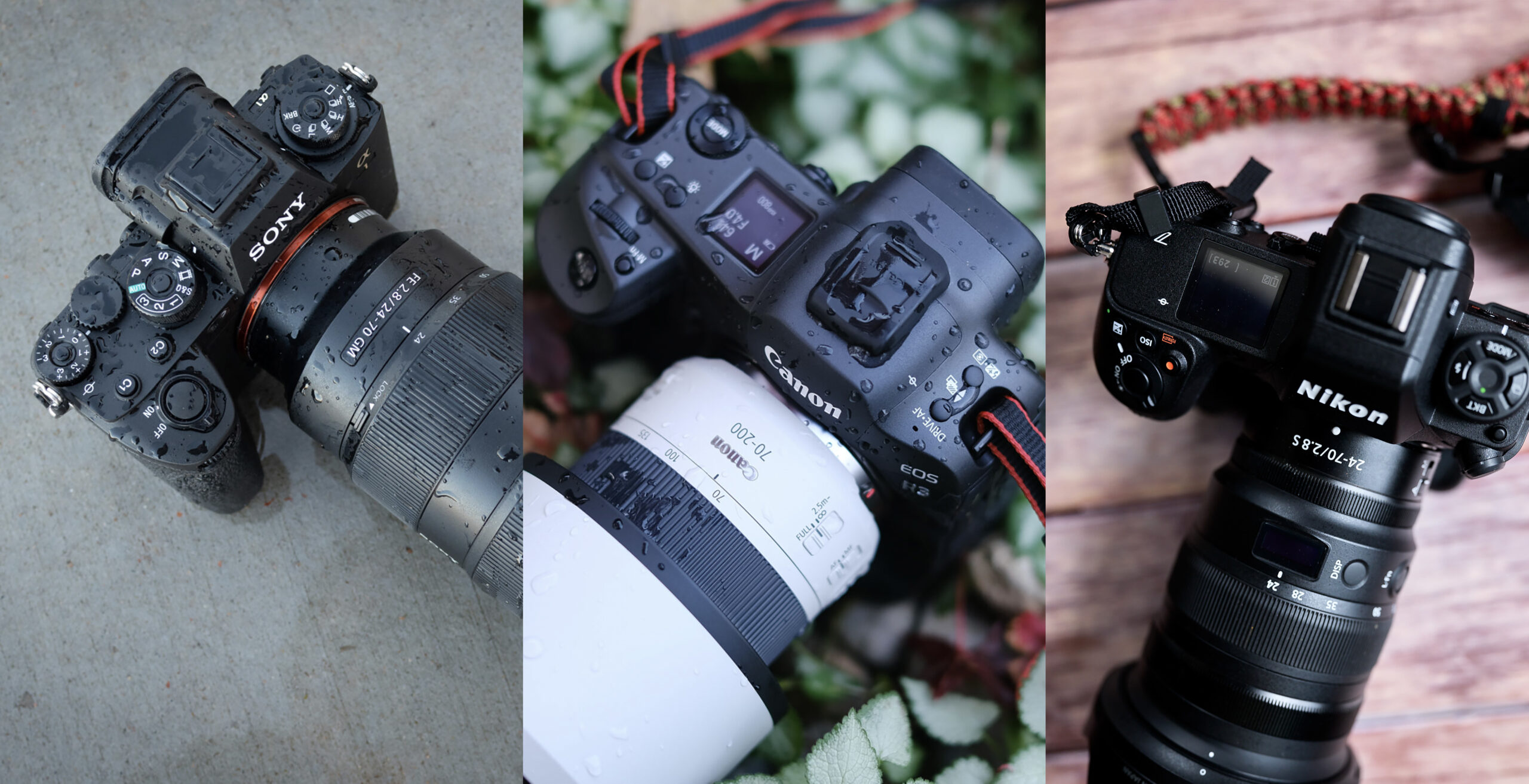
One of the first questions new photographers face is which camera to buy. But, after selecting that first camera, photographers start to accumulate lenses, flashes and other accessories that, in most cases, aren’t compatible with other brands. So rather than asking, what is the best camera, asking what is the best camera brand instead can help save photographers from future financial heartbreak. Brand loyalty is a great thing when you love the brand, but not so much when you are only remaining loyal because it’s too expensive to switch to the camera that you actually want.
The problem is, choosing a camera brand to commit to is rather subjective and depends on both personal style and genre. The best car brand for someone looking for a truck isn’t the same as the one for the driver looking for an electric vehicle. Photography is the same way and whether you shoot portraits or sports, love film-like colors or technical greatness will determine what the best camera brand is for you.
As the Reviews Editor at The Phoblographer, I’ve tested cameras from nearly every major camera brand, including Canon, Fujifilm, Leica, Nikon, Panasonic, Sony, OM System, and Pentax. While my hatred of color editing means I’m a Fujifilm photographer, it’s not the brand I would pick for sports, video, or a dozen other scenarios. Every time I finish a review, I think of who the camera is for, and, after years of testing gear, I’ve noticed some patterns among the biggest camera brands.
There is no one-size-fits-all camera brand, but some companies stick out as being better at a certain task than others. For example, if I shot sports, I probably would have picked a Canon, but if I shot both stills and video, I would have picked up a body from Panasonic. With that in mind, I’ve collected my years of experience — and that from other Phoblographer artists — into a cumulative list of what each of the six biggest camera brands is best for. Is this list still subjective? Absolutely. Am I going to create angry internet mobs wielding keyboards instead of pitchforks that disagree with my choices? Also yes.
The list below includes most of the biggest camera brands. Notably, a few key names were left off this list. OM System creates Micro Four Thirds cameras which work for some scenarios like telephoto, but the price that often sits close to full frame models makes them harder to recommend. Pentax/Ricoh focuses on older DSLRs rather than the newer mirrorless tech. And while Hasselblad has some poetic ergonomics, we tend to prefer medium format cameras from Fujifilm. For those reasons, we left those brands off this list.
These are the best camera brands, ranked in alphabetical order, and the type of photography they are best for.
Table of Contents
Canon: The Best for Autofocus and Ergonomics

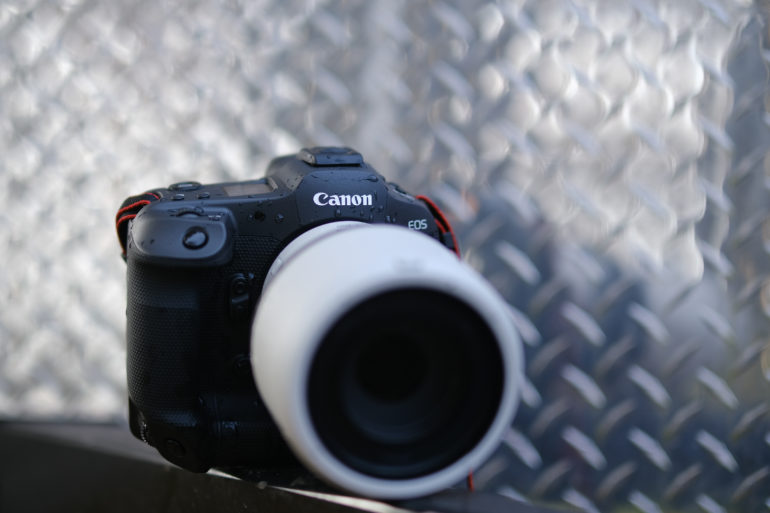
The two features that I tend to love on nearly every Canon camera that I’ve tested are the autofocus speed and the ergonomics.
Canon’s mirrorless cameras use Dual Pixel autofocus. This technology divides each pixel into two separate signals, allowing for a wealth of focus information to analyze and increase the odds of a sharp shot. But outside of that technical speak, Canon cameras simply tend to have fewer autofocus misses, even when photographing fast action. Even Canon’s budget models, while they won’t outperform the brand’s pro-grade options, tend to offer faster autofocus than other similarly priced cameras.
If I had to pick a camera brand that makes mirrorless cameras that feel like DSLRs, Canon would be my first choice. A majority of Canon’s mirrorless cameras have large, comfortable grips that feel nearly identical to the grips on their DSLRs. Canon isn’t creating any “smallest yet” cameras for bragging rights because it knows that those compact cameras can be terribly uncomfortable. Even Canon’s cheapest mirrorless camera, the Canon EOS R100, still has a good grip.
The Best Canon Cameras
Canon EOS R6 Mark II

“The Canon EOS R6 Mk II is a competent little camera. It’s built to withstand nature’s elements and feels good in your hands. The camera boasts new bells and whistles enthusiasts will appreciate while rarely missing a frame. Even seasoned pros will have fun with new panning and intelligent autofocus features.”
Canon EOS R3

Read the full Canon EOS R3 review
“The Canon R3 has a top burst speed that’s actually useful because of a great autofocus system and a faster processor to limit rolling shutter. This camera can not only shoot in the dark but print ISO 128,000 and still look good. While the R5 may make more sense for detail work, the R3 is an exceptional low-light and fast-action camera.”
Fujifilm: The Best Colors and Aesthetics

Ask nearly any Fujifilm photographer why they bought their camera and, more often than not, they will respond with one word: Color. Fujifilm is known for its built-in film simulations that deliver excellent color with minimal editing. (Fujifilm cameras can also be customized with film simulation recipes.) A Fujifilm photographer myself, I love how Fujifilm’s Astia color profile renders skin tones in my portraits.
Another key differentiator for Fujifilm is that this brand started creating digital cameras that look like retro film long before retro was actually cool. While some of their cameras, like the X-H2, feel more like DSLRs, cameras like the X-T5 and X Pro 3 offer a classic look and beautiful top dials that look more like an older film camera than a modern mirrorless.
Fujifilm, however, is one of the few brands that doesn’t offer a full-frame sensor. While Fujifilm’s X series has its perks, recent models have lagged behind in autofocus, making our favorite Fujifilm cameras the medium format options for exceptionally gorgeous bokeh mixed with that excellent color science.
The Best Fujifilm Camera
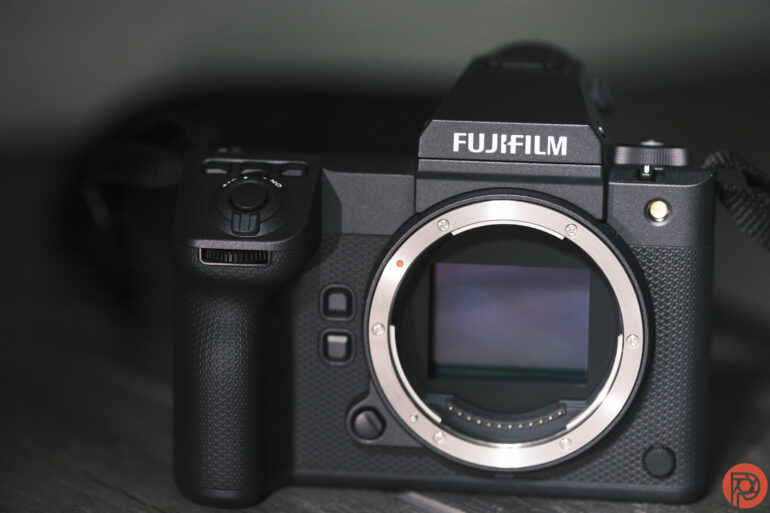
Fujifilm GFX100 II

Read the full Fujifilm GFX100 II review
“Feast your eyeballs on 102 megapixels of colorful medium format goodness—at least, that’s how I thought I should introduce the unedited JPEGs captured on the Fujifilm GFX100 II. I’ve never seen a set of images look so perfect straight from the camera without editing. Get the exposure and white balance right in the camera, and the large sensor and Fujifilm color science will do the rest. The images from the Fujifilm GFX100 II lived up to my exceptions with excellent detail, low noise, and when I didn’t get it right in camera, lots of dynamic range flexibility in post. The new film simulation, Reala Ace, is bound to be a Fujifilm fan favorite. While I’m a huge fan of Fujifilm’s retro-styled top dials, I thought the ergonomics on the GFX100 II were at least significantly better than the XH2 series.”
Leica: The Best Build and Character

The Leica name is synonymous with luxury. While many photographers think “expensive” when hearing the word Leica, the brand’s high-end price point delivers cameras with an exceptionally durable build and beautiful character.
It’s hard to hold a Leica in your hands and not fall in love. If you want a camera made of durable metal rather than plastic, Leica is one of the first brands to look at. Leica is one of the few brands that doesn’t just slap a weather-sealed label on — many of the company’s cameras have an IP rating, so you know just what the camera can handle. This applies to the brand’s L-Mount bodies as well as the M series and even its lovely compact cameras. In the past, some photojournalists have even credited their Leica from saving them from shrapnel in a war zone.
The classic but luxurious look of Leica cameras also extends to the images. In general, Leica’s cameras and lenses tend to offer more character. Yes, you can find some technically perfect, tack-sharp Leica lenses. But many Leica lenses offer beautiful flare and colors, not to mention a solid build much like the cameras.
Leica’s reputation is enough that even photographers who haven’t picked one up before think of luxury. But, many are surprised at how excellent Leica’s autofocus system is. On the last few Leicas that we’ve tested, we’ve raved about the best autofocus for a 60-megapixel sensor yet, while the brand also tends to be one of the better options for low light autofocus and, in particular, focusing on people of color in dim light.
The Best Leica Cameras
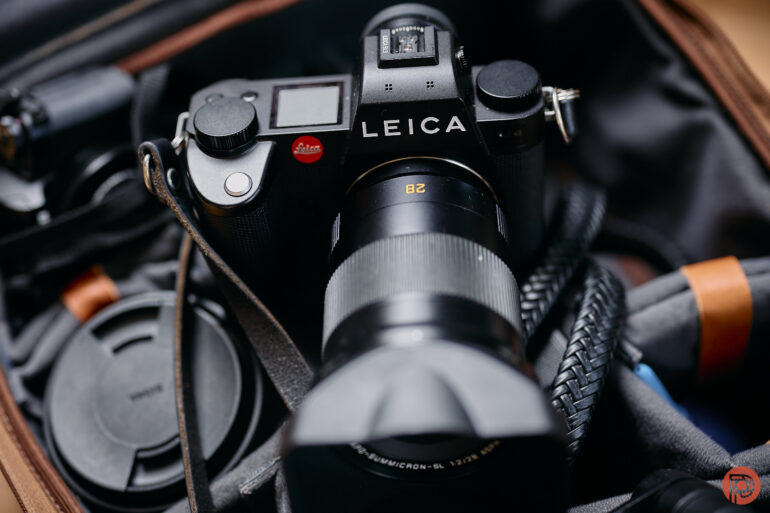
Leica SL3

“It’s packed away in a box right now heading back to Leica — and it’s honestly hard to imagine the rest of the year without the Leica SL3 in my hands. There’s a lot to really like about it. Leica has truly been listening to their customers and the market while incorporating feedback into the camera’s design. It’s smaller and lighter than the previous version — yet they also packed an extra dial onto the top of the camera. This makes it feel a bit more retro while also keeping the very modern and sleek look. Additionally, they gave the camera a tilting touchscreen. Yes, the menu is now touch capable. Plus, they improved the grip, gave it an incredible imaging sensor that rivals the Sony a7r V, majorly improved the autofocus, and built in some of the best battery life I’ve ever experienced. It’s hard to say no to the Leica SL3.”
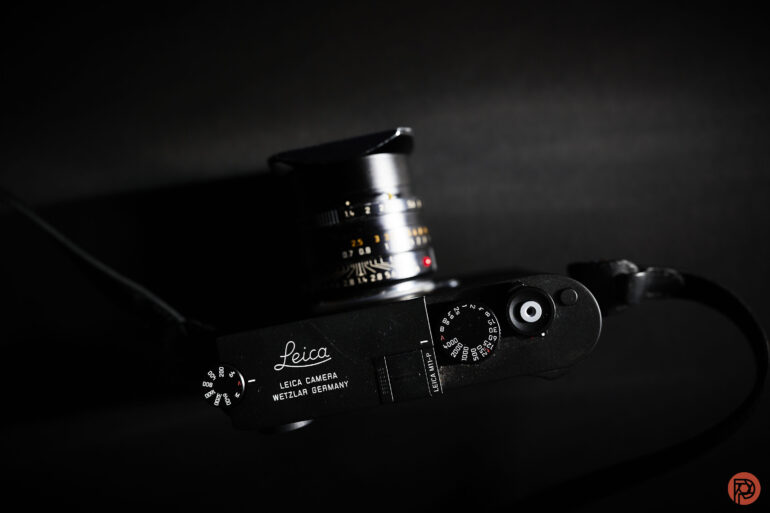
Leica M11P

“I adored the Leica M11 when I reviewed it. And with the Leica M11P being a variant of that, the pictures are just the same. This camera reminds me of the Leica M9 — the colors are just that vibrant. Everything I shoot looks like a painting in a way that’s sufficiently distinct from the Fujifilm Velvia film simulation on their cameras. With that said, the images are saturated, deep, and beautiful.”
Nikon: The Best Lenses and Low-light Autofocus

The reason I love Nikon Z cameras isn’t actually the cameras, but the lenses. Yes, the cameras are good, but Nikon Z lenses are excellent. When Nikon launched the Z line, it did so with a new wider mount designed to improve image quality and the brand has certainly achieved that. More often than not, Nikon lenses are exceptionally sharp, yet many still offer character, including lovely flare and colors. New photographers often give too much credit to the camera when in reality, the lens plays just as big of a role, and at times an even larger one, in image quality.
Nikon’s camera bodies tend to have the edge in low-light autofocus. The Z system has come a long way from its first models and one of the things we see consistently with Nikon’s latest bodies is low light autofocus that still works in situations with limited contrast. Historically, digital cameras have used contrast to find the focus point. While that’s fine outdoors, when you are photographing a dark-colored subject in dim lighting, performance tends to drop significantly. Nikon does one of the best jobs at ensuring autofocus accuracy doesn’t drop to dismal levels in the dark. In particular, the brand’s latest bodies perform better than the competition at photographing people of color in limited light.
The Best Nikon Cameras
The Nikon Zf

“There’s a lot to love about the Nikon Zf. We can talk about the image quality, then go into the retro ergonomics, and we can wax poetically for a long time about how the camera feels in your hand. It’s also very reliable to be able to do most of what you want. Of any Nikon camera you get, this might be the one that you adapt lenses onto the most. It’s a pleasurable experience that has to be experienced to be understood and that leaves you speechless because you’re in love with the camera each and every time you pick it up.”
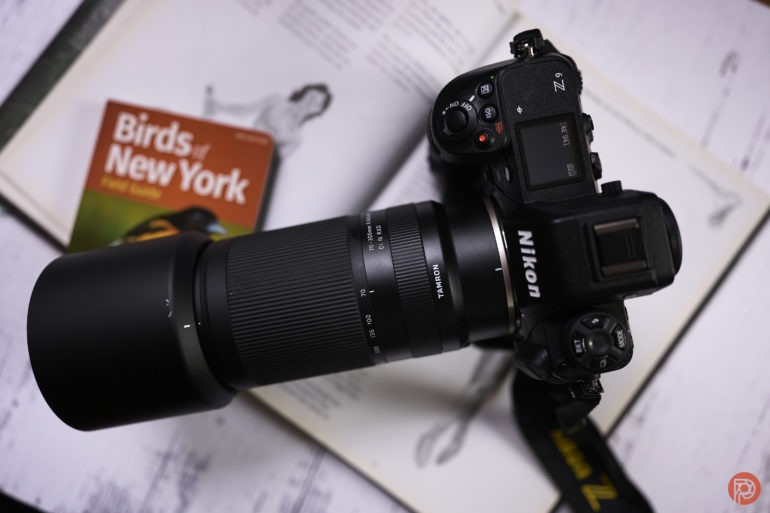
The Nikon Z9

“The Nikon z9 is Nikon’s most innovative camera in years. It’s quite a workhorse with a fully electronic shutter, workable 3D tracking autofocus, and various autofocus scene detection features. It’s also very well weather-sealed and has incredible battery life. It trails behind Sony and Canon in some ways. But in other ways, it absolutely blows them out of the water. In my mind, it’s the first genuinely professional-feeling mirrorless camera that uses 35mm full-frame sensors.”
Panasonic: The Best Photo-video Hybrids and in-camera LUTs

Mirrorless cameras are no longer just for photographers — they are an increasingly popular choice for videography as well. But, the brand that’s best at mixing features for both stills and video is Panasonic. Most Panasonic mirrorless bodies have a long list of video-centric features from advanced codecs to high resolution and slow motion. But (at least for the full-frame cameras) Panasonic hasn’t forgotten about stills photographers either. Panasonic bodies are known for their stabilization, plus they also offer unique features like in-camera composting for star trails.
A key feature of that photo-video hybrid focus are LUTs, which are custom color profiles that you can create and apply to footage in-camera. But, the LUTs also work for still photos as well. That essentially allows you to color edit your photos before they are shot, giving you the ability to customize the hues straight from the camera to your own unique style.
The Best Panasonic Camera
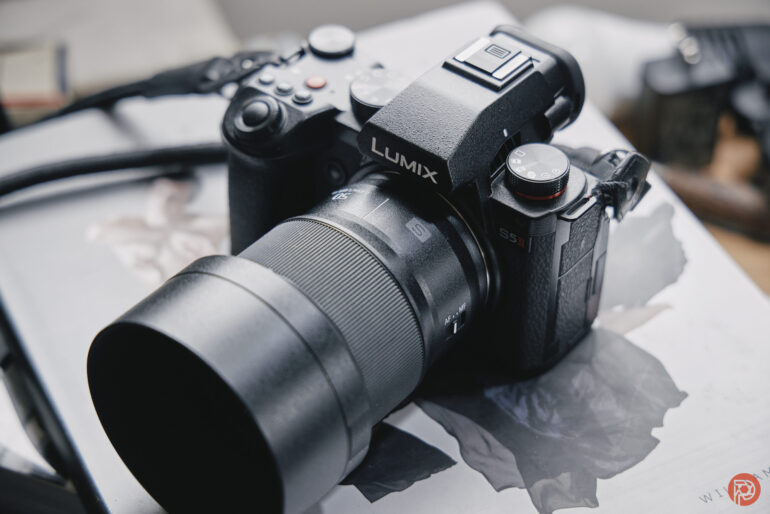
Panasonic S5 II

The Panasonic S5 II is a camera that, in some ways, many of us have dreamed of. I mean, come on, a camera that can take on the look of Kodak film and apply it to the stills? It sounds like the full-frame version of a Fujifilm camera! There’s also an excellent selection of lenses that you can use too. While it’s quite good, it doesn’t really feel like a fully finished camera at least when it comes to autofocus. And that’s probably where it needs to improve the most.
Sony: The Best Innovation and Speed

If there’s one camera brand that is consistently doing things that no other brand is doing, its Sony. That extends back through the company’s history when Sony decided it wasn’t afraid to tank DSLR sales and took a risk to become the first to launch serious full-frame mirrorless cameras. But Sony’s innovation doesn’t just apply to cameras from the past. The new Sony a9 III uses a global shutter, a first for consumer cameras, that allows photographers to use flash at any shutter speed. Sony also developed stacked sensors, a technical feat that allows for faster burst speeds. And speaking of sensors, Sony is one of the largest manufacturers of sensors in the world, which means even if you buy a camera from another brand, you might still be getting a Sony sensor inside.
Sony’s innovation has made the brand’s cameras stand out in terms of speed. If you want to take pictures at a frame rate higher than a movie, Sony is probably your best bet. But, Sony also tends to have a fairly solid autofocus system too. It’s not as good in low light as other brands, but holds its own for action alongside brands like Canon.
The Best Sony Cameras
Sony a7R V

“The a7r V takes everything we enjoy about the a7r IV and improves the user experience. Sony has added a new AI unit for faster and more accurate autofocus performance with a 10fps burst rate. It’s a night and day difference compared to the previous model. Sony has also added new AI based tracking modes to keep its status as one of the best offerings on the market. Photographers of all skill levels will enjoy these enhancements.”
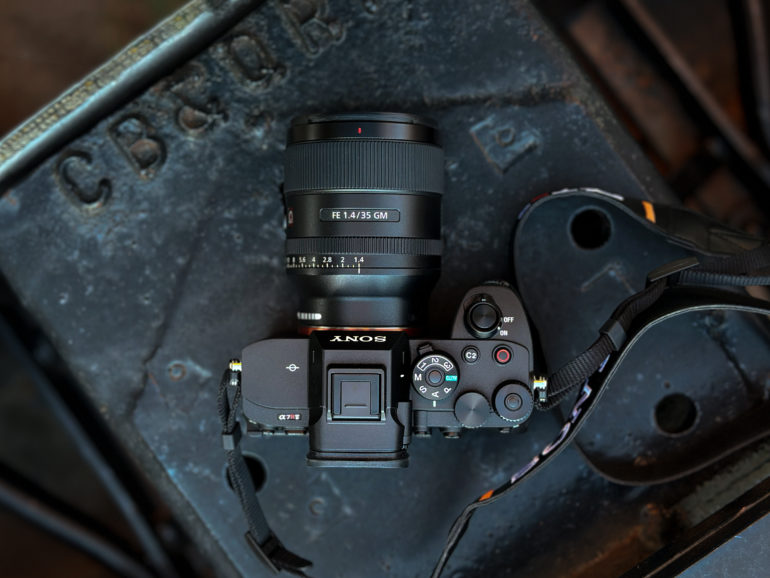
Sony a9 III

“By far, the Sony a9 III is the single best camera that Sony has made thus far. Nearly every issue that I’ve had with the company’s cameras over the years has been resolved in some way or another. Ergonomically speaking, this is the most perfect Sony camera I’ve held. It truly feels like the evolution of a Minolta camera for mirrorless. It’s simple enough to use, and anything that you really need can be wired to a button or two. But perhaps the greatest innovation is the global shutter. While I miss the fact that I could physically feel the shutter, I’ll accept that it comes with new technology that makes strobism even better. If you’re a photographer that uses a lot of off-camera flash, then this is the single best camera you can get on the market right now.”
Why You Should Trust Us
The Phoblographer has been doing real-world photography gear tests longer than any other photography publication currently run. We also have the largest database of real-world lens reviews, amongst other things like straps, camera bags, lights, accessories, and more. Here’s why that matters:
- AI Can’t Do This Job: These days, other publications do roundups, sometimes using generative AI. That’s the same as a person researching products and then making a decision without actually trying it. All of our reviews and guides are written not just by humans but by working photographers — not AI. Computers don’t use cameras, so why would you trust AI to recommend cameras for you?
- Research and Practical Experience: Here at the Phoblographer, humans consult on what roundups to do with guidance from an editor. Then, a human goes through our database of reviews and selects the best products based on our own internal research. The human creating the roundup has practical experience with photography gear and will apply their knowledge of what’s best to the already human-based experience provided in our reviews.
- We Block AI Bots: The Phoblographer blocks indexing bots from reading our site, so what’s here can only be read here.
How we Test and Choose the Best Camera Brands
- The Phoblographer’s various product round-up features are done in-house. Our philosophy is simple: you wouldn’t get a Wagyu beef steak review from a lifelong vegetarian. And you wouldn’t get photography advice from someone who doesn’t touch the product. We only recommend gear we’ve fully reviewed in these roundups.
- If you’re wondering why your favorite product didn’t make the cut, there’s a chance it’s on another list. If we haven’t reviewed it, we won’t recommend it. This method keeps our lists packed with industry-leading knowledge. Some of our stories include affiliate links. If you buy something through one of these links, we may earn an affiliate commission.
- When we test lenses, we’ve got various things in mind. First off, we consider who might want to buy the lens and what they might do with it. With that in mind, we try to tackle at least three genres of photography with that lens in a variety of situations. If the lens has weather resistance, then we’ll test it accordingly with a weather-resistant camera. We also test the autofocus of the lens in continuous mode, single mode, with exposure preview effects, without those effects, and then with all the major image quality parameters. These days, no one really makes a bad lens — but some are far better than others.
- In this specific roundup, we’re basing our findings on the reviews that we’ve done. We’re choosing a favorite, but we’re also giving photographers a bunch of others that they might like, depending on how they shoot.