

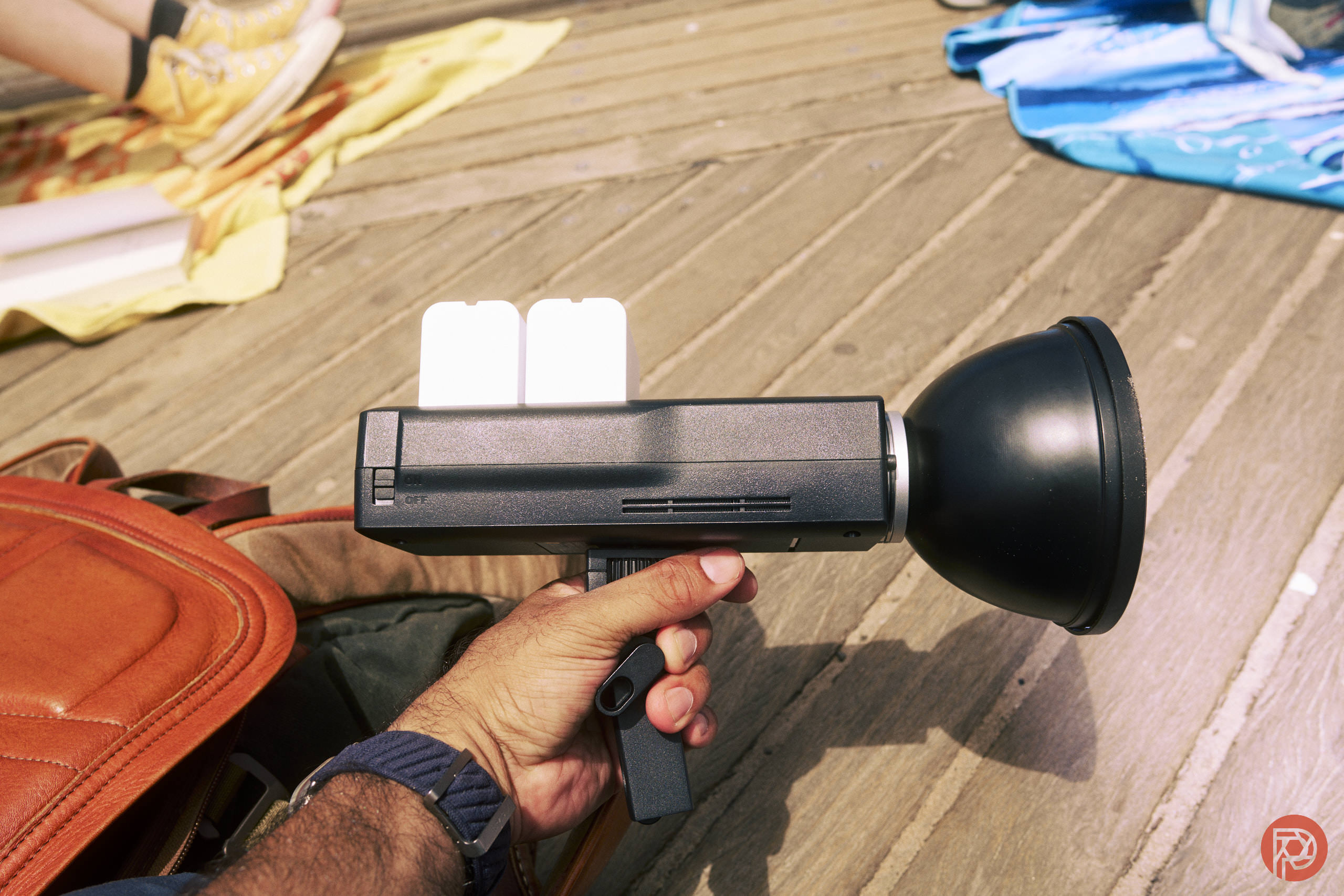
If I didn’t have to title things for searchability and understanding the web better, I’d title this review, “Set phasers to stunning.” The reason why is because the Yongnuo YN200II looks kind of like a space age weapon of some sort once you give it a handle to look and function like a gun. When I called this flash in, I at first didn’t quite understand what I called in — and that’s a rarity for me.
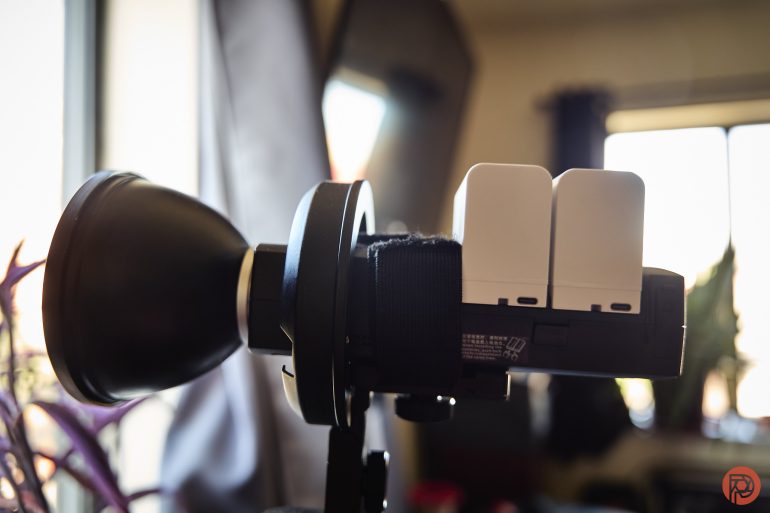
The YN200II is a bit of an odd one. With the transmitter attached, the flash will fire. But the EXIF data says that the flash didn’t fire. It’s quite odd. I used with several product images, but when doing that, I couldn’t really get into the look that it was giving me. That changed once I stepped outside to realize its true power.
Before I contin on with this review, product photos that I shot with this flash are below. And I’m giving the Yongnuo YN200II four out of five stars.


This flash majorly impressed me because of the feature that tells you what the flash duration is at each power level. That then helps you make a better decision when it comes to photographing people or things; providing that you know what you’re doing. At first, I compared the flash duration to Profoto and Elinchrom’s lights and I thought that the Yongnuo, based on specs was crappy. But real life experience proved to be a much different story.


With that said, this is one of the best flashes that I’ve ever used if you’re an expert level strobist. Yongnou sent us to Yongnuo YN200II with the YN560-TXII for review. I tested it with my Nikon Zf and my Nikon D850 — which I own and purchased with my own money. Yongnuo didn’t send me batteries with the flash, so I bought some from Viltrox off of Adorama’s website.
The Yongnuo YN200II, to me, is one of the coolest lights ever made for Nikon cameras. First off I’m going to say what no YouTuber and most journalists aren’t going to tell you because they can’t use strobe: using a flash isn’t about technicalities first. It’s about understanding how to see light in a way that’s significantly more in-tune with your imagination than seeing the light in front of you and just saying, “Yeah, I like that. Let’s go with that.” And I am truly one of those people who’d rather make my own sandwich than choose from the pre-made sandwiches at the deli. If you’re one of those people who reaches for the Monte Cristo that’s been pre-made behind the deli counter, then more power to you. But just this morning when I ordered my protein breakfast wrap, I customized it further to accommodate to my dietary needs. And using a flash is the latter – especially in manual mode. Below are some scenes of me using the flash at the 2026 Mermaid Parade in Coney Island.


I’m not saying that one is clearly superior to the other; I’m saying that one requires a lot more experience and deeper conversations with yourself about your creative vision. Those deeper conversations then need to speak a second language with the technical self to collaborate and make something extraordinary.
If you’re already hating this, then you probably haven’t done the work on yourself and your photography. The photo below is right out of the camera with no editing involved except for resizing for the web and adding the Phoblographer’s watermark. Look at how good an image this flash can produce with the camera and a fairly cheap lens.
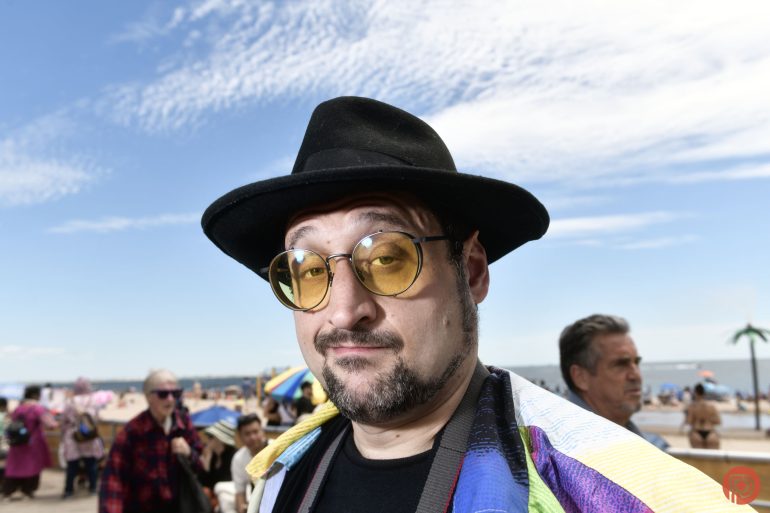
To that end, I constantly compared the YN200II to the Profoto B10. The Yongnuo is around 1/10th of the price and is missing around 1/3rd of the power output and the even faster flash duration. But if you don’t know how to read or understand how flash duration affects your images, then this flash may not work for you; yet the YN200II will tell you what the flash duration is. And for the price, it does a very, very good job. In fact, I’d even say that it’s comparable to the Elinchrom One light that I reviewed a while back.
To recap though, if you don’t understand how to use flash duration, then you’re probably just going to shoot a bunch of images that are overexposed while you spray and pray to hope that one is useable. And for that, I’d tell you to slow down and make one good frame; or three.

With that said, here’s where this review becomes part tutorial: flash durations essentially act like a second shutter speed of some sort and end up helping you to cut down on ambient lighting in the scene. With manual flash, the shutter speed of your camera controls the amount of ambient light in the scene. The ISO controls the overall sensitivity to light. The aperture controls how much of the flash affects the scene. The flash power controls how much added light is in the scene specifically from the flash. Flash duration works in accordance with the shutter speed and can help do things like stop fast moving motion. So for these images, lots of them were shot at ISO 64, 1/250th (flash sync speed) and 1/16th or 1/32nd power. At those power output, the flash duration was between 1/3000th and 1/4000th. Plus, I was at f8 with the 28mm f1.8. Together, they made images that were pretty well balanced.
The YN200II really, truly does require you to slow down. And on the back of the Nikon D850’s LCD screen, I was constantly falling in love with the images I made. That stayed with me even when I brought them into Capture One for editing too. And I really value that in ways most photographers I think will ever understand these days. Less is more. No one wants to scroll through five images of the same scene. It’s so much better to just share the best single image from said scene. Most importantly, using a flash helps you create an image that no one else will be able to make easily.


For that reason, I’m pretty much ready to switch from Profoto to the YN200II as my main flash for most of my work with the Nikon D850. But I own so many studio strobes that it all depends on the camera system that I’m using. There are also times where TTL really does make a lot more sense to use. But if you know what you’re doing, manual output can also work really well as long as you’re tuned into the scene, your subject, and your technical settings. And that ultimately takes practice.
My big complaint here: I wish that the YN560-TXII transmitter had a way to lock itself so that it didn’t accidentally change the settings on the flash. The same, obviously, goes for the flash body itself. But otherwise, Yongnuo made one of the best flashes that I’ve used in the past few years; it even looks like a space-age weapon of some sort. And I love that fun design. I don’t know why more people haven’t talked about it; and more importantly, I wish that more photographers actually took the time to learn how to light and stuck with it instead of not doing so. Flash and strobe are one of the best things about photography that helps to make images that no one else can make.
Get rid of the ads!
Did you enjoy reading this article as much as we enjoyed writing it? There's a way to support us and our reporting, getting ad-free navigation and more as a bonus. Subscribe to us for less than a coffee per month —just $3.99— or take advantage of our yearly subscription with a hefty discount for only $25.- An ad-free experience
- A free mystery box for Lightroom or Capture One
- All the books in our store
- 20% discount on Capture One
- 30% discount on Imalume Photo Theft Protection
- 20% off Herbs and Kettle Tea Company.
- 20% off your order from MPIX printing services.