

I remember several years ago, Sony launched their 55mm f1.8 lens when the full-frame E mount cameras came to be. This lens was long rumored to be an iteration of the Zeiss 55mm f1.4 Otus for DSLRs but made smaller, lighter, etc. In 2026, Viltrox is launching the Viltrox 55mm f1.8 EVO. Very few lenses come out with this focal length. But when they do, they’re just the right range to get me excited.
Table of Contents
The Big Picture: Viltrox 55mm f1.8 EVO Review Conclusions
The Viltrox 55mm f1.8 EVO is a pretty unique lens in some ways. While Sony made a similar focal length over a decade ago, the Viltrox lens is adding a bit more to it. There’s a working aperture ring, substantially more weather resistance at the mount (but nowhere else), comparable autofocus speed, and an apochromatic design to really make your subjects pop. Indeed, I’d say that if I wanted some sort of improvement over the Sony lens, then this would be it. I truly wouldn’t want it to be any sharper or any faster. And for what it’s worth, I think that we all need more apochromatic lenses on the market.
It’s available for both Sony E and Nikon Z mount. Considering what’s currently happening with Nikon’s lawsuit against Viltrox and how Sony’s latest cameras aren’t playing so nicely with the lenses, any photographer should keep in mind that their units may not work until Viltrox offers a firmware update. At least the L-mount alliance has some sanity to them.
Still, this lens outdoes Sony at its own game in some ways.
We’re giving the Viltrox 55mm f1.8 EVO lens four out of five stars.
- Good image quality
- Fast autofocus
- Weather sealing at the mount, but nowhere else
- Lightweight
- It’s only around $370
- Apochromatic design means that your subjects pop — even just a bit more than normal. But even so, it’s nowhere as much as when you use a Leica lens that’s similar.
Experience
During my time with the Viltrox 55mm f1.8 EVO, I tested it on the Nikon Zf. The entire time I used it, I wondered if it was a good decision to call it in for this mount. You see, Nikon is apparently on a campaign to stamp out the third-party support that Viltrox offers to them. It’s similar to wanting to go after Banksy because he painted some art on the side of your building — therefore making it so much more valuable. In a similar fashion, Nikon truly doesn’t realize the value that Viltrox is bringing to its brand.
And honestly, I don’t think they care.
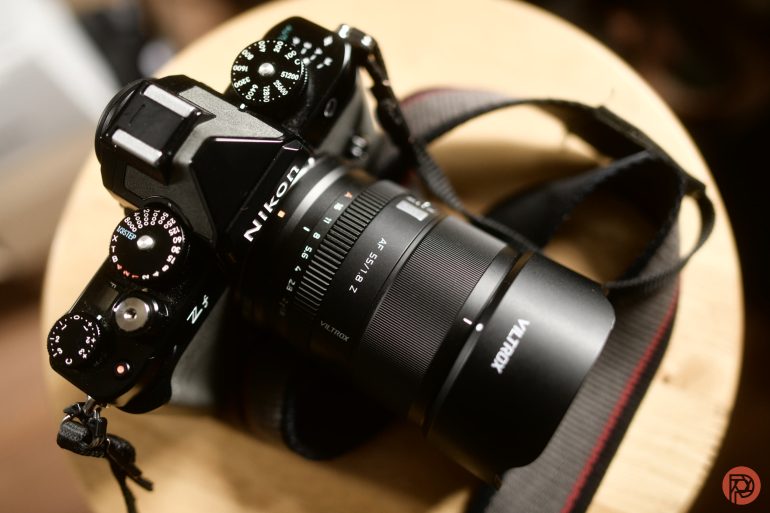
But I only own older Sony E mount cameras — so it could work well on those. But at the same time, Sony camera bodies tend to not bring me much joy like the retro ergonomics of the Nikon Zf.
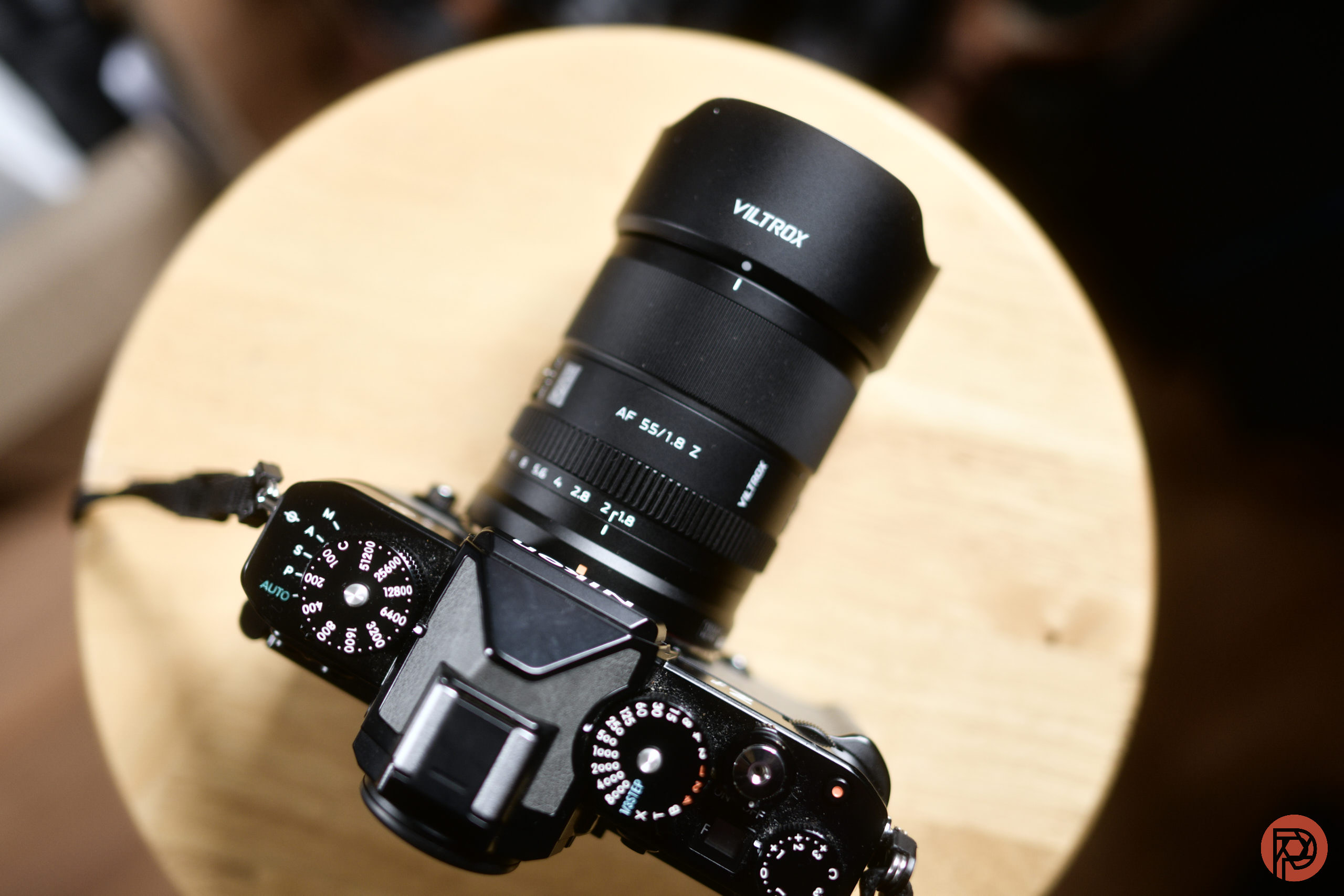
With that said, the Viltrox 55mm f1.8 EVO has a modern design to it with a bit of retro. There’s a functional, clicky aperture ring that can be declicked if needed. And it’s also overall a pretty small lens. The only weather resistance is at the mount, however. And that means that you’ll probably want to be really careful when you’re out and about in the big, scary world. Espcially keep this in mind with all the buttons and switches as they’re obviously points where debris and moisture can enter the lens.


In the tests that we did, the Viltrox 55mm f1.8 EVO also autofocused just as well as we’d expect from a Nikon lens — even with really harsh backlighting. With the exposure preview function turned off, this lens never ran into a problem. And even with the function enabled on the Zf, the lens and camera worked together very well to find subjects in lighting conditions where we were at least four stops underexposed. More specifically, the pair worked well together in AF-S, AF-C, with subject detection enabled and disabled, and even with autofocus tracking. Tracking is where we experienced just a few hiccups and even those are insanely rare.
Image Quality
The Viltrox 55mm f1.8 EVO has an apochromatic design. Obviously this helps with eliminating chromatic aberrations, but what it also means is that the bokeh often ends up popping a whole lot more. In fact, with Leica, an f2 lens can look like it’s rendering like an f1.4. At least, that’s the case with the Leica 50mm f2 SL lens.
In the case of the Viltrox, it’s still got a nice render but the pop is nowhere as apparent as it is with a Leica APO lens.
Everything else is just plain standard: it’s sharp, there’s nice bokeh, and there’s even nice lens flare. Come to think of it, even though this is an apochroamtic lens, I wouldn’t necessarily know that it was.
One of the finest examples of an apochromatic lens that we’ve tested is the Laowa 28mm f1.2 Argus — as it had bokeh that really, truly popped. There’s also the Zeiss 135mm f2 APO. To this day, that lens created images that captivate me. And with the Viltrox, the magic seems somehow subdued.
The following images are edited with the Phoblographer’s presets available in our online store.


The following images were not edited.


Declaration of Journalistic Intent
The Phoblographer is one of the last standing dedicated photography publications that speaks to both art and tech in our articles. We put declarations up front in our reviews to adhere to journalistic standards that several publications abide by. These help you understand a lot more about what we do:
- At the time of publishing this review, Viltrox is not running direct-sold advertising with the Phoblographer. This doesn’t affect our reviews anyway and it never has in our 15 years of publishing our articles. This article is in no way sponsored.
- Note that this isn’t necessarily our final review of the unit. It will be updated, and it’s more of an in-progress review than anything. In fact, almost all our reviews are like this.
- None of the reviews on the Phoblographer are sponsored. That’s against FTC laws and we adhere to them just the same way that newspapers, magazines, and corporate publications do.
- Viltrox provided the unit and accessories to the Phoblographer for review. There was no money exchange between us or their 3rd party partners and the Phoblographer for this to happen. Manufacturers trust the Phoblographer’s reviews, as they are incredibly blunt. We get to keep the lens.
- Viltrox knows that it cannot influence the site’s reviews. If we don’t like something or if we have issues with it, we’ll let our readers know.
- Viltrox paid for shipping of the lens to and back. This is a standard practice in the world of journalism.
- The Phoblographer’s standards for reviewing products have become much stricter. After having the world’s largest database of real-world lens reviews, we choose not to review anything we don’t find innovative or unique, and in many cases, products that lack weather resistance. Unless something is very unique, we probably won’t touch it.
- In recent years, brands have withheld NDA information from us or stopped working with us because they feel they cannot control our coverage. These days, many brands will not give products to the press unless they get favorable coverage. In other situations, we’ve stopped working with several brands for ethical issues. Either way, we report as honestly and rawly as humanity allows.
- At the time of publishing, the Phoblographer is the only photography publication that is a member of Adobe’s Content Authenticity Initiative. We champion human-made art and are frank with our audience. We are also the only photography publication that labels when an image is edited or not.
More can be found on our Disclaimers page.
Get rid of the ads!
Did you enjoy reading this article as much as we enjoyed writing it? There's a way to support us and our reporting, getting ad-free navigation and more as a bonus. Subscribe to us for less than a coffee per month —just $3.99— or take advantage of our yearly subscription with a hefty discount for only $25.- An ad-free experience
- A free mystery box for Lightroom or Capture One
- All the books in our store
- 20% discount on Capture One
- 30% discount on Imalume Photo Theft Protection
- 20% off Herbs and Kettle Tea Company.
- 20% off your order from MPIX printing services.
- 5% off Viltrox Products via their eCommerce store.
- 10% off all film developing, printing and scanning services from Blue Moon Camera and Machine
- 15% off 7Artisans products: The lens and accessory maker is offering a sweet discount for Phoblographer's readers.