


Last Updated on 04/20/2026 by Chris Gampat
Canon has some of the most talked-about cameras over the years. The 5D series was the favorite of professionals, while the Power Shot models won over beginners, and then there was the R7, designed for serious enthusiasts. Each of the cameras had something special for varying groups of photographers. It now appears that Canon plans to combine two different groups with a camera in the near future. This is how it may pan out.
According to Canon Rumors, Canon is working on two different versions of the R8. One is the Canon R8 II and the other is R6 V. The latter’s launch is expected in April. But here is the twist. The R8 II is expected to be a retro-inspired model, which may be introduced in May.
Those who have followed us are aware of how Canon’s representatives have shot down the idea before. The retro camera was supposed to celebrate the milestone anniversary of the AE-1. However, Canon’s Manabu Kato revealed that the company does not have anything special planned for the future. But it now appears that it was not the dismissal of a retro camera, but rather the dismissal of a dedicated AE-1 successor. The R8 II is said to be a full-frame modern camera but with a retro design, and perhaps, the company was trying to only answer what was asked at that point.
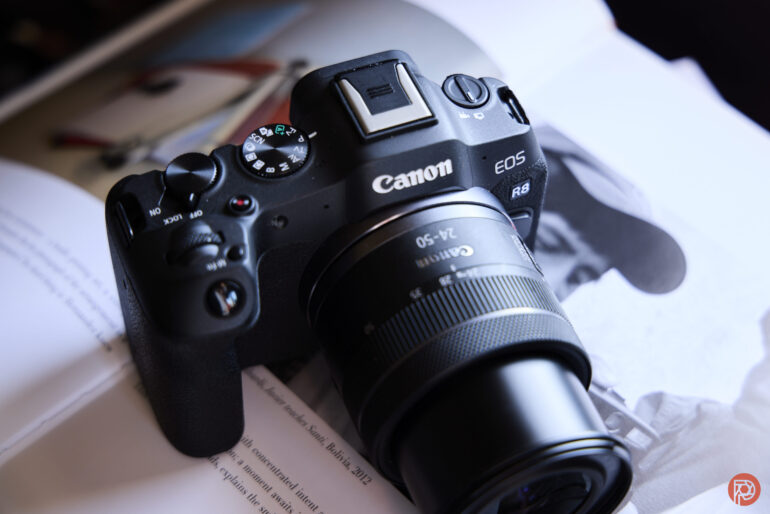
At the moment, it appears that the R8 II will have the same sensor as the R6 Mk III, a 33MP FSI CMOS sensor. While there are no other specifications revealed yet, the idea that the R8 II could have a different body is exciting.
In addition, Canon Rumors has also revealed that the company may also introduce matching lenses. It includes discussions of a retro-looking L-series prime lens, which may come in silver color to complement the camera. There is no specific focal range that has been disclosed yet.
For those who are excited, they must remember a few things. The R8 is not the most celebrated camera from the company. When the camera was introduced, it was considered an interesting full frame version of the Canon Rebel. However, with its updates, the camera began to show its true colors. For instance, with firmware, the camera does not bring the shutter down over the sensor. There is also a lack of improvement to the touch and drag settings, a lack of refinement in display simulation, and the lack of auto scene detection. Sure, it is one of the cheapest offerings in Canon’s R range, but for the camera to work better, you need to rely on L-series zoom lenses.
The strategy for a Canon shooter used to be that you buy a cheap camera, get the expensive lenses, and then upgrade to an expensive camera later on. But I wouldn’t really recommend that now partially because Canon’s cheap cameras are so mediocre. On the contrary, you can get something like the Sony a7 IV and a high-end Tamron lens while spending less compared to the Canon EOS R8 and L-glass.
Chris Gampat, Founder of The Phoblographer
So, if Canon intends to break into the retro market with an affordable camera that can compete with the Zf and X-Pro series, they also need to work around their features. The R8’s existing strengths are the weather sealing and price point. To appeal to an audience that has abundant options, they must include features that will be liked by other users, who may not be into Canon. For instance, multiple exposure mode. Separate selection for autofocus. And, an alternative to Fujifilm’s and Nikon’s color profiles. Of course, the lenses go without saying, given that L-series offerings are quite expensive.
It remains to be seen what Canon finally introduces. We won’t be surprised if the R8 II is a watered-down version of the R6 III, with no retro body. After all, you have to take such news with a pinch of salt.
Get rid of the ads!
Did you enjoy reading this article as much as we enjoyed writing it? There's a way to support us and our reporting, getting ad-free navigation and more as a bonus. Subscribe to us for less than a coffee per month —just $3.99— or take advantage of our yearly subscription with a hefty discount for only $25.- An ad-free experience
- A free mystery box for Lightroom or Capture One
- All the books in our store
- 20% discount on Capture One
- 30% discount on Imalume Photo Theft Protection
- 20% off Herbs and Kettle Tea Company.
- 20% off your order from MPIX printing services.
- 5% off Viltrox Products via their eCommerce store.
- 10% off all film developing, printing and scanning services from Blue Moon Camera and Machine
- 15% off 7Artisans products: The lens and accessory maker is offering a sweet discount for Phoblographer's readers.