

I never thought that I’d see it happen. For years now, OM System and their predecessor, Olympus, have said that they weren’t going to get into the retro market and instead just focus on the outdoor and macro photography market. But thanks to the requests of the community, the company has finally released something for city photographers and street photographers. Today, the world is being introduced officially to the OM System OM3 (also called the OM-3). It brings with it all the functions of the OM System OM1 Mk II and the retro-styling of the original EM5. This camera was seriously one of my favorites when we reviewed it back in 2012. And if anything, it’s OM System’s way of diving into the appeal of retro-digital and, therefore, retro-styling.
Table of Contents
The Big Picture: OM System OM3 Review Conclusions

The OM System OM3 is a pretty cool classic-styling camera that transports me back to the time in the 2010s where we all dressed with inspiration from that show Mad Men. With it comes a lot of power including all of the computational photography power of their higher end cameras and the insane durability that OM System gives to their cameras. What I overall really feel we needed though was a compact camera. In some ways, this is a glorified compact camera that OM System doesn’t feel like they’re holding back on. That’s evident with features like the film simulation dial — something you don’t get with any other camera that the system currently holds and was made famous with the Pen F.
OM System also wins points on our inclusivity testing. The menu is easy to navigate when you tap through it. In fact, it’s just as simple, if not better, than Canon’s. With menu systems becoming so thick these days, we’re told to just use the quick menu settings instead. But even with cameras that I’ve owned for years, I don’t want to do that. With two taps of the screen, I can get to anywhere I want in the OM System menu. And that’s absolutely incredible for folks with failing vision because it will just become simple muscle memory.
Where they’re losing out, however, has to do with autofocus on people of color in low light. We found it to generally be very intermittent and annoyingly inconsistent. Maybe this will change with firmware updates. Because of this, we remove an entire star from the review.
At the same time, this is still a Micro Four Thirds camera with a Four Thirds sensor. So, we cannot expect the RAW file output to match full-frame cameras. For the price of nearly $2,000, you’d be hard tempted to reach for the Panasonic S9 or the Nikon Zf instead.
If you’re going to get the OM System OM3, I strongly suggest that you treat it like a compact camera and only shoot in JPEG. Don’t even bother editing the images because they’re beautiful right out of the camera.
We’re awarding the OM System OM3 4 out of five stars. Want one? They’re going for around $2,000 on Amazon.
Pros
- A phenomenal JPEG camera that I’d also think of as a little toy camera.
- Much better autofocusing than anything similarly sized cameras have done
- Weather sealing
- Metal build
- The viewfinder is so good that it makes manual focus easy with classic lenses like the Voigtlander 17.5mm f0.95
- Some of the best battery life I’ve seen from a mirrorless camera in years.
- Film profiles are lovely
- Insanely lightweight, but it doesn’t feel cheap. OM System really nailed this.
- Vertical image format without needing to rotate the camera is a dream.
- The color from the JPEGs when well exposed is something akin to a dream. I haven’t been this excited about colors from a small format camera since the X Pro 1 launched.
Cons
- Micro Four Thirds is still behind on image quality when we’re talking about the RAWs. But their JPEGs are worth writing sonnets about.
- Autofocus on people of color (and those with lighter skin) in low light can’t track a subject moving across a room.
- It’s nearly the price of the Nikon Zf but lacks the autofocus capabilities and the more metal body or the dual card slots. And you can get the Panasonic S9 for cheaper.
Gear Used
We tested the OM System OM3 with the new 17mm f1.8 II and the 25mm f1.8 II. All of these were loaner units provided to us by OMDS. We also used the Voigtlander 17.5mm f0.95 lens. Anyone who’s read this site for a while knows by affinity for this lens – which I bought several years ago.
Innovations: What’s New with the OM System OM3?
There’s nothing really innovative about the OM System OM3. If anything, it’s just their higher end camera with a new body format. That’s about it.
So why are we reviewing this camera if we’ve generally been staying away from smaller-sensor options? Well, there are a few great reasons:
- This is the closest thing to the highly anticipated Pen F successor.
- This is the only retro-style camera for around $2,000 with durability that’s this serious.
- The inclusion of the film simulations (though they’re not specifically attributed to any particular emulsion.)
- This camera is actually small; and it’s almost like a large compact such as the Fujifilm X100VI.
- OM System has the preset MF distance setting that’s essentially zone focusing, making this very effective for street photography.
Hardware

After walking with this lens for several hours during a rainy January day in NYC, I’m very proud to say that this camera is very durable and weather-resistant. OM System, in a meeting with the press, told us that the exterior of the camera is made of metal. But honestly, it doesn’t seem to be the case. I own the Fujifilm X Pro 3, and the Nikon Zf; both of those really feel like metal. This doesn’t. But that’s totally fine.
The camera also survived quite a bit of snowfall in NYC during the mid-late part of January 2025. It indeed shrugged the snow off like it was absolutely nothing.
I’m surprised at how lightweight this camera is and how wonderful the dials all feel. Every time I put it in the hands of friends, they were in love with the camera. In many ways, it brings back the joy of the Olympus EM5.
Here are photos of the new OM3.


And below are photos of the original EM5 pulled from our archives.
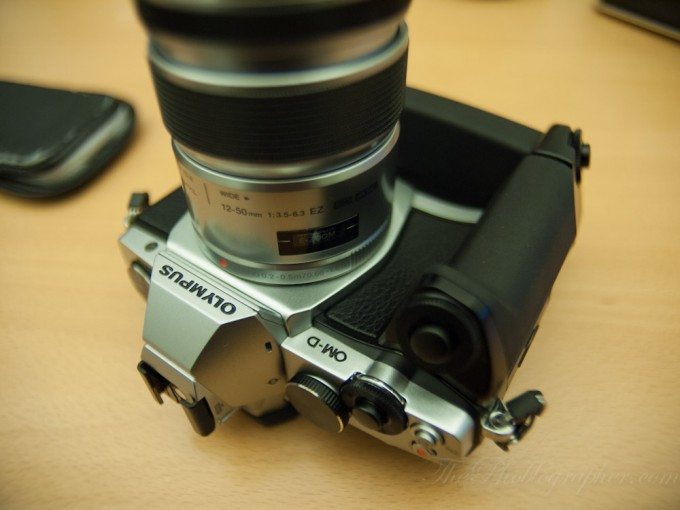
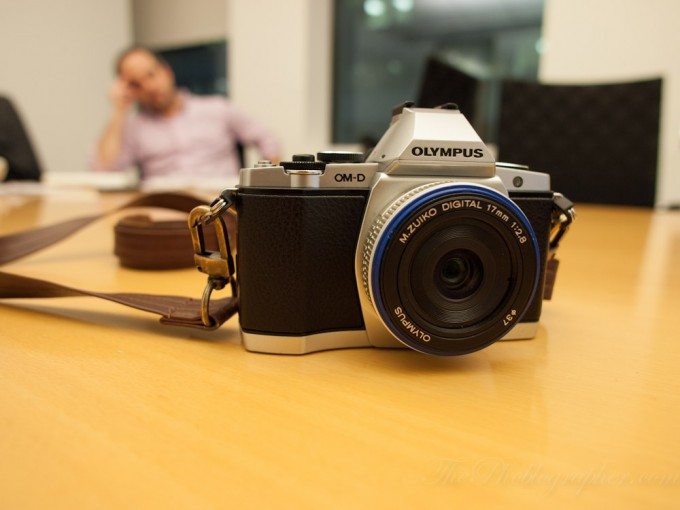
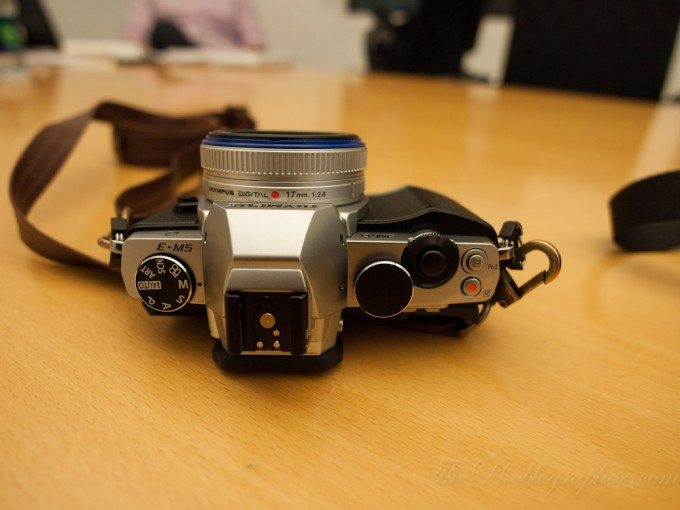
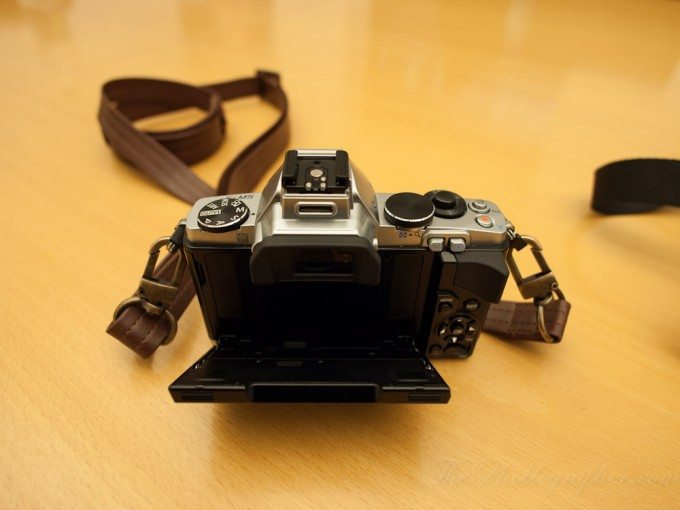
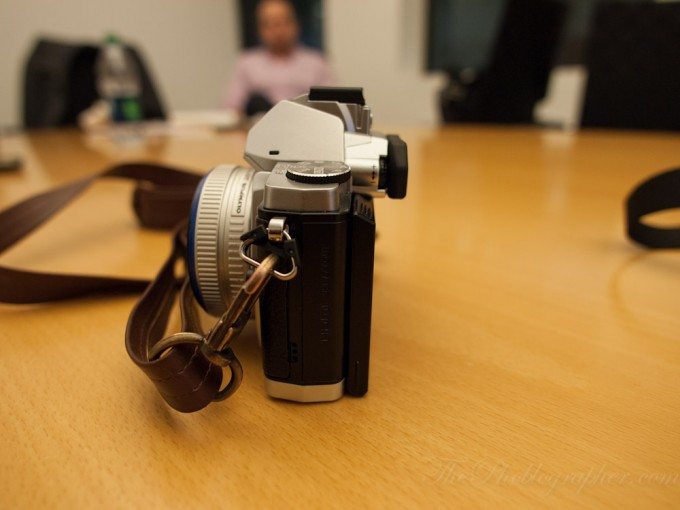
For what it’s worth, though, I still consider this camera to be an expensive toy of sorts – and you should undo any bad thoughts you’ve got in your head about that. What I mean by this is that it is a serious adjacent compact camera. Sure, you can switch the lenses out. But it’s really small and lightweight. It’s also really capable for personal photography. Because it boasts a Micro Four Thirds sensor, I wouldn’t necessarily use this for more professional grade work because my work requires a shallower depth of field at wider angles with autofocus. But as a play-time camera, I think that this could be one of the best out there. I thoroughly enjoy holding and using this camera over the Fujifilm X100vi – and that camera is a rangefinder-style option, which I’d prefer by default. But in this case, I’m really truly amazed at how good the hardware is with the OM System OM3.
Still, I wish that this camera had come to us in Pen-format.
Protect Your Camera Gear

For years, here at The Phoblographer we’ve done tests on cameras, lenses, bags, computers, lights, and more. And we know that your warranty doesn’t always cover the damage. Plus, accidents can happen on set.
This is why we’ve created a Photography Care Program in partnership with Full-Frame Insurance. Now, photographers across the United States looking for extra security can get various protections to cover their craft. The Photography Care Program provides peace of mind; now you’ll know you can bounce back from a photoshoot gone awry, on-site or inside. We’re making it super easy to get it done, too! Better yet, there is coverage outside of the US and Canada when the photographer is traveling for short periods of time for business.
We’re able to do this through our partnership with Full-Frame Insurance, a company specializing in Small Business Insurance. Are you a Freelance Photographer? We’ll cover you. What about a freelance multi-media journalist? We’ve got you. The Photography Care Program will protect you.
Transform your focus from worry to creativity with the Photography Care Program. Whether it’s a light stand tumbling down, a telephoto lens shattering, or an unforeseen mishap, you don’t have to face the financial burden alone. Experience the freedom to capture stunning shots, knowing you’re protected. Whether you’re an amateur or a professional, secure your peace of mind – and protect your photography gear – with our affordable Photography Care Program today.
Ease of Use
OM System is winning all kinds of awards here for the menu system. It is absolutely 100% right on par with Canon’s. And with memorization, you can get to anywhere you want with two taps on the screen. This is so incredibly simple and reminds us of the old-school Apple products like the iPod that let us get anywhere with two clicks of the wheel. After multiple times of needing to navigate and dig into the menus, we found the process to be super simple. And trust us, you’ll need to dig into the menus because there aren’t all that many custom buttons.
Even when friends held this camera, they were able to figure it out with a bit of guidance. However, one couldn’t figure out which button fired the shutter.
I remember being on a call with Fujifilm’s reps last year and asking why they’d let their latest cameras shoot vertical video without needing to switch the camera from landscape mode. And the rep basically dismissed my question as something frivolous. Lo and behold, OM System did it.
What I’m most surprised by, though, is perhaps the battery life. After shooting with this camera from 2pm to 8pm, it only had 75% battery life. This is positively incredible, considering that NYC was both rainy and cold. That tells me that the durability of this camera is truly top-notch.
Even better: there was virtually no camera shake.
Do you want to know what’s really awesome about the OM3? Vertical format shooting without needing to switch the camera away from Landscape orientation. I remember being on a call with Fujifilm’s reps last year and asking why they’d let their latest cameras shoot vertical video without needing to switch the camera from landscape mode. And the rep basically dismissed my question as something frivolous. Lo and behold, OM System did it. And it’s glorious. In every since way, the OM System OM3 is a better Fujifilm X100vi, and nearly every other camera that they’ve made in the past few years, than Fujifilm could make themselves. Shooting with the camera is such a relief even when your jacket is covered in snow from being outside and moving becomes a bit awkward when you’ve got layers on.
I really love the dial designated for switching from color film, to black and white, standard shooting, art filters, and custom color settings. With some muscle memory, you’ll know exactly where it needs to be at all times.
Focusing
Even in low lighting, the OM System OM3 didn’t have much a problem finding people when autofocusing. In my short time testing it, it probably missed the subject once – and that’s because they moved while I was shooting in Single Autofocus mode.
In 2024, the Phoblographer changed our rules for autofocus standards when testing cameras and lenses. In low light, the OM System OM3 could find a person of color with darker melanin in their skin when they weren’t moving around. But once that person started to move, it couldn’t track them moving towards the camera. This is rather unfortunate because when it comes to inclusivity, we have to take away a full star from the review for this issue.
For extra clarification, we were even set to scene detection mode with humans selected.
With my style of street photography testing using autofocus, the OM System OM3 doesn’t really totally do the trick – at least that’s what I saw in low light with C-AF on. My style requires me to walk by people as they pass me on the street. And often, I let the camera pick the autofocus point and have face/body/human detection on. Most full-frame cameras can do this very well. But in this case when shooting around 6th Ave at night, the OM3 couldn’t quite do the job. And by that, I mean that almost every single shot missed the target. But despite that happening, this camera continued to give me some of the most beautiful colors I’ve seen straight out of a camera in years.
To further clarify, I often shoot wide open with the 17mm f1.8 at f1.8 – which is around f3.6 in full frame terms. It also didn’t work so well in good lighting at 2pm in the afternoon.
However, there is also a setting called Preset MF – which is sort of like zone focusing but said in a totally different way. This is what you’d seemingly think is better for street photography, right? Well, yes. It’s actually pretty good as long as you keep in mind the proper zone focusing distance and have all the other settings in just the right place to make the pictures able to happen. If you shoot street photography in cities like NYC, you know that the light from one block can change drastically from the one another block away. So as long as you’re keeping your settings in a place to get the images you want, you’ll be alright. Luckily, when you’re using the color film simulations at high ISOs and raise the exposure compensation a bit in aperture priority, you get really stunning images.
And to my surprise, it works incredibly well. If you’ve ever used a Ricoh GR series camera, the OM System OM3 is it on steriods.
Image Quality
Honestly, I didn’t even bother shooting RAW format with the OM System OM3. There’s a five way control switch to change the image quality type that you get. And it’s best off to just shoot in JPEG with the film simulations along with the auto white balance set to keep the warm colors in the scene. And when I did that, the OM System OM3 became one of the most liberating cameras I’ve used in years.
But the JPEGs? Oh, my heavens! They’re positively beautiful when you’re embracing the color film and black and white format standards that the camera gives you. The colors are vivid, bright, punchy, saturated, and juicy. At the same time, the black and white looks are something that you’d dream of. I truly can’t find a fault with the JPEGs here as I even go ahead and embrace the image noise in the photos.
Extra Image Samples
The Phoblographer has been huge on transparency with our audience since day one. Nothing from this review is sponsored. Further, many folks will post reviews and show lots of editing in the photos. The problem then becomes that anyone and everyone can do the same thing. They’re not showing what the lens can do. So, we have a section in our Extra Image Samples area to show edited and unedited photos. From this, you can decide for yourself.
Unedited


Edited (Perspective Correction Only)


Tech Specs
| Sensor | 20.4 Megapixel 4/3 Stacked BSI Live MOS |
| Processor | TruePic™ X Dual Quad Core Processor |
| Image stabilisation | 5-Axis Image Stabilisation with up to 7.5 Shutter Speed Steps Compensation |
| Dust reduction | Super Sonic Wave Filter |
| Weatherproofing | Dust, Splash and Freezeproof (IP53 Rated) |
| Viewfinder | Eye-level OLED electronic viewfinder, approx. 2.36M dots |
| Rear monitor | 3.0-inch vari-angle monitor (electrostatic capacitance touch panel), Approx. 1620k dots (3:2) |
| Focusing system | High-speed imager AF: Imager phase detection AF and imager contrast AF used in combination |
| Focusing points | Cross-type phase detection AF (1,053 points) |
| AI Detection AF | Human, Formula cars, rally cars, motorcycles / Aircrafts, helicopters / Bullet trains, standard trains, steam locomotives / Birds / Dogs, cats |
| Creative features | Color dial available Color filter effect: None/8 colours (Red, Orange, Yellow, Yellow-Green, Green, Cyan, Blue, Magenta) with 3 steps Shading effect: 11 steps (-5 ~ +5) Film grain effect: Off/Low/Med/High Monochrome colour: Normal/Sepia/Blue/Purple/Green *Settings can be stored individually to MONO1/MONO2/MONO3/MONO4. Settings of High- light & Shadow Control can be stored as well. Color profile control: Saturation of 12 colours can be adjusted in 11 steps (-5 ~ +5) Shading effect: 11 steps (-5 ~ +5) *Settings can be stored individually to COLOR1/COLOR2/COLOR3/COLOR4. Settings of Highlight&Shadow Control can be stored as well |
| Sequential shooting | [Sequential shooting] approx. 6 fps with selectable 1-6 fps [Silent sequential shooting SH1] approx. 120 fps with selectable 30, 60, 100, 120 fps [Silent sequential shootingSH2] approx 50 fps with selectable 12.5, 16.7, 25, 50, fps |
| Weight | Body only: 413g |
| Dimensions | Approx. 139.3mm(W) x 88.9mm(H) x 45.8mm(D) *Based on CIPA standards: excludes protrusions |
Declaration of Journalistic Integrity
The Phoblographer is one of the last standing dedicated photography publications that speaks to both art and tech in our articles. We put declarations up front in our reviews to adhere to journalistic standards that several publications abide by. These help you understand a lot more about what we do:
- At the time of publishing this review, OM System is not an advertiser with the Phoblographer. However, our campaign focuses on showcasing art that photographers make with their products first and foremost. It has nothing to do with our reviews.
- We’re initially publishing this review with a pre-production unit. Later, we’ll update it with a production unit, which could even be updated as new firmware comes in.
- Note that our reviews are constantly works in progress. This review will be updated later on.
- This review, and none of the reviews on the Phoblographer, are sponsored. That’s against FTC laws and we adhere to them just the same way that newspapers, magazines, and corporate publications do.
- OM System loaned the OM System OM3 and accessories to the Phoblographer for review. There was no money exchange between OM System and the Phoblographer for this to happen. OM System (and OM Digital Solutions) and several other manufacturers trust the Phoblographer’s reviews, as they are incredibly blunt.
- OM System knows that they cannot influence the site’s reviews. If we don’t like something or if we have issues with it, we’ll let folks know.
- OM System sent the product to Phoblographer in NYC to loan the camera to us. Our home office is based in New York.
- The Phoblographer’s standards for reviewing products have become much stricter. After having the world’s largest database of real-world lens reviews, we choose not to review anything we don’t find innovative or unique, and in many cases, products that lack weather resistance. We’ve also steered away from Micro Four Thirds and APS-C as they’re dying formats. This is a conclusion that even the other members of TIPA agree on. Unless something is very unique, we probably won’t touch it.
- In recent years, brands have withheld NDA information from us or stopped working with us because they feel they cannot control our coverage. These days, many brands will not give products to the press unless they get favorable coverage. In other situations, we’ve stopped working with several brands for ethical issues. Either way, we report as honestly and rawly as humanity allows.
- At the time of publishing, the Phoblographer is the only photography publication that is a member of Adobe’s Content Authenticity Initiative. We champion human-made art and are frank with our audience. We are also the only photography publication that labels when an image is edited or not.
More can be found on our Disclaimers page.

Get rid of the ads!
Did you enjoy reading this article as much as we enjoyed writing it? There's a way to support us and our reporting, getting ad-free navigation and more as a bonus. Subscribe to us for less than a coffee per month —just $3.99— or take advantage of our yearly subscription with a hefty discount for only $25.- An ad-free experience
- A free mystery box for Lightroom or Capture One
- All the books in our store
- 20% discount on Capture One
- 30% discount on Imalume Photo Theft Protection
- 20% off Herbs and Kettle Tea Company.
- 20% off your order from MPIX printing services.
- 5% off Viltrox Products via their eCommerce store.
- 10% off all film developing, printing and scanning services from Blue Moon Camera and Machine
- 15% off 7Artisans products: The lens and accessory maker is offering a sweet discount for Phoblographer's readers.