


The consumer market has undergone tremendous changes since COVID-19, with many consumers now focusing on two ends of the camera market spectrum. There are high-end users with specific fast-paced cameras, and there are content creators, both in video and still, who want a decent device to meet their creation demands. One company that can juggle the two with some versatility is Sony, with their wide range of offerings. It is also why the company is consistently at the top in camera sales year after year. And now, in a new interview, Sony’s Fabrice Abuaf, senior product manager IP&S at Sony France, reveals how the company’s a9 III and APS-C offerings, such as the a6400, still hold value even today.
Sony A9 III was a Hit at The Paris Olympics
According to the interview, first reported by French publication PhotoTrend (Via DigiCame-Info), Abuaf spoke about a9 III’s remarkable capabilities. However, when one asked about the camera finding a desired audience, Abuaf said it can’t be quantified. “It’s always difficult to answer these kinds of questions. The a9 III is a pioneering camera,” he notes. However, he also added how the a9 III, with the first global shutter, works in their favor. “Technological disruptions are always very intense moments. Being in a new and different market takes time for things to change. We didn’t have specific expectations, but we do an evangelistic work, explaining the advantages of this new technology. And it’s paying off,” he states.
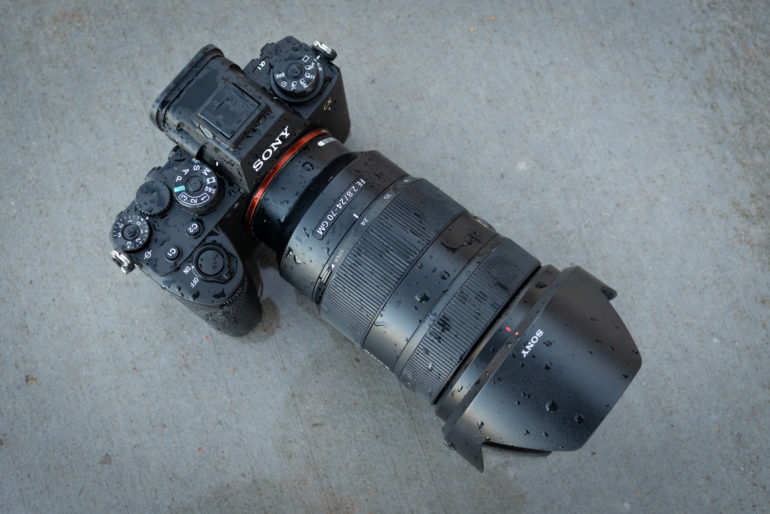
While speaking about this, he also highlighted how the device was loaned to several photographers. “In 2024, Sony had a great year in the professional photographer segment. So, we had an impressive number of equipment loans, with over 1,000 loans from Sony, a colossal figure,” he said. He also added that the strongest demand was for the Sony a1 and the Sony a9 III, which also helped them promote the new global shutter technology.
APS-C Market is Still Important
We said in the past that camera makers are no longer focusing on APS-C cameras, with many devices today having little to no differentiation. They have identical sensors, and there are barely any innovations. Furthermore, the a6700 was launched and released last year, and it barely made sense for Sony to have a camera with these specs out so late in the game. While it seems everyone is abandoning APS-C, Abuaf says that isn’t the case. “Although the full-frame range is now more developed with more new features, the APS-C range is not left behind,” he states. He further believes that in addition to the a6700, the older a6400 “remains a very powerful option, with its autofocus on the eyes and face.”

Considering that some older full-frame cameras make more sense to buy than the new APS-C, there is a demand for them. For instance, cameras like the Canon EOS R10, Canon EOS R50, Nikon Z 30, and Sony a7C II sold well in recent months. So, despite the lack of innovation, some consumers purchase them because they are better options than a phone. Perhaps it’s also the reason why Sony should rework its strategy and cater to people who don’t have niche requirements.
Sony Must Focus on Compact Cameras
The Fujifilm X100 VI and Pentax GR III are some successful examples of smaller cameras that have gained momentum in recent years. As Sony RX1R Mark II celebrates its 10th year anniversary in 2025, and seeing how the trend continues, it is perhaps not too late for Sony to launch a new successor to its famed camera. Although Abuaf said that the market for compact cameras is “dynamic” and users have already given the feedback to engineers at Sony, there is still no word on whether the company will actually work on it.
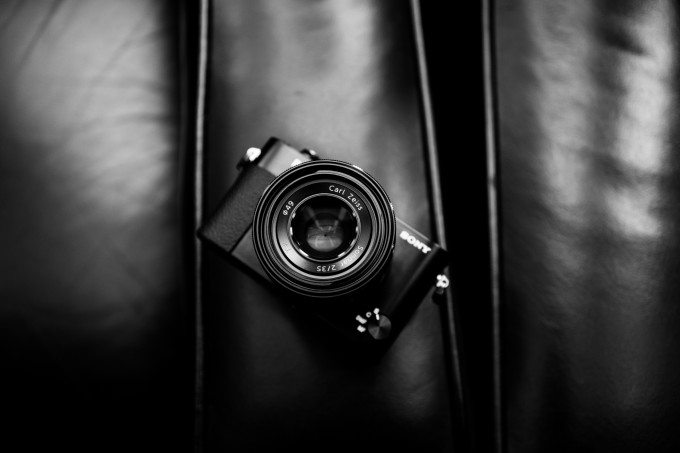
From its looks, Sony is pretty sure of which direction it is taking. While they are pretty confident in their products, as they should be, there is also a whole new segment that the company can easily dominate. Whether they take this opportunity up or not remains to be seen. But, we, for once, they better do.
Get rid of the ads!
Did you enjoy reading this article as much as we enjoyed writing it? There's a way to support us and our reporting, getting ad-free navigation and more as a bonus. Subscribe to us for less than a coffee per month —just $3.99— or take advantage of our yearly subscription with a hefty discount for only $25.- An ad-free experience
- A free mystery box for Lightroom or Capture One
- All the books in our store
- 20% discount on Capture One
- 30% discount on Imalume Photo Theft Protection
- 20% off Herbs and Kettle Tea Company.
- 20% off your order from MPIX printing services.
- 5% off Viltrox Products via their eCommerce store.
- 10% off all film developing, printing and scanning services from Blue Moon Camera and Machine
- 15% off 7Artisans products: The lens and accessory maker is offering a sweet discount for Phoblographer's readers.
- 15% off a VSCO One subscription: Get a bunch of great tools with their all-in-one package.