


Last Updated on 11/12/2024 by Hillary Grigonis
Astrophotography is one of the more challenging genres to master. But, while you’ll need a good lens, you don’t necessarily need the most expensive lens. Why? Autofocus doesn’t work on the night sky (though some OM System cameras have this feature). If you skip the autofocus motor, you can pick up a wide and bright lens for the night sky for only a few hundred dollars. That’s right, the best lenses for astrophotography don’t have to cost thousands of dollars.
While you don’t need an autofocus motor for astrophotography, many photographers want a lens that can not just do astrophotography, but other genres too. For that reason, we’re including a range of lenses below, from affordable astrophotography lenses to autofocus workhorses that can shoot astro as well as other genres.
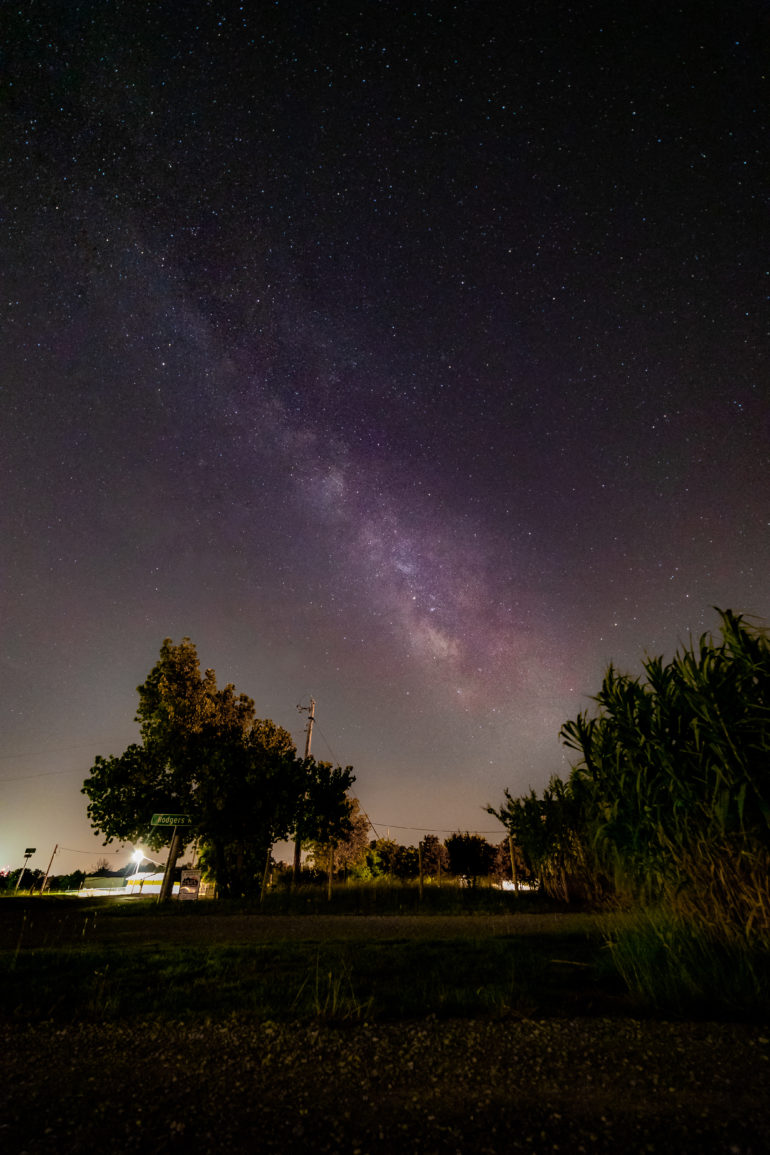
Listed below are some wide-aperture lenses that can really aid in helping to create gorgeous night sky shots. The faster the lens the better; you will need to be able to capture a lot of light from the stars which are millions of miles away. The good news is you don’t need to spend a fortune to get great lenses. We have listed lenses from several price brackets to help you make your decision. And if you are new to astrophotography, you’ll want to check out our astrophotography guide as well as our guide to photographing the northern lights.
Table of Contents
Why You Should Trust Us

The Phoblographer has been doing real-world photography gear tests longer than any other photography publication currently run. We also have the largest database of real-world lens reviews, amongst other things like straps, camera bags, lights, accessories, and more. Here’s why that matters:
- AI Can’t Do This Job: These days, other publications do roundups, sometimes using generative AI. That’s the same as a person researching products and then making a decision without actually trying it. All of our reviews and guides are written not just by humans but by working photographers — not AI. Computers don’t use cameras, so why would you trust AI to recommend cameras for you?
- Research and Practical Experience: Here at the Phoblographer, humans consult on what roundups to do with guidance from an editor. Then, a human goes through our database of reviews and selects the best products based on our own internal research. The human creating the roundup has practical experience with photography gear and will apply their knowledge of what’s best to the already human-based experience provided in our reviews.
- We Block AI Bots: The Phoblographer blocks indexing bots from reading our site, so what’s here can only be read here.
How we Test and Choose the Best Lenses for Astrophotography
- The Phoblographer’s various product round-up features are done in-house. Our philosophy is simple: you wouldn’t get a Wagyu beef steak review from a lifelong vegetarian. And you wouldn’t get photography advice from someone who doesn’t touch the product. We only recommend gear we’ve fully reviewed in these roundups.
- If you’re wondering why your favorite product didn’t make the cut, there’s a chance it’s on another list. If we haven’t reviewed it, we won’t recommend it. This method keeps our lists packed with industry-leading knowledge. Some of our stories include affiliate links. If you buy something through one of these links, we may earn an affiliate commission.
- When we test lenses, we’ve got various things in mind. First off, we consider who might want to buy the lens and what they might do with it. With that in mind, we try to tackle at least three genres of photography with that lens in a variety of situations. If the lens has weather resistance, then we’ll test it accordingly with a weather-resistant camera. We also test the autofocus of the lens in continuous mode, single mode, with exposure preview effects, without those effects, and then with all the major image quality parameters. These days, no one really makes a bad lens — but some are far better than others.
- In this specific roundup, we’re basing our findings on the reviews that we’ve done. We’re choosing a favorite, but we’re also giving photographers a bunch of others that they might like, depending on how they shoot.
Sigma 14mm f1.4 Art
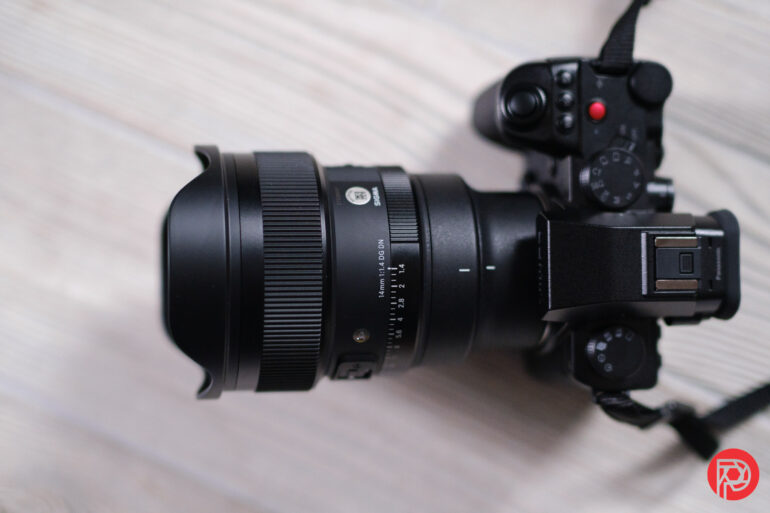
Here are the pros and cons from our Sigma 14mm f1.4 Art review:
PROS
- Bright f1.4 aperture
- Lots of physical controls
- Aperture ring with click or de-click
- Focus lock for astrophotography
- Weather-sealed
- Beautiful, streaky lens flare
- Incredibly fun ultra-wide perspective
- Minimal barrel distortion and chromatic aberration
- Soft, round bokeh
- One foot minimum focus distance
CONS
- Autofocus has some struggles with action
- Very heavy
- Images have soft edges
Buy now for L-Mount: $1,599
Astrhori 12mm f2.8 Fisheye
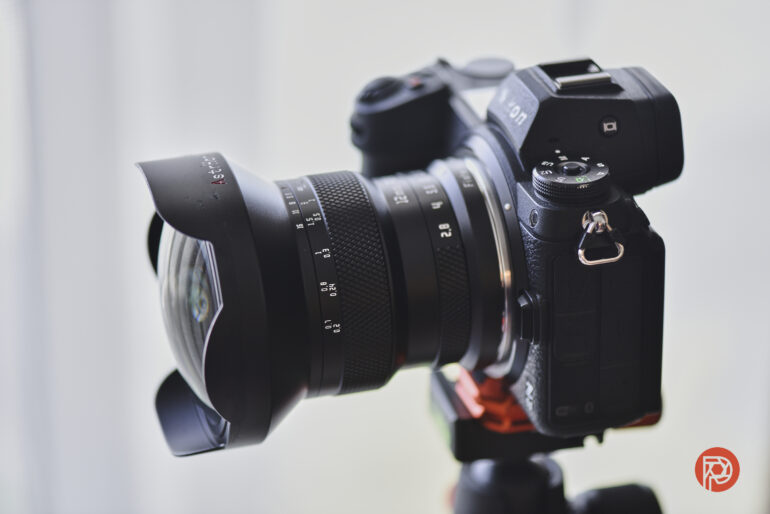
In our Astrhori 12mm f2.8 Fisheye review, we noted these pros and cons:
PROS
- Sharp images even wide open at f2.8
- 20cm/7 ⁷/₈in close focusing distance
- All metal lens barrels and metal lens mount, weighing around 757g/1.67lb
- Multi-layer front lens element coating to suppress ghosting and flares
- Clicked aperture ring and very smooth manual focus ring
- Sells for $256
CONS
- The glue on the padding of the inside lens cap transfers onto the lens very often, resulting in a sticky lens.
- No electronic contacts on the mounts means no EXIF data enters your image file.
Buy now Nikon Z: $224
Buy now L-Mount: $224
Sony 16-35mm f2.8 GM II

In our Sony 16-35mm f2.8 review, we noted these pros and cons:
PROS
- Lightweight and compact
- A new aperture ring with declick!
- Nice and sharp
- Bokeh is round and doesn’t take on much cat-eye shape towards the edges
- Focuses as close as .7 feet
- Autofocus has decent speed and is pretty quiet
- Great image quality that’s pretty consistent with other GM series lenses
- Minimal, if non-existent, distortion, aberration, and vignetting
- Stabilized
- Weather-sealed
CONS
- Occasional soap bubbling to the bokeh
- Flare is heavily suppressed
- The lighter build doesn’t feel quite as nice
Buy now: $2,299
Viltrox AF16mm f1.8 (Sony E-Mount)

In our Viltrox AF16mm f1.8 review, we said:
PROS
- Exceptional sharpness, even at f1.8 (yes you read that right. It’s f1.8, not f2.8)
- Super-useful LCD screen on the top that also acts as a distance scale
- Surprisingly low minimum focal distance of 27cm(10 5/8 in).
- Aperture ring with de-click option
- Really quick autofocus
- Weather sealed
- Only USD 549
- Just 550g (19.4 oz) in weight
- USB-C port allows firmware updates in the future
- Two programmable FN (function) buttons
- Non-bulbous front element allows you to use 77mm screw-on filters.
CONS
- Currently only available for Sony FE mount. I hope this is released for other mounts ASAP.
- I wish the lens hood wasn’t made of plastic. It doesn’t go with the premium feel of the lens body.
Buy now: $580
Laowa 28mm f1.2

In our Laowa 28mm f1.2 review, we noted these pros and cons:
PROS
- Metal body
- Clicked or de-clicked aperture option
- f1.2 aperture
- Beautiful lens character
- Depth of field scale that works effectively enough
- The lens flare of the Laowa 28mm f1.2 is a stunning beauty equivalent to the golden sunset we all wish to stare at on our days off.
- Small sized
- It’s $599
CONS
- I wish that this had focusing and exposure contacts
- Laowa refuses to add full weather resistance to its lenses. And it’s killing me at this point; because if they only did this, they’d have an automatic buyer in me.
- Minimum focusing distance that I’d expect of a rangefinder lens.
Buy now: Amazon
Tamron 20mm F2.8 Di III OSD
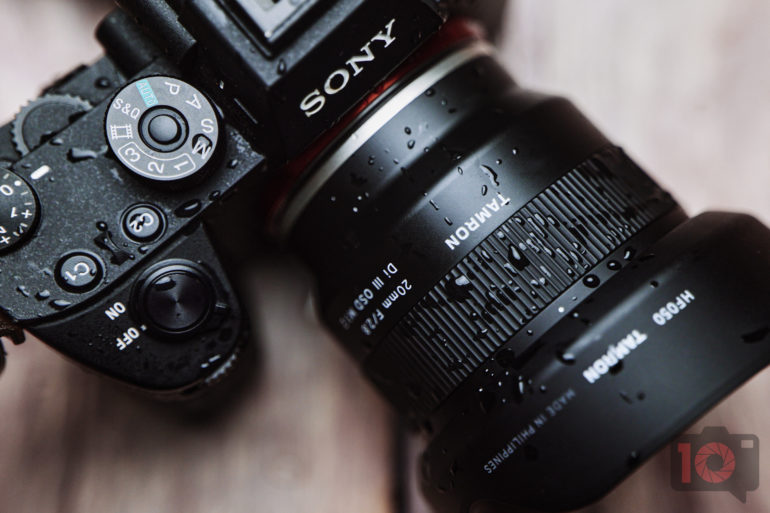
Here are the pros and cons from our full review:
Pros
- Well built
- Affordable
- Nice colors
- Tamron is embracing Mirrorless with a small and lightweight offering.
- Weather-sealed very well; it survived a few hours in the rain.
- Autofocuses quickly
- Priced at only $349
Cons
- This is one of the most heavily distorted lenses we’ve tested in a while. You can use that to your advantage, or you can correct it in post
Buy now: $349
Canon RF 35mm F1.8 USM IS
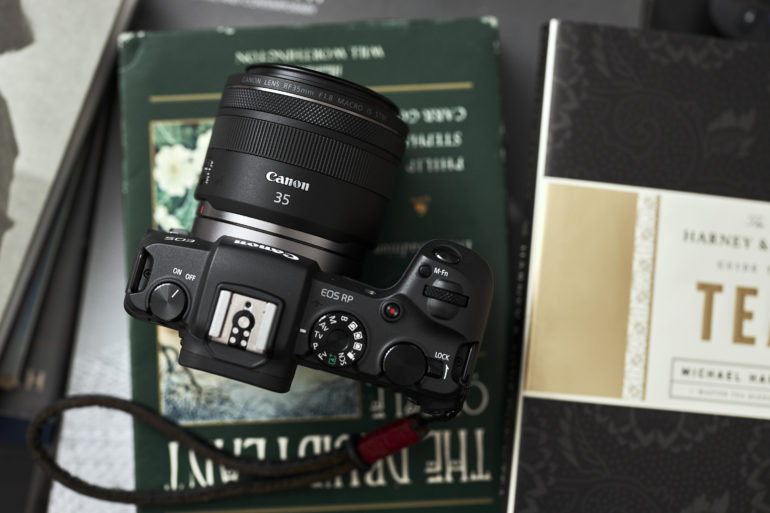
Here are the pros and cons from our full review:
Pros
- Small
- Lightweight
- Fairly fast to focus
- It’s a lens designed to always be on your camera.
- Image stabilization (very much needed in the system)
- Gorgeous bokeh
- Sharp enough for most uses but not as sharp as most L glass we’ve seen and used. Still, it’s a shocker.
Cons
- We would have gladly paid more money weather sealing.
Buy now: $499
IRIX 15mm F2.4 FireFly
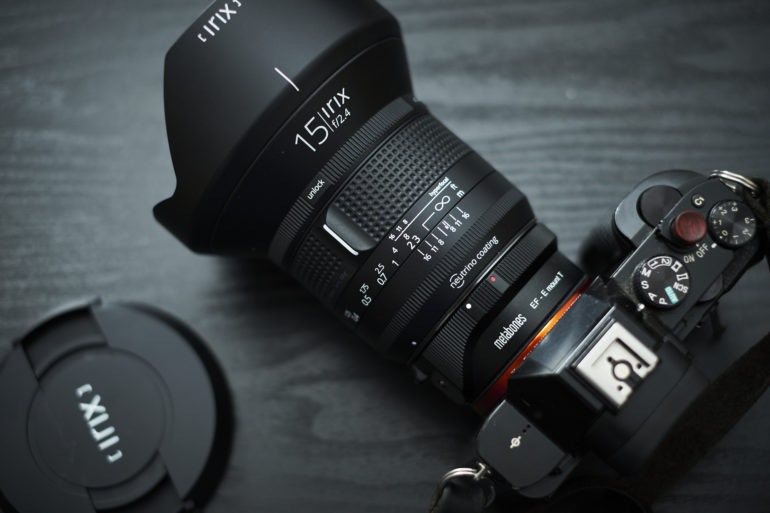
Here are the pros and cons from our full review:
Pros
- Weather sealing
- Fairly lightweight
- Accurate focusing depth of field markers
- Sharp optics
- Innovative features like the ability to lock the focus with a separate ring
Cons
- Focusing communication with a Sony FE camera via a Metabones adapter wasn’t the absolute best.
Buy now Canon EF: $375
Buy now Nikon F: $375
Buy now Pentax: $375
Rokinon 14mm F2.8 AF
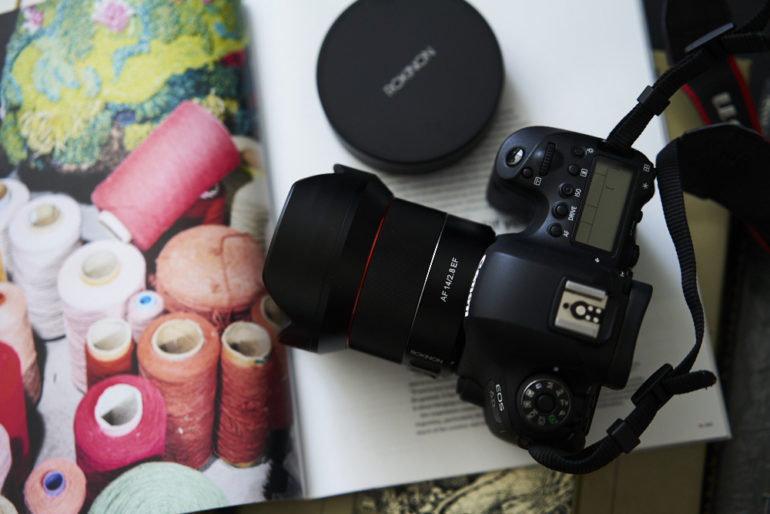
Here are the pros and cons from our full review:
Pros
- Sharp output
- Accurate autofocus in most situations
- The clear, crisp color that we’ve come to expect from Rokinon
- Bokeh when needed
- Weather sealing
Cons
- A few inconsistencies with the focus
Buy now Canon EF: $599
Buy now Nikon F: $599
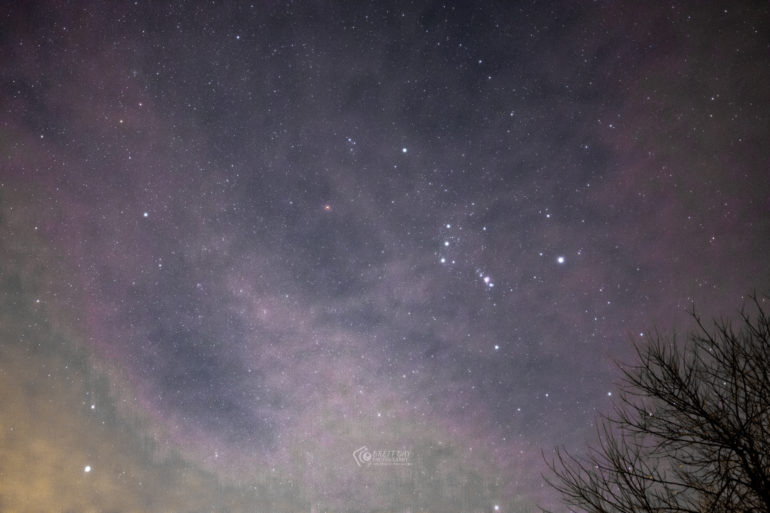
Pro Tip: If you really want to get the most out of your camera and lenses when it comes to astrophotography, invest in a star tracker. Due to Earth’s rotation, you can shoot only relatively short exposures before you get star trails. A star tracker will enable you to shoot for minutes at a time without star trails. Star Trackers will also allow you to shoot at lower ISOs, which in turn will result in cleaner images. I use the Star Adventurer pro, but any star tracker will do the job.
Venus Optics Laowa 9mm F2.8
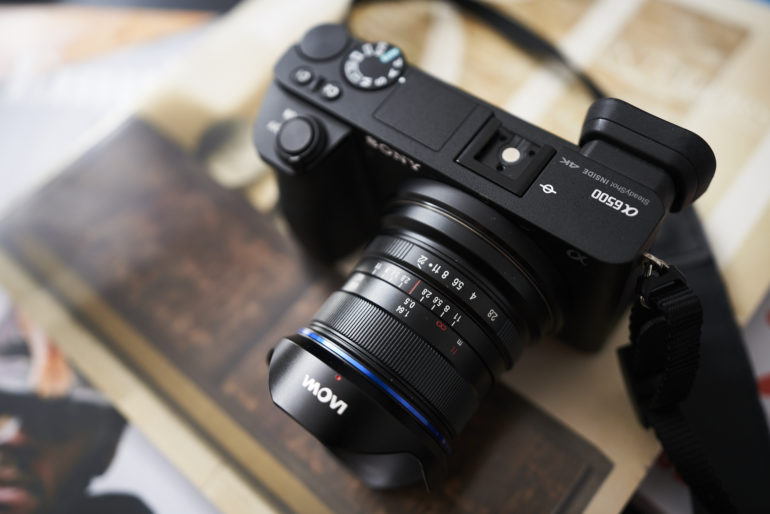
Here are the pros and cons from our full review:
Pros
- Decent image quality
- Sharp
- Keeps the distortion down a whole lot
- With a lens like this, you’re either focusing up close and personal or far away; there is no in-between.
Cons
- The colors are just adequate.
- Distortion around the corners is a bit annoying.
Buy now Canon M: $499
Buy now Fujifilm X: $499
Buy now M4/3: $499
Sigma 16mm F1.4 DC DN Contemporary
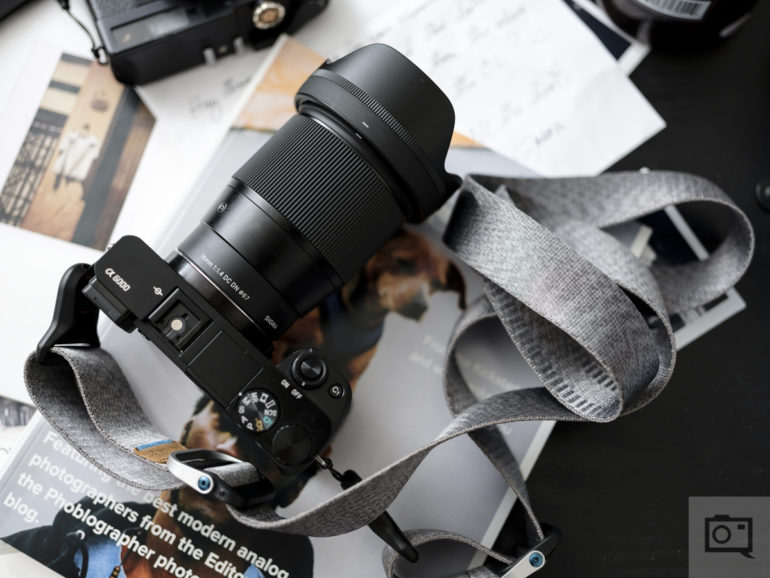
Here are the pros and cons from our full review:
Pros
- Fast aperture
- Weather sealing to a point
- Fast autofocus performance for the most part
- Nice bokeh
- Sharp, surprisingly sharp
Cons
- To be honest, nothing
Buy now Canon M: $399
Buy now: M4/3: $398.99
Buy now Sony E (APS-C): $363.99
Fujifilm 16mm F1.4 R WR
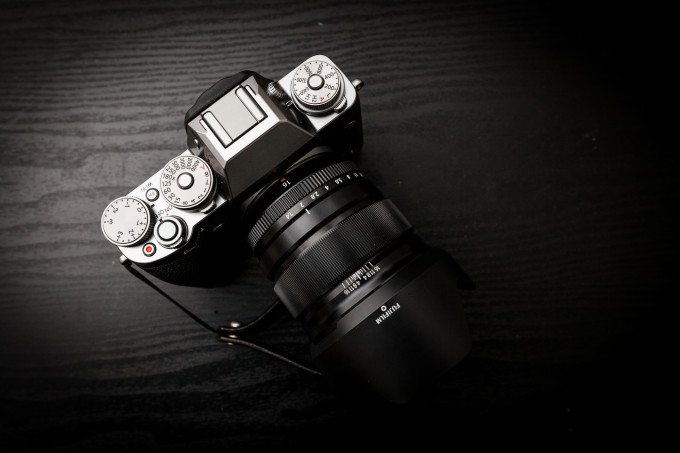
Here are the pros and cons from our full review:
Pros
- Very sharp wide open
- Very sharp overall
- The excellent metal build quality
- The focusing ring allows for zone focusing
- Pretty decent bokeh for a lens of this type, despite having nine aperture blades
- Fast-focusing performance
- Weather sealed construction
- Keeps distortion down pretty well
Cons
- Depth of field scale could have given us more focusing markers
- More purple fringing than a modern lens should have despite it easily being removed in post-production
Buy now: $999
Sony 24mm F1.4 G Master
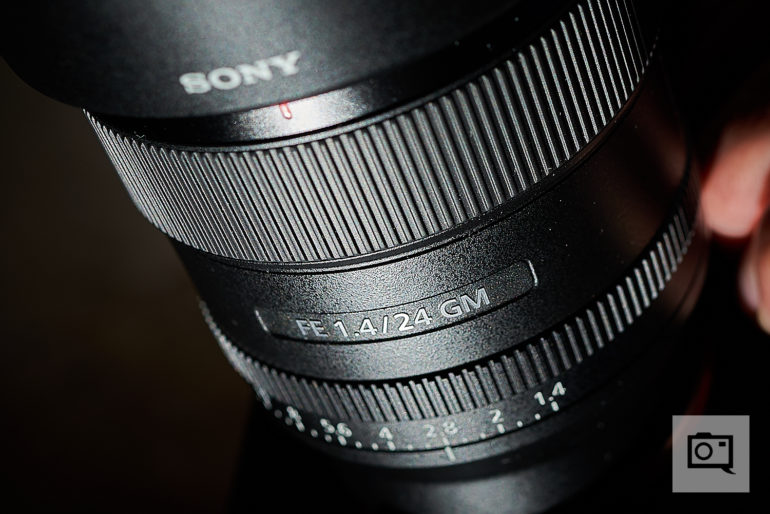
Here are the pros and cons from our full review:
Pros
- Compact and lightweight
- Weather sealed
- Superb image quality
- Outstanding edge to edge sharpness, even when shooting wide open
- Dreamy, circular bokeh
- Impressive minimal focus distance of 0.79 feet (0.24 meters)
Cons
- Slight color fringing (easily mitigated in post-processing)
Buy now: $1,398
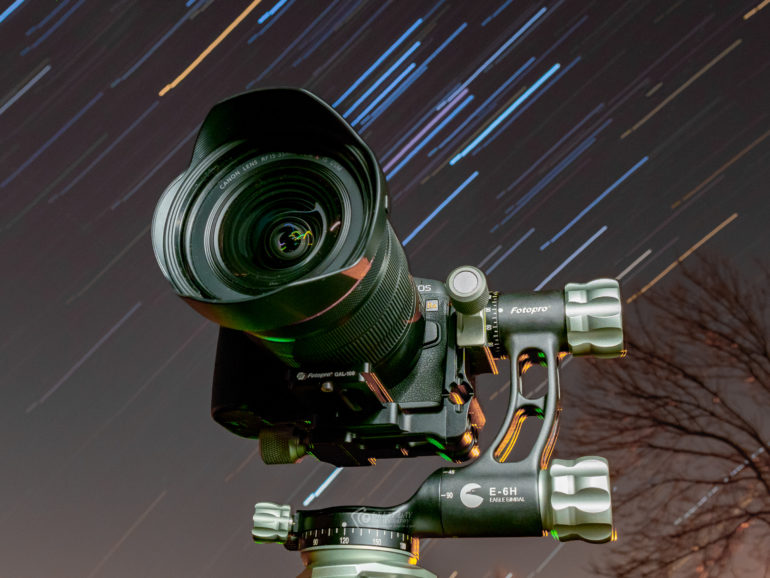
Pro Tip: One thing for sure is that you are going to need a few items to be successful at astrophotography. First, you’re going to need a strong tripod so that you can get the longer exposures that are needed. Not sure which one to buy? Check our review section for tripod reviews. Secondly, we highly recommend a dedicated Intervalometer so that you can set up your camera to take multiple exposures. With an Intervalometer and a tripod, you’ll be able to set it and forget while your camera and lens do their thing.
Sigma 18-35mm F1.8

Here are the pros and cons from our full review:
Pros
- Damned good build quality
- Super sharp wide open
- The fact that its got wide to normal focal length range at a constant f1.8 blows our minds
- Fast to focus
- Perhaps the absolute best concert or astrophotography lens that anyone can get their hands on for APS-C
Cons
- APS-C only; but that isn’t really a con. Sure, everyone wants a full-frame version.
- Positively nothing else
Buy now Canon EF: $599.43
Buy now Nikon F: $577
Canon RF 15-35mm F2.8 L IS USM
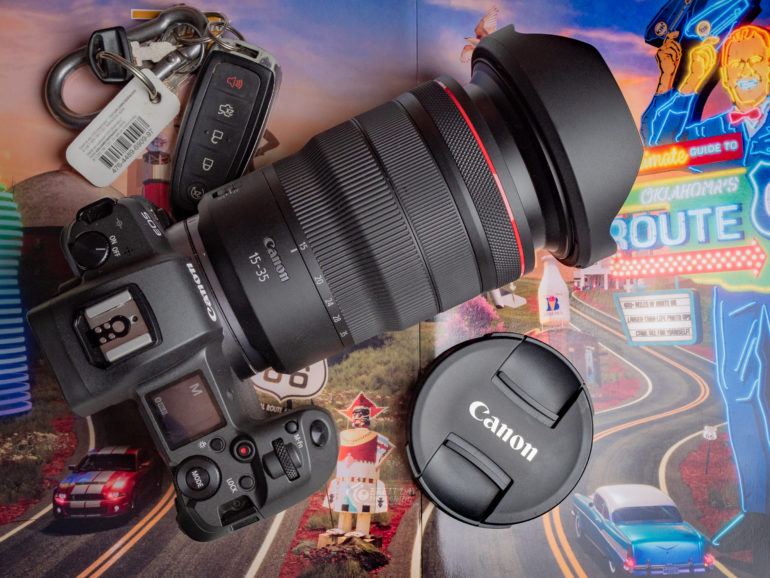
Here are the pros and cons from our full review:
Pros
- Image stabilization of five stops that works really well
- Plenty of weather sealing
- Wonderful overall build quality
- Focuses very quickly
- Images are ridiculously sharp
- Great color reproduction
- Silky smooth manual focus ring
Cons
- A fair amount of vignetting wide open at f2.8 and set to 15mm
- A little more distortion than we would like to see, but easily fixed during post
- The zoom ring is perhaps just a little too stiff.
- The price is up there with other RF mount glass ($2,299).
- While the build quality is great, the plastic does feel a little cheap.
- No gap between the zoom and focusing rings means you’ll turn the wrong one often.
Buy now: $2,299
Olympus 7-14mm F2.8 PRO
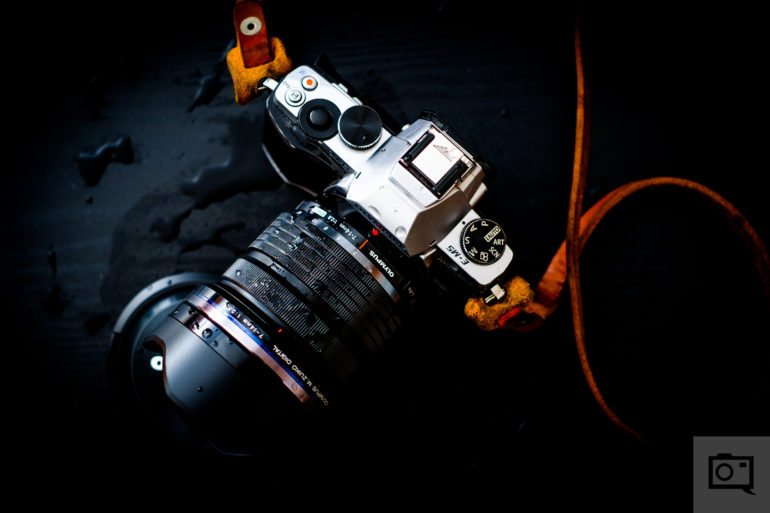
Here are the pros and cons from our full review:
Pros
- Very sharp
- Relatively low distortion
- The small form factor that will make this lens almost permanently attached to your camera.
- f2.8 is awesome for light-gathering abilities.
- Fast-focusing
- Weather sealing
- Super wide landscapes and buildings at one end while street photography ready at the other end
Cons
- Bulbous front element is easily affected by the rain or any other sort of precipitation that you take this lens into
Buy now: $1,199
Tips on Choosing the Best Astrophotography Lens
- Look for a lens with a wide aperture. This will help you photograph the stars with a lower ISO, which in turn will help the stars stand out.
- A wide focal length will help show off the night sky with the surrounding landscape. Yes, you can photograph the stars with a longer lens, but in general, you’ll want an ultra-wide angle.
- You don’t need an autofocus motor to photograph the stars, since you’ll be shooting in manual focus mode anyway. If you are looking for a lens just for photographing the stars, you can save some money by picking up a manual focus lens. But if you want a more versatile lens to also use in other genres, you may want something with autofocus.
- Don’t forget the tripod. A tripod is still a must for getting sharp photos of the stars, so be sure to factor one into your budget.
Picking the right Astrophotography Lens for you
- What’s your budget?
- How will you use the product?
- What lighting situations are you in, and how will that affect what you’re doing? Our reviews hyperlinked in this article can help with that.
- Are you traveling a lot with it?
- Will you be using it in a situation that’s a bit rougher?
- Who else uses this product? How are they using it?
- What’s so appealing about this product that I can’t get from what I have already or something else?
- When will I really have time to use this product?
- Where will I bring this product?
- How will this product help bring me joy and joy in my photography?
Get rid of the ads!
Did you enjoy reading this article as much as we enjoyed writing it? There's a way to support us and our reporting, getting ad-free navigation and more as a bonus. Subscribe to us for less than a coffee per month —just $3.99— or take advantage of our yearly subscription with a hefty discount for only $25.- An ad-free experience
- A free mystery box for Lightroom or Capture One
- All the books in our store
- 20% discount on Capture One
- 30% discount on Imalume Photo Theft Protection
- 20% off Herbs and Kettle Tea Company.
- 20% off your order from MPIX printing services.
- 5% off Viltrox Products via their eCommerce store.
- 10% off all film developing, printing and scanning services from Blue Moon Camera and Machine
- 15% off 7Artisans products: The lens and accessory maker is offering a sweet discount for Phoblographer's readers.