


When Sony introduced its mirrorless camera back in 2012, the industry wondered why they would leave behind a highly successful market. The company foresaw the future before anyone and they continue to reap its rewards even today. However, while its mirrorless segment is doing much better than most, it appears that the company may shift gears again. This time, with a medium format. Have a look.
Additional insight was provided by Chris Gampat.
In a report from Sony Alpha Rumors, it was revealed that Sony may announce a new 65mm format image sensor to launch Rialto 65. The sensor is reported to measure 53.75mm wide and 35.83mm tall, with a diagonal size of 64.60mm — almost the 645 medium format film aspect. It is also said to have 2.2 times the light-receiving area of a full-frame sensor.
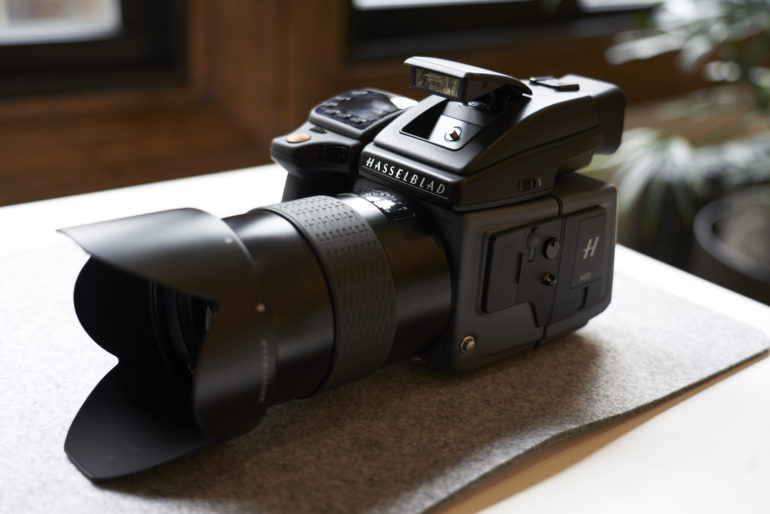
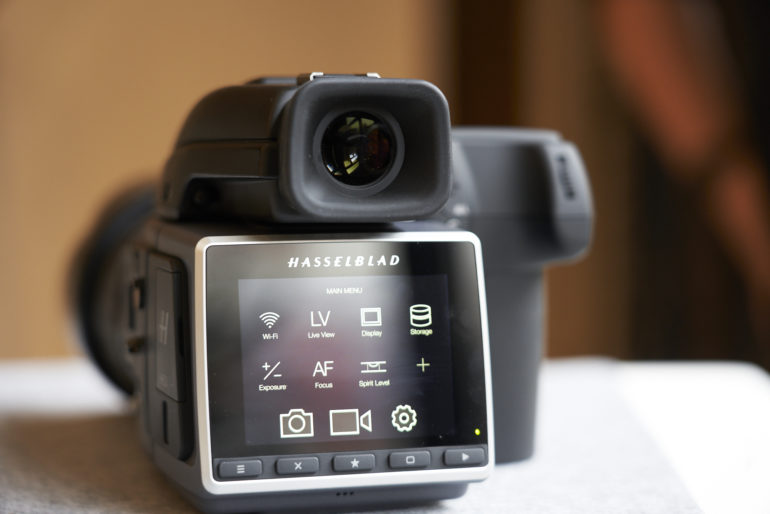
In fact, that’s around the size of the Hasselblad H6D-400 Multi-shot camera that we used back in 2018. To that end, it’s far bigger than even Fujifilm’s Eterna Cinema camera.
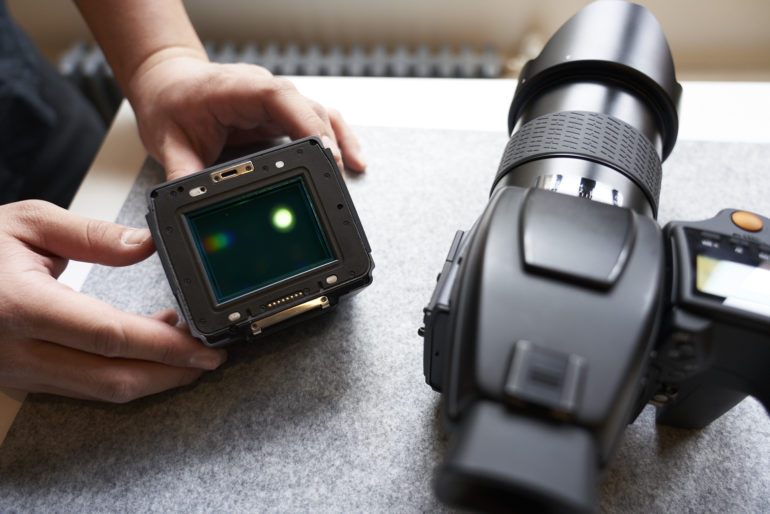
According to the report, an anonymous source reveals that the company has been discussing “an entirely new medium-format line with a new lens mount and ultra-high MP sensor (100MP+), potentially a couple of years away.” However, the twist here is not just this news, but also a lens compatibility, one where full frame lenses will work like an APS-C on a full frame camera. This also means offering an 88MP crop mode. The company is also said to work with a 3:2 aspect ratio rather than a 4:3 one.
Since Sony is already working on a 247MP medium format sensor, there is also a possibility that something similar with a “back-side illuminated chip capable of 5fps speed” may trickle down. However, as it is with such reports, one has to take them with a pinch of salt.
Since the release of this article, photographers have showcased a mixed reaction. Some are quite skeptical that this news a reinterpretation of the Rialto 65 announcement itself, a camera that is designed for cinema use, instead of stills. Others argue that Sony is simply better off building a 100MP full-frame sensor using LOFIC technology rather than building an entirely new ecosystem.
There are also observations that a medium format stills market is genuinely difficult since Hasselblad, Phase One and Fujifilm are already attracting buyers. In an environment where research and development cost a lot, Sony’s best bet would be to improve and create new breakthroughs like they did with the a1 II and the a9 III. The a1 II uses an AI chip, while the a9 III builds the first ever global shutter in a photo-centric camera. Each of these models truly excelled, and the next Sony offering, especially since they develop new sensors, can further help enhance image quality and user experience.
Is a Sony Medium Format Camera Really Coming?
Believe it or not, Japanese camera manufacturers are creatures of habit. I mean, look at Canon: they barely try until they realize that they’re going to lose market-share. Sony, similarly, often invokes other ideas that they’ve had in the past too. In this case, we think that history is repeating itself.
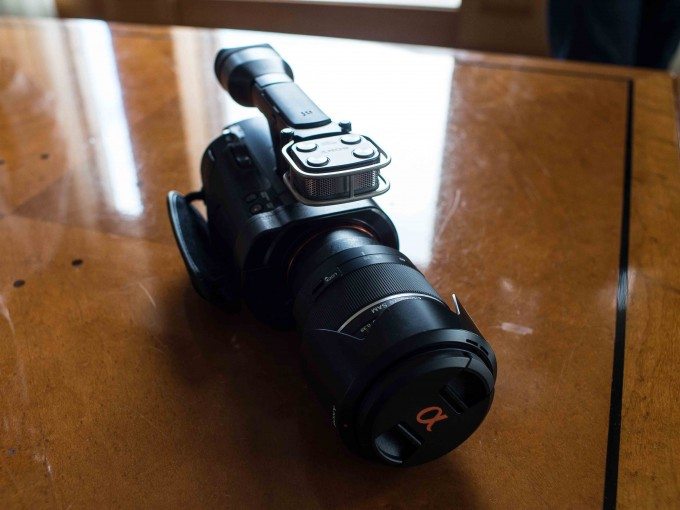
In 2012, Sony launched the VG900. This was an NEX E-mount camcorder and also Sony’s first full-frame interchangeable lens mirrorless camera. While we got to test and play with it, we didn’t do a more thorough review because Phoblographer is and always has been a site dedicated to still-photography. However, we noted that later on, the company launched their full-frame mirrorless cameras for stills.
Sure enough, in 2013, Sony introduced the Sony a7 original and the Sony a7r original. If Sony is repeating what they did in the past, then that indeed means that a medium format camera for stills is on the way for us. And with the way things are going, we may get it next year or we may get it if the US Presidency changes and stabilizes the world’s economy a bit more.
This is a very smart move for Sony. As it is, they’re already making the sensors for a ton of camera manufacturers. But that’s been changing. Leica has moved away from them more and more and even announced a partnership with GPixel. Nikon sometimes uses TowerJazz instead of Sony. Canon makes their own sensors for the most part; but has famously not said where some sensors come from. Panasonic typically uses Sony but the major curiosity is still the original LUMIX S1R. Fujifilm uses Sony in a custom-made design. So does Hasselblad. And OM System also uses Sony and has for well over a decade. But it’s resulted in too much of the same image output and more demands from people to have variety. I’ve been one of the journalists saying this for a very long time. Perhaps this is Sony’s way of differentiating itself because it doesn’t want to give up its sensor-production cash-cow.
Get rid of the ads!
Did you enjoy reading this article as much as we enjoyed writing it? There's a way to support us and our reporting, getting ad-free navigation and more as a bonus. Subscribe to us for less than a coffee per month —just $3.99— or take advantage of our yearly subscription with a hefty discount for only $25.- An ad-free experience
- A free mystery box for Lightroom or Capture One
- All the books in our store
- 20% discount on Capture One
- 30% discount on Imalume Photo Theft Protection
- 20% off Herbs and Kettle Tea Company.
- 20% off your order from MPIX printing services.
- 5% off Viltrox Products via their eCommerce store.
- 10% off all film developing, printing and scanning services from Blue Moon Camera and Machine
- 15% off 7Artisans products: The lens and accessory maker is offering a sweet discount for Phoblographer's readers.