

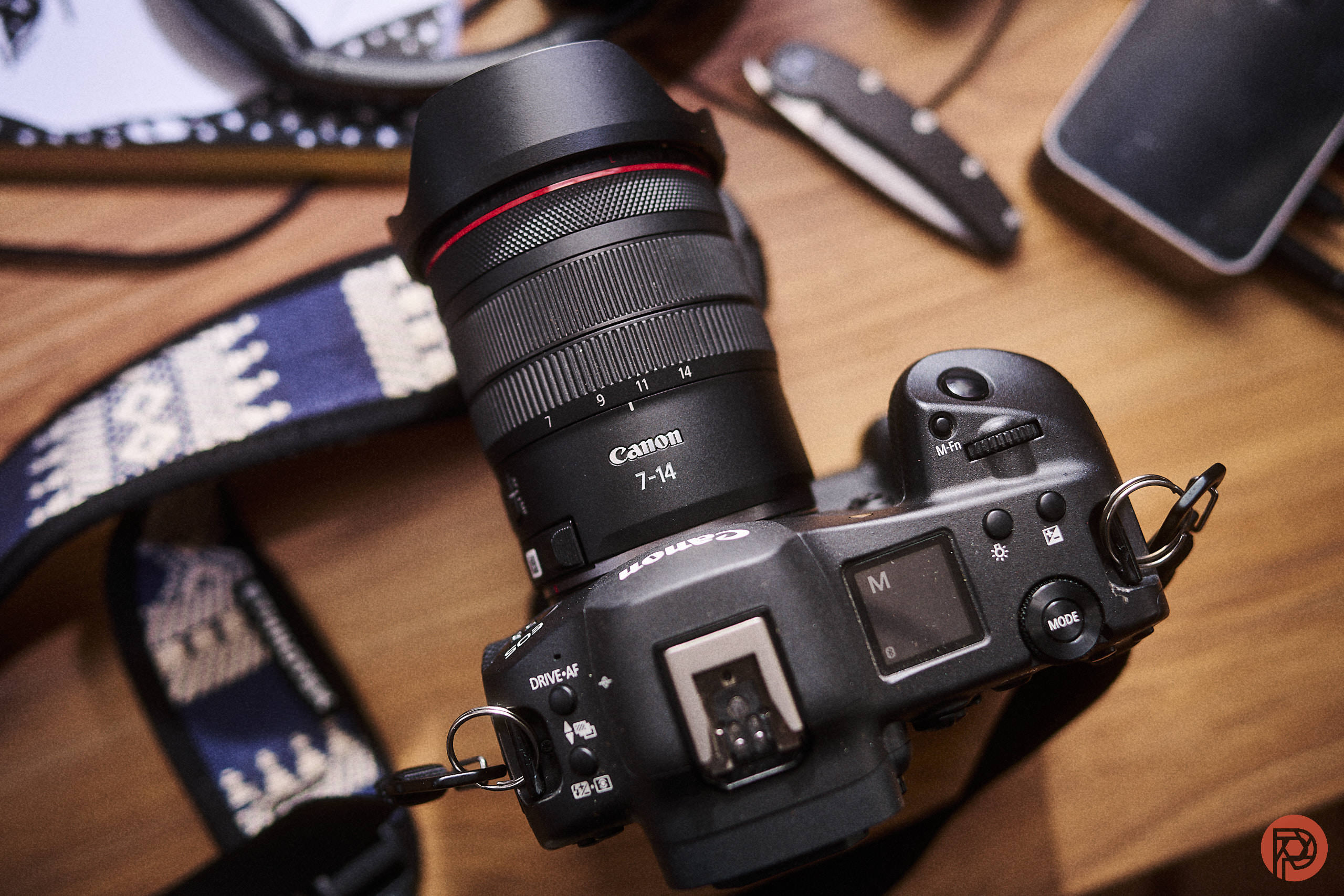
If you’ve been wanting the return of a fisheye lens for Canon, then the Canon RF 7-14mm f2.8-3.5 L is really the best option that you’ve got. If you’re here and clicked this review, then you know exactly what you’re here for. Thankfully, after long requests, they’re a growing category again.
Table of Contents
The Big Picture: Canon RF 7-14mm f2.8-3.5 L Review Conclusions
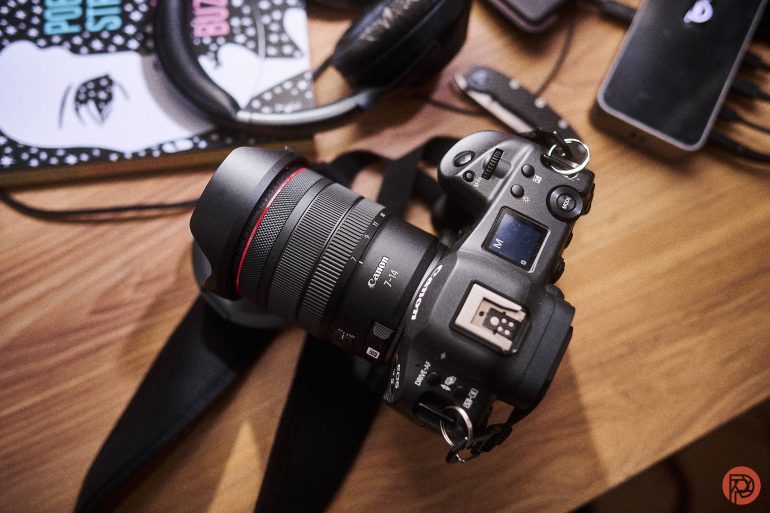
This…this is the type of work from Canon that I LOVE to see. Not only did Canon bring back their wonderful 8-15mm fisheye, but they changed it in some ways. It’s wider, has a special slot for a lens filter, can autofocus really quickly, and it’s very lightweight. Most of all, it’s such a joy to use in a world where camera manufacturers are trying to create an ideal world that’s crystal clear. We have to be reminded that we need some fun again!
I’m typically very hard on Canon. But this is somewhere I truly feel like they earned the credit. I’m awarding the Canon RF 7-14mm f2.8-3.5 L lens our Editor’s Choice award. I haven’t had this much fun with a first-party optic in a very long time.
Want one? Consider renting it from Lensrentals first to ensure it’s right for you.
- I’m so glad that Canon brought back the fisheye zoom lens
- Amazingly sharp
- So fun to use in the right situations!
- Weather resistance
- Innovative slide slot for a lens filter
- Fast autofocus
- Lightweight
- Kind of small
- Not a bad price at just under $2,000.
Experience
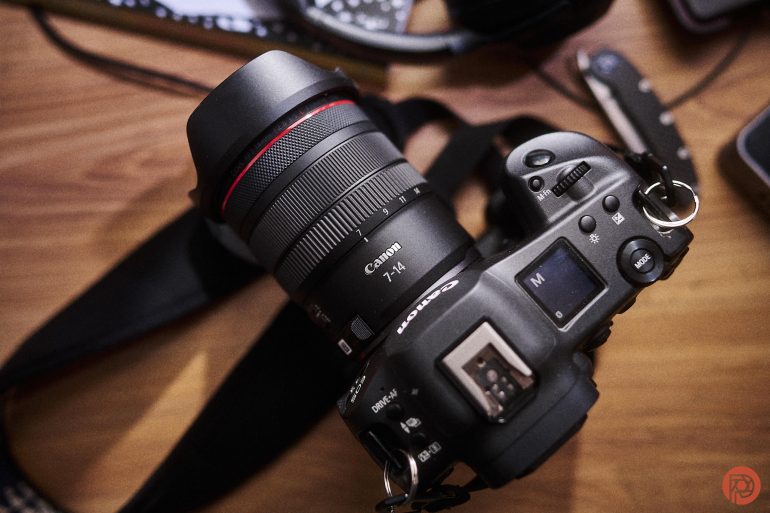
For this review, we used a copy of the Canon RF 7-14mm f2.8-3.5 L lens that we were loaned from Lensrentals free-of-charge for this review. We also used it with the Canon R5 and the R3 along with the Flashpoint AD100II Pro and the Profoto B10 — of which are ours. Combined with the R3, I’m amazed at how lightweight and a joy the package is to use together.
Looking at this lens, you’d probably not pay it much attention after you see the big red ring on it. That’s how you’d know it’s probably Canon L glass. But then when you look closer, you start to see a lot of things that are different.


Canon has not only a filter slot on the side of the Canon RF 7-14mm f2.8-3.5 L, but there’s also a zoom lock of some sort. Fascinating, right? Then there’s the big, bulbous element in the front. Plus there are the standard controls with the three rings and the switches accompanied by function buttons.
The brand only puts weather resistance in its high end L-series lenses. And thank God for that this time around. During my time with this lens, I used it at a paid gig: Rib King 2026. I’m one of the few journalists who actually uses and tests camera gear on real, paid gigs. And so I test the gear in real environments. For these shows, I’m known for doing funny photos of people eating with gluttony. This time, the fisheye lens really made that happen in droves. It rained that weekend in NYC, and both the R3 and the R5 survived with the Canon RF 7-14mm f2.8-3.5 L attached. Amazingly, both the Profoto B10 and the Flashpoint light also did well and survived the slightly-more-than-a-drizzle rainfall.
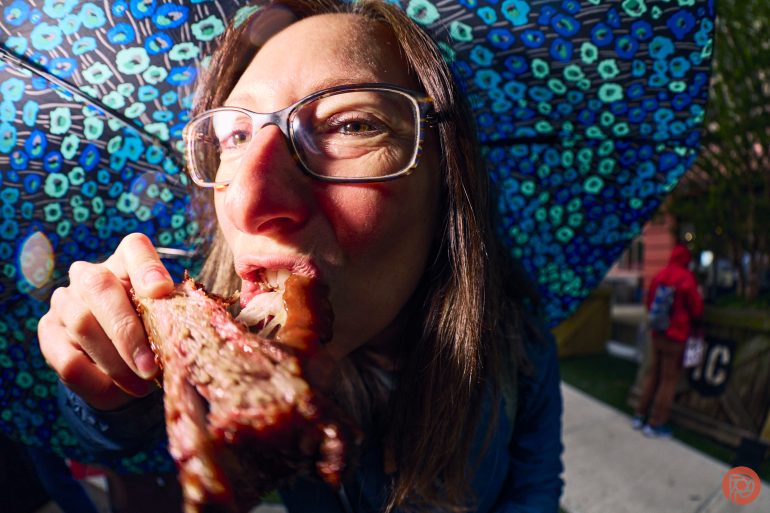
I used the lens in both Single and Servo AF with people detection turned on. And for the most part, the cameras and lens got the shots most of the time. Sure, there were some misses — but it wasn’t bad enough that the client wouldn’t use the images.
For the record, I shoot in manual mode and take all exposure preview effects off. That’s when the lens has its biggest advantage. When you take that feature off and the scene is underexposed, the hit-rate can go down a bit. So if you know how to use a light meter and not rely on the exposure preview, you’ll be getting the best autofocus effects of this lens. That goes for both the R5 and the R3.
I also ended up using it for some fun time exploring the city, retro arcades, and an old-school burger joint here in NYC with my best friend. Additionally, I took out to Snug Harbor in Staten Island with the NY Tea society during a bit of a rainfall. The lens performed well overall. Though I have to admit, some of it was just for play. I’d almost never use a lens like this except for extreme events.
With that said, it’s a niche lens — though a really great one.
Image Quality
What can I say? You’re not going to buy this lens for the bokeh. But instead, you’re going to buy it for the specific character that it delivers. It’s designed to be super distorted, sharp, and all while boasting great colors. And the Canon RF 7-14mm f2.8-3.5 L does that in droves.
The following images were edited using the Phoblographer’s presets.


The following images are straight out of the camera with resizing for the web.


Do You Really Want to Buy From Canon?
We believe that everyone should be aware of the ethical decisions that they’re making when they spend money. So to do this, we research the companies that whose products we test and make folks aware of both possible concerns and reasons to feel great about giving a company your money.
Here’s what we’ve got for Canon:
- Several of Canon’s products may contain potentially harmful chemicals, as described under California’s Proposition 65/Safe Drinking Water and Toxic Enforcement Act of 1986.
- Like many other companies, Canon has recently begun working with more artists from diverse (non-white/European) regions, including members of the African Diaspora, the Middle East, Asia, and the Americas; one such example is the Miraisha Project, which aims to increase employment opportunities and skills training in Africa. Locally, Canon has provided support to the BLACK PEARL’s Culture@ Campaign.
- Since the early 2000s, Canon has become more proactive in its sourcing and supply chain practices to ensure that its suppliers/vendors meet Canon’s corporate ethics, environmental conservation goals, and ensure the rights of their suppliers’ workers. You can find their full Sustainability Policy here.
- In Canon’s 2025 Sustainability Report, a third-party researcher concluded that Canon has continued making progress in its sustainability goals.
- We’ve previously questioned Canon’s employment practices when it comes to equality.
- Canon has been known to offer misogynistic responses to criticism about what they think of women.
- Canon has had to recall several devices in the past. Some of these were cameras.
- Class Action Lawsuits have been taken against Canon for printer issues.
- Customers have been actively leaving Canon because of the lack 3rd party options.
Declaration of Journalistic Intent
The Phoblographer is one of the last standing dedicated photography publications that speaks to both art and tech in our articles. We put declarations up front in our reviews to adhere to journalistic standards that several publications abide by. These help you understand a lot more about what we do:
- At the time of publishing this review, Canon isn’t running direct-sold advertising with the Phoblographer. This doesn’t affect our reviews anyway and it never has in our 15 years of publishing our articles. This article is in no way sponsored.
- Note that this isn’t necessarily our final review of the unit. It will be updated, and it’s more of an in-progress review than anything. In fact, almost all our reviews are like this.
- None of the reviews on the Phoblographer are sponsored. That’s against FTC laws and we adhere to them just the same way that newspapers, magazines, and corporate publications do.
- Canon did NOT loan the unit or any accessories to the Phoblographer for review. There was no money exchange between us or their 3rd party partners and the Phoblographer for this to happen. Manufacturers trust the Phoblographer’s reviews, as they are incredibly blunt.
- Canon knows that it cannot influence the site’s reviews. If we don’t like something or if we have issues with it, we’ll let our readers know.
- The Phoblographer’s standards for reviewing products have become much stricter. After having the world’s largest database of real-world lens reviews, we choose not to review anything we don’t find innovative or unique, and in many cases, products that lack weather resistance. Unless something is very unique, we probably won’t touch it.
- In recent years, brands have withheld NDA information from us or stopped working with us because they feel they cannot control our coverage. These days, many brands will not give products to the press unless they get favorable coverage. In other situations, we’ve stopped working with several brands for ethical issues. Either way, we report as honestly and rawly as humanity allows.
- At the time of publishing, the Phoblographer is the only photography publication that is a member of Adobe’s Content Authenticity Initiative. We champion human-made art and are frank with our audience. We are also the only photography publication that labels when an image is edited or not.
More can be found on our Disclaimers page.
Get rid of the ads!
Did you enjoy reading this article as much as we enjoyed writing it? There's a way to support us and our reporting, getting ad-free navigation and more as a bonus. Subscribe to us for less than a coffee per month —just $3.99— or take advantage of our yearly subscription with a hefty discount for only $25.- An ad-free experience
- A free mystery box for Lightroom or Capture One
- All the books in our store
- 20% discount on Capture One
- 30% discount on Imalume Photo Theft Protection
- 20% off Herbs and Kettle Tea Company.
- 20% off your order from MPIX printing services.
- 5% off Viltrox Products via their eCommerce store.
- 10% off all film developing, printing and scanning services from Blue Moon Camera and Machine
- 15% off 7Artisans products: The lens and accessory maker is offering a sweet discount for Phoblographer's readers.