

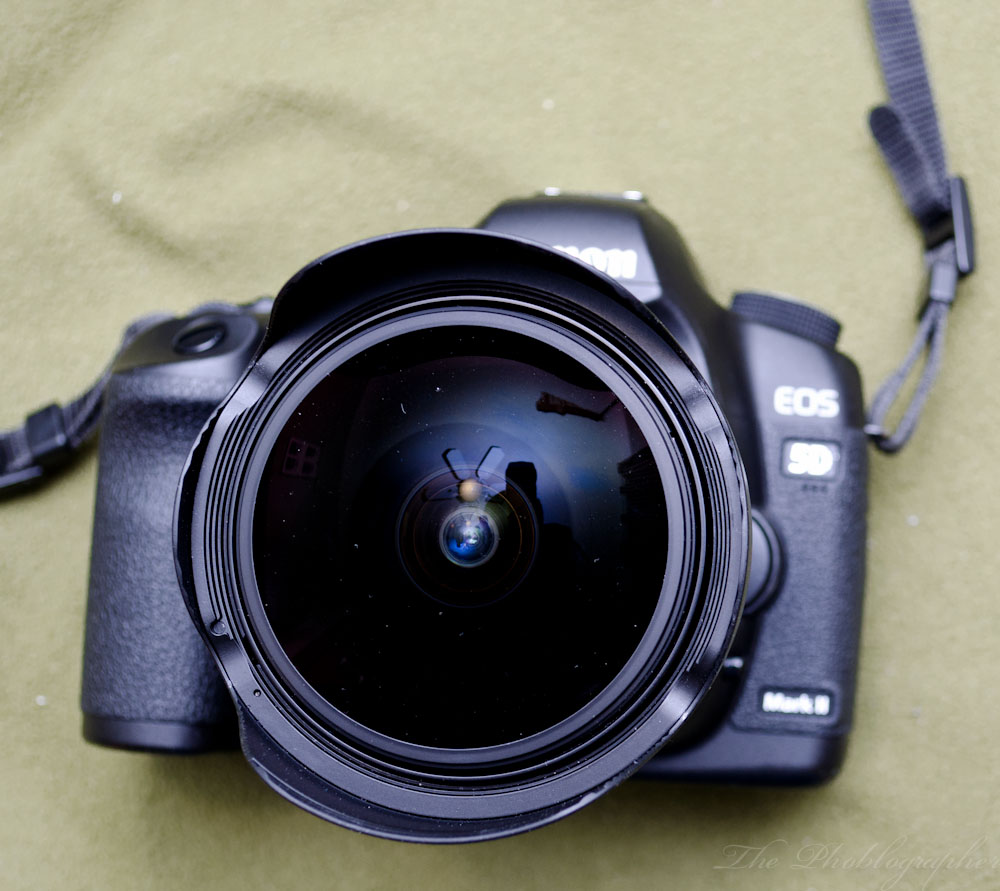
Photography has always been about the narrative, the gaze, the frames, and how it can impact the world. In more recent decades, the medium has had another pillar of importance: gear. With cameras and lenses becoming prominent, there is also a trend of some cameras and lenses doing better than others. And it appears that fisheye lenses are doing better than most.
If you look at the Google Trends search from 2004 to now, fisheye lenses have seen a great rise and fall, and then rise again. From 2008 to 2013, this period was the golden era for the lens’ signature ultra-wide, barrel-distorted look and feel. This was also the period when photographers were embracing fisheye for portraits, music videos, album covers and more. This helped the genre to help ordinary spaces feel vast and otherworldly.
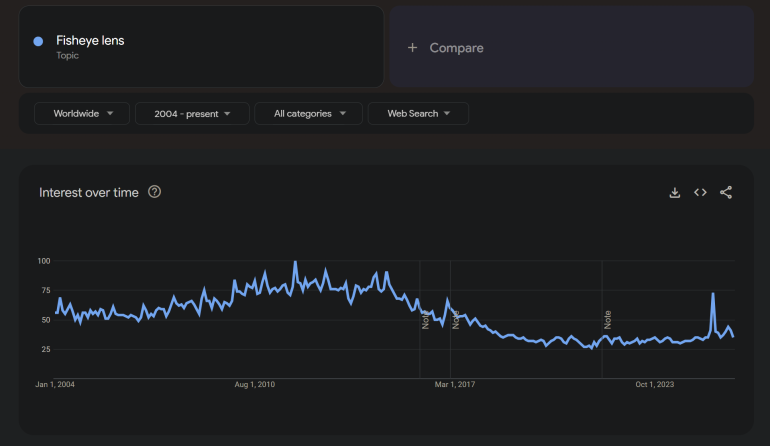
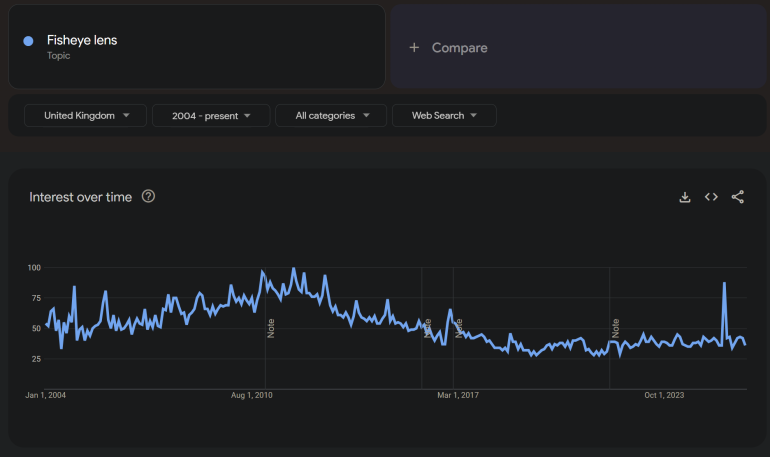
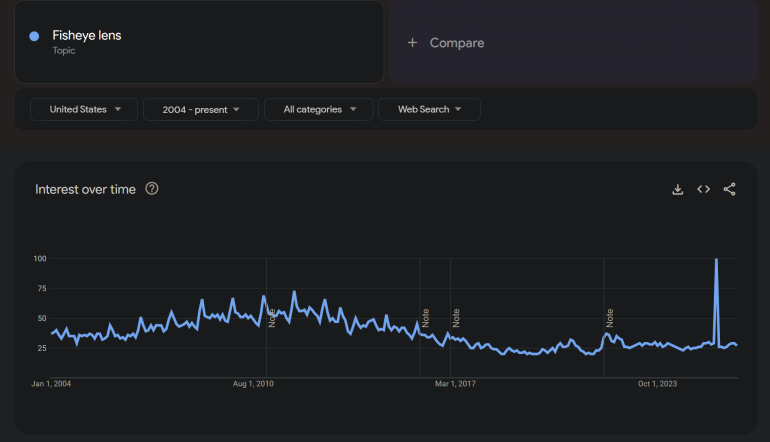
However, by 2017, the interest seemed to have declined a bit. The drop was seen across the US, UK, and globally. On paper, it may seem like fisheye lenses were fading into irrelevance, but it appears to be different now. The data showcases a spike from late 2024 to early 2025, and the sudden surge is a result of renewed interest. This has been the case even in the United States, where you see a sharp spike, followed by a gradual decline. The demand for fisheye lenses exists, just waiting for the moment to resurface.
One of the reasons for the sustained love for fisheye lenses is how much the optics have changed. From Canon to Nikon to third party options such as Laowa and Rokinon are some options that are great. There is also a keen interest in fisheye lenses on smartphone cameras, which further makes the demand worthwhile.
Even today, many photographers rely on fisheye lenses. This includes sports photographers, such as skate culture or concert photography. There is also Red Bull contest, where photographers use really wide fisheye lenses to make things better. Street, events and creative photographers continue to put their faith into these lenses.
If you decide you want to correct the fisheye effect in post, you’re going to get amazingly sharp results – even when heavily cropped. While the bulk of this lens’s character is in its fisheye effect, the lens produces some pleasing colors with the Nikon Zf’s “Portrait” color mode and especially when paired with the Provia-F 100 custom profile on my Nikon Z7II.
Chris Gampat, Founder, The Phoblographer
So, while Google searches suggest a maturing market, it also showcases that the lenses have not lost their relevance. Canon made fisheye lenses from 2010 to 2015s, which made their access easy. Canon has now revived 7-14mm RF fisheye lens, which proves that the demand continues. There is also the Brightin Star 11mm f2.8, which was introduced this year. Given that mirrorless cameras have limited first-party options, it could be one of the reasons why photographers are shying away.
It remains to be seen what the future holds, but it is safe to say that the fisheye lenses are going to stay.
Get rid of the ads!
Did you enjoy reading this article as much as we enjoyed writing it? There's a way to support us and our reporting, getting ad-free navigation and more as a bonus. Subscribe to us for less than a coffee per month —just $3.99— or take advantage of our yearly subscription with a hefty discount for only $25.- An ad-free experience
- A free mystery box for Lightroom or Capture One
- All the books in our store
- 20% discount on Capture One
- 30% discount on Imalume Photo Theft Protection
- 20% off Herbs and Kettle Tea Company.