

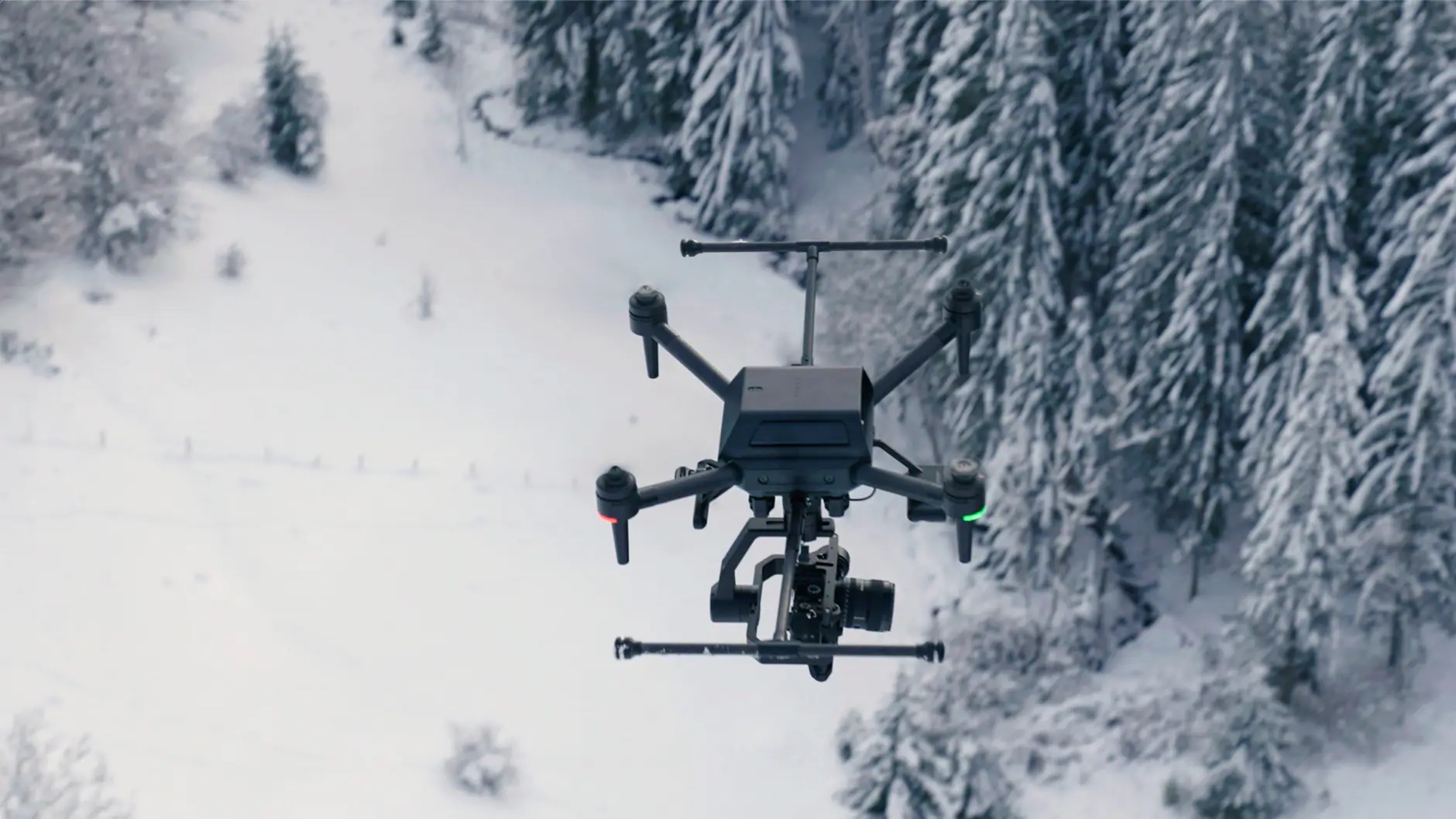
Discontinuing a product decades later is nothing new. Many camera brands have done so in the past, and this could sometimes also result in some products having a higher resale value, such as Leica or Hasselblad cameras. However, it is certainly peculiar if the gear that has been launched recently ends up being discontinued. An example of this is the Sony Airpeak S1 drone, which was launched in 2021. In just four years, Sony’s choice of pulling the plug indicates a distinct market trend.
Why Was the Sony Airpeak S1 Drone Discontinued?
The Sony Airpeak S1 drone is said to be discontinued by March 31st, as reported by Sony’s website (via Photo Rumors). While the drone itself will not be available starting next year, the battery pack will cease production on March 31st, 2026. Similarly, its software maintenance, repairs, and inspections will also end over the next five years by March 2030.
So far, the company has not shared the reason behind the decision. They have only stated that the “recent changes in the business environment” are the reason for the production cease. But what those changes are, we don’t know. The Sony Airpeak S1 drone, after all, had some interesting features, such as a 55.9mph top speed, 12 minutes of flight time with a camera and gimble attached, and the ability to continue its flight stably up to 44.7mph winds. All of this was offered by Sony as its first offering in the drone business, and it had a hefty price tag of $9000.
We didn’t test the drone, so we can’t discuss its performance. However, there were some caveats, which we spoke about in our news post. For instance, one can’t use the device to its full ability if one uses a third-party camera, such as a Canon or a medium-format camera. “Overall, I feel like the Sony AirPeak S1 is going for a niche market in an already niche market,” we wrote. Later, Sony further added new features via software updates, such as advanced flight mapping and flight path recreation. The launch of the ILX-LR1 61-megapixel full-frame drone camera brought some rejoicing, which was soon dissipated because it was incompatible with the drone. These things, together, could have resulted in its end.
Learning From DJI Would Have Helped Sony
As noted in our news post, Sony’s biggest competitor is DJI, which continues to dominate the drone market. In our previous tests, we noticed that not only are the devices cost-effective, but they also offer ample features. For instance, the DJI Mini 4 Pro is excellent for beginners, while the DJI Air 3 offers two cameras, and the DJI Mavic 3 Pro is a good option for those who like to pixel peep.
As one can see, DJI understood the market and easily undercut Sony’s price by ten folds. Furthermore, DJI was flexible with third-party cameras, giving aerial photographers ample chances to have complete control over the devices. Perhaps, if Sony had used a higher sensor camera that actually worked and allowed Sony photographers to play with a wide range of lenses, then the drone, perhaps, would have survived. Many Japanese companies need to learn from their Chinese counterparts. Either you reduce the price, or you take on a luxury market like German and Swiss company. If you can provide either, then I am afraid you will be stuck in the middle like this over and over.
Get rid of the ads!
Did you enjoy reading this article as much as we enjoyed writing it? There's a way to support us and our reporting, getting ad-free navigation and more as a bonus. Subscribe to us for less than a coffee per month —just $3.99— or take advantage of our yearly subscription with a hefty discount for only $25.- An ad-free experience
- A free mystery box for Lightroom or Capture One
- All the books in our store
- 20% discount on Capture One
- 30% discount on Imalume Photo Theft Protection
- 20% off Herbs and Kettle Tea Company.
- 20% off your order from MPIX printing services.
- 5% off Viltrox Products via their eCommerce store.
- 10% off all film developing, printing and scanning services from Blue Moon Camera and Machine
- 15% off 7Artisans products: The lens and accessory maker is offering a sweet discount for Phoblographer's readers.