

Last Updated on 04/20/2026 by Chris Gampat
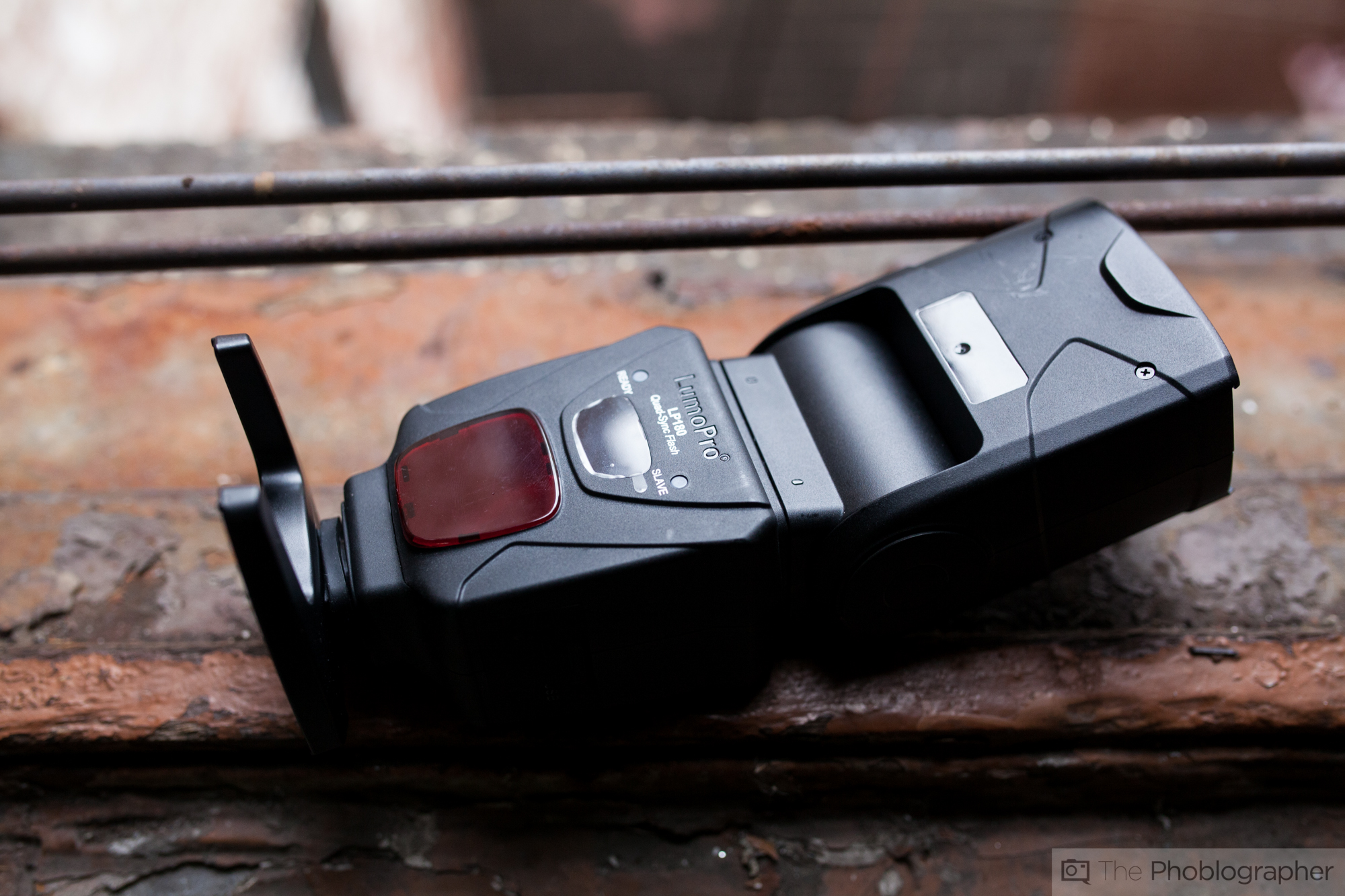
Lumopro’s LP-180 is the successor to the very well acclaimed LP-160. As an all manual and well built hot shoe flash, you’d be surprised to know that this flash isn’t designed for the hot shoe. Instead, it is designed for the strobist looking for an affordable, manual solution with excellent build quality and lots of power. Indeed, the LP-180 is a flash that many are currently in love with.
For the past month, we’ve been testing in flash in various situations–and we have to do nothing else but agree.
The LumoPro LP-180 Flash in 2026
So what was so great about the LumoPro LP180? Well, there were several things that really make it stand out. For starters, it had 1/4 20 slots on two different sides so that you could mount the flash directly on a light stand. It also had adequate sound ports so that you could hook up radio transmitters to them. Right there, that might sound weird. These days, nearly every flash has radio transmission built into it unless it’s really meant to be just in a hot shoe and nowhere else. More importantly, they’re all really affordable.
So that means that if you’re using the flash, you need to go over to it and manually adjust the power output. You can’t do it from your transmitter on top of your camera. Otherwise, you’d need to adjust your camera’s exposure settings because the light is all manual. There is no TTL at all. This means that you need to read the light meter (not the exposure preview), use a low ISO, and understand how the aperture affects the flash output. Plus you need to think about your subject’s distance from the flash.
Trust me when I say that even typing that out sounded daunting. But luckily, I’ve still got those skills. So I used the Lumopro LP-180 with my Nikon D850, 28mm f1.8, and the PocketWizards.


This type of setup is very specific to a certain era of photography. It was when Joe McNally would go around making lots of really innovative images using off-camera flashes. Flickr groups would have their own strobist photographers and critiques too. By all means, it was a good time. But you also really had to rely on the idea of sometimes fixing it in post-production. The reason for that really was true more for event photography than still portrait photography.
Sure, you can call the images, “too hot” or not balanced enough. But the truth is that it’s a vibe. And the aesthetic adds to the fun of the moments. I could do this because I’m skilled enough to be able to know how to work with lights. If my memory serves me correctly from years ago, the Watsons would have to have their lights set up for them on each press trip. And I can imagine that’s still the case with tons of the influencers out there.
The Lumopro LP-180 isn’t a simple light to use. With that said, I wouldn’t at all recommend it for a content creator. But I think that photographers making real photographs will love it.
At the same time, I will say with the fullest expression of my heart that I do not miss this era. These days, I typically make images using in-camera color profiles, TTL lights, a bag of tricks, and working with my subjects to make unique images. This ultimately means that when I get home, there’s no real post-production to do and I deliver everyone’s photos to them within 24 hours — and usually within two hours. Then I get my life back to play video games, go eat, hang out at bars, play my bass guitar, make chai, read, or do literally anything else like soak in my bathtub to lower my cortisol levels.
But trust me when I say this: this era of photography that the LumoPro LP
Pros and Cons
Pros
– Excellent light output
– Incredible build quality. We took it out into the rain and it suffered no issues.
– Side 1/4 20 socket for a light stand is quite convenient
– Fast recycle time
– Hands down the most reliable flash that we’ve ever tested.
Cons
– Absolutely, positively, not a single complaint.
Gear Used
We used the Lumopro LP-180 with the Canon 5D Mk II, Sigma 35mm f1.4, Sony A7r, 35mm f2.8, Pentax K3, Profoto Speedlight speed ring and RFi Softboxes.
Tech Specs
Specs taken from Lumopro’s listing of the product
| Guide Number: | Every company measures guide number differently. At LumoPro®, this is how we measure guide number: GN= Distance x f/stop, Distance = 10ft, F/stop at 105mm, ISO 100, Full Power = f/11 10ft x f/11 = 110, GN = 110 The LP180’s power is roughly equivalent to the Canon Speedlite 600EX-RT or the Nikon SB-900. |
| Sync: | 3.5mm (1/8″) Miniphone port, PC port, standard ISO hot shoe, built-in optical slave |
| Recycling Time: | 4 seconds at full power with fresh NiMH batteries, 1 second at full power with high voltage battery input |
| Bounce (Tilt) Angle: | -7°, 0°, 45°, 60°, 75°, 90° |
| Motorized Zoom Settings: | 14mm (with wide-angle diffuser), 24mm, 28mm, 35mm, 50mm, 70mm, 80mm, 105mmm, 105mm |
| Swivel Angle: | 360° Total Right: 0°, 60°, 75°, 90°, 120°, 150°, 180° Left: 0°, 60°, 75°, 90°, 120°, 150°, 180° |
| Manual Power Settings: | Full Power to 1/128 |
| Built-in Slave Function: | S0 (off), S1 (standard optical slave), and S2-1 through S2-10 (pre-flash synchronization optical slave). |
| Hot Shoe: | Standard ISO size, center pin contact, mounting foot lock with drop-down locking pin. |
| Sleep Mode/Auto Power-off: | Sleep mode engages after 20 minutes (if enabled). Auto power-off engages 3 hours after sleep mode. |
| Flash Ready Indicator: | Front and rear ready LED light, optional flash ready tone |
| Power Source: | Four 1.5V AA size batteries (Alkaline or rechargable NiMH). NOTE: Do not use Nickel Zinc “NiZn” batteries as they can cause damage to the LP180. |
| Included Accessories: | Soft case, flash stand, 3.5mm miniphone to 3.5mm miniphone sync cord. |
| Flash Body Dimensions: | 8.125″ (L) x 2.5″ (W) x 2″ (D) |
| Flash Head Dimensions: | 2.875″ (W) x 1.75″ (H) |
| Weight (without batteries): | 15oz (0.9lbs) (425 grams) (0.0004 metric tons) |
| Warranty: | 2 years from date of purchase through authorized LumoPro® dealers. |
Ergonomics

Like many other flashes, the Lumopro LP-180 has a couple of things that are very standard to it. For example, there is an infrared slave sensor on the front along with indicator lights. But the overall build and feel of the flash just feels beefy. In fact, it’s incredibly beefy and feels better than anything Canon, Nikon or anyone else has put out.
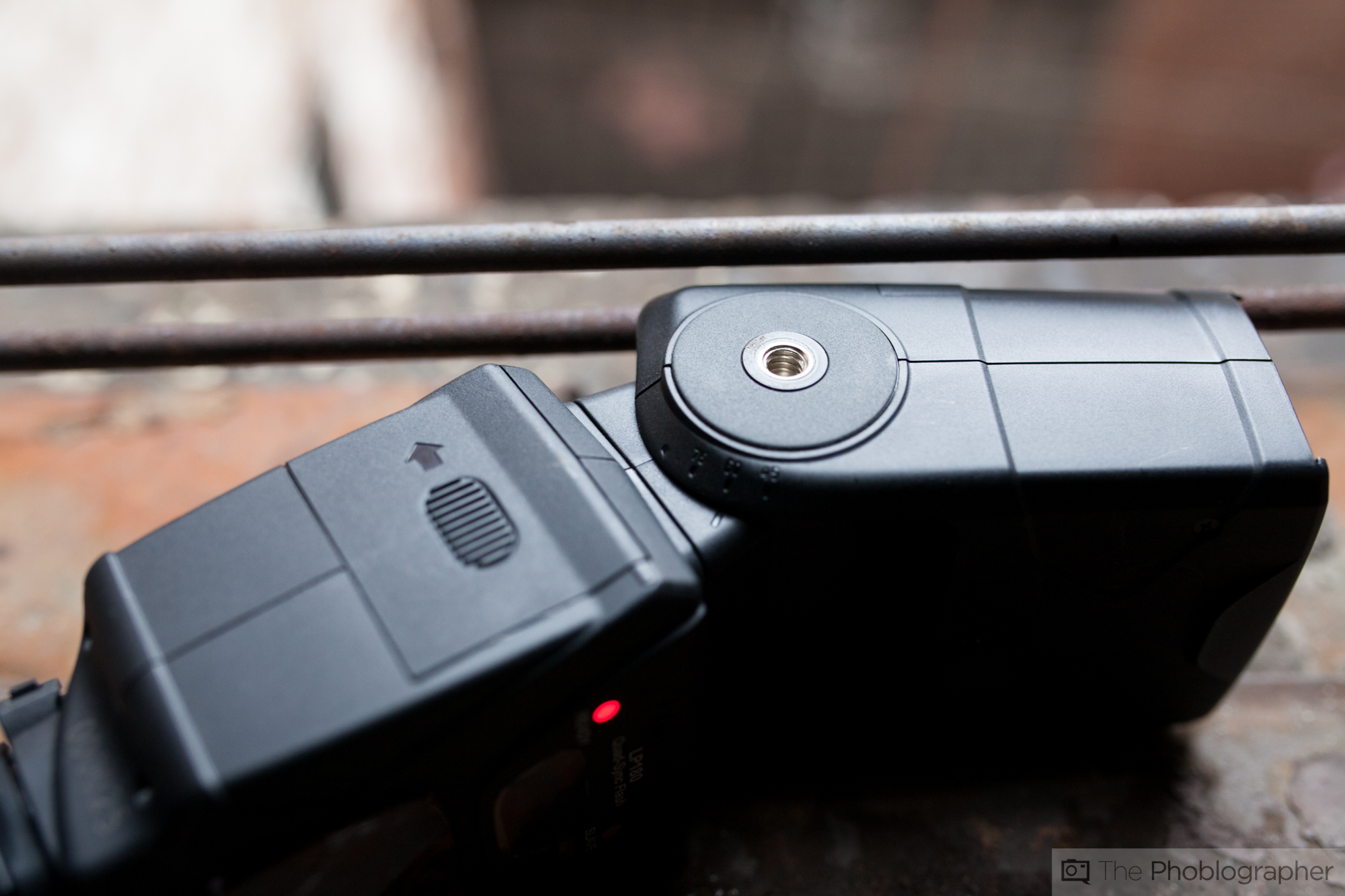
On the side of the flash, you’ll see a little 1/4 20 slot for a light stand if you choose to use it this way. Otherwise, you can connect the stand to the hot shoe and then screw that into the light stand. Lumopro offers a solution for either position–which one one else does at the moment.
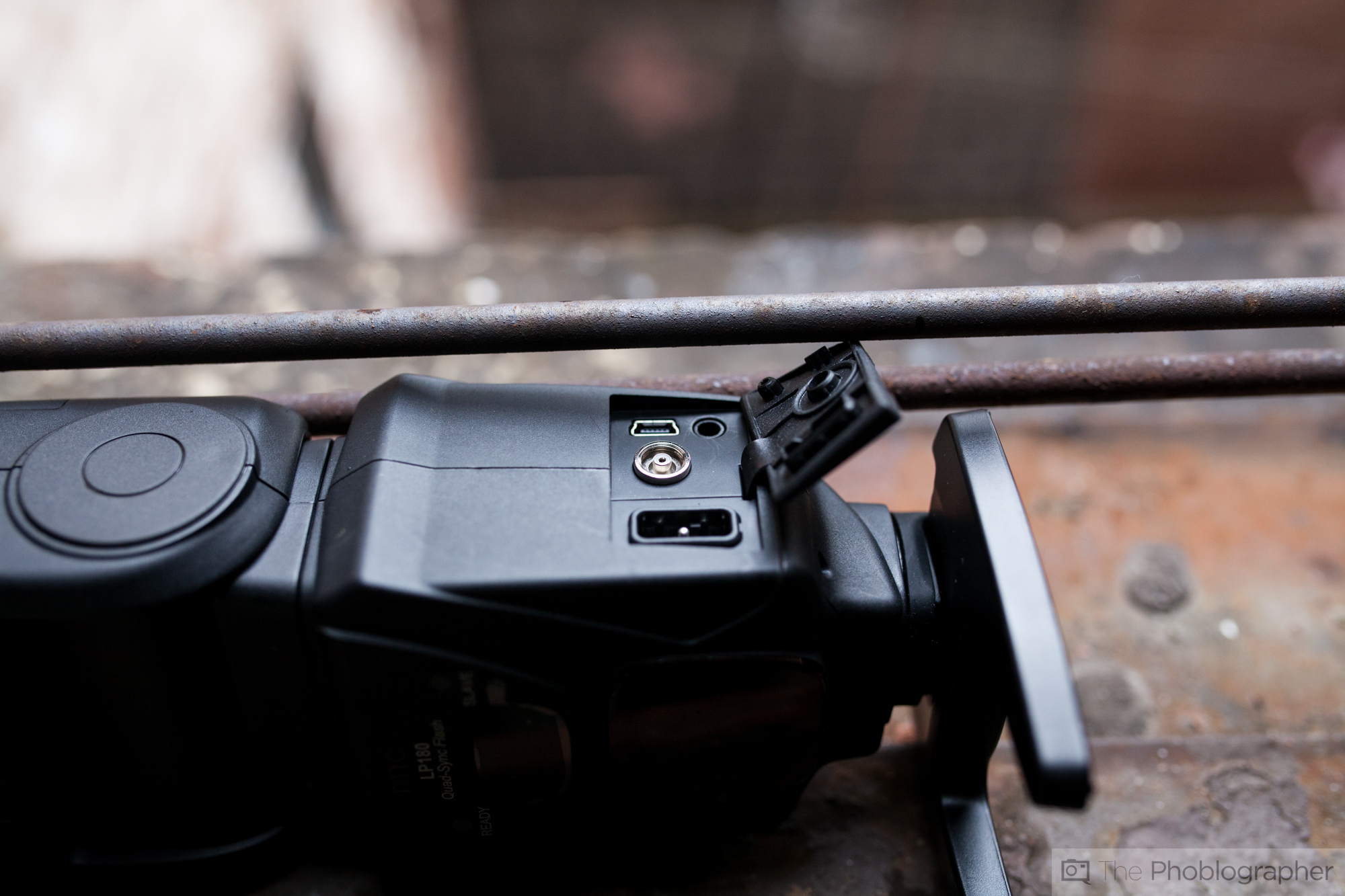
On one side of the flash are ports such as USB, PC, sound and for extra battery power. The sound port is probably what you’re going to use using the most if you’re working with radio transmitters.
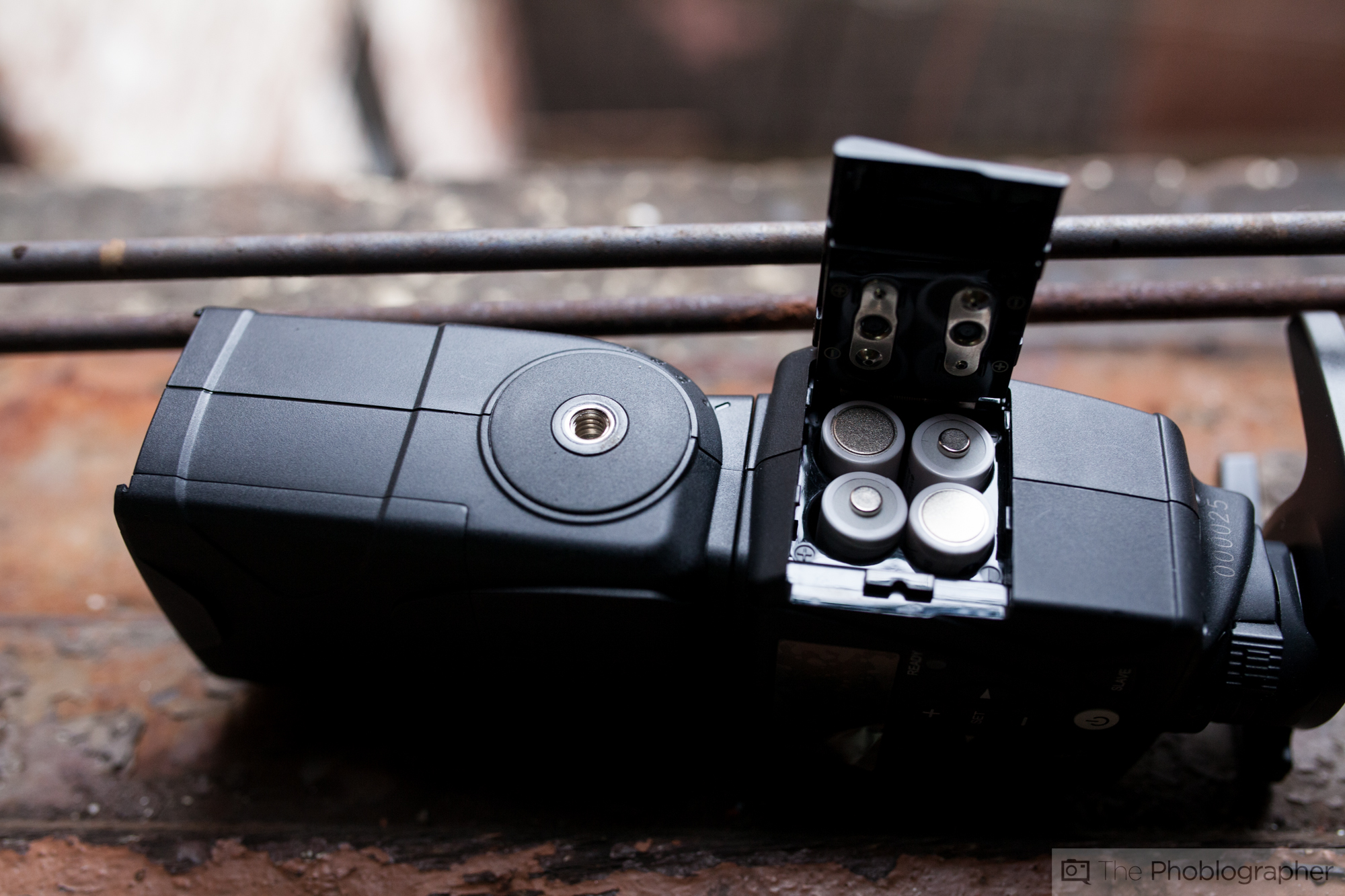
On the other side of the flash, you have your slot for four AA batteries. This area also closes very tightly with an authority that you can physically feel. Perhaps this adds to the ruggedness of the flash.

The back of the flash has the standard buttons that many others have. Here you can control the power output, zoom level and more. There are single buttons to switch the flash into slave mode or have it be tested. Then there is the on/off switch and the LCD screen that you can use to judge the settings.
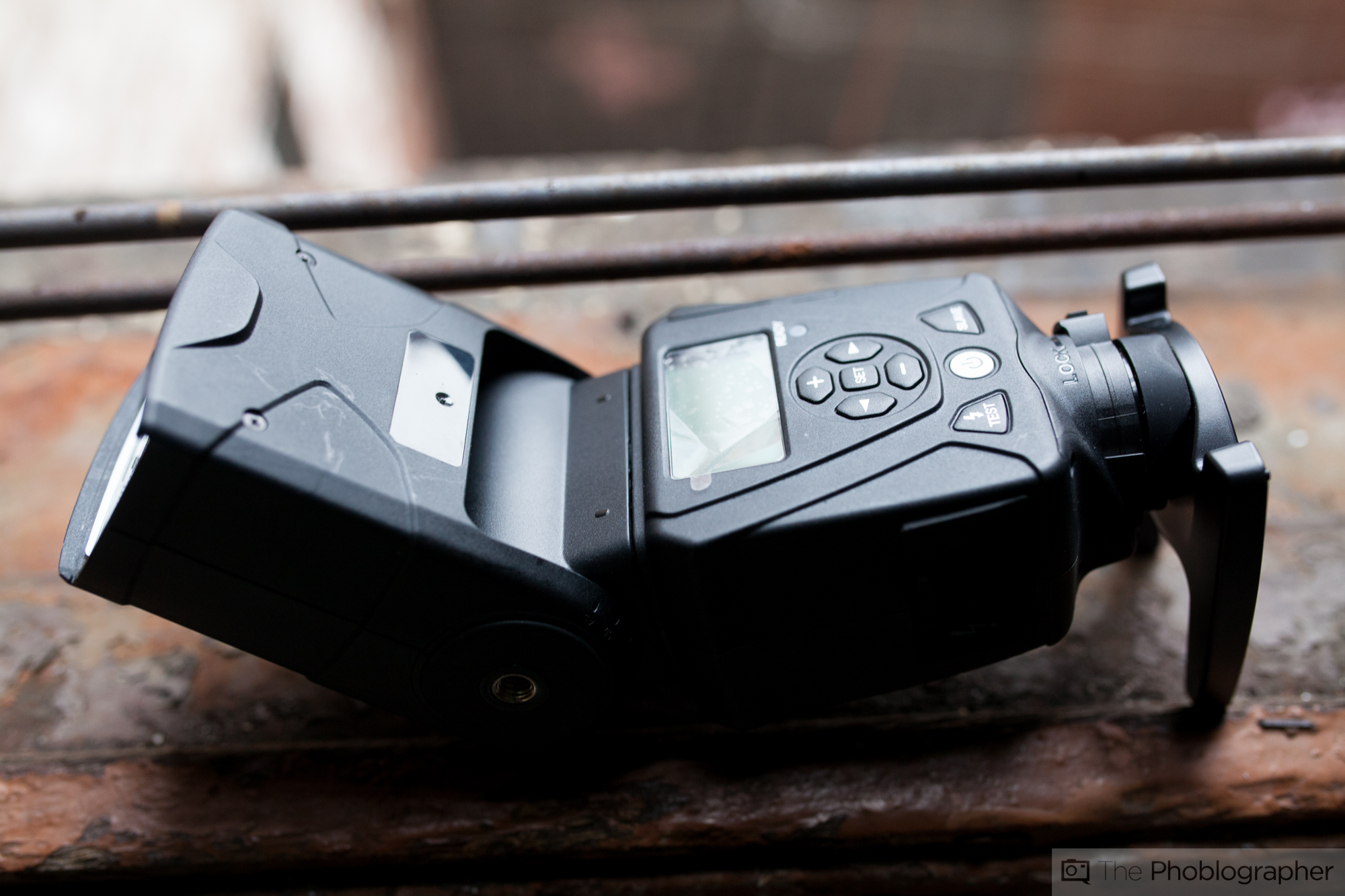
And of course like most hot shoe flashes, the head turns around and flips up or down. Seriously, what would a modern flash be without this feature.
Build Quality

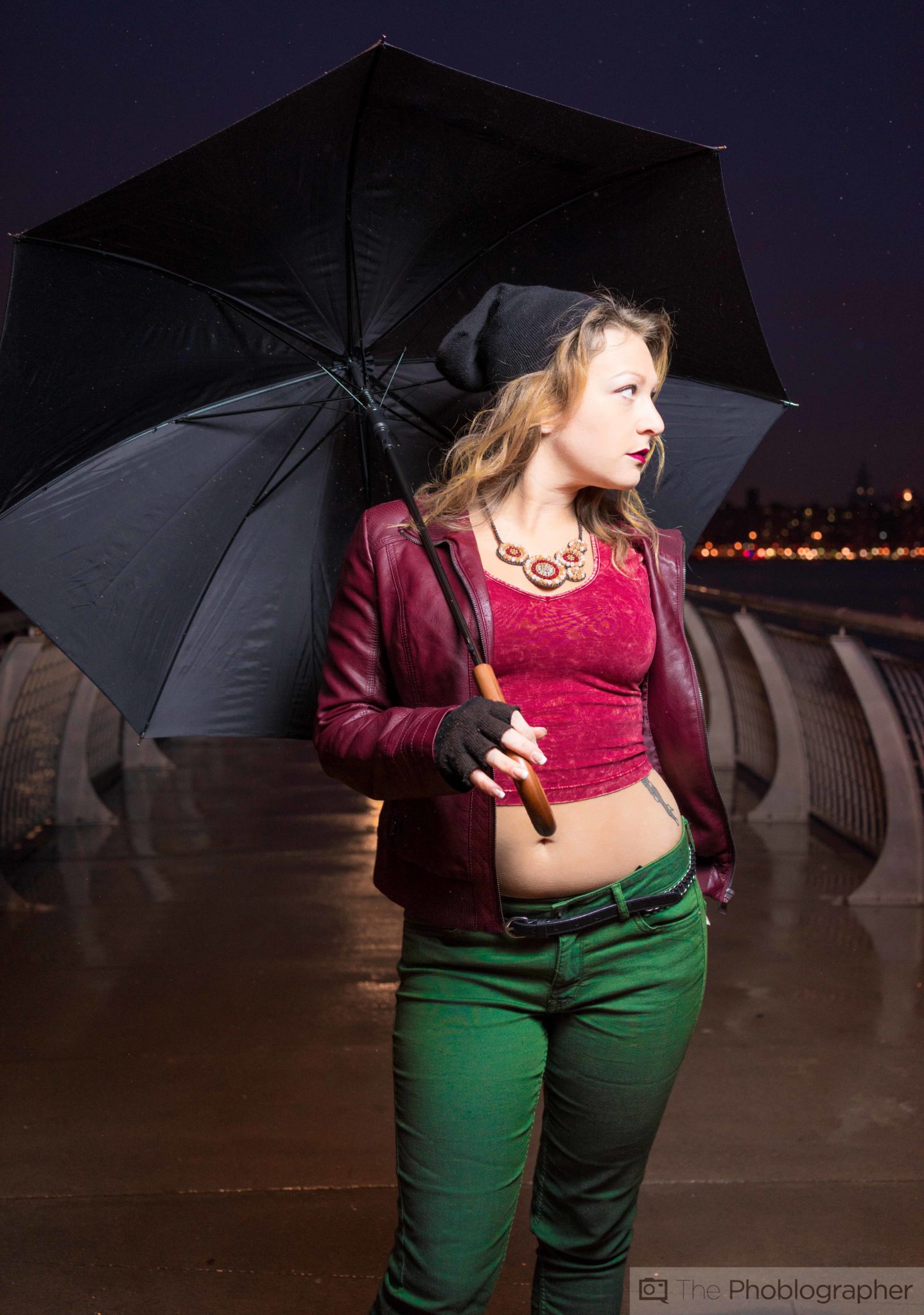
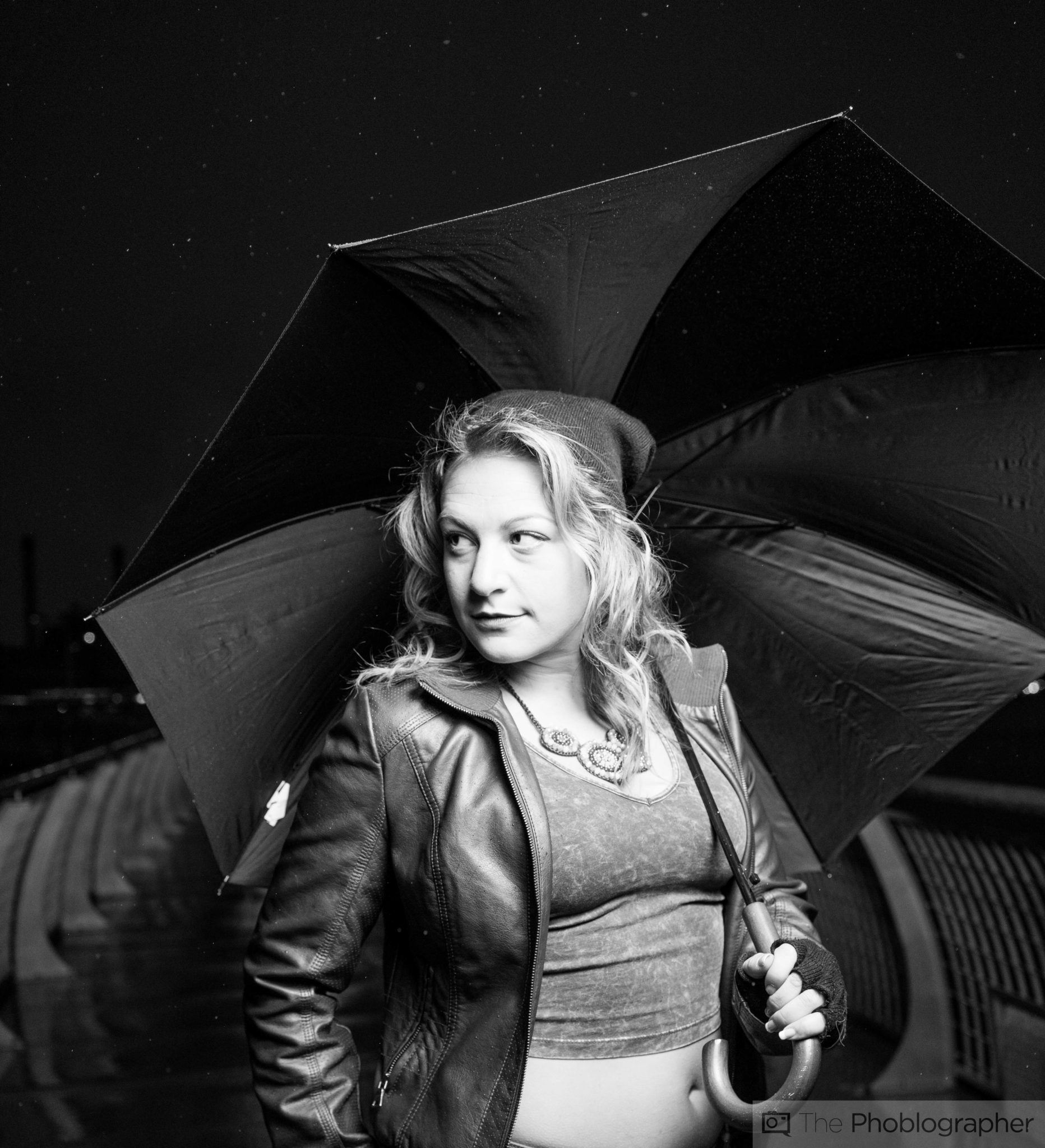
This photo is of the LumoPro LP-180 in a rainstorm a couple of nights before the publishing of this story. It got soaked but still continues to fire even with its socket port open. More than anything, this impressed us. Sure the flash is powerful, but I didn’t expect it to stand up to NYC rains like this.
It’s a rather impressive feat.
Ease of Use
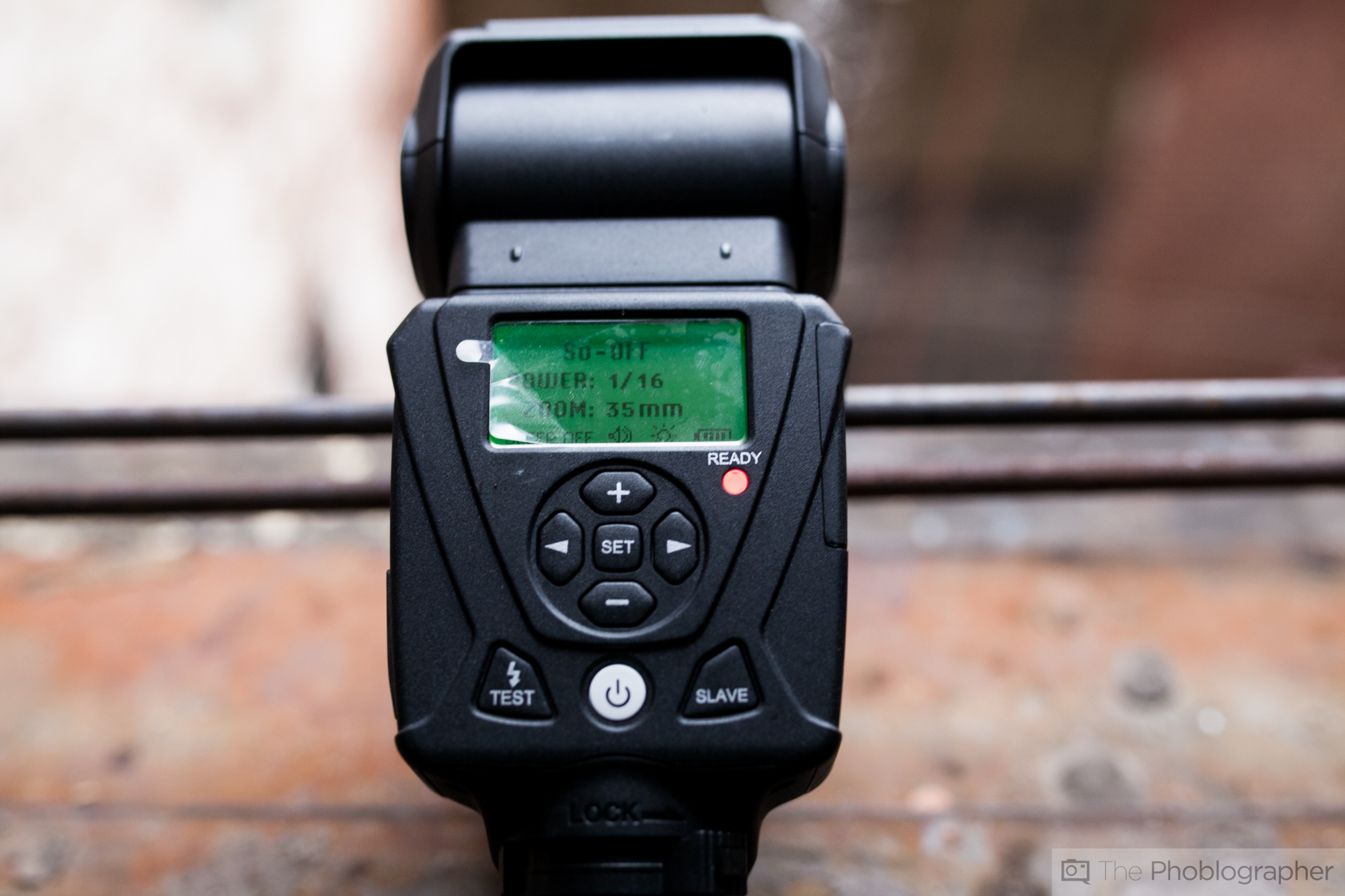
The Lumopro LP-180 is controllable via the top and side buttons. The + and – buttons control the power output while the left and right buttons control your zoom.
Otherwise, just make sure that it is ready to fire along with your radio trigger when in use. Granted, there is no TTL; it is all manual. If you’re okay with that, then there is no real better option.
Something that we wish it had though was radio control from some sort of commander. However, then the price would be much more. Still, it would be an excellent feature.
Image Quality

We used the LumoPro LP-180 on many shoots as well as for much of the product photography that we do here on The Phoblographer. It has almost never failed and on top of that the flash doesn’t seem to eat batteries. Yongnuo’s tend to have them for Thanksgiving dinner and leftovers though.
We used the flash bounced off of windows, in a softbox, and bounced off of ceilings.

One of the tests that made me really appreciate the LP-180 is when I shot Little Miss Rollerhoops: a fire dancer in the New York area. With the Sony A7r set to second curtain flash and the flash set to 1/8th power, it was able to fire off consistently with the camera’s continuous burst shooting to help me get an image like this one.
Here are a couple of other shots.



Conclusions

After a month of testing, we have no reason not to give the LP-180 our Editor’s Choice award for best afford Strobist flash. Its build quality can surely stand the test of time, the fact that you can shoot at ISO 100, 105mm at 10 feet away at f11 is also blowing our minds just a bit. Then mix into all of this the portability and the reliability.
We just can’t see us using other flashes. Sure, Yongnuo has some more affordable options, but they’re not as tough or as powerful as the LP-180.
Please Support The Phoblographer
We love to bring you guys the latest and greatest news and gear related stuff. However, we can’t keep doing that unless we have your continued support. If you would like to purchase any of the items mentioned, please do so by clicking our links first and then purchasing the items as we then get a small portion of the sale to help run the website.
Also, please follow us on Facebook, Google+, Flickr and Twitter.
Get rid of the ads!
Did you enjoy reading this article as much as we enjoyed writing it? There's a way to support us and our reporting, getting ad-free navigation and more as a bonus. Subscribe to us for less than a coffee per month —just $3.99— or take advantage of our yearly subscription with a hefty discount for only $25.- An ad-free experience
- A free mystery box for Lightroom or Capture One
- All the books in our store
- 20% discount on Capture One
- 30% discount on Imalume Photo Theft Protection
- 20% off Herbs and Kettle Tea Company.
- 20% off your order from MPIX printing services.
- 5% off Viltrox Products via their eCommerce store.
- 10% off all film developing, printing and scanning services from Blue Moon Camera and Machine
- 15% off 7Artisans products: The lens and accessory maker is offering a sweet discount for Phoblographer's readers.