


Last Updated on 03/12/2026 by Feroz Khan
When you first receive the RewindPix camera, you’ll be pretty shocked. It isn’t a camera you’d expect to be an everyday companion. But with each click and each viewing of the results, the unpredictability of the images becomes quite addictive, and you find yourself carrying the Rewindpix camera wherever you go. At least, that was my experience.
The Big Picture: Rewindpix Non-Disposable Digital Film Camera Review Conclusions
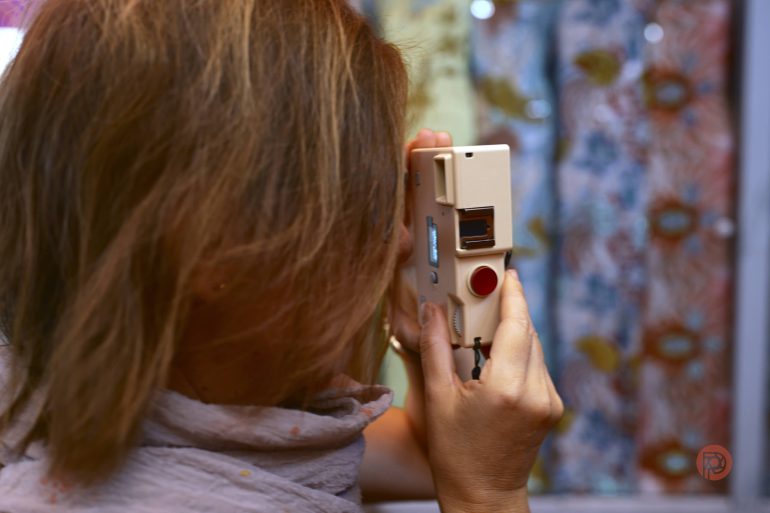
There are very few digital cameras that slow me down anymore. My Nikon D4 and Z8 are blazingly quick. The smartphone camera in my pocket can be activated almost instantly. In fact, aside from my Nikon Zf, there really were none. That is, until I received a pair of Rewindpix cameras from the creator Xiao. I’ll say this without hesitation – I love the way these cameras make me feel when I use them. This isn’t about the results they produce or the features they have. It’s just the radical idea they introduced, starting with making you go old school and treating it like you would have with a disposable analog camera in your childhood. The camera makes you want to shoot with it more and more, and that’s an achievement for something that isn’t designed to keep you intentionally addicted. In a world where we shoot and immediately review on an LCD, where you want to upload pics right away to social media for dopamine hits, and where you are finding yourself shooting umpteen frames of the same subject for no reason, Rewindpix makes you change all that. It brings back the anticipation and the valuing of each and every click.
I’m giving the Rewindpix camera four out of five stars, which is excellent for a product still in beta. I have no doubt that future iterations of this camera will be rated better.
- Screen-free, virtual 36-frame shooting experience
- You will find yourself more connected to each frame you compose
- Loads of film-inspired filters (you can select 3 at a time per virtual roll)
- Mechanical film advance dial is nostalgic
- Lightweight and small, easily toss it into any camera bag you have
- Flash can be activated via a switch
- App has a few bugs, but that’s fine as it’s still in beta
- Portrait orientation doesn’t seem to be applied to the files when taking pics this way
- The viewfinder is an optical one that, to me, doesn’t always show you exactly what you might get in the image. This might have to do with the focal length of the lens and the angle of viewing in the viewfinder not quite matching
- I’d love to see a metal version of this camera
- Rechargeable via a USB-C cable
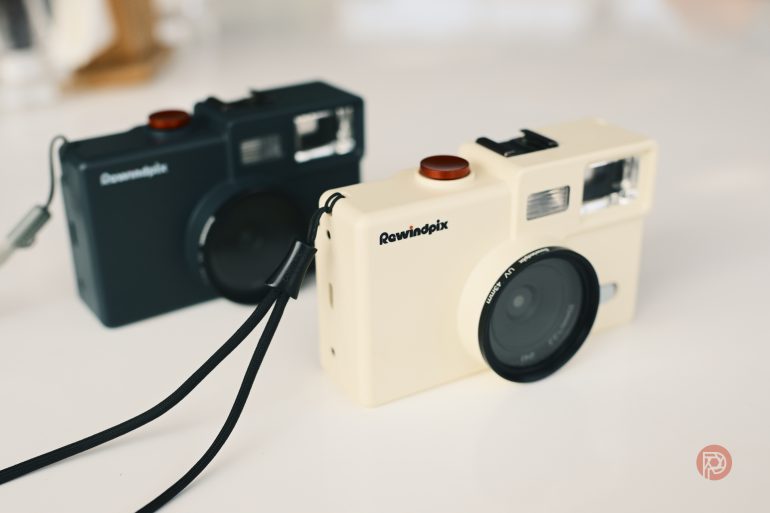
This is a camera that can genuinely improve our lives. We are so used to instant gratification now that I genuinely worry about what it’s doing to our brains. Constant checking, scrolling, and validation isn’t how we should be living. This camera system makes us wait and anticipate the results, even if we already know they aren’t going to be clinically perfect. Rewindpix takes us back to a time when we shot photos for ourselves, to be used as reminders of the past, not as pigeon feed for social media likes and comments. People look at you curiously at first when you use it in public – a simple camera that I’m not constantly looking at after taking photos. It becomes a great conversation starter. It may look and behave like a disposable camera, but it’s one that you are definitely not throwing away. This won’t replace any of your modern cameras or your smartphone, but it might replace your current mindset towards casual photography. I’d argue that in 2026, that alone is a reason to back this camera on Kickstarter today.
Experience
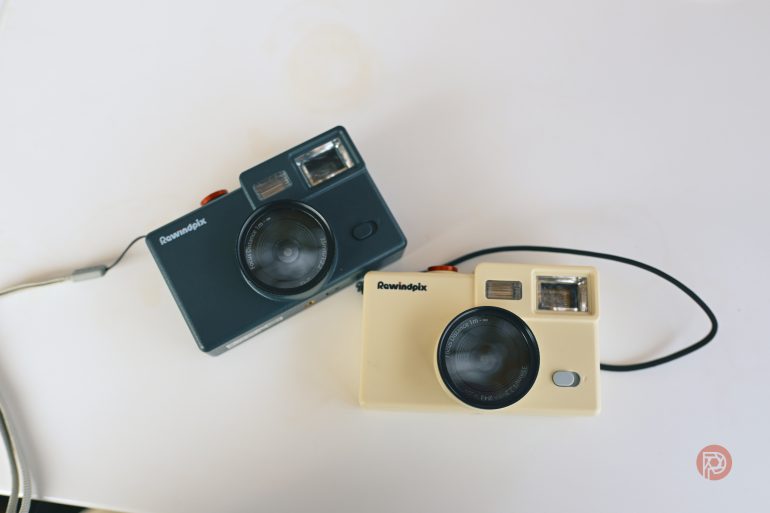
Your first thoughts when holding the Rewindpix camera might be that it feels too light to be sturdy; its plastic exterior can give that impression. But it’s well-designed and comfortable to hold. I added a lanyard to the right side; the creator says that he will probably include a slim neck strap with the camera when it goes to distribution. Its lightweight design makes this camera easy to carry everywhere. Slip it into your jacket or cargo pockets, and you almost forget about it. I did, at one point, and it dropped onto the hard floor of the tailor’s I was at. The back half popped open, and I was worried I had irreparably damaged the camera. It didn’t shut back easily and kept bulging in the centre for a bit, but I then unsnapped the sides out once and snapped it all back into place. It worked just as well after this. I was worried the exterior may have cracked; such was the thud which it gave when it fell, but nothing of the sort is visible
I’ll say this without hesitation – I love the way these cameras make me feel when I use them
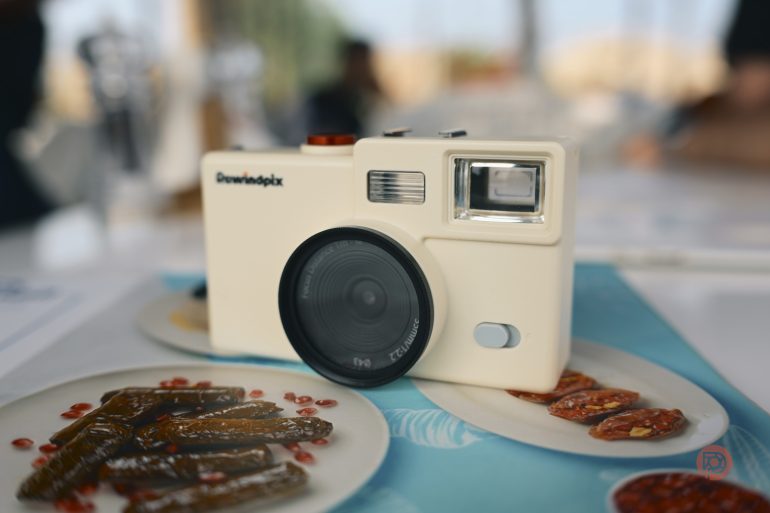
The front has a 43mm clear filter; you can remove it and experiment with other filters if you want. The shutter button is threaded. My Rewindpix cameras came with a spare shutter button each, which was great, as I lost one when I took it to a tennis tournament. An inbuilt flash adds to the retro look and capabilities of this camera, and it is activated, thankfully not automatically, by toggling a switch on the front. The power switch – there is none. You turn on the camera by manually turning the film advance dial(yes, such a lovely addition!); the camera turns off by itself after 3 minutes of inactivity.
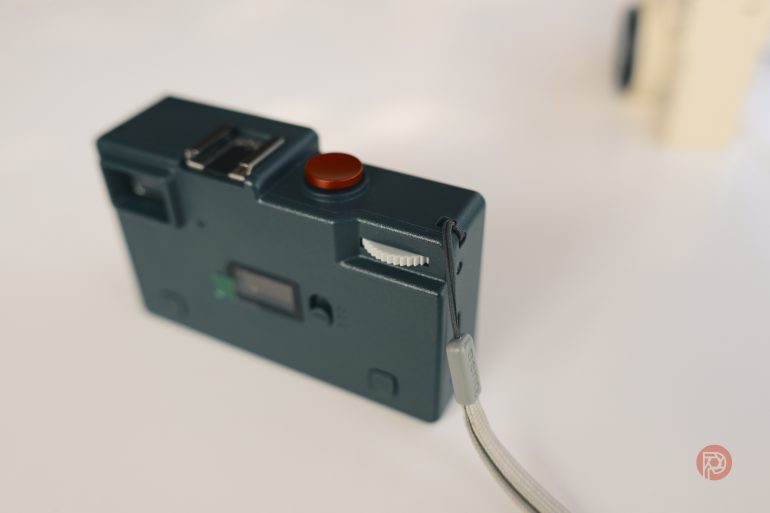
You have to wind the dial after every shot to take another photo, just like with old compact film cameras. This reinforces the idea that each frame matters on Rewindpix. A tiny LCD finds a place on the back of the camera, and this is used to display the currently activated film stock as well as the number of frames left, before you need to sync the camera to your phone’s app.
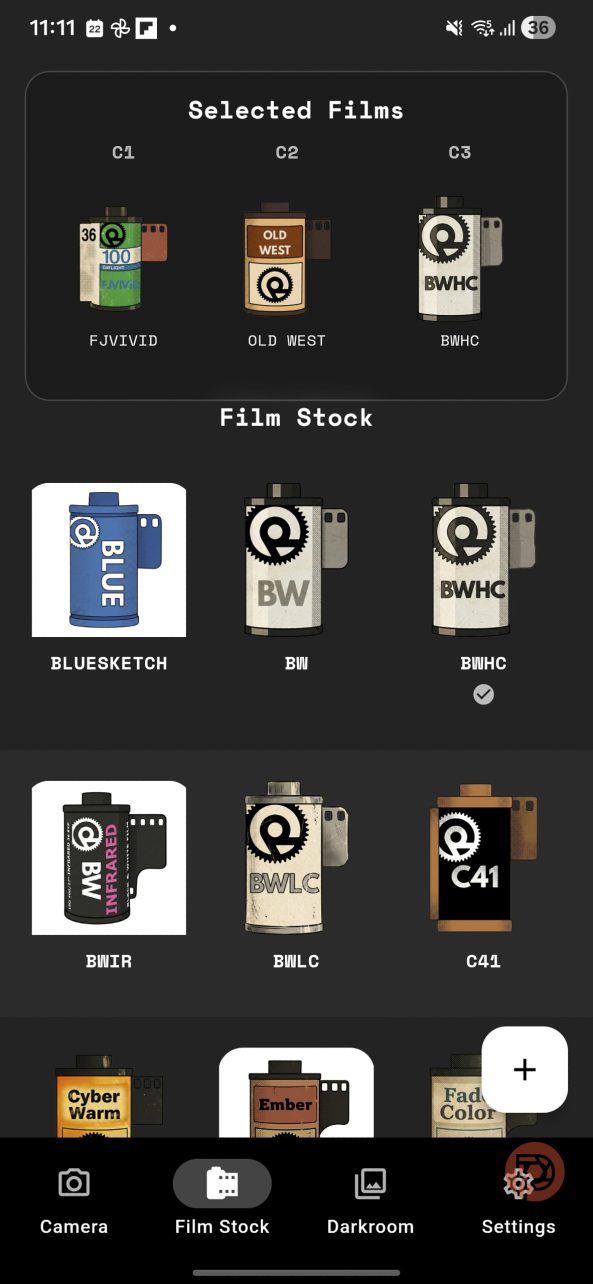
The virtual film experience is one of my favorite parts of all this. It’s like using expired film – you never really know what the images will turn out like. The app currently has 30-something film-inspired filters that you can “load” to the Rewindpix camera when it’s connected to your phone via Wifi. The sample images for each film stock give you a rough idea of what your images might look like. Once you select three to load onto the camera, you have 36 frames in total for your shoot. So, technically, on a compact camera, you were tied down to shooting 36 frames with the same stock and couldn’t swap out rolls in between. The Rewindpix team decided to give a bit of leeway and added a feature that lets you switch between the three loaded film stocks using a physical C1, C2, C3 switch. It’s not 36 per stock, it’s 36 in total across all three. You can, of course, shoot all 36 in just one or two; it’s entirely up to you how you manage this.
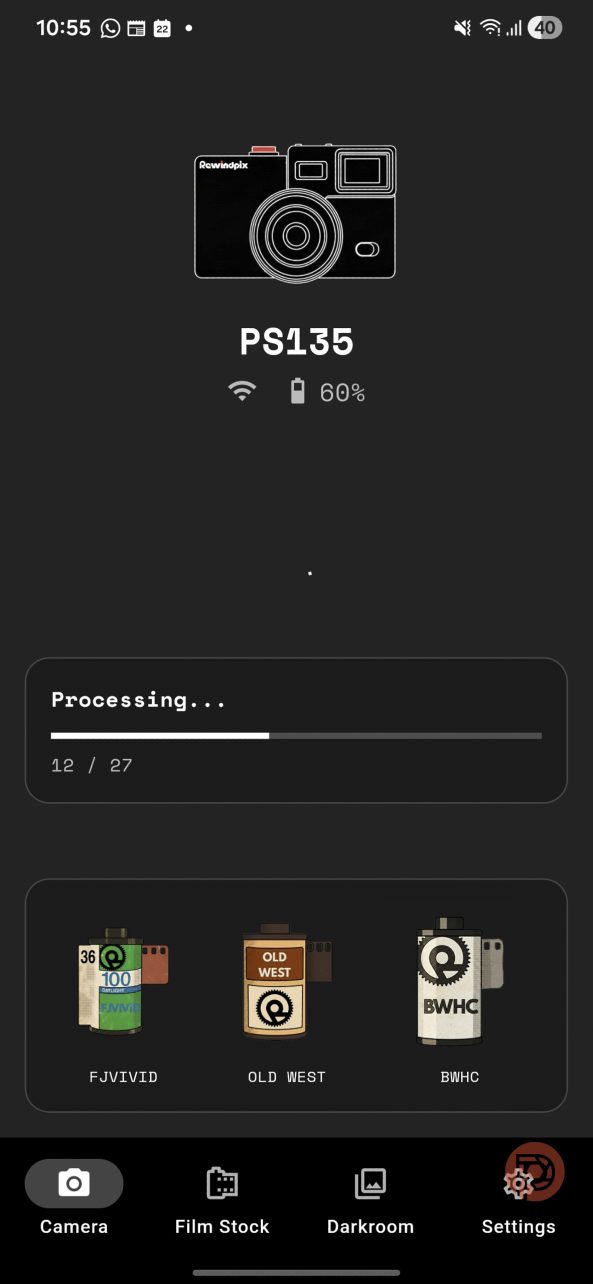
Okay, technically, there are six filters. But three of them are built into the camera and can’t be changed, as per what Xiao tells me. To move to these three filters, there’s an M switch on the back that allows you to toggle between these preloaded three and the three you select from your app. To be fully transparent here, I did not use the built-in three – Sunny Warm, Breezy Cool, and Simply Mono – during my tests
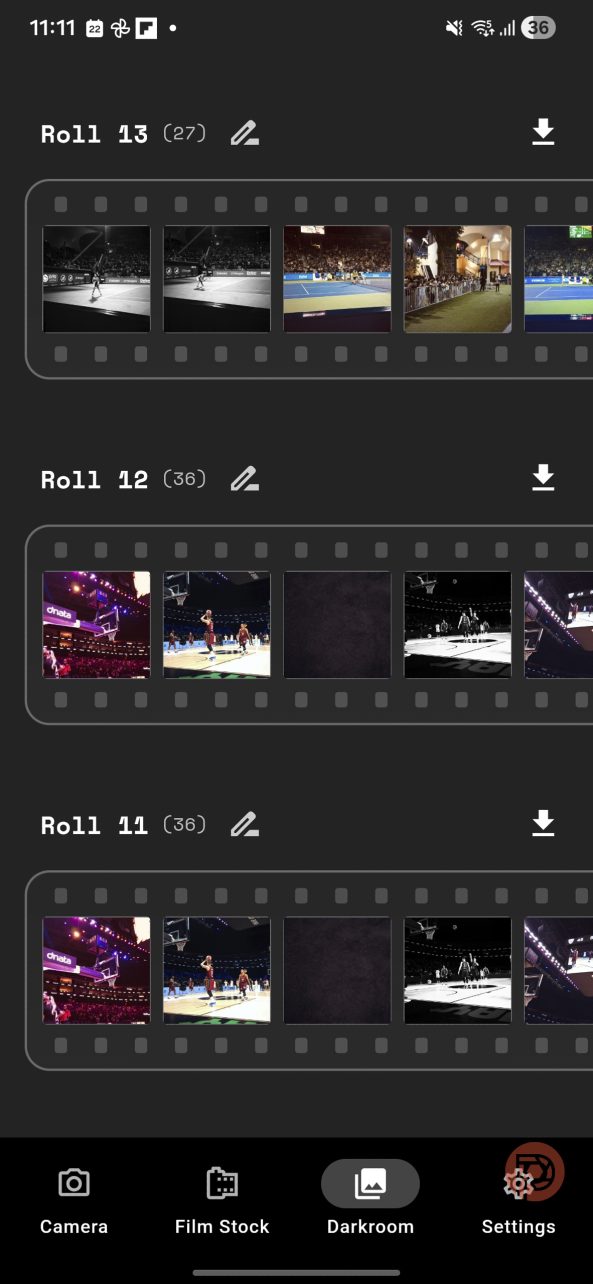
After a few days (or less) of shooting, when you’ve completed your roll of 36 and the excitement to see the results has built up to a crescendo, it’s time to see the images you’ve taken. Turn the camera’s Wifi on via the switch on the back, connect your smartphone to it, and then open the Rewindpix app – it’s time to “unload” the film and download your photos. The images are transferred from the camera’s memory card, secured via a screwed latch, and the selected film filters are applied during this process. Only then do you see your results. The wait to see the results built anticipation I haven’t experienced in quite some years with photography. This is not WYSIWYG like my Nikons with their in-camera retro simulations. With those, I know exactly what I’m getting. With Rewindpix, I don’t — because I’m using an optical viewfinder. That unpredictability is addictive- I never once felt the urge to unload early; I always wanted to complete all 36 frames.
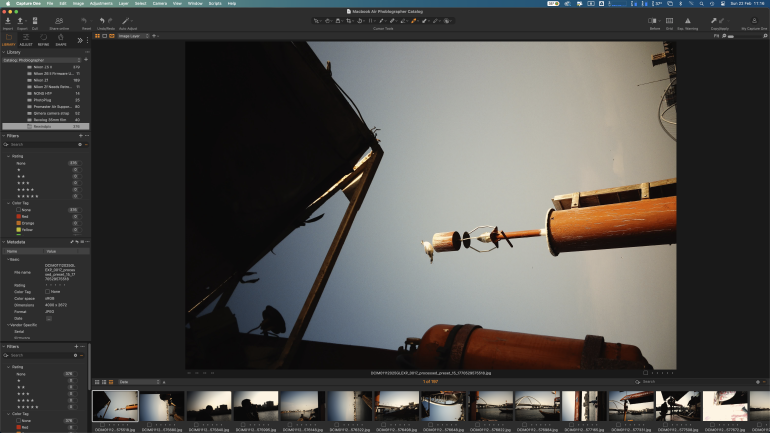
I do have some minor gripes, which I think can be ironed out easily. Images taken in portrait orientation don’t translate into the image data for some reason, so these photos still display in horizontal mode on your phone after being unloaded from the camera. The app crashes at times. Other times, midway through an image unload session, it’ll stop and ask me to log in to continue. Then I’ll have two rolls of the same images in the app’s Darkroom tab. Xiao has been receptive to my feedback on these issues. When I shoot with my digital cameras, and something doesn’t work out, it frustrates me. With the Rewindpix, I embrace the imperfections and move on – a mindset we can all apply to a lot of aspects in our lives.
This isn’t about the results they produce or the features they have. It’s just the radical idea they introduced, starting with making you go old school and treating it like you would have with a disposable analog camera in your childhood.
Image Quality
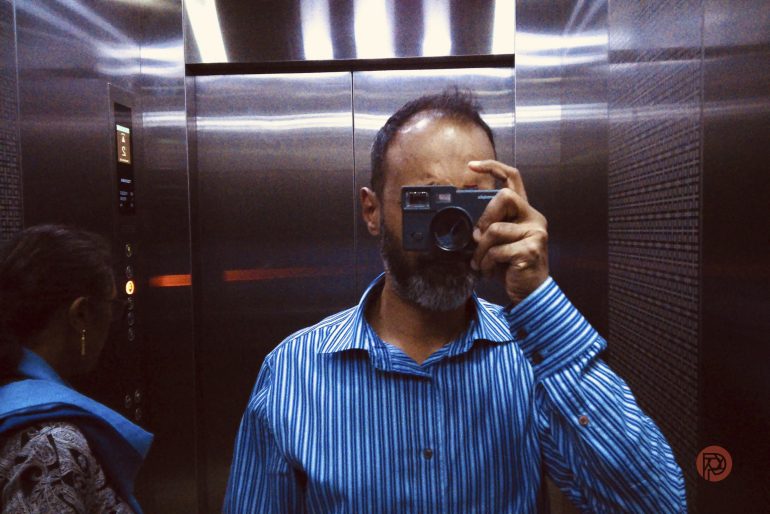
From a technical perspective, I think RewindPix is upfront in setting expectations. You can take one look at an image from here and realise that even your average smartphone camera these days can outperform it. But technicality isn’t where this camera aims to win. The resolution is modest, and I have no idea which sensor is in there (I couldn’t find that in the EXIF data). Dynamic range, megapixels, corner sharpness, aberration – all these terms are a distant memory when you shoot with this camera. Bokeh is unpredictable, and so are the filters at times. You do select a filter and shoot, but your images may look very different depending on the time of the day and the available light (the overall feel of the selected filter will remain, of course). For those of you who find analog photography expensive but want to change how you shoot, this camera helps rewire your behaviour. It’s the experience that you crave more than the results. Sometimes images surprise you in wonderful ways, and other times they’re imperfect. But that imperfection feels real and honest. You’ll never know what shutter speed or aperture the camera will use, so be sure to keep your hands steady in low-light scenarios. Embrace the blurs and shakes just as we used to back in the good old days.
None of the images below has been retouched. They are exactly as the app has processed them based on the filter that they were shot with in-camera


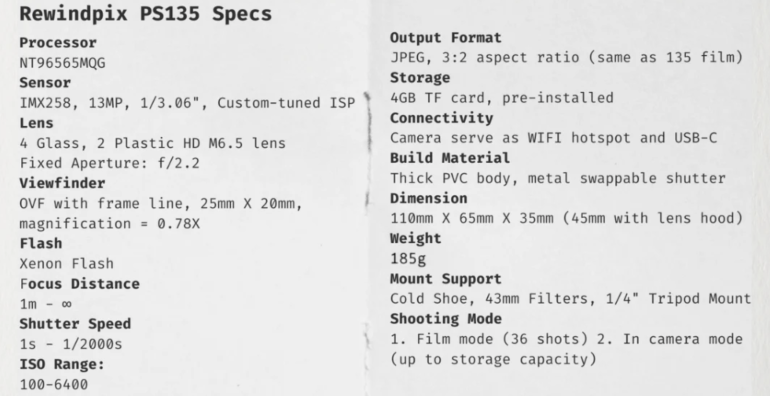
Technical Specs
Screenshot taken from the FAQ page on the Rewindpix website
Declaration of Journalistic Intent
The Phoblographer is one of the last standing dedicated photography publications that speaks to both art and tech in our articles. We put declarations up front in our reviews to adhere to journalistic standards that several publications abide by. These help you understand a lot more about what we do:
- At the time of publishing this review, Rewindpix is not an advertiser with the Phoblographer. Either way, that wouldn’t affect our reviews.
- Note that our reviews are constantly works in progress. This review will be updated later on.
- None of our reviews on the Phoblographer are sponsored. That’s against FTC laws and we adhere to them just the same way that newspapers, magazines, and corporate publications do.
- Rewindpix sent two cameras to the Phoblographer for review. There was no money exchange between Rewindpix and the Phoblographer for this to happen.
- Rewindpix knows that they cannot influence the site’s reviews. If we don’t like something or if we have issues with it, we’ll let folks know. We were the first publication to inform about the issue with the Leica M10R and how it renders the color orange.
- Rewindpix sent the cameras to Phoblographer in Dubai. Our home office is based in New York.
- At the time of publishing, the Phoblographer is the only photography publication that is a member of Adobe’s Content Authenticity Initiative. We champion human-made art and are frank with our audience. We are also the only photography publication that labels when an image is edited or not.
More can be found on our Disclaimers page.
Get rid of the ads!
Did you enjoy reading this article as much as we enjoyed writing it? There's a way to support us and our reporting, getting ad-free navigation and more as a bonus. Subscribe to us for less than a coffee per month —just $3.99— or take advantage of our yearly subscription with a hefty discount for only $25.- An ad-free experience
- A free mystery box for Lightroom or Capture One
- All the books in our store
- 20% discount on Capture One
- 30% discount on Imalume Photo Theft Protection
- 20% off Herbs and Kettle Tea Company.
- 20% off your order from MPIX printing services.
- 5% off Viltrox Products via their eCommerce store.
- 10% off all film developing, printing and scanning services from Blue Moon Camera and Machine
- 15% off 7Artisans products: The lens and accessory maker is offering a sweet discount for Phoblographer's readers.