


There’s a problem with street photography that I think that many don’t understand: it’s not necessarily photojournalism. However, because of the lack of standardization in the field, it results in lots of different ethical conflicts. This could be seen as problematic because of how little media literacy there is with social media. On the other hand, it limits what’s possible for artists. But something that’s often been hotly debated is whether or not the use of Photoshop is allowed in street photography. So we talked to a few photographers about it after a statement made on behalf of Adobe.
All images in this article are used with permissions from the photographers.
Photoshop in Street Photography
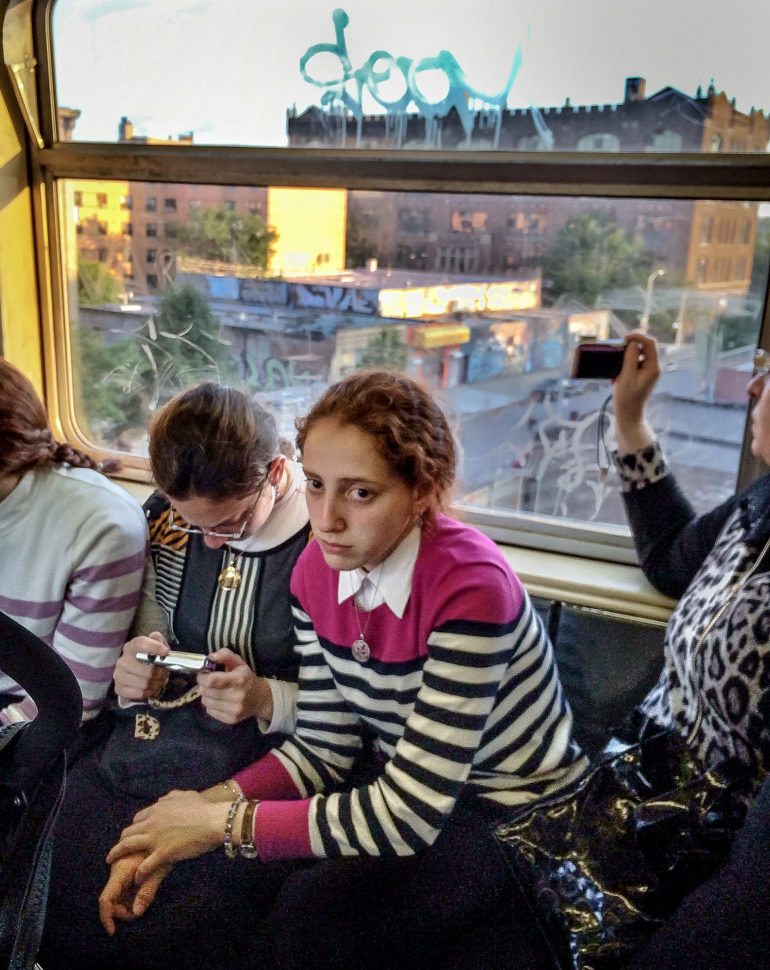
Something that experienced and passionate photographers alike could find odd is that even though technology has improved over the years, photography itself hasn’t majorly changed. With the new Photoshop Mobile, Adobe approached some of the photographers they work with for quotes when we asked them how it helps photographers make better photos. Our Adobe Rep, who wanted the communications we had attributed to Adobe in general, provided the following to the Phoblographer:
“I really love street photography, and it’s actually how I got started. To me it’s just so pure. No set, no models. Just you, your camera, and your perspective. And with Photoshop on iPhone, I can quickly take my photos where the real magic happens – the edit. Photoshop on iPhone lets you use powerful features like the Remove Tool, Generative Fill, adjustment layers, and advanced color grading…”
Tej Patel
Given Tej’s portfolio, most wouldn’t call them a street photographer — but, without seeing invoices, we can’t deny Tej’s credibility as a working photographer. Tej’s website shows work with lots of different clients whom we can assume have paid Tej for services.
Today, no one would deny how good smartphones are as cameras. We can look at a series like Gretchen Robinette’s Unlimited Metrocard as proof of that. The series has been featured by prominent publications. “Smartphone technology has advanced to a level where it now delivers powerful, innovative workflows for creative work, allowing photographers to refine and enhance their photos with the same precision and versatility as desktop tools, all from the convenience of their phone,” Adobe told us. “Photoshop’s new mobile app is purpose built for phones. It was designed from the ground up to welcome a new generation of image and design enthusiasts to the limitless potential of Photoshop in an easy-to-use mobile interface.” Powering this is the commercial-free assets from Adobe Stock.
Photoshop Mobile is going after aspiring photographers who don’t attend classes — assumedly so. The tool is letting those creatives make their own images and us features like retouching, generative fill, Lightroom integration, clone stamp, lighten, darken, etc. “The next generation of creators, as well as experienced creative professionals who want to make unique digital art on mobile, can now get started with Photoshop faster and easier than ever before,” says Adobe.
Lots of these tools are available and are easy to use, but what’s concerning is that brands like Adobe don’t consider also teaching and positively reinforcing ethics when it comes to using these tools. Instead, their use has continued to make matters like authenticity much worse. For that, Adobe has the Content Authenticity Initiative — which the Phoblographer is a member of. But it’s not marketed anywhere as sexily as a few feature in Photoshop.
Thoughts from Photographers
There are many different schools of thought when it comes to editing and Photoshop usage in street photography. Lots of photographers didn’t believe in doing any editing — even cropping. Diane Arbus famously is one of those who didn’t want to do anything else besides basic developments in the darkroom. And in many ways, her traditions are being upheld. Photographers like both Richard Bram and Teri Vershel both do very minimal editing according to our previous interviews. Many photographers often say that they only do things that they would’ve been able to do in the darkroom.

There’s also a side of street photographers that think that Photoshop and editing are totally ethical in street photography. We can’t forget about the famous case of Steve McCurry; but we also should remember the genius that is Diado Moriyama. In Moriyama’s mind, the camera is an imperfect way of capturing the world. And so if it’s already imperfect, the interpretation is solely that of the photographer’s. For this reason, he embraces photo editing as an essential part of his work. Granted, Moriyama’s work can be seen by many to be very weird — but it wouldn’t be art if we didn’t feel something.
The reason why McCurry’s situation is so unique is that folks didn’t think that he edited his photos. But he came out later to say that he never said he didn’t. Instead, it was just assumed by the public — who thought of him as a photojournalist.
“Photoshop is acceptable for street photography provided that it is used to make acceptable edits,” states street photographer Eric Davidove, whom we’ve interviewed many times here at the Phoblographer. “Street photography does not necessitate truthfulness, honesty, or an accurate depiction of a scene, akin to Photo Journalism. Street photographs can be surreal or misleading, suggesting multiple narrative interpretations.” He clarifies this statement by saying that acceptable edits include the following:
- Cropping
- Adjusting brightness, exposure, and contrast
- Adjusting color tone, saturation, and hue
- Adjusting clarity and sharpness
- Fixing lens distortion and alignment
- Dodging and burning to highlight or reduce areas of the image
- Removing small defects such as water spots or dust spots
However, this does not imply that you should alter or remove crucial elements of the composition. Nor does David believe one should excessively manipulate the image, compromising the integrity of the original. Essentially, he believes that whatever could be done in the darkroom to a single image alone without composites or anything like that is perfectly acceptable.

The legendary street photographer Meryl Meisler also uses Photoshop for good reason. “Street photography documents time, place, culture, history, and more, she states. She continues to explain how Photoshop saved her images:
“My slides from the 1980s and 90s Bushwick were stored in boxes near a damp basement wall. Many of the transparencies had dust, and some even had green mold spots or hairlines. Kodachrome kept its color well, but Ekathrome “faded” or color shifted. So, I use Photoshop to retouch dust and mold and color correct them as I recall the setting. Like traditional analog film photography, dodging, burning, and cropping are ethically appropriate to enhance the print. However, if a person uses software to alter, eliminate, or add content, I would not consider that “street photography.” It becomes street-style-influenced digital imagery.”
Meryl Meisler
Other photographers, like Melanie Einzig, only use Photoshop. Specifically, she cites to us that she only uses Photoshop RAW to process her photos.
All anyone remembers in the end is the final shot. Manipulating reality through photography can lead to many issues in a world where people don’t know how to verify the authenticity of an image. There is the CAI for that. But then there is also Google searching, Flickr searching, Instagram searching, etc.
Get rid of the ads!
Did you enjoy reading this article as much as we enjoyed writing it? There's a way to support us and our reporting, getting ad-free navigation and more as a bonus. Subscribe to us for less than a coffee per month —just $3.99— or take advantage of our yearly subscription with a hefty discount for only $25.- An ad-free experience
- A free mystery box for Lightroom or Capture One
- All the books in our store
- 20% discount on Capture One
- 30% discount on Imalume Photo Theft Protection
- 20% off Herbs and Kettle Tea Company.
- 20% off your order from MPIX printing services.
- 5% off Viltrox Products via their eCommerce store.
- 10% off all film developing, printing and scanning services from Blue Moon Camera and Machine
- 15% off 7Artisans products: The lens and accessory maker is offering a sweet discount for Phoblographer's readers.