

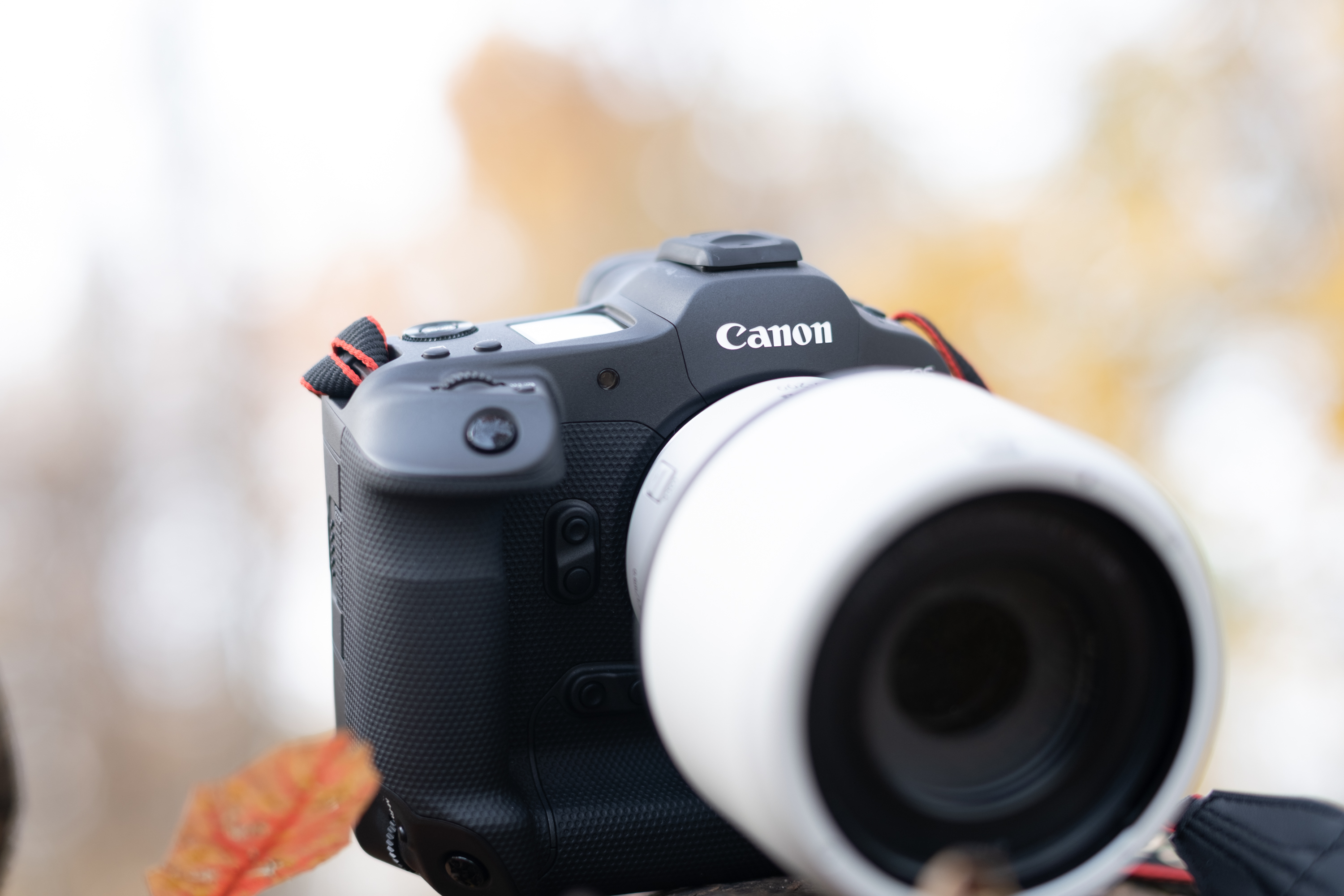
Canon EOS R1 is supposed to be the company’s best flagship. While it is far more advanced and not the same as the Canon EOS R3, there are still a lot of comparisons between the two, with the former being named the succors of the latter by loyalists. All that’s thanks to the sensor resolution, which is 24MP back-illuminated stacked CMOS sensors in both devices. But we are not here to talk about differences, rather than the future of the R3. As it turns out, it is all not too sad for Canon fans.
According to a report by Canon Rumors, the R3 line will continue, with the company likely to release it in 2026. A source close to the publication said the company’s internal meeting, which occurs regularly, is often about the roadmap of the company’s future. The source has seen the words “New 3 Q1-Q2 2026” on the roadmap, which indicates the plan for the camera is there despite the product not being announced in the near term. The publication reports that, unlike the last time, they did not receive the slide, as they did in the past. So, one has to take the report with a pinch of salt.
Although the slide mentions the new 3, it is unclear what kind of device it will be. By that, whether it will focus on the same users as the EOS R1 or a different group. Furthermore, the report also adds that the camera that hasn’t yet been seen but is now mentioned on the side is the EOS R7 C, an APS-C cinema camera.

The EOS R3 was quite exceptional when it was launched in 2021. The R3 competes with the Sony a1 and Nikon Z9 as a flagship sports camera. However, what they did differently was include Eye Control AF, which was seen on their film cameras before. Furthermore, it reduces rolling shutter distortion when shooting at 30fps.
In our review of the device, we noted that these qualities are quite exceptional. It can “shoot in the dark” while giving ISO 128,000 prints that look good. “While the R5 may make more sense for detail work, the R3 is an exceptional low-light and fast-action camera,” we stated. Furthermore, the R3 is still a capable camera, now that the R1 has launched, and in the future, too, it may be slightly priced lower than the R1.

looking at the timeline, the R1 is certainly a bump and comes after 3 years of the Canon EOS R3. So, there are chances that its successor will be released after a 2-3 year gap. However, considering the technology in the Sony a1, which has a higher pixel, and the Z9, which has a faster burst speed and low light recognition for POC, the R3 successor will have to do more. For instance, the sensor size may have to be bigger, an AI chip to process images better, or, like the a9 III, have a global shutter, which can also make it the first Canon photo-centric camera to do so.
There is still time, but it seems Canon will figure out the users’ demands following the launch of its latest cameras and perhaps incorporate them into the same. It remains to be seen how it all plays out in the future. Canon must take its competition from Nikon and Sony more seriously.
Get rid of the ads!
Did you enjoy reading this article as much as we enjoyed writing it? There's a way to support us and our reporting, getting ad-free navigation and more as a bonus. Subscribe to us for less than a coffee per month —just $3.99— or take advantage of our yearly subscription with a hefty discount for only $25.- An ad-free experience
- A free mystery box for Lightroom or Capture One
- All the books in our store
- 20% discount on Capture One
- 30% discount on Imalume Photo Theft Protection
- 20% off Herbs and Kettle Tea Company.
- 20% off your order from MPIX printing services.