


The Canon EOS R5 Mark II merges high resolution and high speed photography together in one full-frame camera. While we wish Canon would have done a little more, the 45-megapixel sensor, 30 fps electronic shutter burst speed, and eye control autofocus will undoubtably mean that the R5 Mark II ends up in many photographers hands. But a high-end camera like the $4,299 R5 Mark II is only as good as the lenses mounted on the front of it. That leaves an obvious question: What are the best lenses for the Canon EOS R5 Mark II?
The speed of the Canon EOS R5 Mark II will likely mean many photographers pick up the body for genres like sports and wildlife, which typically requires a much longer reach. But that 45 megapixel sensor will likely draw more than just action shooters. With Canon touting this lens as ideal for both photo and video, the lenses should be equally as versatile.
While Canon has a number of affordable lenses, putting a $500 lens on a $4,299 camera is a bit like dipping your caviar in WalMart ketchup. For squeezing the best quality and performance out of the R5 Mark II, L glass is where it’s at.
If you don’t find your favorite focal length below, check out our full list of Canon RF lenses.
Table of Contents
How We Test and Choose the Best Lenses for the Canon EOS R5 Mark II
- The Phoblographer’s various product round-up features are done in-house. Our philosophy is simple: you wouldn’t get a Wagyu beef steak review from a lifelong vegetarian. And you wouldn’t get photography advice from someone who doesn’t touch the product. We only recommend gear we’ve fully reviewed in these roundups.
- If you’re wondering why your favorite product didn’t make the cut, there’s a chance it’s on another list. If we haven’t reviewed it, we won’t recommend it. This method keeps our lists packed with industry-leading knowledge. Some of our stories include affiliate links. If you buy something through one of these links, we may earn an affiliate commission.
- When we test lenses, we’ve got various things in mind. First off, we consider who might want to buy the lens and what they might do with it. With that in mind, we try to tackle at least three genres of photography with that lens in a variety of situations. If the lens has weather resistance, then we’ll test it accordingly with a weather-resistant camera. We also test the autofocus of the lens in continuous mode, single mode, with exposure preview effects, without those effects, and then with all the major image quality parameters. These days, no one really makes a bad lens — but some are far better than others.
- In this specific roundup, we’re basing our findings on the reviews that we’ve done. We’re choosing a favorite, but we’re also giving photographers a bunch of others that they might like, depending on how they shoot.
Our Choice Among the Best Lenses for the Canon EOS R5 Mark II: Canon RF 24-105mm f2.8 L

The Canon RF 24-105mm f2.8 L is the sharpest Canon zoom lens that we’ve tested. But it’s that 24-105mm versatility that makes the lens an excellent pairing for the R5 Mark II. That wide to telephoto versatility paired with the flexibility of having both a high resolution sensor and a fast burst speed is going to be a really great combo. As part of the L series, the optic has the fast autofocus and durable weather resistance that we’ve come to expect from Canon’s high-end line. Like the R5 Mark II, the 24-105mm f2.8 is also designed for hybrid shooters, capable of working with both stills and video.
In our review, we state:
The Canon RF 24-105mm f2.8 L is an incredible lens. Overall, this is perhaps the sharpest zoom lens that I’ve seen from Canon. In fact, I’d rate this the sharpest zoom lens overall that I’ve tested in a while. That’s a good thing for many of you who want to do a lot of post-production or don’t mind doing it. I, on the other hand, much prefer their prime lenses and the gentle beauty they bless the heroes of your photos with. But I absolutely cannot deny the incredible innovation Canon has with this lens. No one else on the market has it. And if you’re a hybrid production shooter, then you’ll probably really like the Canon RF 24-105mm f2.8 L.


Canon RF 24-105mm f2.8 Tech Specs
Taken from the Lensrentals listing:
- Angle of View: 84° to 23° 20’
- Autofocus: Autofocus
- Brand: Canon
- Compatibility: Full Frame
- Exterior Design
- Focusing / Control Ring: Yes, with click stops
- Manual Focus Ring: Electronic ring system, Full-time Manual focus possible
- No physical limit to ring rotational angle: Yes None (Electronic distance scale possible in viewfinder or LCD monitor, with compatible EOS R-series cameras)
- Provided: Full / 1m to infinity Yes, AF / MF Switch, Distance Scale Distance Limiter SwitchDust / Weather Resistant
- Filter Size: 82.0mm
- Focal Length: 24.0-105.0
- Focus: Autofocus Drive System 2x Canon Nano USM focus motors Yes (Supports both ONE SHOT AF and SERVO AF with compatible EOS R-series cameras)Full-Time Manual Focusing Dual-Pixel CMOS AF Coverage (H x V)EOS R/RP/Ra/R100 – Approx. 88% x 100%EOS R5/R6 – With face + tracking-priority AF: Approx. 100% x 100%Other than with face + tracking-priority AF: Approx. 90% x 100%EOS R3, R6, Mark II, R8 R7, R10, R50 – For whole area AF: Approx. 100% x 100%For non-whole area AF when subject has been detected: Approx. 100% x 100% When subject has not been detected: Approx. 90% x 100%
- Dimensions (ø x L): 3.5 × 7.8″ / 88.5 × 199mm, 2.9 lb. / 1.3 kgWeight
- Hood Included: Yes
- Image Stabilization: Yes
- Item Type: Lens
- Lens Type: Normal Range
- Max Aperture: 2.8
- Maximum Magnification: 0.08 to 0.29x
- Mfr. Model Number: 6347C002
- Minimum Aperture: 22.0
- Minimum Focusing Distance: 1.5feet
- Mount: Canon RF
- Optical Design: Groups/Elements18/2343, Canon SSC (Super Spectra Coating), ASC (Air Sphere Coating), Fluorine Coating11Ultra-Low Dispersion Elements Aspherical Elements Lens Coatings Aperture Blades
- System: Canon
- Tripod Collar: Removable
For Some Photographers, These Might be the Best Lenses for the Canon EOS R5 Mark II
While the quality of the 24-105mm f2.8 makes the lens a tempting option to leave on the camera, it’s a fairly massive lens. Photographers will want additional options for more portability, more bokeh, or more reach, which is why we also recommend these lenses for the Canon EOS R5 Mark II.
Canon RF 50mm f1.2 L USM
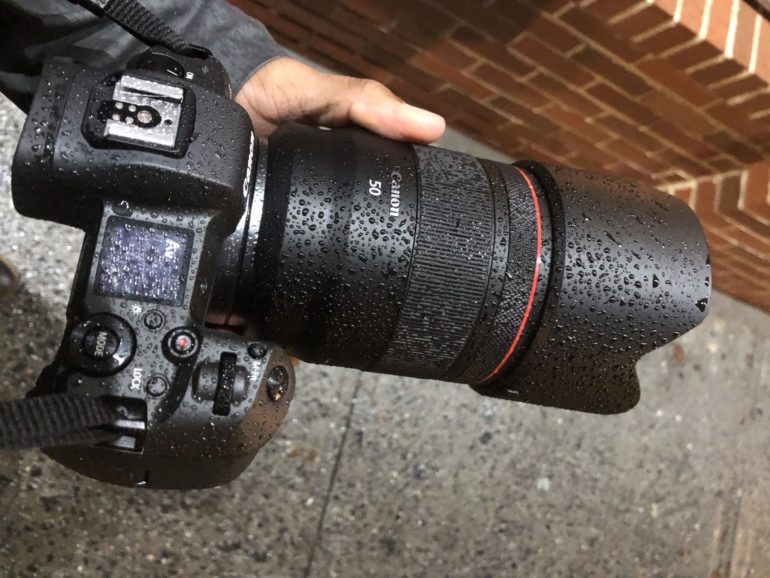
Every once in awhile, we find a lens that’s so good, it may even tempt photographers to switch brands. The Canon RF 50mm f1.2 L USM is one of those lenses. The mix of sharpness and bokeh with the way this lens renders colors won us over. The control ring makes aperture control seamless, while the autofocus is fast. The durable construction is another key highlight. The downside? It’s a pricey lens with some weight to it.
In our review, we state:
I didn’t expect to Canon RF 50mm f1.2 L USM to be a reason to come back to Canon, but I’m glad to say that, via Adorama, I purchased the new lens along with a new body. With a very medium format look to it, the Canon RF 50mm f1.2 L USM proves Canon put lenses first when they created this camera system. While the Canon EOS R is a bit lackluster in comparison to its competitors, this lens really makes it stand out. Maybe I’m smitten with the way the sharpness is just there at f1.2, or the colors, the way it makes people look, or just how it renders scenes. But as it is, I’m pretty safe-guarded against the bokeh bug. And in my testing, I’ve found the Canon RF 50mm f1.2 L USM to be incredible.





Canon RF 70-200mm f2.8 L IS USM

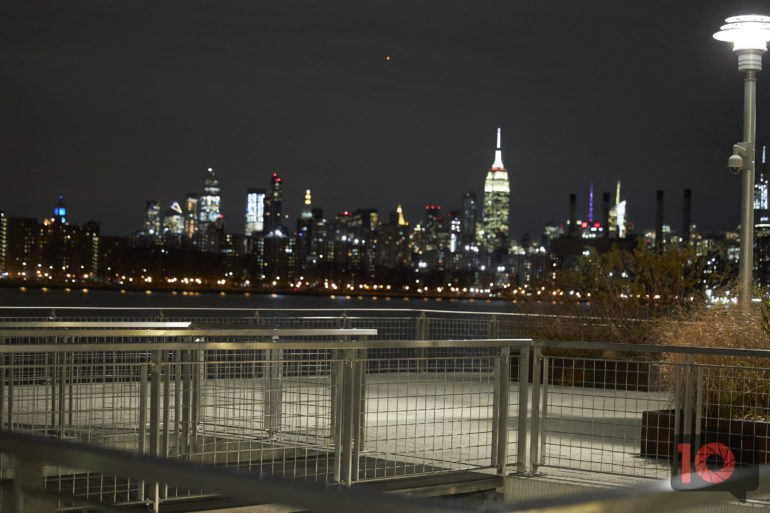
If the 24-100mm isn’t quite long enough, but you don’t want a huge telephoto, consider the Canon RF 70-200mm f2.8 L IS USM. The lens is fairly compact considering it’s a 200mm, and that’s paired with weather sealing too. The autofocus is not only fast but capable of focusing fairly close to the front of the lens too. While we wish the control ring was in a different spot, the 70-200mm f2.8 is an excellent glass for Canon’s RF bodies.
In our review, we said:
After first laying eyes on the Canon RF 70-200mm f2.8 L IS USM nearly a year ago, I wasn’t sure what to expect when the review unit came in. What I didn’t realize is that it would quickly become one of my favorite telephoto zoom lenses. What’s more, it’s the first 70-200mm f2.8 lens I seriously considered purchasing. The secret to the Canon RF 70-200mm f2.8 L IS USM is the size. It becomes larger when it’s fully zoomed in, but, when set to 70mm, it’s shockingly small. Attach it to the Canon EOS R, and you can easily stuff it into a messenger bag. Then consider the image stabilization, Canon’s lens character, and the beautiful image quality it delivers. And let’s not forget that it survived a photo walk in the rain. In comparison to Sony’s option, the Canon RF 70-200mm f2.8 L IS USM is much more practical.




Canon RF 100-500mm f4.5-7.1 L IS USM
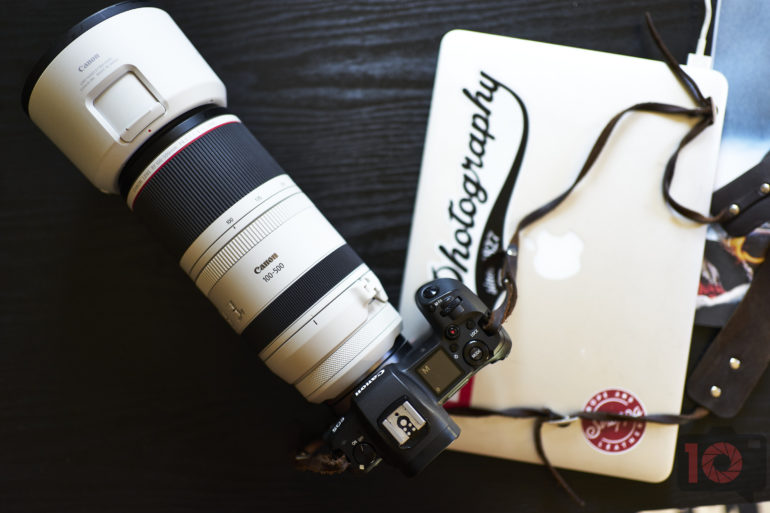
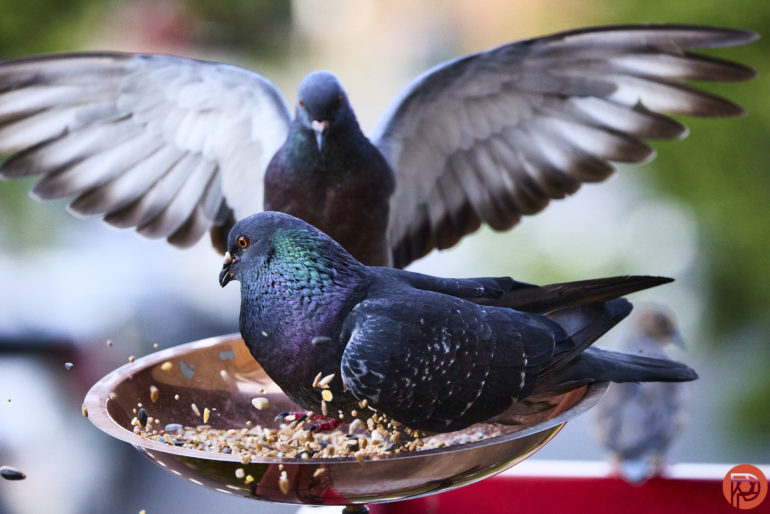
The 30 fps speed on the Canon EOS R5 Mark II is bound to draw a number of sports and wildlife photographers. But for those genres, you really need a great super telephoto. Enter the Canon RF 100-500mm f4.5-7.1 L IS USM. Besides the obvious reach listed right in the name, this lens has fast autofocus motors, plus stabilization. The mix of sharpness, colors, and bokeh produces some pretty beautiful results when birding, even when mounted on a more affordable camera like the EOS R.
In our review, we said:
It shoots birds. In fact, the Canon RF 100-500mm f4.5-7.1 L IS USM does a great job of that. Make no mistake, this is a beastly lens. It’s large but not overly heavy. But if you’re birding, then it’s got exactly what you need if you’re using higher megapixel bodies. When we took it out birding, we were reminded why Canon’s lenses are so gorgeous. There isn’t anything major to complain about, but personally speaking, you may have your gripes. When you look at the image quality, build quality, and the competition, you’ll appreciate this lens a lot. What’s even more impressive is that you might not need to upgrade beyond the Canon EOS R.



Using this Guide to the Best Lenses for the Canon EOS R5 Mark II
If you’re considering purchasing anything from this list, consider the following:
- All the product images and sample photos in these roundups are shot by our staff. In fact, we don’t talk about products at length in roundups like this unless we’ve done full reviews of them. But you can surely know that we’ve done all the research ourselves.
- We’d never recommend a product to you that we haven’t tested or that we really didn’t like. You can reference our linked reviews, for more information on this.
Tips on Choosing the Best Lenses for the Canon EOS R5 Mark II
The Canon EOS R5 Mark II is an RF mount body. While you can use an adapter on Canon’s old DSLR lenses, the sharpest shots and the fastest autofocus performance comes from Canon’s made-for-mirrorless RF lenses.
- Canon’s L series is by far our favorite options for RF bodies because they produce lovely images and have high-end features like wide apertures and weather-sealing.
- If you can only pick up one pricey L series lens, choose one that’s your favorite focal length. The longer optics are best for birding and sports, a nifty fifty is great for portraits, where the 24-105mm f2.8 has the versatility for a number of different genres.
- Consider how long you would typically shoot with the lens. If you want to be able to hike with the lens all day, size and weight becomes even more important.
- Weather-sealing is a feature that’s about more than just shooting in the rain. The seals will also help prevent dust from collecting on that new R5 Mark II sensor.
Picking the right Lenses for the Canon EOS R5 Mark II for you
- What’s your budget?
- How will you use the product?
- What lighting situations are you in, and how will that affect what you’re doing? Our reviews hyperlinked in this article can help with that.
- Are you traveling a lot with it?
- Will you be using it in a situation that’s a bit rougher?
- Who else uses this product? How are they using it?
- What’s so appealing about this product that I can’t get from what I have already or something else?
- When will I really have time to use this product?
- Where will I bring this product?
- How will this product help bring me joy and joy in my photography?
Get rid of the ads!
Did you enjoy reading this article as much as we enjoyed writing it? There's a way to support us and our reporting, getting ad-free navigation and more as a bonus. Subscribe to us for less than a coffee per month —just $3.99— or take advantage of our yearly subscription with a hefty discount for only $25.- An ad-free experience
- A free mystery box for Lightroom or Capture One
- All the books in our store
- 20% discount on Capture One
- 30% discount on Imalume Photo Theft Protection
- 20% off Herbs and Kettle Tea Company.
- 20% off your order from MPIX printing services.
- 5% off Viltrox Products via their eCommerce store.
- 10% off all film developing, printing and scanning services from Blue Moon Camera and Machine
- 15% off 7Artisans products: The lens and accessory maker is offering a sweet discount for Phoblographer's readers.