

I can’t believe this, but I published the review of my favorite film camera around a decade ago. Purchased from a gentleman whom I believe used to run Nippon Photo Clinic in NYC, I remember going to a place deep in Brooklyn to get it. We either met up in a Chinese store or a laundromat. And when I held it, I realized that it was pretty much fully restored and totally functional. Since then, it has come with me on random tips. That camera is the Polaroid 180; and unfortunately I also published my review of after peel apart film was pretty much gone. Those cameras turn 80 years old next year. And brands like Supersense are trying to keep the format and lifestyle alive.
In my fridge, I’ve got a few packs of Fujifilm FP-100c Film. Every now and again I consider selling them, but I know that I’ll actually really enjoy shooting with the film. On eBay right now, you can find a pack for around $50. But according to WatchCount, one listing went for $5,000. It’s crazy for me to think about this because that’s what I’m selling my Hasselblad 501C and accessories for right now.
Every year since the film has been discontinued (which is over a decade now) I tell myself that I’ll finish it all up this summer. That hasn’t happen, obviously. But this year, I’m making a more concerted effort.
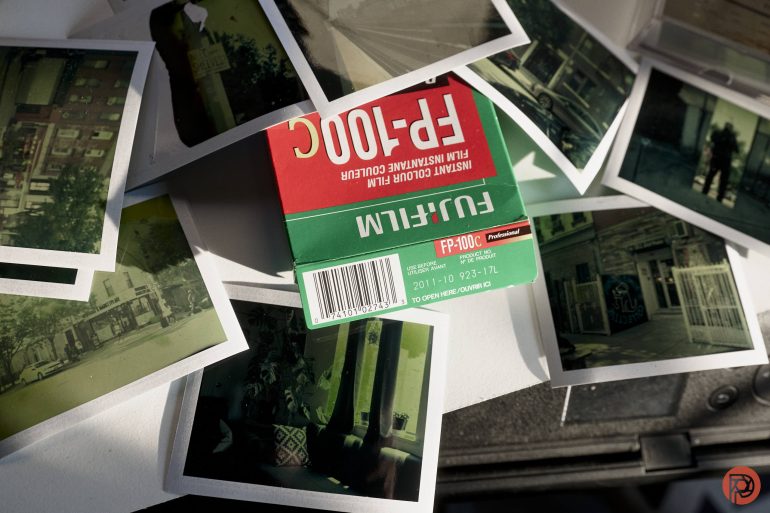
Fujifilm FP-100c Film has quite a history. For most real photographers, it’s probably best known for being a preview film. You’d use it with an instant film back connected to a medium format film camera to preview the exposure and scene before loading up real 120 film into the camera. Then you’d do your shoot as planned. But after digital started to become more mainstream, people shot with it for fun. The problem is though that not enough people shot with it. Polaroid discontinued their film and eventually Fujifilm did the same thing.
I’ve had a bunch of this film in my fridge for a long time. And it has always been in my fridge save for a short period where I moved apartments. It should always be in the fridge — never the freezer lest the chemicals fail. I found that out the hard way a long time ago.
Several years ago, I went on a date with a truly wonderful woman who was getting off of alcohol at around the age of 30. So we met up, shared the first avocado toast I actually liked, and we walked around Park Slope, Fort Greene, and Downtown Brooklyn on a Polaroid photo walk. It was romantic and fun. But some of the images never developed because it was the winter and it was way too cold out. Indeed, this film needs to be preserved in the cold, but shot with in the warmth.
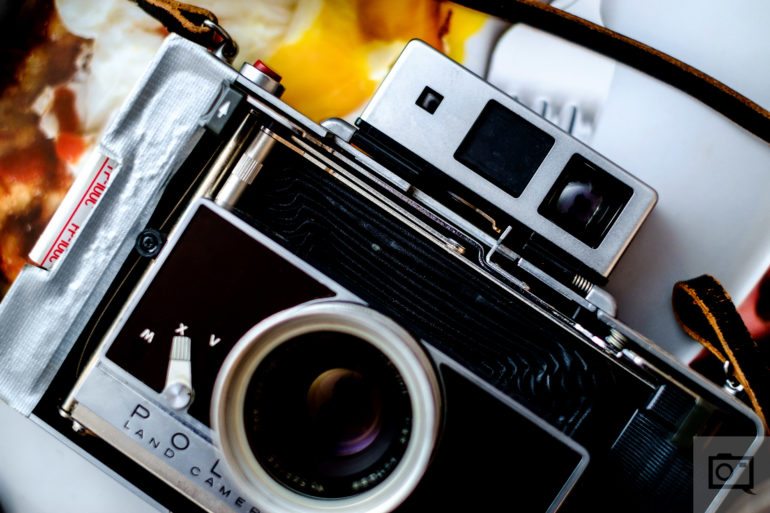
Bringing the Polaroid 180 out of my camera bag and slinging it around my neck was quite a nice experience. Perhaps moreso than any other camera I’ve ever had on me, it got looks and conversations started. I remember walking home last week after yoga and a woman told me that she was in love with my camera. Because my brain was still in yoga mode, I just said thank you and moved on. It was quite fascinating too — she was speaking Spanish in some of the fastest I’ve ever heard and then she purposely slowed her pace down to switch to English and say, “Ohhhhh, nice camera papi.”
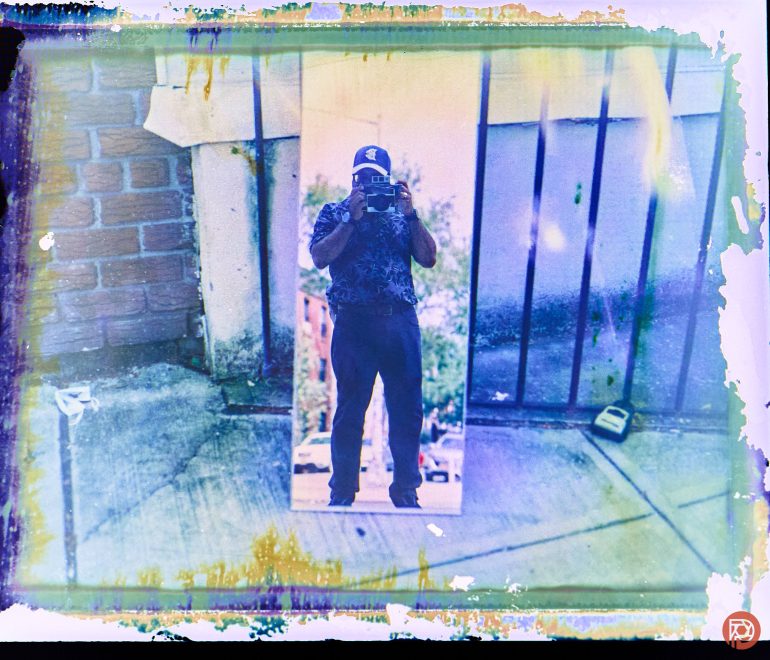
A few days ago, I went back to my old neighborhood in Brooklyn to meet up with a photographer whom I’m interviewing as part of a research piece. While I waited for the 7 train, I stared out at a scene and prepared the camera to shoot. It’s so fascinating because this is truly a process that’s part of a tactile magics inherently missing from modern cameras.
First, I mounted the camera around my neck. Then, when looking out at the scene, I used Sunny 16 to figure out my metering. Earlier, I was shooting a pack that expired in around 2016. But the pack that was loaded into the Polaroid 180 then expired back in 2011. With the expiration in mind, I decided to overexpose the scene by 2 stops. So with my ISO locked to 100, I set the shutter speed to 1/125th. Then I moved the aperture ring to 16, then all the way to f8 to give it two more stops of light. After this, I flipped up the rangefinder viewfinder, which was made by Zeiss. Once that was locked in, I carefully pulled out the bellows and lens system, cocked the shutter, focused the frame, and shot the image.
People stared at me in curiosity the entire time.
Once the frame was made, I pulled a tab on the side of the camera that allowed me to pull the image through the roller system. I ensured that it was done just fast enough but also just slow enough to get the chemicals to fully go through the film plane. After this, I massaged the exposure to really ensure that the chemicals distributed themselves evenly through.
I noted that it was 80 degrees, so after reading the development time, I waited a bit over 90 seconds just to be safe.
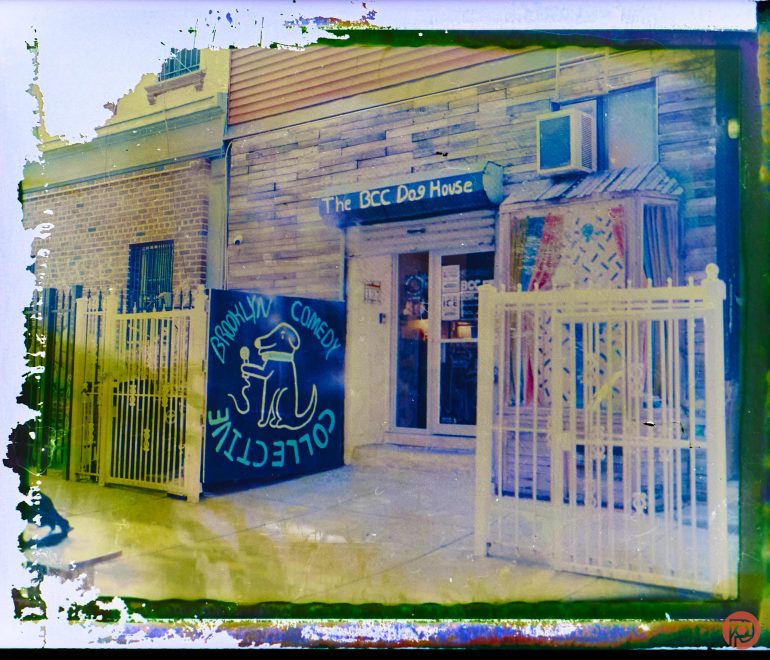
A young man started talking with me about the camera and a young lady nearly stared a hole through me as she listened in intently.
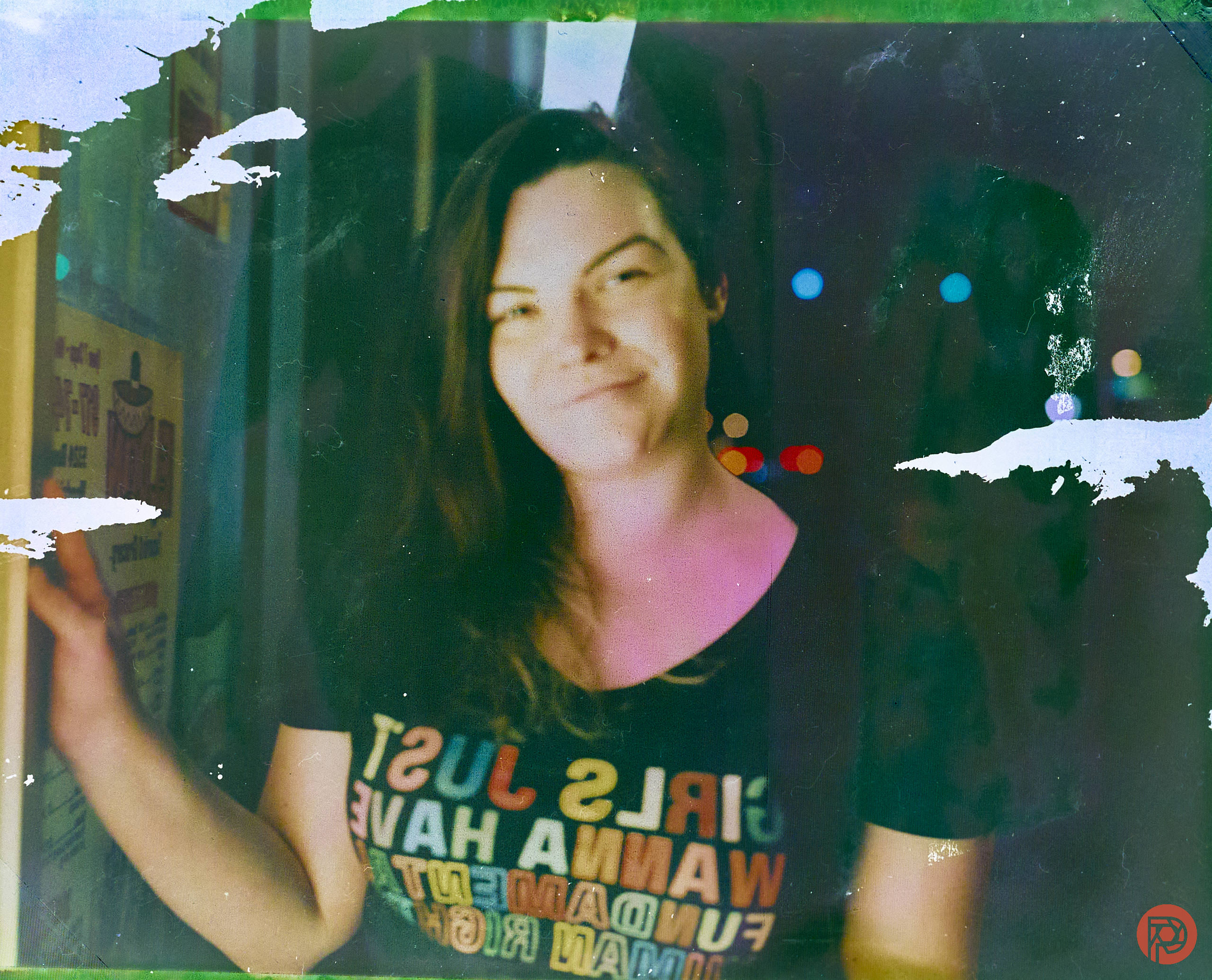
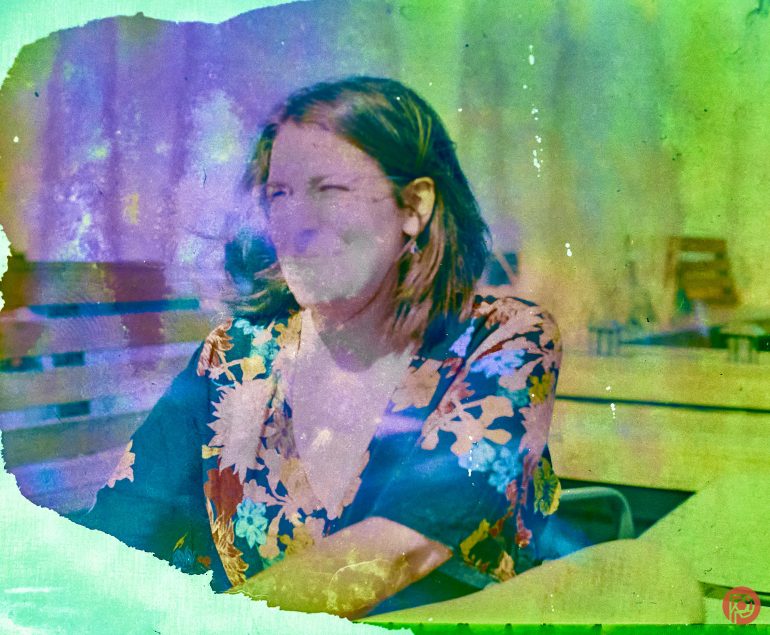
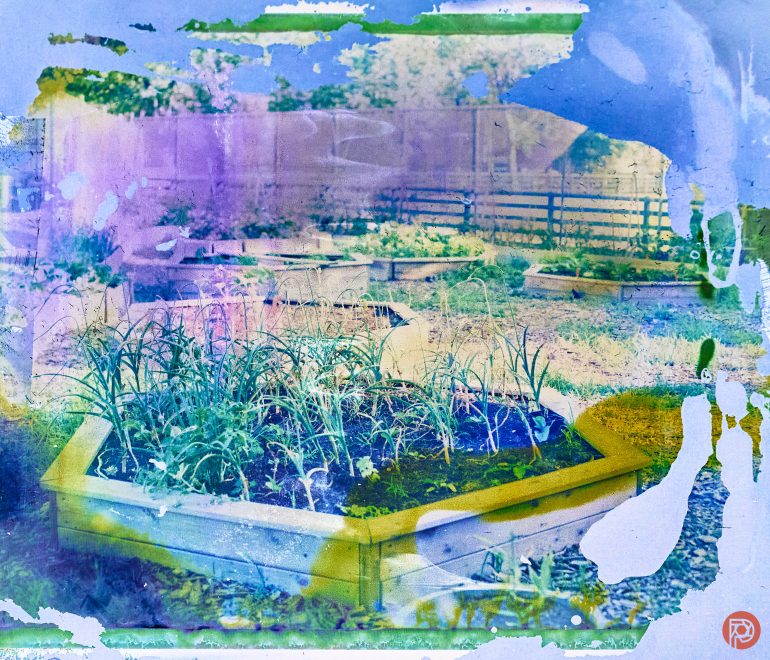
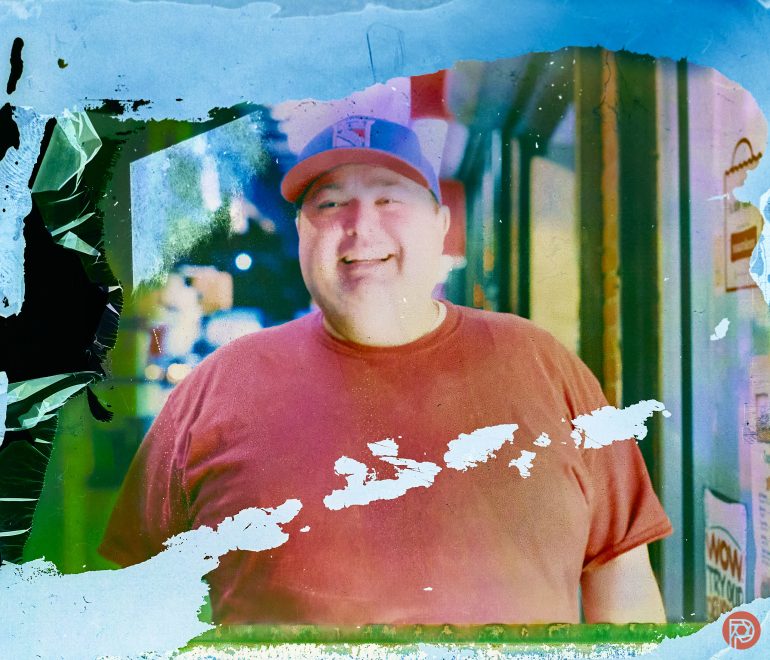
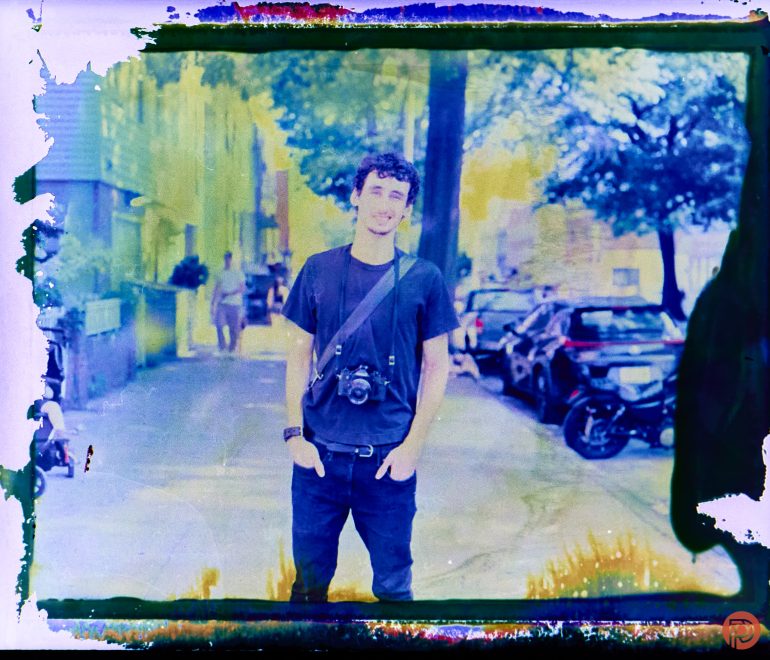
Because the film had been expired for so long, it developed some oddities. It’s got a super green tint to both the positive prints and the negative. The positive prints can be seen in the lead image of this article. The negatives were color corrected; sort of. And those are the scans that you’re seeing here. The more messed up looking ones were recently shot. Others are from film that expired maybe 10 years ago but I kept the negatives in my desk and only developed, scanned, and color corrected them over the weekend.


To get the negatives from the film, you have to keep the part that you peeled away. I tend to soak them in water. After that I prepare a board of some sort and I tape the negative down with the really black side face up towards me. I used to use toilet bowl cleaner gel with bleach, but now I use the spray. After this, I’ll use either a Q-tip or a shaving brush to get that black stuff away. All the while, I’m running it under water to keep the entire thing clean. When the blue underlayer appears, I know that I made progress. I’ll hold the negative up to the light, make fine tuned adjustments, and then let it dry. After that, I set it out on my iPad set to a bright white screen. My Leica SL2s will shoot a frame and I’ll mess with the negative in Capture One.
That’s when the magic really happens.
For the life of me, I don’t understand why the Japanese brands don’t lean more into the retro-aesthetic of cameras. And a conversation I had with friends yesterday made me realize why: they’re not good at making original products — and if they or anyone believes that to be wrong, then I challenge you to prove me otherwise and I beg you to change my mind. They’re incredible at improving technology: they did wonders for the SLR by the way of Nikon and Pentax and the watch world by the way to Casio and Grand Seiko. But they also basically just rely on marketing to oversell and then buy out the competition, much like they did with the whiskey world.
With that said, Zeiss or Leica could’ve done something like this if they just had the resources to do it. So the only real brands that you can rely on now to make this happen are the Chinese ones. They are rife with artisans and people who are genuinely passionate about photography and olden ways.
All of this to say something that I’ve continued to say for too long of a time. Modern photography is way too easy. The cameras and the lenses do everything for us. It’s designed for brain rot, being sloppy, and then telling yourself that you’ll fix it all later. I hate that. It takes away from the intentionality of the moment and puts all your eggs into a basket that’s still being woven. Modern photography is also very predictable — and I miss the unpredictable nature of things.
Sure, you could turn off all the exposure previews and stuff. And I surely tend to do that. But how many people actually do this? What I see on Reddit are images of mostly the same things over and over. There’s far less of that on Behance and VSCO; but modern photographers are stuck in a toxic relationship with Instagram and TikTok thinking that people will actually hire them to be photographers instead of content creators.


It’s crazy that all of these thoughts came from shooting with a few packs of expired film and reminded me of how I’ve always felt to be true. Generally speaking, I feel like most photographers these days could be replaced by their cameras set to auto or something. But not many of them can do the same with analog film cameras.
Analog instant film still holds a surprise for us and makes people believe that photography can be an art and a skill again when they experience you actually doing it. In the age of AI and all the Youtubers cosplaying as journalists along with influencers misleading the public, we’re not rushing back to the analog ways fast enough.
Get rid of the ads!
Did you enjoy reading this article as much as we enjoyed writing it? There's a way to support us and our reporting, getting ad-free navigation and more as a bonus. Subscribe to us for less than a coffee per month —just $3.99— or take advantage of our yearly subscription with a hefty discount for only $25.- An ad-free experience
- A free mystery box for Lightroom or Capture One
- All the books in our store
- 20% discount on Capture One
- 30% discount on Imalume Photo Theft Protection
- 20% off Herbs and Kettle Tea Company.
- 20% off your order from MPIX printing services.
- 5% off Viltrox Products via their eCommerce store.
- 10% off all film developing, printing and scanning services from Blue Moon Camera and Machine
- 15% off 7Artisans products: The lens and accessory maker is offering a sweet discount for Phoblographer's readers.