

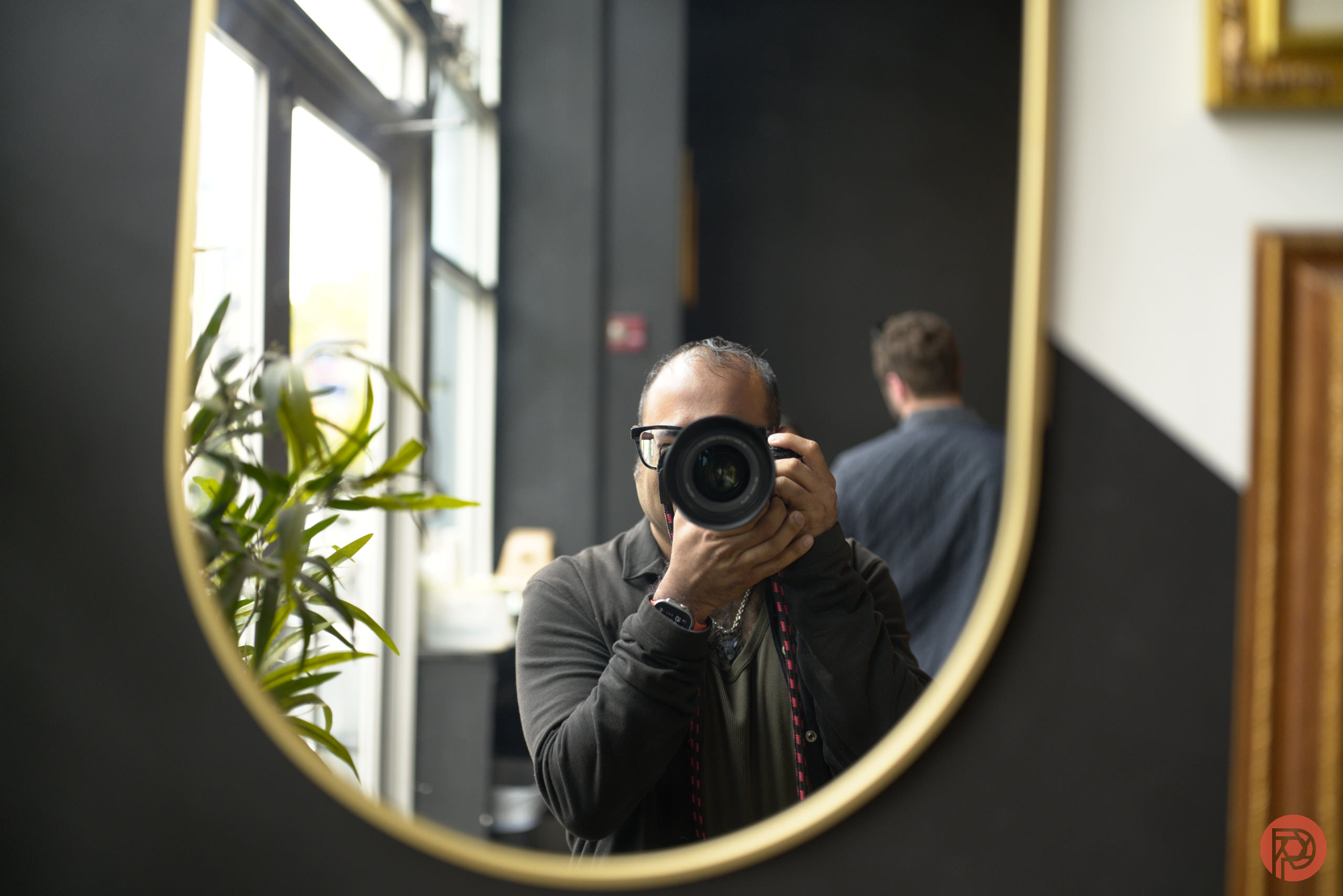
Fact: most photographers who wear glasses can’t really function without them all that well. But there is a growing number of photographers who have low vision and even qualify for legal blindness. I’m one of those. That means that even with corrective lenses, you can’t see well enough to be able to legally drive anymore. It also doesn’t need to stop you from making images. So if you’re low vision, I’m going to quickly go through a few things you should consider.
First off, when you’re buying a camera, work with the person who sold it to you to set it up. That person hopefully will be smart enough to help you understand and navigate things like the menu settings and how to increase the size of the font on many new cameras.
Take a few days to really familiarize yourself with the camera and learn the muscle memory. Eventually you’ll learn different sequences like: menu button, right button, right button, right button, down button, down button, down button, down button, down button, down button, middle button, right button, middle button, etc.
Ideally too, you’ll be able to see well enough that you can use the touch screen to navigate through menus. And this, honestly, is why I’ve been telling camera companies for years to make their cameras more compliant for low vision people. We’re all staring at screens more and more and losing our vision. The billion dollar companies can give us a break.
Next, I recommend using scene detection/AI to help you out with autofocusing. I can do this manually to a certain point, but things like bird photography became so much easier for lots of photographers once the AI scene detection setting became available. Now bird photographers have been popping up everywhere and only getting the photographs that they can make because of the AI features.
If you’re low vision, combine this with using binoculars to find the animals in the scene.
Otherwise, consider manual focus and zone focus. Zone focusing is one of the best things to help you with getting the photograph you want. We’ve got an entire tutorial here on zone focusing.
Here’s a quote from that article:
To understand zone focusing think about looking at something very far away. The first thing you do is squint your eyes in order to force your eyes to see it clearer. Zone focusing works similarly, except that the lens of your camera selectively allows things to be seen clearly. Essentially, zone focusing is the process of using a lens stopped down and focused to a certain distance. If you stop a 28mm lens down to f5.6 and focus around five feet away, a distance of maybe four to seven feet could be in focus. But if you do this with a 35mm lens, less of the scene will be in focus due to the longer focal length. The longer the focal length, the less of the scene will be in focus at a given aperture and distance.
On top of all that, consider something a bit more obvious: walk slower. When you walk slower, you actively also lower the cortisol in your system and your stress hormones calm down. This is pretty essential to making better images with more impact.
You may even consider setting up with a tripod too. Using a tripod forces you to slow down. And sometimes, you really need to do that and think more critically about how you make images instead of trying to always be so blazing fast.
Consider these if you’ve got low vision. Being low vision means that you’ll end up making images that other photographers don’t necessarily make. And that’s exactly what we need these days.
Get rid of the ads!
Did you enjoy reading this article as much as we enjoyed writing it? There's a way to support us and our reporting, getting ad-free navigation and more as a bonus. Subscribe to us for less than a coffee per month —just $3.99— or take advantage of our yearly subscription with a hefty discount for only $25.- An ad-free experience
- A free mystery box for Lightroom or Capture One
- All the books in our store
- 20% discount on Capture One
- 30% discount on Imalume Photo Theft Protection
- 20% off Herbs and Kettle Tea Company.
- 20% off your order from MPIX printing services.