

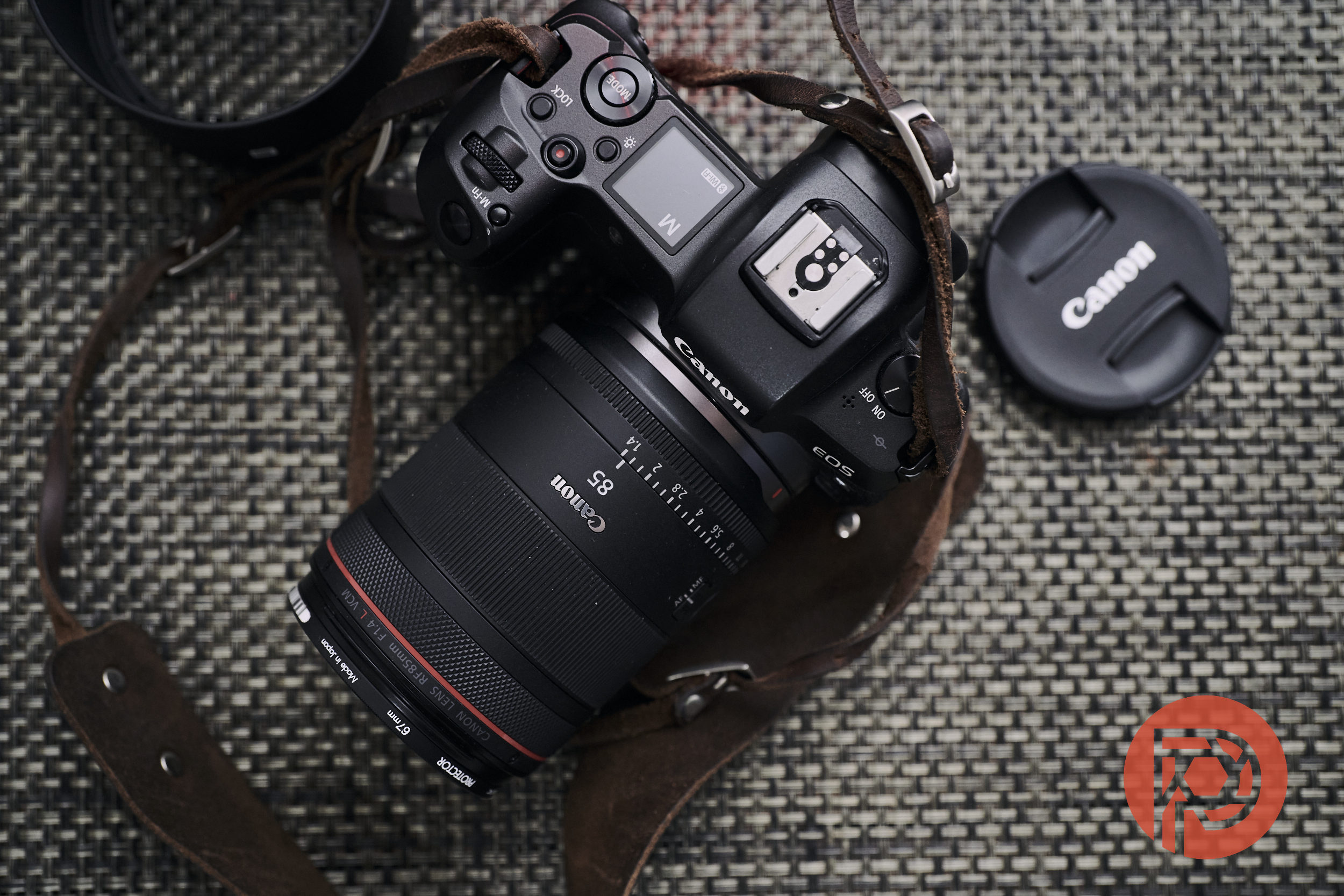
Recently, Canon began releasing several prime L-Series lenses with VCM autofocusing motors. These new VCM lenses are notable for their relatively compact size, weight, fast apertures, and crazy fast autofocusing speeds. The Canon RF 85mm F1.4 L VCM lens is the latest that I’ve had the opportunity to test, and for the most part it’s a great 85mm lens that offers a good balance between size and image quality. However, there’s a glaring issue with all these new lenses and it’s hard to recommend these lenses for that reason. In conversations with the Phoblographer’s Editor in Chief Chris Gampat, we’ve concluded that Canon must really hate their own customers.
Table of Contents
The Big Picture: Canon RF 85mm F1.4 L VCM Review Conclusions
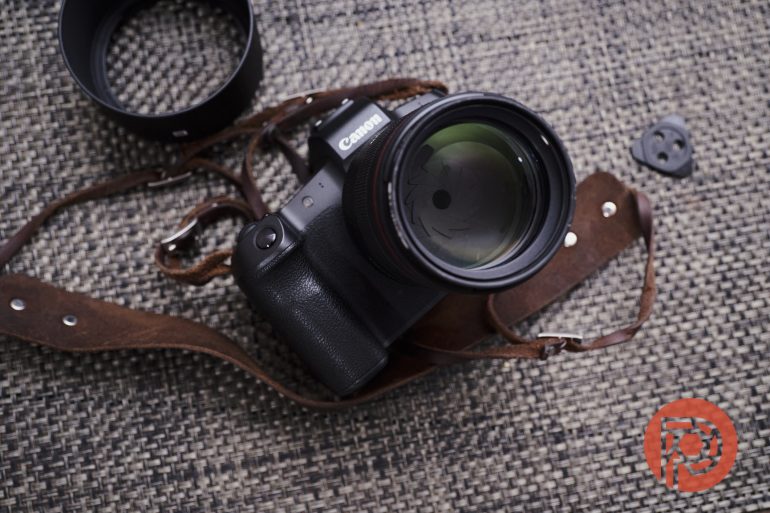
If you’re using an older Canon camera, the Iris/Aperture control ring on the RF 85mm L VCM won’t work. Worse yet, if you’re using the very capable in 2026 EOS R (the original) the front, assignable control ring won’t work either. This was something that I encountered in previous versions of Canon’s VCM lenses and it was annoying then, today it feels outright hostile. My personal camera is the Canon EOS R8, at The Phoblographer we keep an EOS R, EOS R5, and EOS R3 on hand for reviews. This and every VCM lens we’ve tested with these older bodies are not compatible with one of the biggest improvements to these lenses – a dedicated Iris/Aperture ring.
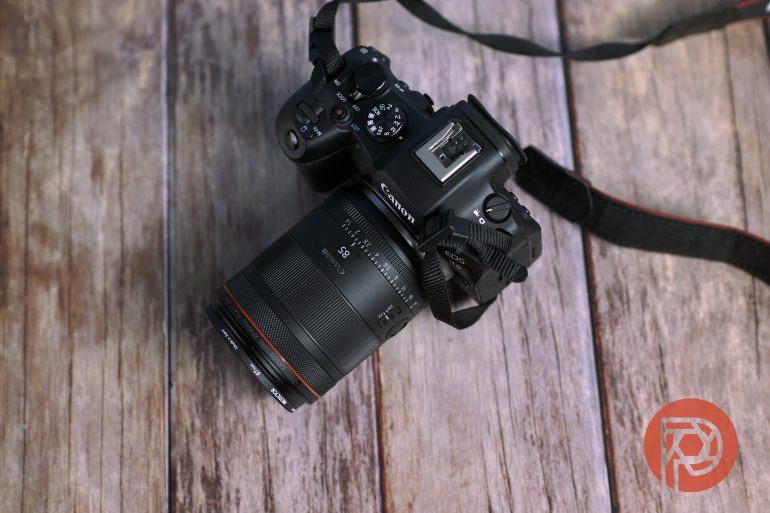
The RF 85mm F1.4 L VCM does everything it needs to do for an L-Series lens: it’s properly fast in acquiring focus, it has a sufficiently fast aperture for work in a variety of conditions and genres, and it’s the right weight where you could keep it in your gear rotation. In the most technical sense, it does everything it claims to do if you have an EOS R5 Mark II or newer. But, if you’re not changing out your camera gear every couple of years, you might find yourself with some serious buyers’ remorse. Does Canon just hate its customers?
More importantly, Canon hasn’t give us a lot of reasons to really need to upgrade in a long time.
We’re giving the Canon RF 85mm F1.4 L VCM three out of five stars. Want to try one for yourself? Check it out on Amazon for $1649.
Experience
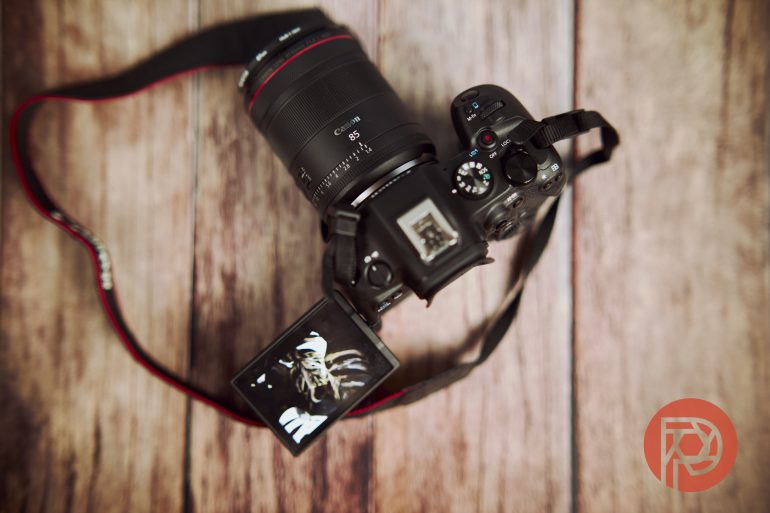
We tested the Canon RF 85mm F1.4 L VCM with a Canon EOS R6 Mark III, EOS R5 Mark II – all three on loan from LensRentals. We also tested the lens with the EOS R8 and EOS R, which we own.
When Canon introduced the VCM lens lineup I was truly intrigued. They’re a series of quality lenses that are compact, lightweight, with fast apertures, and all sharing the same lens filter thread size, it seemed like an instant homerun. Better yet, Canon was including a hardware, aperture control ring; consider me sold!
The RF 85mm F1.4 L VCM ticks off many of these boxes, but I can’t help but feel that Canon is purposely gimping older camera models in hopes that it will frustrate a photographer enough to buy a newer body.
But the more I uses these lenses, the more it’s becoming very obvious that Canon didn’t make these lenses with photographers in mind. In fact, if you’re like me and have no desire of upgrading your pre-R5 Mark II Canon body, you’ll find that at best the Iris control ring will only work in video mode. For some cameras, like my R8, you can assign aperture control to the front multi-function ring, but that dedicated Iris control is rendered useless. It’s even worse on the EOS R – you can’t even use the multi-function ring to control aperture.
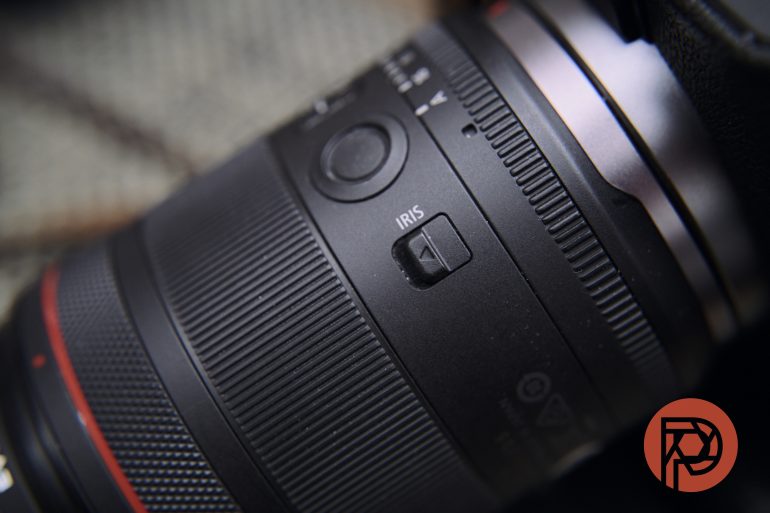
At best, you might find this quirk a little annoying, but if you’ve been using Canon cameras since the release of the original Canon 5D, you’ve been waiting and wanting more compact, lightweight lenses, with weather-resistance built into them. The RF 85mm F1.4 L VCM ticks off many of these boxes, but I can’t help but feel that Canon is purposely gimping older camera models in hopes that it will frustrate a photographer enough to buy a newer body.
Don’t.
The more time I’ve spent with Canon’s VCM line of prime lenses, it becomes clear that these lenses are primarily aimed at the unicorn that marketers call “the hybrid photographer.” I’m not suggesting that this photographer doesn’t exist, just that it feels like an affront to those of us who are only interested in tools for still photography. Overall, the lens feels wonderful in the hand – it’s compact but not tiny, lightweight, but still feels like its solidly built – and if you’re the proud owner of a newer Canon body, you can also enjoy the benefits of a dedicated aperture control ring. For everyone else, we can start doing the mental math of just how much we’ll be in debt to use, what is otherwise, a hardware control ring on a lens.
Image Quality
My love-hate relationship continues with Canon. The RF85mm F.14 L VCM can produce some beautiful images that are both sharp and give photographers a beautiful color palette to work with. The color the lens produces are bright while keeping the images tack sharp – regardless which body we used. In fact, I found myself quite confidently using the JPEG images for gigs and for some of the product images on this site. Yes, the 85mm focal length is often associated with portrait photography but the RF85mm L VCM can be great for street, product, events, and anything else in between.
Here are some unedited sample photos taken with the Canon RF 85mm F1.4 L VCM lens:


These sample photos have been edited:


Do You Really Want to Buy from Canon?
We believe that everyone should be aware of the ethical decisions that they’re making when they spend money. So to do this, we research the companies that whose products we test and make folks aware of both possible concerns and reasons to feel great about giving a company your money.
Here’s what we’ve got for Canon:
- Several of Canon’s products may contain potentially harmful chemicals, as described under California’s Proposition 65/Safe Drinking Water and Toxic Enforcement Act of 1986.
- Like many other companies, Canon has recently begun working with more artists from diverse (non-white/European) regions, including members of the African Diaspora, the Middle East, Asia, and the Americas; one such example is the Miraisha Project, which aims to increase employment opportunities and skills training in Africa. Locally, Canon has provided support to the BLACK PEARL’s Culture@ Campaign.
- Since the early 2000s, Canon has become more proactive in its sourcing and supply chain practices to ensure that its suppliers/vendors meet Canon’s corporate ethics, environmental conservation goals, and ensure the rights of their suppliers’ workers. You can find their full Sustainability Policy here.
- In Canon’s 2025 Sustainability Report, a third-party researcher concluded that Canon has continued making progress in its sustainability goals.
- We’ve previously questioned Canon’s employment practices when it comes to equality.
- Canon has been known to offer misogynistic responses to criticism about what they think of women.
- Canon has had to recall several devices in the past. Some of these were cameras.
- Class Action Lawsuits have been taken against Canon for printer issues.
- Customers have been actively leaving Canon because of the lack 3rd party options.
Declaration of Journalistic Intent
The Phoblographer is one of the last standing dedicated photography publications that speaks to both art and tech in our articles. We put declarations up front in our reviews to adhere to journalistic standards that several publications abide by. These help you understand a lot more about what we do:
- At the time of publishing this review, Canon isn’t running direct-sold advertising with the Phoblographer. This doesn’t affect our reviews anyway and it never has in our 15 years of publishing our articles. This article is in no way sponsored.
- Note that this isn’t necessarily our final review of the unit. It will be updated, and it’s more of an in-progress review than anything. In fact, almost all our reviews are like this.
- None of the reviews on the Phoblographer are sponsored. That’s against FTC laws and we adhere to them just the same way that newspapers, magazines, and corporate publications do.
- Canon did NOT loan the unit or any accessories to the Phoblographer for review. There was no money exchange between us or their 3rd party partners and the Phoblographer for this to happen. Manufacturers trust the Phoblographer’s reviews, as they are incredibly blunt.
- Canon knows that it cannot influence the site’s reviews. If we don’t like something or if we have issues with it, we’ll let our readers know.
- The Phoblographer’s standards for reviewing products have become much stricter. After having the world’s largest database of real-world lens reviews, we choose not to review anything we don’t find innovative or unique, and in many cases, products that lack weather resistance. Unless something is very unique, we probably won’t touch it.
- In recent years, brands have withheld NDA information from us or stopped working with us because they feel they cannot control our coverage. These days, many brands will not give products to the press unless they get favorable coverage. In other situations, we’ve stopped working with several brands for ethical issues. Either way, we report as honestly and rawly as humanity allows.
- At the time of publishing, the Phoblographer is the only photography publication that is a member of Adobe’s Content Authenticity Initiative. We champion human-made art and are frank with our audience. We are also the only photography publication that labels when an image is edited or not.
More can be found on our Disclaimers page.
Get rid of the ads!
Did you enjoy reading this article as much as we enjoyed writing it? There's a way to support us and our reporting, getting ad-free navigation and more as a bonus. Subscribe to us for less than a coffee per month —just $3.99— or take advantage of our yearly subscription with a hefty discount for only $25.- An ad-free experience
- A free mystery box for Lightroom or Capture One
- All the books in our store
- 20% discount on Capture One
- 30% discount on Imalume Photo Theft Protection
- 20% off Herbs and Kettle Tea Company.