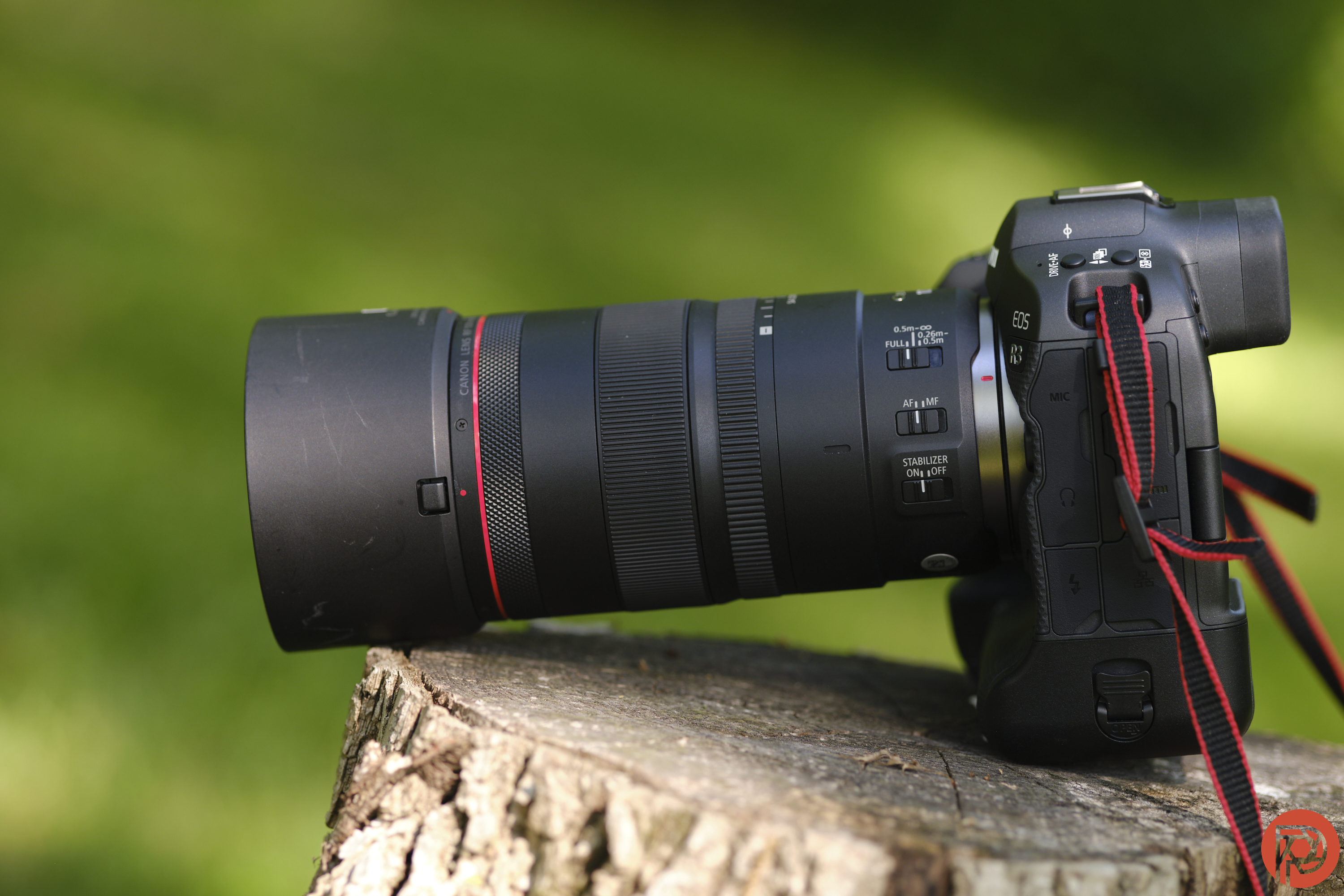
Canon has been one of the few companies to continue pushing the boundaries of its optical system. With the EF mount, the company introduced models such as 200mm f2, 24-70mm f2.8L, and 50mm f1.8 STM lenses. However, with the RF, the list is small but continuously growing. And one lens that managed to win us over but is continuously ignored, is the Canon RF 100mm f2.8 Macro.
The RF 100mm f2.8 is one of the most innovative lenses the company has released in the past few years. What makes it great is that it allows photographers a level of control over the “corrective elements using the SA (Spherical Aberration) ring.” In other words, it is like using a built-in mist filter, allowing you to control the sharpness of your images. This allows for technically sharp, dreamy-soft photos without using two separate lenses.
Some of its other features include 9 aperture blades, image stabilization, 1.4x magnification, and a close focusing distance of 0.9 feet. It is also a long lens for a prime, and it comes a full inch longer than the EF mount variant of the same. However, it is not heavy, which makes life easy. The SA dial is placed on the lens but it has a lock on it. In case you bump into it, you’ll send up getting softer images.
Where the lens excels at is the image quality. The spherical aberrations help to make the corners soft, but modern lenses are made to fight this off differently. When the SA witch is locked in, the lens delivers sharp images, with minor softening. But when the SA dial is on, you can add slight softness or a more extreme level of softness based on your needs. Here are some examples


However, what must be remembered is that unless the setting is minimal, the subject is also very soft. This also means the bokeh is not as swirly or bubbly as one might expect. However, when the SA dial is turned towards “+” the bokeh balls are more defined. Some examples below.


It’s other features also include sharpness, which is exceptional, and accurate color rendition. However, where the Canon 100mm shines more is it’s character.
I got genuinely excited when I captured flare with this lens. Half-cover the sun with an object like a building or a tree, and the lens creates these cool, rainbow ghosting circles. This was easy to control by slightly adjusting the position of the lens to get the flare in a variety of positions and looks.


The files have slight vignetting but that’s only for RAW files. Similarly, you get a quick and accurate autofocus for all your needs as well.
The lens is perfect for professional photographers who document macro subjects or portraits. It is also pretty exceptional for those who want a bit of character along with sharpness. If you are someone who wants a technically perfect lens, the Canon 100mm is for you.
Get rid of the ads!
Did you enjoy reading this article as much as we enjoyed writing it? There's a way to support us and our reporting, getting ad-free navigation and more as a bonus. Subscribe to us for less than a coffee per month —just $3.99— or take advantage of our yearly subscription with a hefty discount for only $25.- An ad-free experience
- A free mystery box for Lightroom or Capture One
- All the books in our store
- 20% discount on Capture One
- 30% discount on Imalume Photo Theft Protection
- 20% off Herbs and Kettle Tea Company.
- 20% off your order from MPIX printing services.
- 5% off Viltrox Products via their eCommerce store.
- 10% off all film developing, printing and scanning services from Blue Moon Camera and Machine
- 15% off 7Artisans products: The lens and accessory maker is offering a sweet discount for Phoblographer's readers.
- 15% off a VSCO One subscription: Get a bunch of great tools with their all-in-one package.