


If you’ve scanned medium-format film before, you know how cumbersome this can be. With various instruments to care for and juggle, the enjoyment of shooting medium-format film can be ever so slightly soured by the process of digitizing the frames. Scanning the film shouldn’t take longer than photographing, so the team at Valoi has introduced the easy120 system to alleviate many of your troubles in this regard.
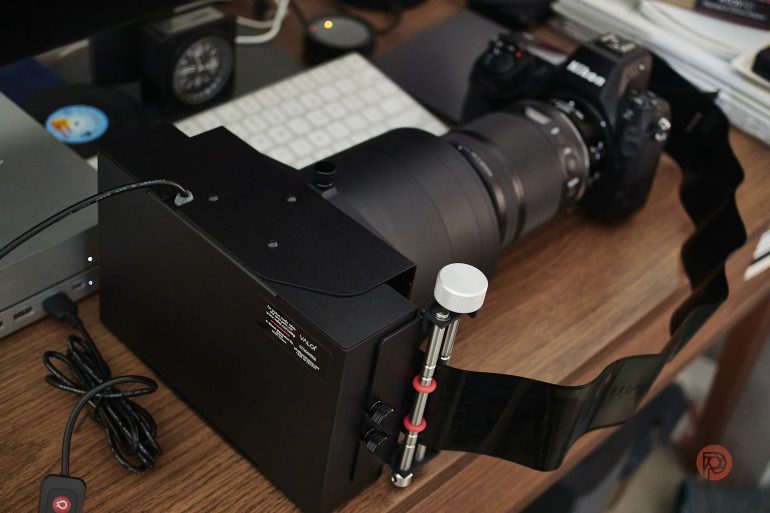
Table of Contents
The Big Picture: Valoi easy120 Medium-Format Film Scanning System Review Conclusions
The Valoi easy120 does exactly what its name suggests. It makes medium-format scanning easier. It’s not effortless or instant, but it’s much less painful than traditional copy stand setups. I still don’t fully understand the Cinestill tie-up or why Valoi didn’t just make their own light source, but it works functionally. The lighting is consistent, the color modes are truly useful, and the overall system feels thoughtfully designed. Most importantly, it values the photographer’s time and comfort.
This system clearly outperforms mounting a camera on a stand and pointing it down. It’s faster, easier to use, and much more repeatable. If you already trust Valoi for your 35mm scanning, the easy120 feels like a natural addition to that approach. Medium format film deserves a scanning workflow that isn’t a hassle. The Valoi easy120 gets you very close to that ideal.
I’m giving the Valoi easy120 a whole five stars.
- Multiple medium-formats supported – 6×6, 6×7, 6×4.5
- Support even for 35mm, so you don’t have to go out and get the more comfortable easy35 system if you don’t have many 35 mm negatives to scan
- Excellent build quality
- Easily powered light source
- Fast scanning becomes smoother with the optional advancer; so much more fun than staring down a copy stand setup
- You don’t have to worry about camera shake like you would with a copy stand. Since it’s resting on a level surface this is one less headache to be concerned about
Experience
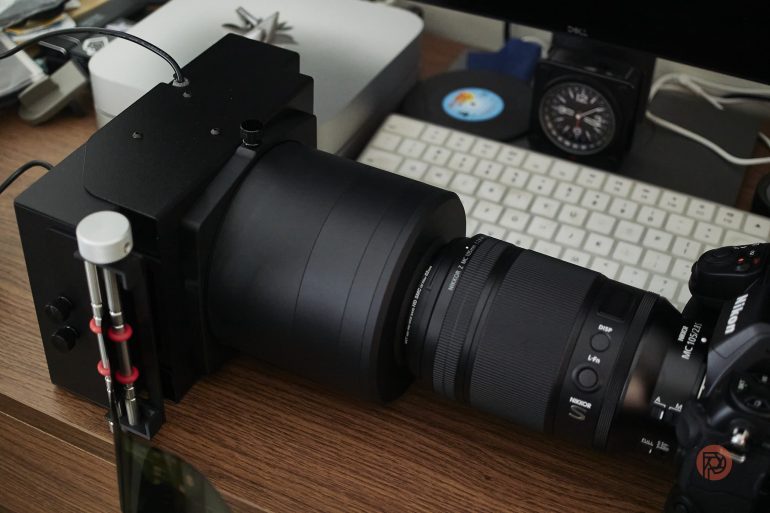
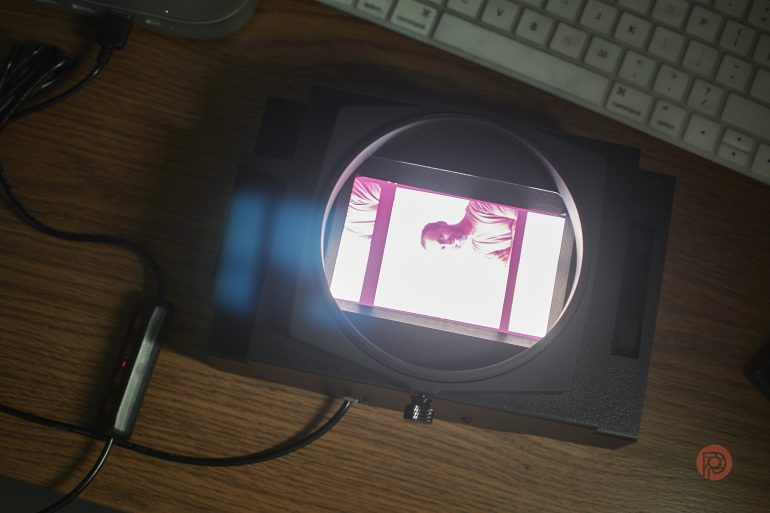
The first thing you notice is that the light source unit on the Valoi easy120 is much larger than the one used on the easy35. Medium-format negatives require even lighting across a larger surface area, and Valoi has designed the light accordingly. The benefit is consistent brightness across the frame. The downside is that this isn’t a lightweight setup, at least not when compared to the easy35.
When it comes to finishing quality, the easy120 feels just like the easy35. The machining is clean, tolerances feel tight, and nothing seems cheap or rushed. Valoi has clearly established a manufacturing approach focused on precision and modularity.
One interesting detail is the Cinestill branding on the light switch. Cinestill is the North American distributor for Valoi, according to their website. However, I’m still not completely sure what the deeper connection is between these two companies is that warrants their logo. Either way, the product works well. There are some key differences, though – the easy35’s color temperature dial isn’t here. Instead, the Valoi easy120 light source has three fixed color temperature modes.
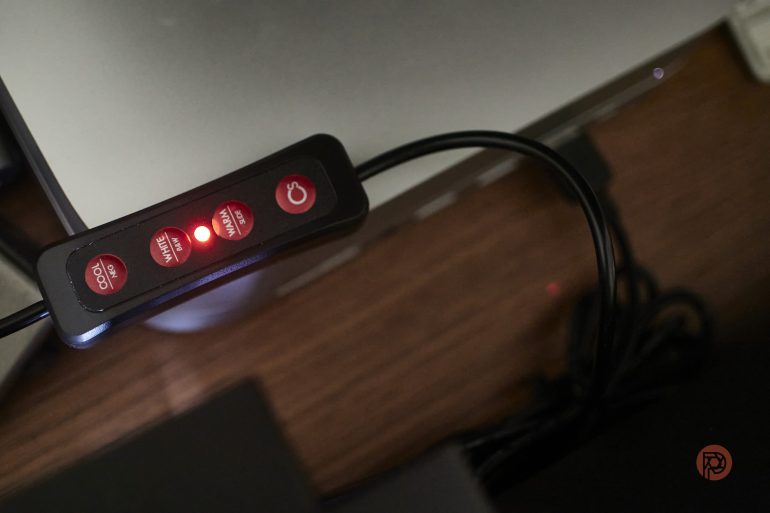
Each mode is designed for a specific task: scanning positive slides, black-and-white negatives, and color negatives. Valoi notes that the color negative mode is especially tuned to handle orange mask film, resulting in better color separation and less noise when working with regular negative stocks.
The other difference you’ll observe is that the light source itself cannot be dimmed, which may surprise some users coming from the Easy35. In reality, this isn’t as big a problem as it might seem at first – just control exposure through your camera, and the fixed output keeps results consistent across frames.
Compared to the easy35, the easy120’s light source is more powerful. An internal battery is not present here, but it still doesn’t need to be connected to a wall socket. I even powered it up straight from my Mac mini through a USB-A cable. It runs very well, though I just can’t figure out why it’s not USB-C. Honestly, at this stage, USB-C should actually be the default for all modern photographic accessories.
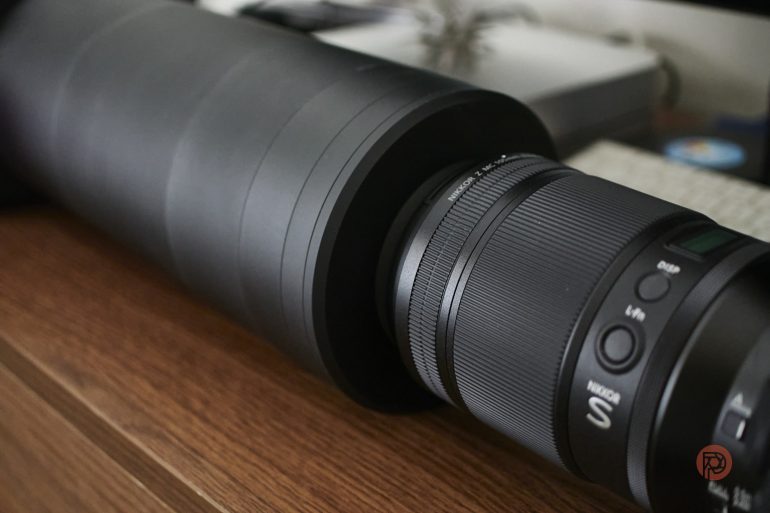
In the case of this review, I used a Nikon Z8 paired with the Nikon Z 105mm f2.8 Macro for all the negatives seen in the gallery below. To get an entire medium-format frame in view, I had to use all three extension tubes supplied with the kit. Once set up this way, framing was precise and easily repeatable.
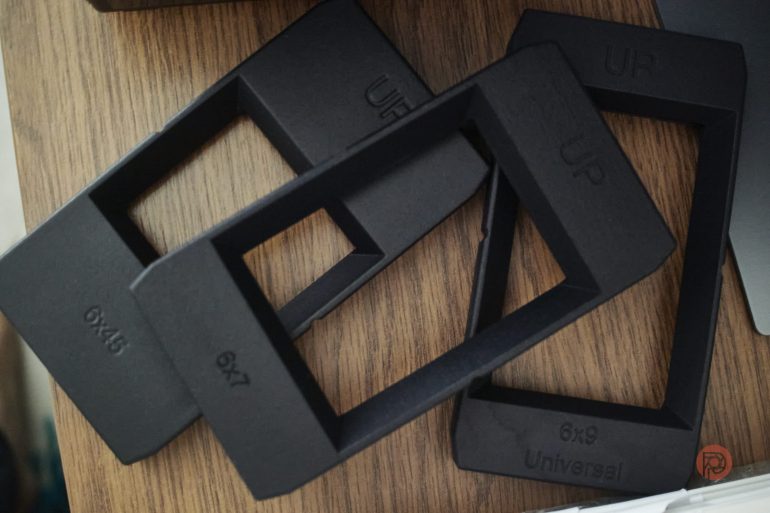
To see what comes in the box, scroll down to the end of this article. By default, you don’t receive the dedicated 6×6, 6×7, or 6×4.5 holders. These were mailed to me separately by Valoi after I requested them. This is something to bear in mind because if you want your film frames to be snapped without other negatives coming into view, you might have to set aside a budget for these additional holders.
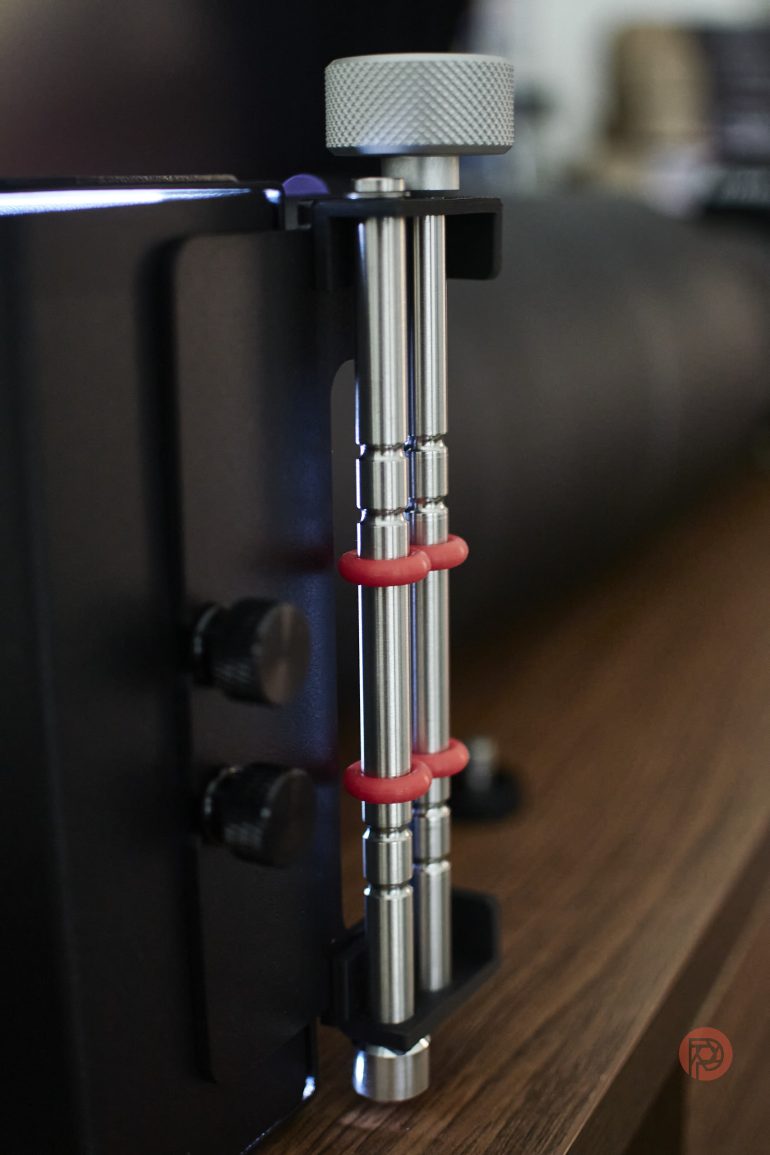
When you start threading the film it feels like the old easy35 – same rhythm, same flow. Line things up just so, then press the shutter. Move the film forward and repeat. However, working with larger medium format means dealing with different physical traits. Movements must be more precise, and that’s when the optional Advancer helps out. Once connected, progressing your film feels fluid. True, many rotations are needed between frames, but every rotation feels even and satisfying. Almost like a quiet rhythm. Start twisting by hand, but if you’re in a hurry and it feels too slow, just pop off the Advancer.
What shifts most isn’t the process but how you adjust yourself to the scanning process on the Valoi easy120. On the easy35, lounging on a sofa felt natural, almost like holding a camera without urgency. Not so with this one. It’s heavier, plus that cord needs to be plugged in for the setup to work. A flat surface works best when you connect the camera and easy120; I don’t think this is a setup suited for a regular tripod. Slow and steady progress fits here, because precision matters more than speed.
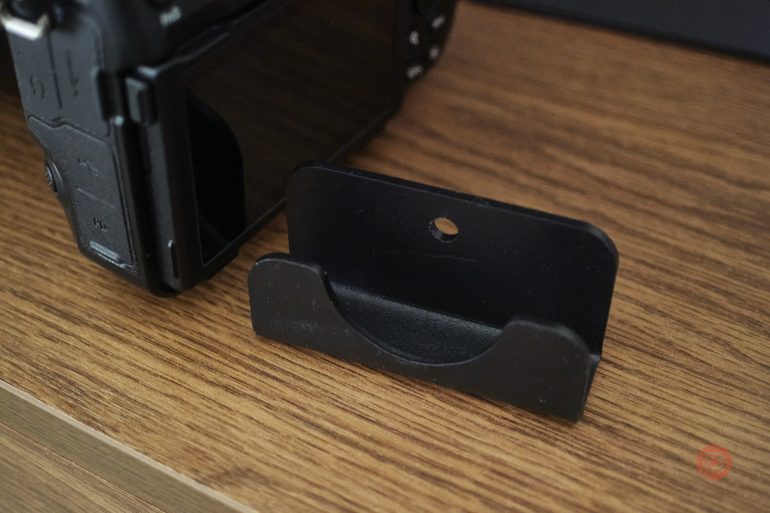
Valoi includes a camera-height support bracket to help keep the camera level with the film plane when the entire setup is placed on a table. Whether this works perfectly for you depends on the height of your camera body. In some setups, it aligns beautifully, but you may need to make minor adjustments.
One small disappointment comes from the film holders themselves. I wish they were tall enough to show the edges of the film. There’s something undeniably classy about seeing the frame boundaries, edge markings, and film annotations. None of the holders I used, including the 6×9, allowed for this. It’s not a functional problem, but it is an aesthetic one. On the whole, though, the system is brilliant for anyone wanting a steady scanning solution for their medium format film
Results
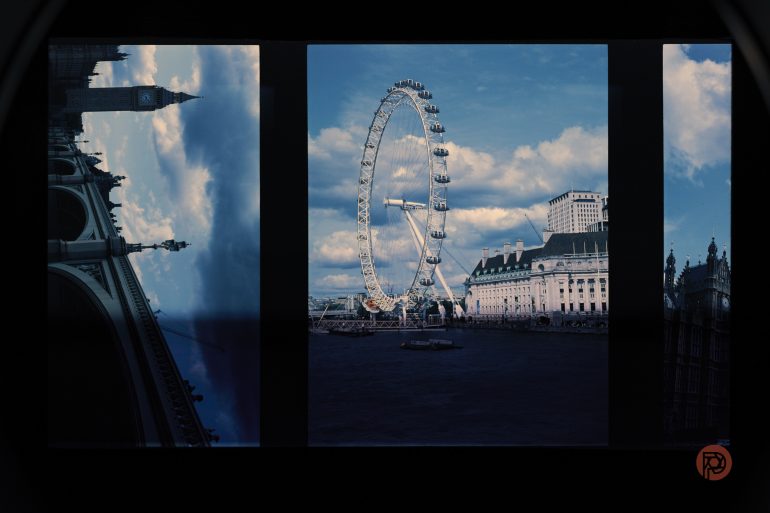
Here’s how the Valoi did with some expired Ektachrome film and other film stock


Tech Specs
Taken from the Valoi easy120 product page:
Included in the box:
- VALOI easy120 Body
- Built-in Cinestill CS-LITE inside
- VALOI easy120 Universal Holder (fits 120 film up to 6×9)
- VALOI easy120 Distance Tubes: 1x 12mm, 1x 25mm, 1x 50mm, 2x 100mm
- VALOI Filter Thread Adapters: 39mm, 46mm, 49mm, 52mm, 55mm, 58mm, 62mm, 67mm, 72mm, 77mm
- Native filter thread size: 62mm (compatible out of the box with listed sizes)
- VALOI easy120 Camera Support Bracket
- easy120 English Manual (other languages available online via QR code)
Lens and Camera compatibility:
| Feature | Compatible |
| Dedicated macro prime lens | Yes |
| Zoom lens with macro function | No |
| Manual focus lens | Yes |
| Autofocus lens | Yes |
| 1:1 macro lens | Yes |
| 1:2 macro lens | Yes, only for 120 medium format |
| Filter thread size: 39–77mm | Yes |
| Filter thread size: E60 | Not compatible |
| Medium format digital camera | Yes |
| 100mm lens on APS-C sensor | No, too long |
| Fixed lens camera | Not compatible in most cases, not recommended |
| Enlarger lens | No, incompatible filter thread (often 40.5mm)* |
* A 40.5mm to 62mm adapter may allow use of some enlarger lenses. A sturdy helicoid is required. Bellows are not recommended due to weight.
Declaration of Journalistic Intent
The Phoblographer is one of the last standing dedicated photography publications that speaks to both art and tech in our articles. We put declarations up front in our reviews to adhere to journalistic standards that several publications abide by. These help you understand a lot more about what we do:
- At the time of publishing this review, Valoi is not an advertiser with the Phoblographer. Either way, that wouldn’t affect our reviews.
- Note that our reviews are constantly works in progress. This review might be updated later on.
- None of our reviews on the Phoblographer are sponsored. That’s against FTC laws and we adhere to them just the same way that newspapers, magazines, and corporate publications do.
- Valoi sent a Valoi easy120 unit and additional film holders. to the Phoblographer for review. There was no money exchange between Valoi and the Phoblographer for this to happen.
- Valoi knows that they cannot influence the site’s reviews. If we don’t like something or if we have issues with it, we’ll let folks know. We were the first publication to inform about the issue with the Leica M10R and how it renders the color orange.
- Valoi sent the system to Phoblographer in Dubai. Our home office is based in New York.
- At the time of publishing, the Phoblographer is the only photography publication that is a member of Adobe’s Content Authenticity Initiative. We champion human-made art and are frank with our audience. We are also the only photography publication that labels when an image is edited or not.
More can be found on our Disclaimers page.
Some negatives used in this review were graciously supplied by my friend Don Surrendra
Get rid of the ads!
Did you enjoy reading this article as much as we enjoyed writing it? There's a way to support us and our reporting, getting ad-free navigation and more as a bonus. Subscribe to us for less than a coffee per month —just $3.99— or take advantage of our yearly subscription with a hefty discount for only $25.- An ad-free experience
- A free mystery box for Lightroom or Capture One
- All the books in our store
- 20% discount on Capture One
- 30% discount on Imalume Photo Theft Protection
- 20% off Herbs and Kettle Tea Company.