


When I began my journey as a photographer some eight years ago, I relied on my kit lens to do everything. Sure, there were some shortcomings, but it was the best option I had within my reach. When I joined Better Photography magazine a year after college as a junior writer, the world of photography and lenses opened up in ways I couldn’t have imagined. From telephotos to prime lenses, I tested a few focal ranges that changed my perspective as an image-maker. Here is a look at the three that really changed how I shoot.
Sigma 14-24mm f2.8 DG DN Art
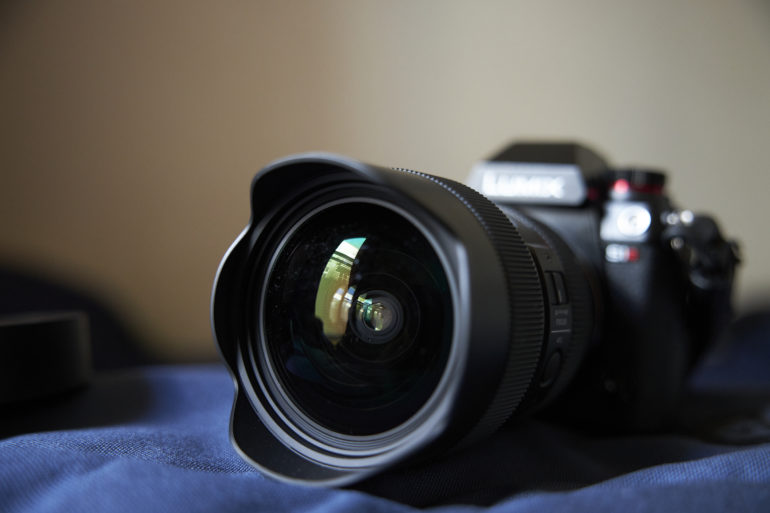
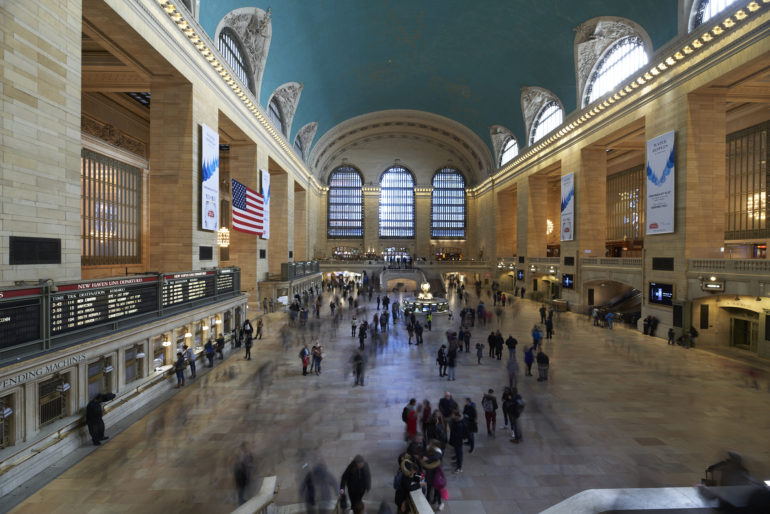
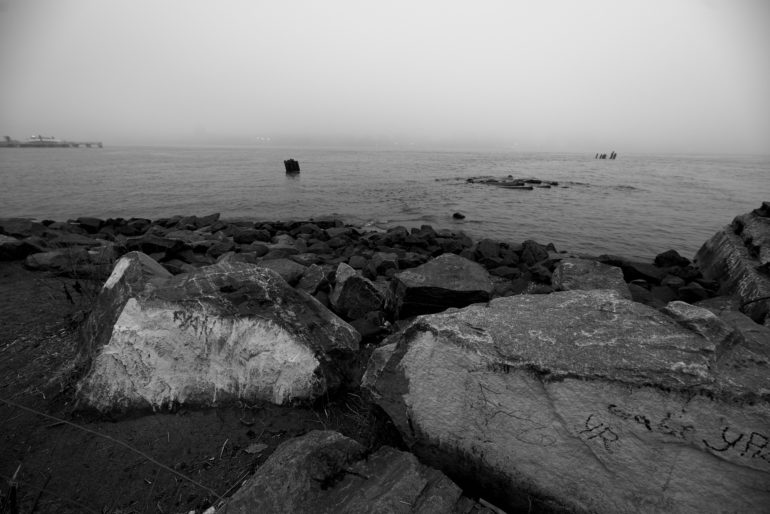
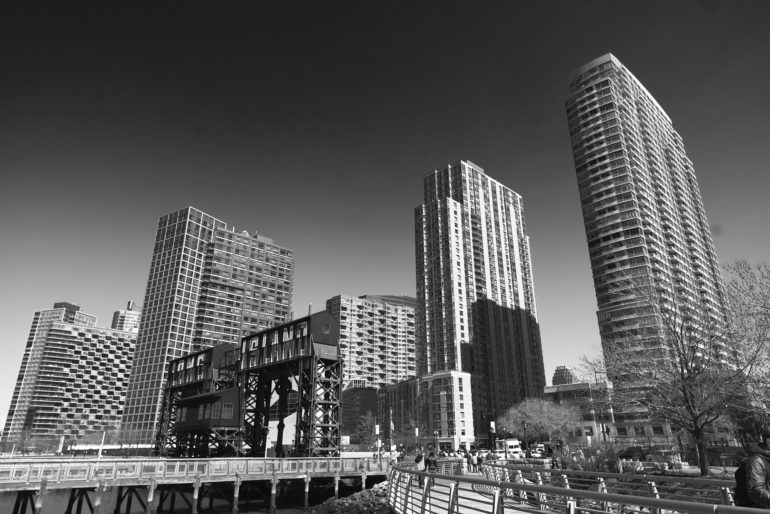
How did I use it? The Sigma 14-24mm f2.8 was given to me during a trip to Bengaluru, India, where I was asked to document the ancient temples in and around the city. Prior to this, I was working with a standard 18-55mm lens with an APS-C camera, and had little idea how a wide-angle zoom works. There were initial trials and errors in my composition, but the change of perspective really pushed me to see the world differently.
What did I learn? For starters, I was now able to photograph an entire compound from a certain perspective, and with an aperture of f5.6, I could capture details even from the corners. The colors from Sigma’s lens were fantastic as they were, and the lens also had pretty great control over distortion. Sure, it took me a while to get a sense of straight lines when shooting architecture, but the lens made me realise so much can be possible. I feel that if I had taken the lens to shoot on the streets of Mumbai, I would have gotten just as exciting results.
In our review, we said:
You’ll get the most sharpness from the Sigma 14-24mm f2.8 DG DN Art when stopped down just a bit. However, when shooting wide open the lens is capable of being very sharp as is. This again comes at no surprise.
Fujifilm 23mm f1.4 R WR LM
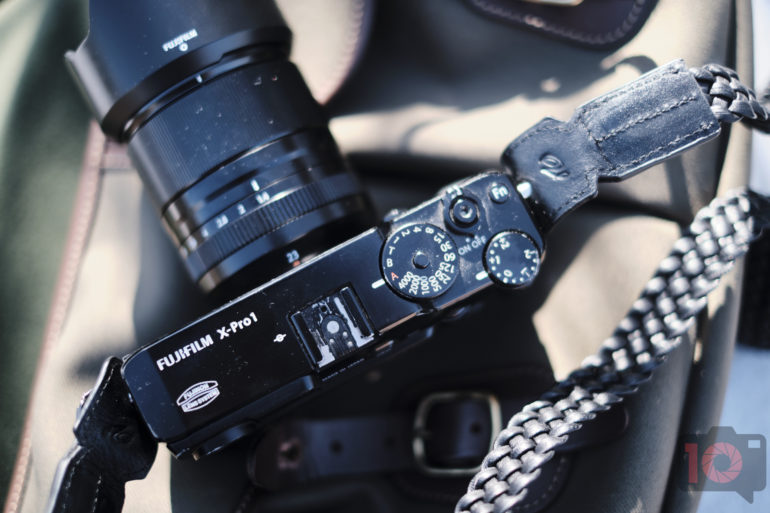
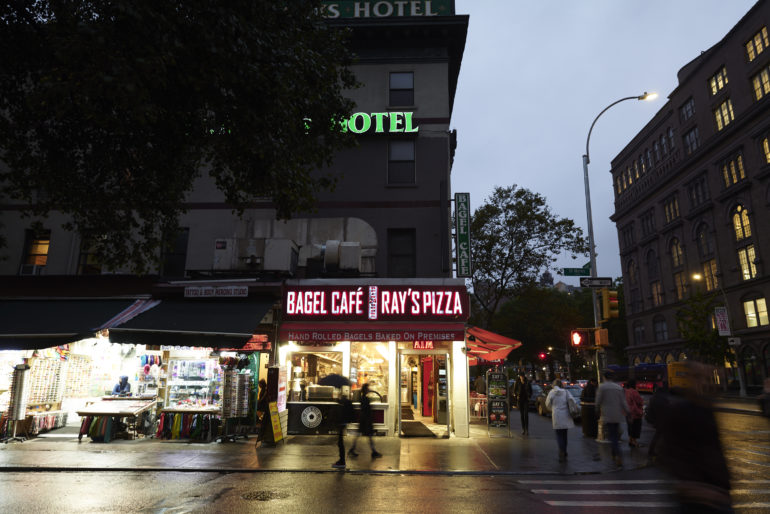
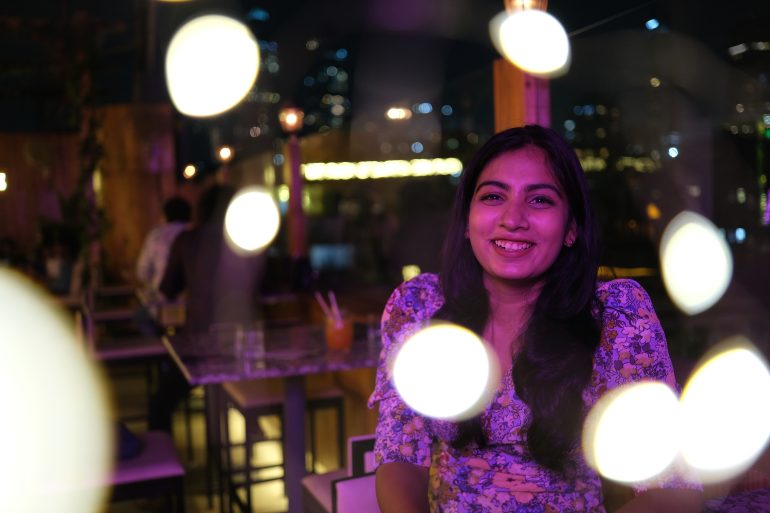
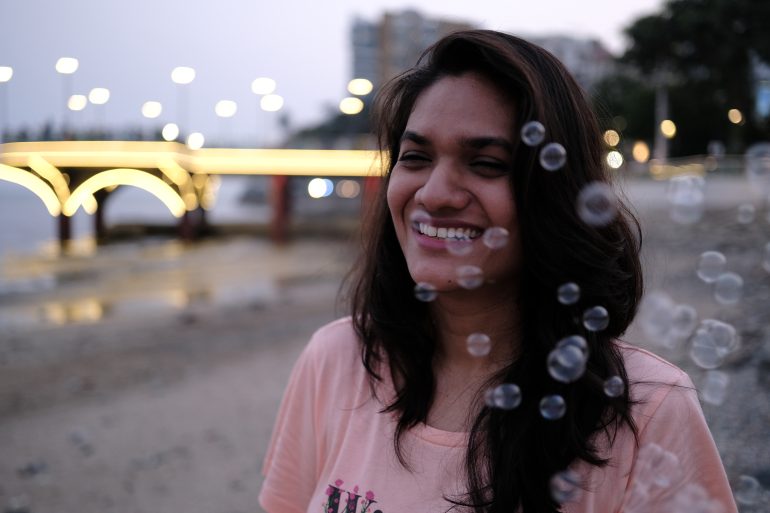
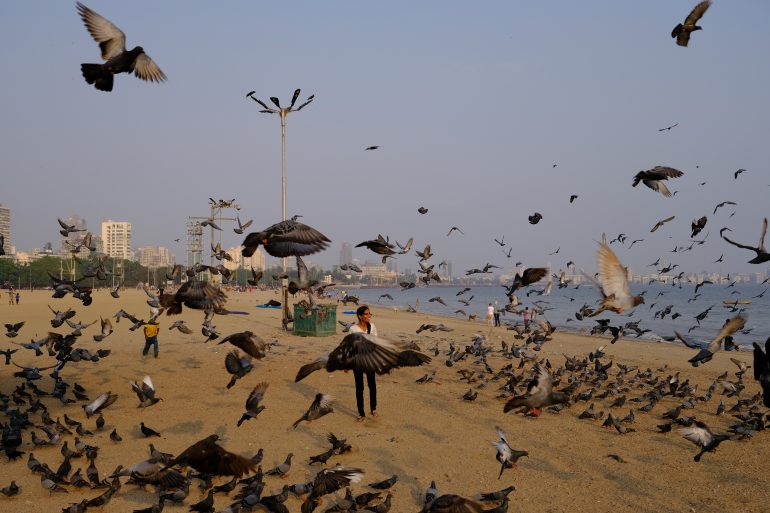
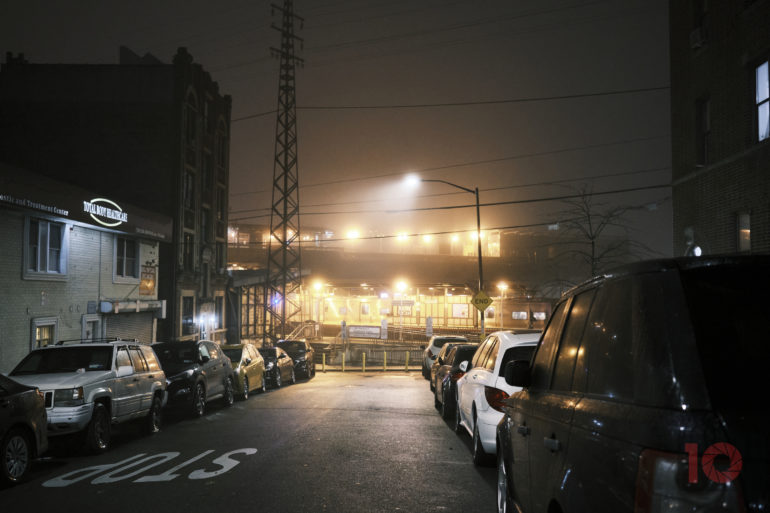
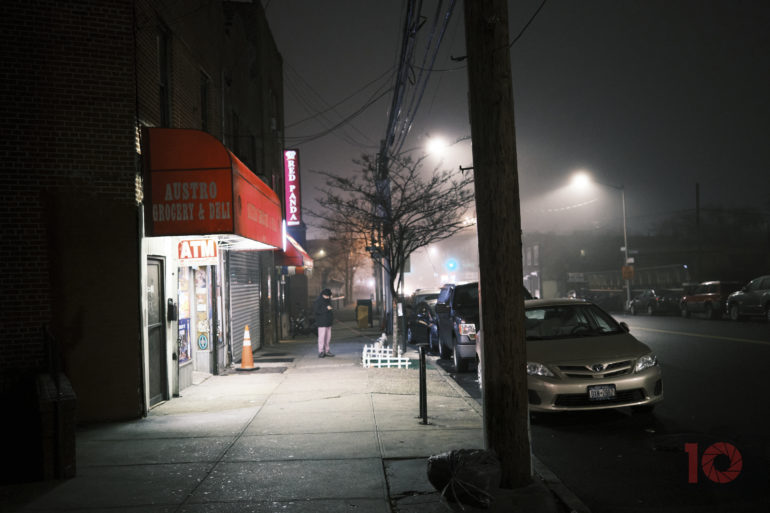
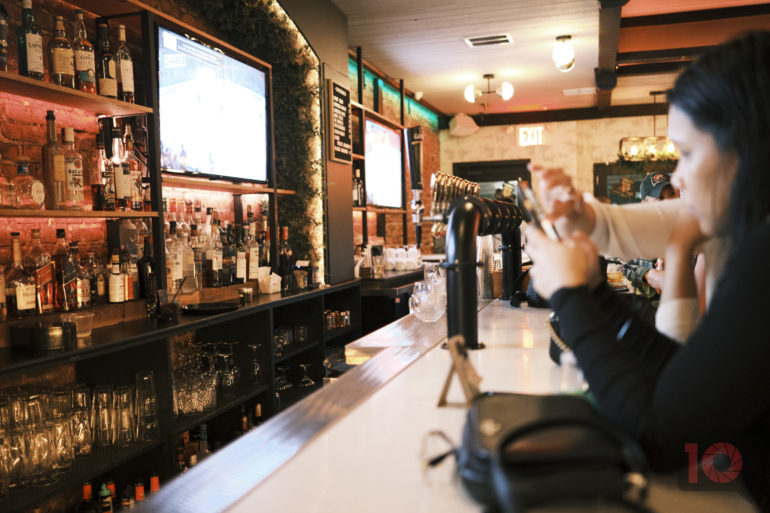
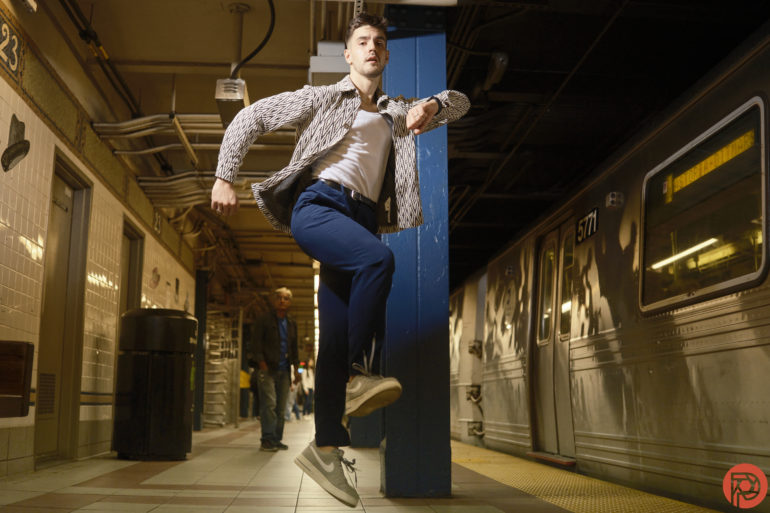
How did I use it? The Fujifilm 23mm f1.4 was another lens that I received shortly after the pandemic. The world was opening up, and we got the chance to visit outside of our house once again. On the X-T4, it offered 35mm, which was ideal for street photography and environmental portraits.
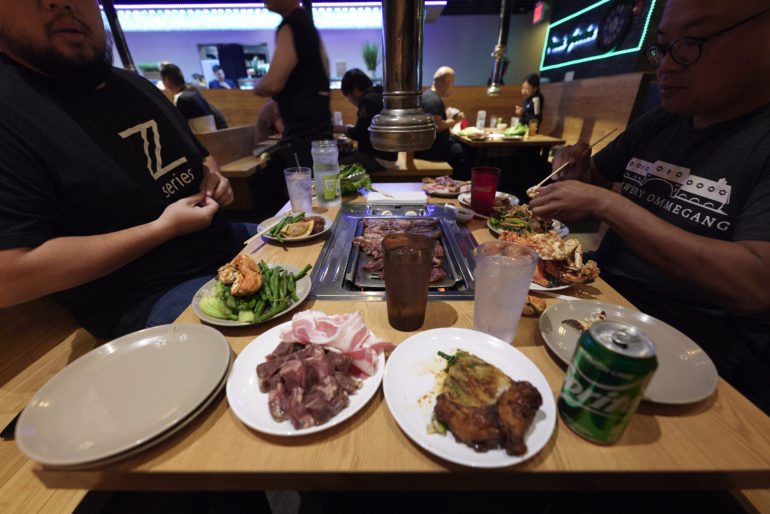
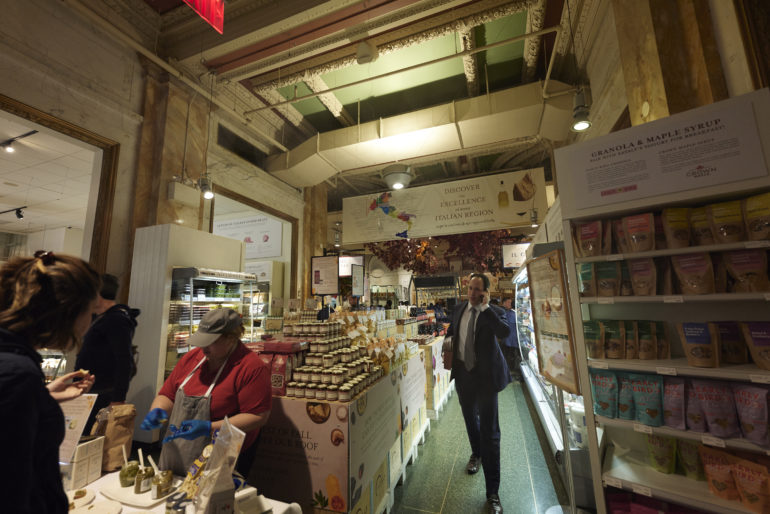
What did I learn? I was enamored by the wide open aperture, so I wanted to play with the bokeh as much as possible. I decided that since I couldn’t zoom in when I needed to, I had to use my body to get my images right. The photo below (the one with my friend in a pink dress) was a result of multiple trials and errors. Similarly, I wanted to create water bubble layers in the portrait next to it to show the softness of the wide aperture. Although the experiment did not yield the desired results, it was a valuable practice in patience. With street photography, I realised I needed to get the pigeons in focus, and the lens was able to get everything right despite the chaos around me. Zoom lenses made me a little lazy, but with a prime, I had to push myself, whether I was controlling the environment or the environment controlling me.
In our review, we said:
The bokeh from this lens is positively divine. I mean, come on, look at this! How can you not like what the Fujifilm 23mm f1.4 R WR LM can produce? This lens has 9 aperture blades that make the bokeh look smooth and creamy. In my opinion, it’s far nicer, smoother, and creamier than the characteristic bokeh Nikon lenses have.
Fujifilm 70-300mm f4-5.6 R OIS WR
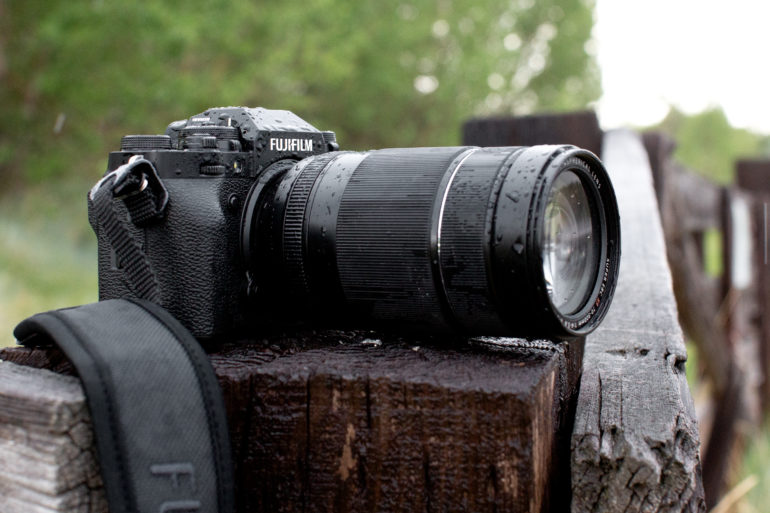
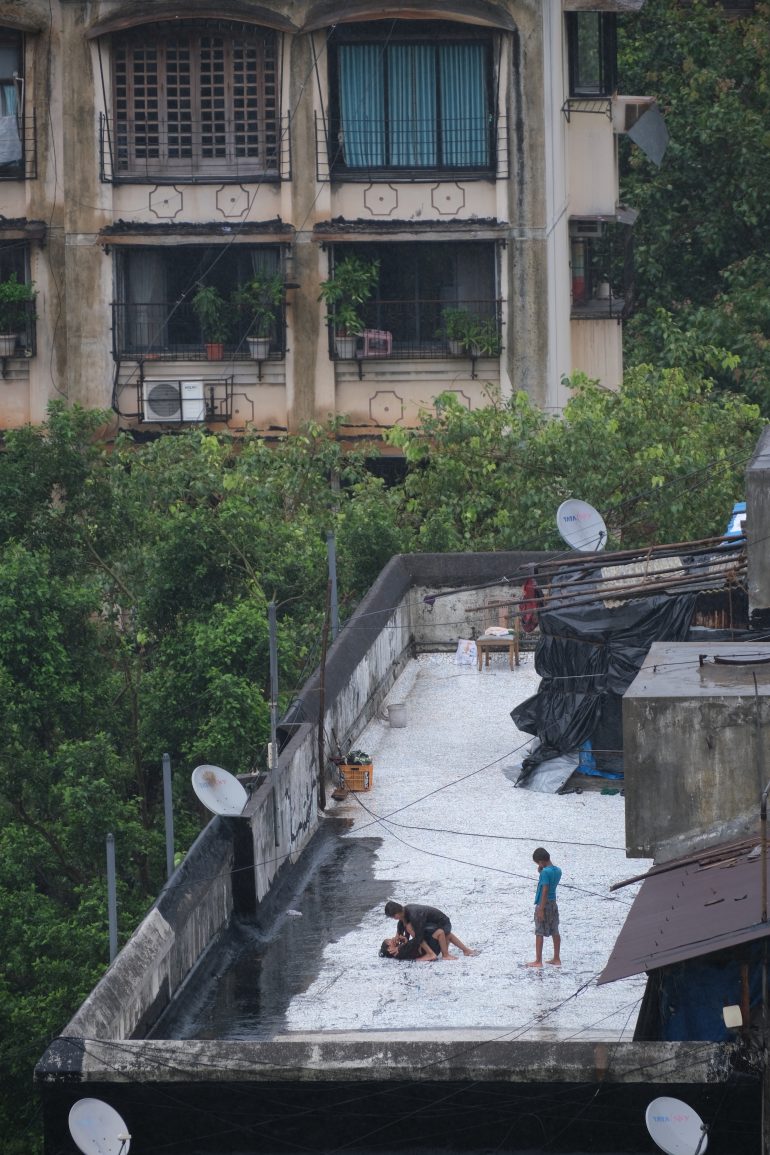
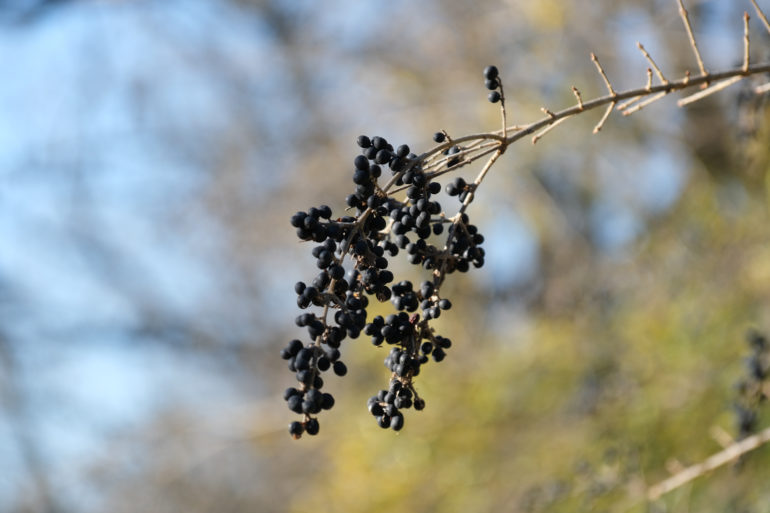
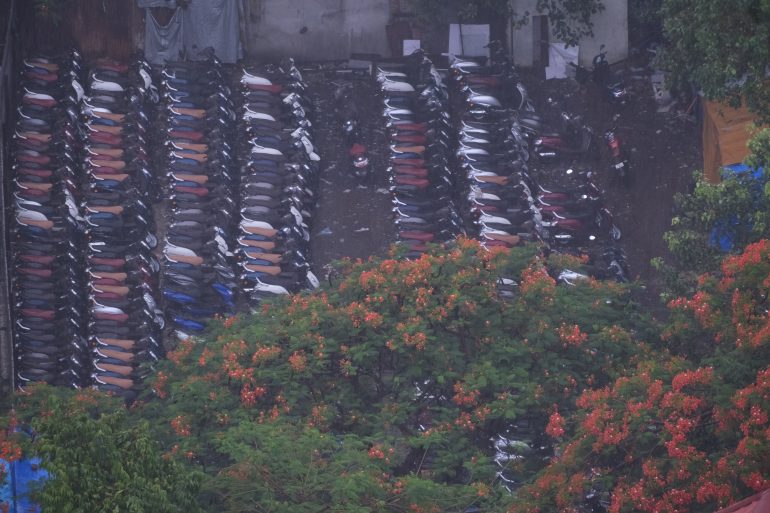
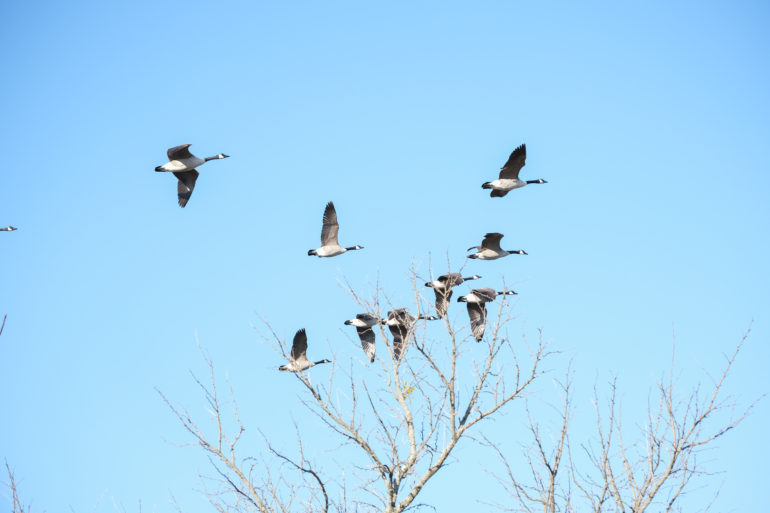
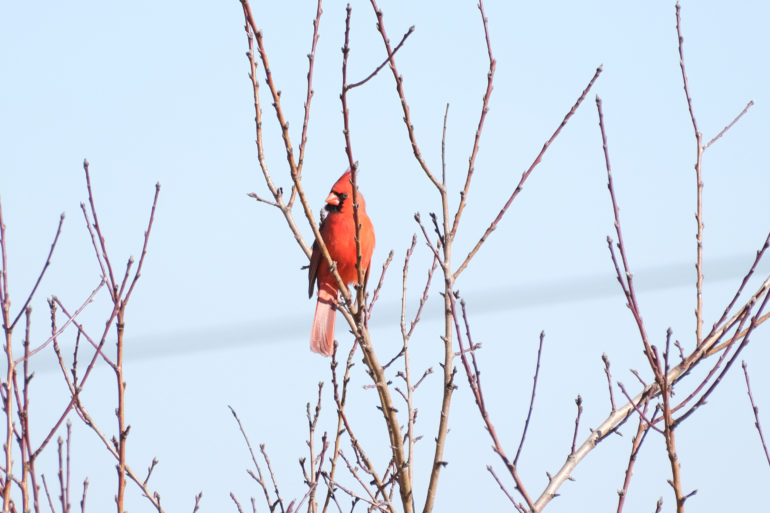
How did I use it? The Fujifilm 70-300mm was one of my initial super telephoto lenses for testing. While I knew the purpose of choosing it, my style of shooting honestly did not require me to pick one up for myself. So, when I had the chance to work with this focal range, approximately 107-457mm on the X-T4, I was running short of ideas. The next best thing was to shoot from my balcony.
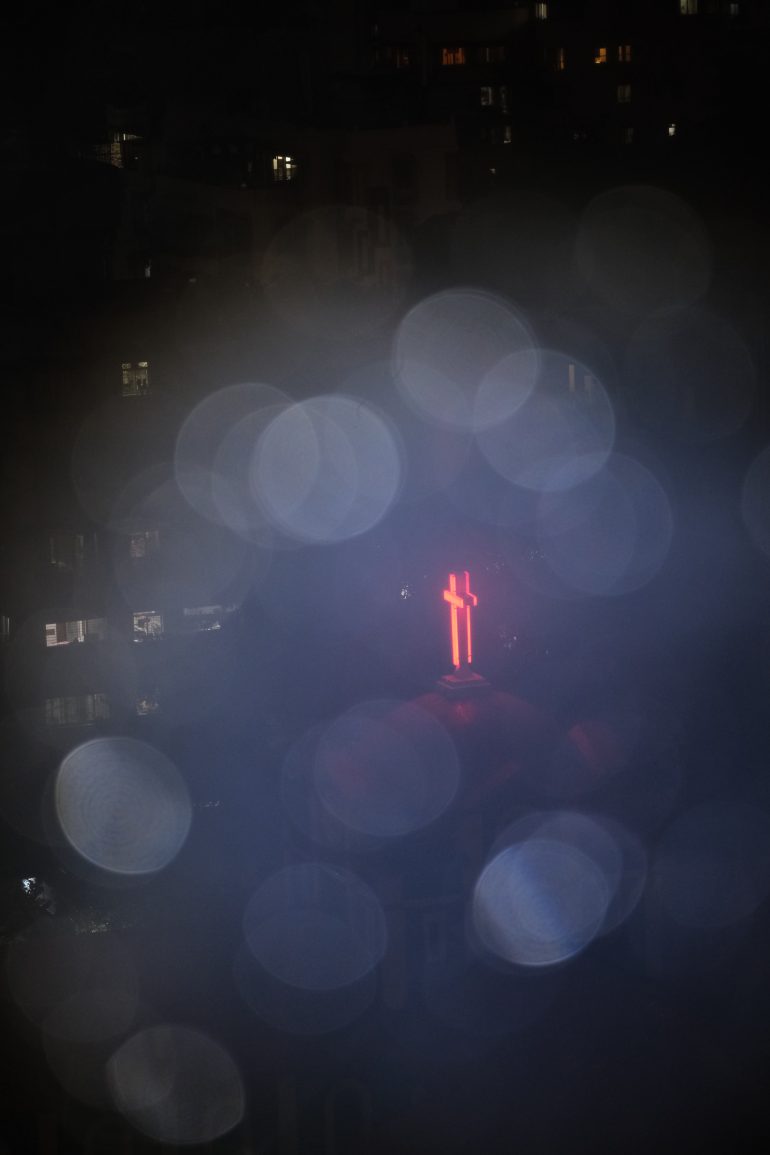
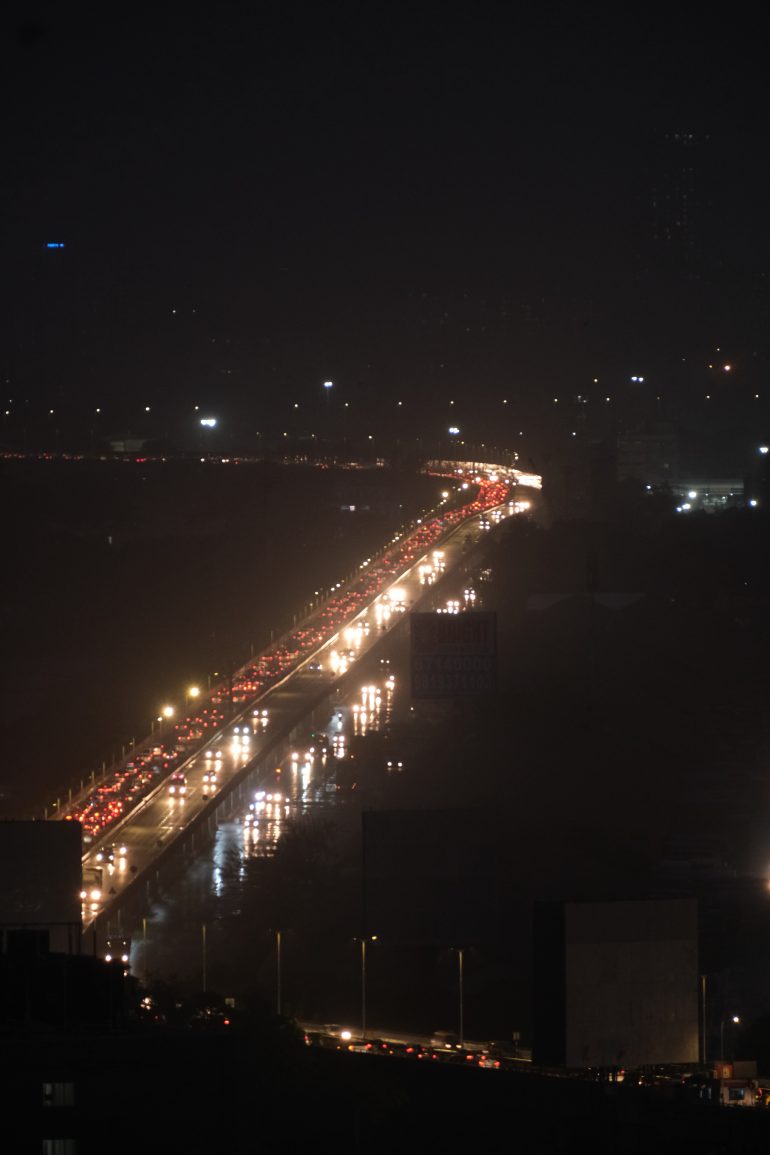
What did I learn? The compression was one of the aspects I enjoyed most while working with this lens. Not only could I see far-off objects closer to me, and capture interesting moments, but the compression worked in my favor to play with human-made patterns. For instance, the far-off cars line up, and the scooters parked together below helped to move away from my usual style of making images of people. Furthermore, the bokeh helped me utilize the rainy weather as a means to create something distinct (for example, the image of the cross). It gradually helped me to understand how I learn to layer my images with elements that exist around me.
In our review, we said:
It is lightweight, well-built, and delivers beautiful images that any wildlife, nature, still life, sports, wedding, and portrait photographer would enjoy creating time and time again.
Get rid of the ads!
Did you enjoy reading this article as much as we enjoyed writing it? There's a way to support us and our reporting, getting ad-free navigation and more as a bonus. Subscribe to us for less than a coffee per month —just $3.99— or take advantage of our yearly subscription with a hefty discount for only $25.- An ad-free experience
- A free mystery box for Lightroom or Capture One
- All the books in our store
- 20% discount on Capture One
- 30% discount on Imalume Photo Theft Protection
- 20% off Herbs and Kettle Tea Company.
- 20% off your order from MPIX printing services.
- 5% off Viltrox Products via their eCommerce store.
- 10% off all film developing, printing and scanning services from Blue Moon Camera and Machine
- 15% off 7Artisans products: The lens and accessory maker is offering a sweet discount for Phoblographer's readers.