


Nikon has been changing its trajectory for the better. The company introduced iconic DSLRs, such as the Df, D3, and D850, as well as mirrorless cameras, including the Zf and Z9. With Nikon taking this year a bit more slowly, they seem to be searching for ways to make their upcoming lineup far more futureproof. Per a new patent release in the United States, it appears that the company is researching next-gen sensors, one that will offer better colors and speed to photographers.
First reported by YMCinema, the patent number US 20250357942 A1 was released on November 23, showing a new design of a multi-layer stacked image sensor. The design focuses on two different aspects: dynamic range and readout speed. This technology, if passed, can help the next generation of Nikon Z series to be ideal for various fast-paced shooting scenarios.
What Does the Patent Suggest?
The new design showcases a four-layer semiconductor stack. The top layer will receive the light through a micro lens and color filters, but the lower layers will manage signal conversion and processing. This is possible with the help of Analog-to-Digital Conversion (ADC) and the company’s component distribution across multiple layers:
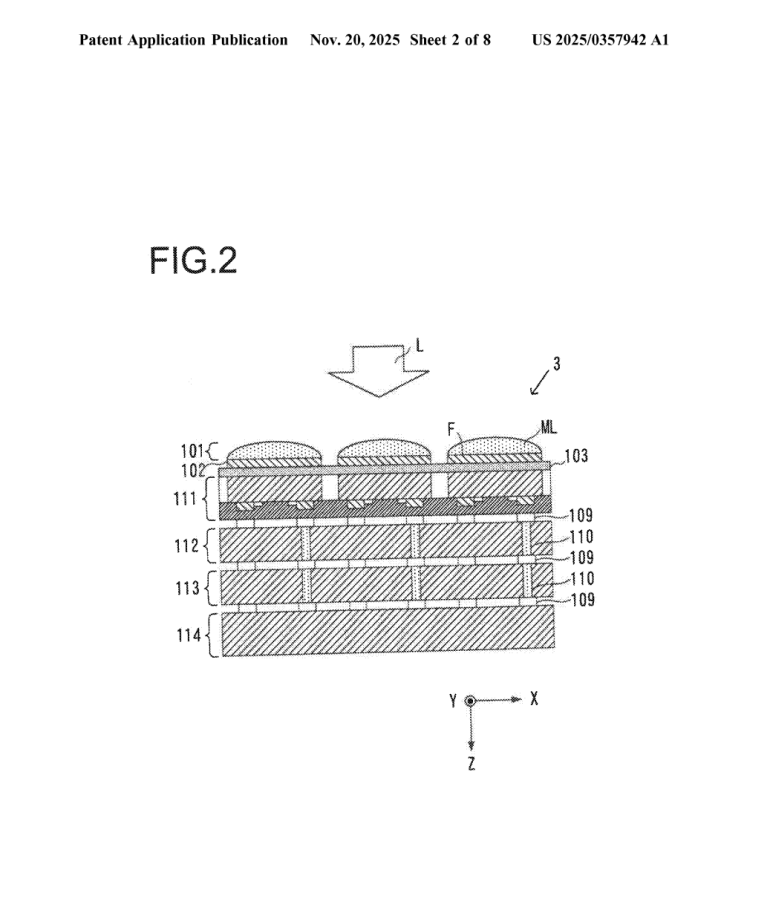
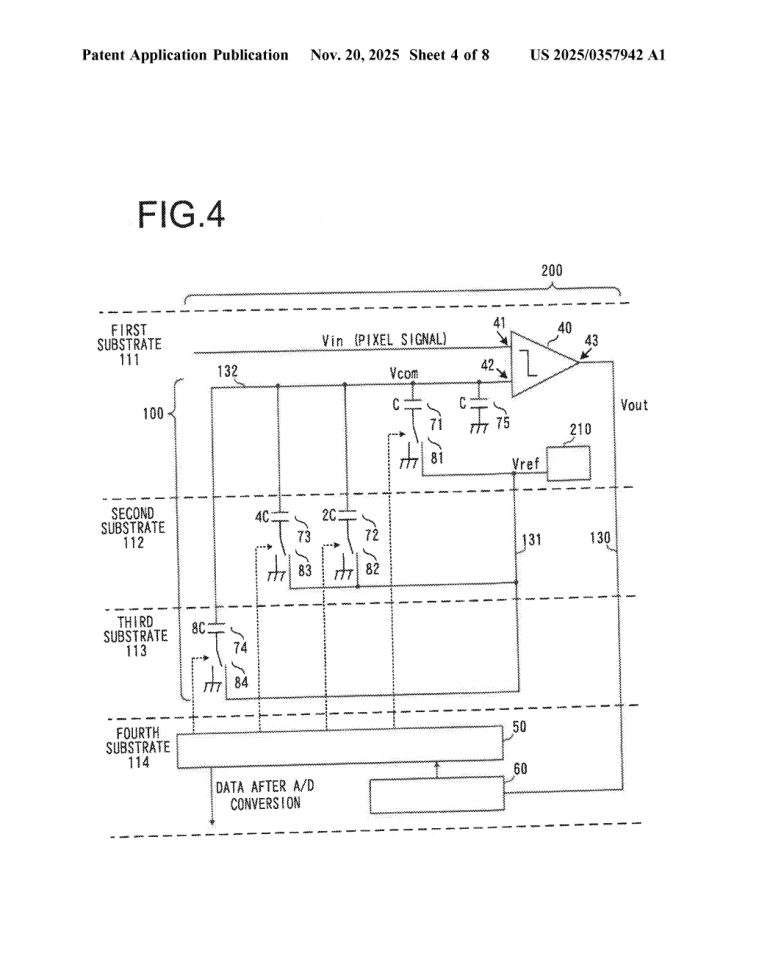
- Noise reduction: The smallest and most sensitive capacitors are positioned closest to the comparator (the part that determines a pixel’s brightness). This physical placement aims to minimize electronic noise and boost the accuracy of the analog signal conversion.
- Parallel processing: The components are spread across several layers, allowing Nikon to integrate more ADC units in parallel without increasing the physical size of the chip. This columnar or pixel-group-based conversion allows for near-simultaneous signal processing.
How Photographers Will Benefit?
A photographer needs cleaner images, especially if you are someone who likes to shoot at any time of the day. A photojournalist, wedding, sports, or wildlife photographer will certainly stand to gain a lot.
- Smoother shadows and highlights: This promises better tonal latitude, which means one can capture more details in highlights and shadows within a single exposure. Images of sunset sky, people standing in shade, or an incorrect exposure can all be fixed far easily.
- Reduce noise in low light: The arrangement also helps reduce electronic noise, resulting in cleaner images at higher ISOs. One can also achieve better shadows, as noise is often too visible in these areas. This will also be helpful for nighttime photography, including astrophotography or indoor events.
- Better post-production flexibility: A file with a wider dynamic range offers greater flexibility for editing. Thus, one can recover detail from over- or underexposed areas, without introducing color shifts or severe noise.
- Elimination of rolling shutter distortion: This can also help photographers reduce or eliminate the “jello effect” (skew and wobble) that often occurs when the camera is panned quickly or used with fast-moving objects.
- High-resolution video: In addition to a silent shutter, you also get faster readout speed for higher frame rates. One will no longer have to sacrifice image quality, and this can make Nikon mirrorless competitive for professional video use.
Overall, there are numerous benefits. With Sony launching a global shutter sensor for stills, it is time for Nikon to introduce something better. The company reached new heights of innovation with the Nikon Z9, but after that, we got the Nikon Z6III, which offered a partially stacked sensor. There have been reports of another patent, where Nikon is aiming to launch a sensor with both rolling and global shutter. While the patent is intended for research purposes, if it proves true, it could open up new avenues in photography.
Nikon’s patents are interesting, but whether they become a reality or not remains to be seen. For now, the company has us excited, which is great given the platenue we have hit.
Get rid of the ads!
Did you enjoy reading this article as much as we enjoyed writing it? There's a way to support us and our reporting, getting ad-free navigation and more as a bonus. Subscribe to us for less than a coffee per month —just $3.99— or take advantage of our yearly subscription with a hefty discount for only $25.- An ad-free experience
- A free mystery box for Lightroom or Capture One
- All the books in our store
- 20% discount on Capture One
- 30% discount on Imalume Photo Theft Protection
- 20% off Herbs and Kettle Tea Company.
- 20% off your order from MPIX printing services.
- 5% off Viltrox Products via their eCommerce store.
- 10% off all film developing, printing and scanning services from Blue Moon Camera and Machine
- 15% off 7Artisans products: The lens and accessory maker is offering a sweet discount for Phoblographer's readers.