


Our planet offers magnificent sights and scenes, which have been bringing together photographers for eons. While some images showcase the breathtaking beauty of the world, there are other photographs that call us to take action against climate change. To honor these images, showcasing nature in varied hues and forms, the Nature Photography Contest unveils the winners of its second edition. Here is a look at the photographers and how they captured these award-winning photographs.
The lead image is by Christopher Paetkau. All images are used with permission, courtesy of the Nature Photography Contest.
The Cameras Used:
- DJI Mavic 3 Pro
- Canon R3
- Canon R5
- Canon 50D
- Fujifilm GFX 100II
- DJI Mini 3 Pro
- Sony a7r III
- Sony a7r Mk II
- Nikon D7500
This is a fascinating mixture of camera gear with the inclusion of some newer camera bodies and many older ones. The Sony a7r Mk III has long been considered to be one of the best cameras the brand has made for several reasons. But to think that a DJI Mini could also score a winning photo is fascinating to think about.
On top of that, it’s proof that the absolute most expensive gear is really only used for the most extreme situations. All of these cameras have weather resistance with the exception of the Nikon DSLR.
Photograph of the Year
Christopher Paetkau
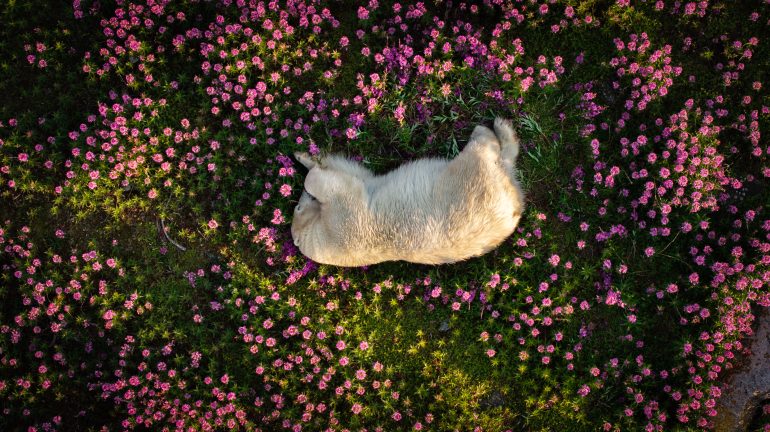
Christopher Paetkau took away the grand title of the Nature Photography Contest this year with his endearing image of a polar bear resting in a field of fireweed blooms. “With its colors, composition, and underlying message, Christopher Paetkau’s photograph represents the very essence of nature and photography. It serves as a reminder of the countless reasons why we must cherish and protect our planet,” stated The Nature Photography Contest jury.
The image was shot with DJI FC 4382, the Mavic 3 Pro. Paetkau shot the image because this “fleeting experience was a powerful reminder of the raw magic and tranquility of the Arctic wilderness.” Perhaps this image wouldn’t have worked so well if it had been shot from surface level, leaving little room for imagination. He will also receive 1000 euros as a prize.
Photographer of the Year
Thomas Vijayan
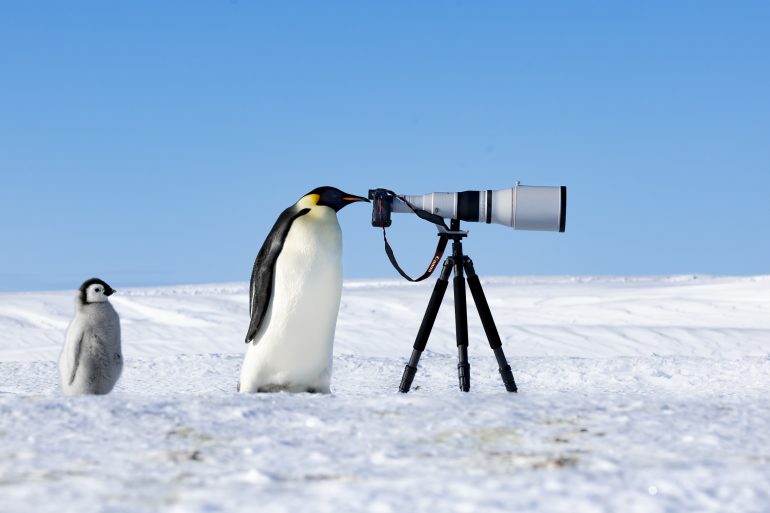
This image was chosen for its ability to balance the human and natural worlds. It was captured with a Canon EOS R3, a 24-MP sensor camera with excellent autofocus. The Nature Photography Contest states that the winner of this title will “have the honor of selecting the location where nearly 500 trees will be planted” to honor those who have participated in the contest.
Natural Landscape
Stuart Chape
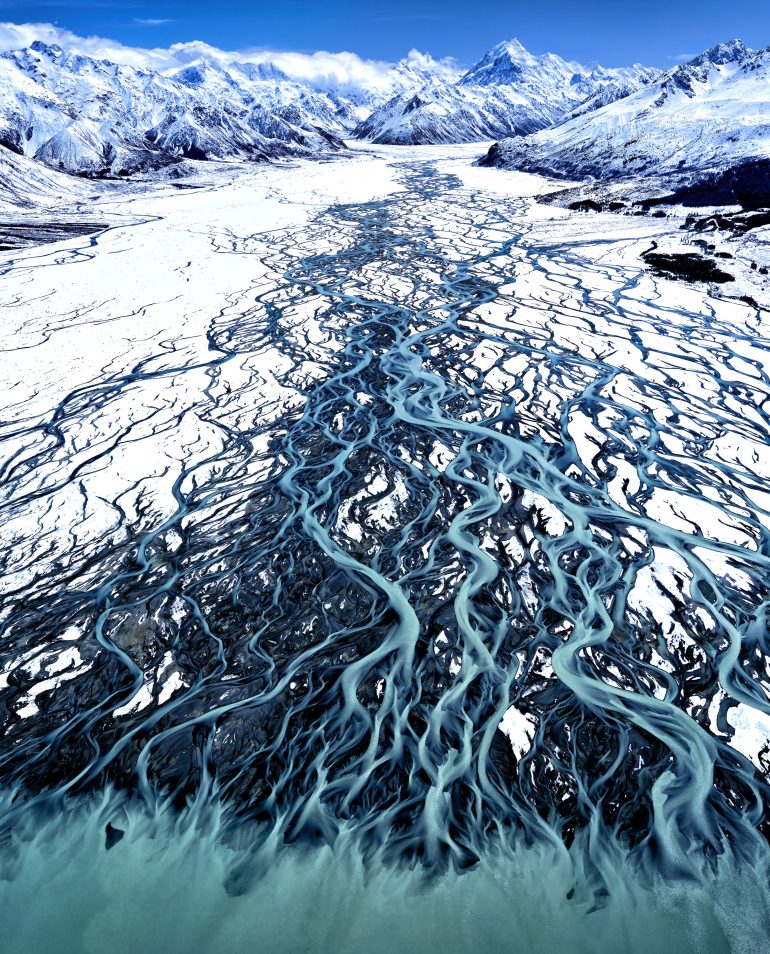
This aerial view was actually captured in New Zealand from a helicopter with a Fujifilm GFX100 II camera and a wide-angle lens. The GFX100 is a great idea for a picture of this nature, as it allows photographers enough room to edit or crop the image yet capture all the details in the smallest of corners.
Wildlife
Steve Marsh
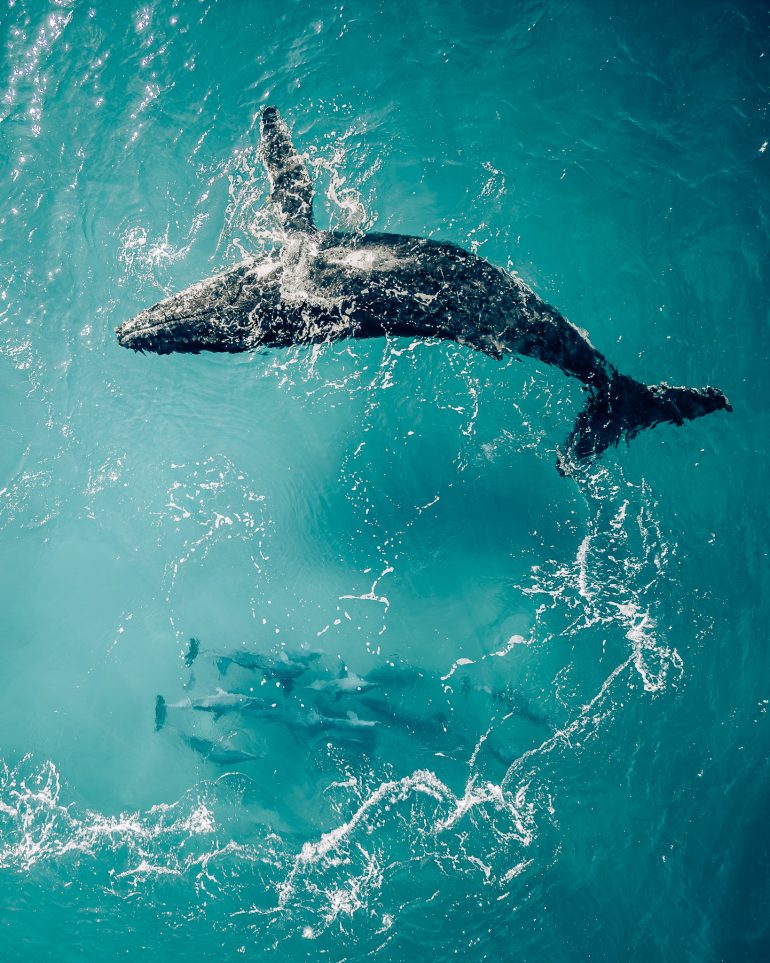
“This extraordinary image captures the harmonious dance of a majestic humpback whale swimming gracefully alongside a playful pod of dolphins. As you gaze upon this breathtaking spectacle from above, you’ll be transported to a realm where two species, each with its unique grace and power, come together in perfect synchrony,” states Steve. To capture this majestic Nature Photography Contest category winner, Steve used the DJI Mini 3 Pro. It is a small but powerful camera with a 24mm equivalent f1.7 lens. The wide angle actually helped Steve to capture the dolphins, which otherwise would have gotten cropped.
Macrophotography
Berthold Grünhagen
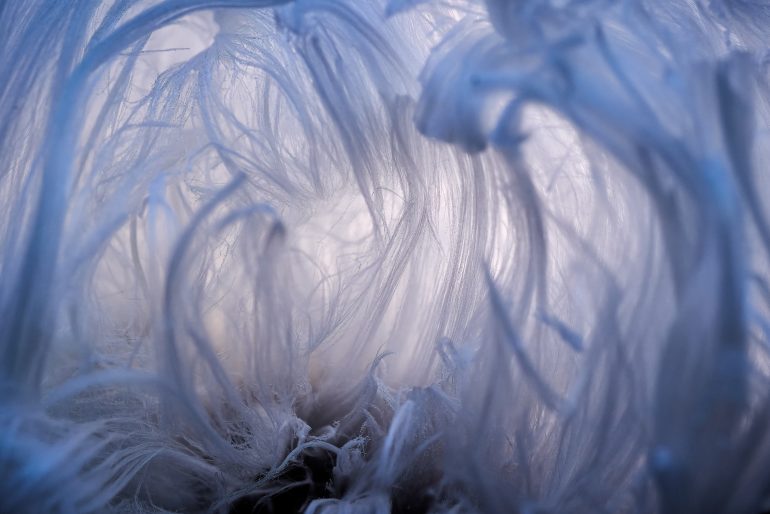
This phenomenon, called hair ice, only forms on “dead wood under very special conditions and often lasts only a few hours.” One can only see this when the temperature is perfect for the hair ice, and then one can witness water emerging from “channels in the wood,” that are created by “special fungi.” After this, the water is pushed out, which gradually freezes with the temperature. To capture this image, Berthold used the Sony a7R III, which offers a 42MP sensor, perfect to capture the micro details in the ice. Furthermore, it was paired with a macro lens and shot at 105mm.
Underwater
James Ferrara
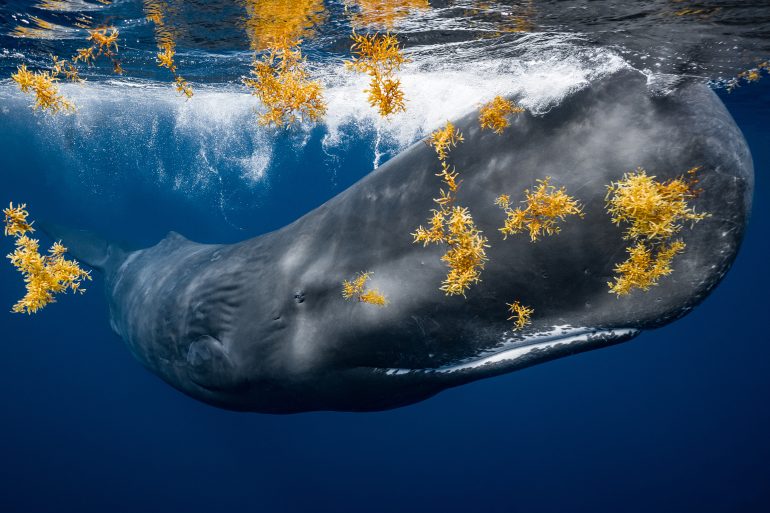
This Nature Photography Contest category-winning image showcases a sperm whale surrounded by “tons of sargassum weed.” James used his Sony a7R Mk II, a 2015 manufactured device with a wide-angle lens, to capture the length and breadth of the massive creative. “I held my ground, and when it passed me, it felt like a train going by,” he added. The sargassum weed only further helps to elevate the composition of the image.
Birds
Saleel Tambe
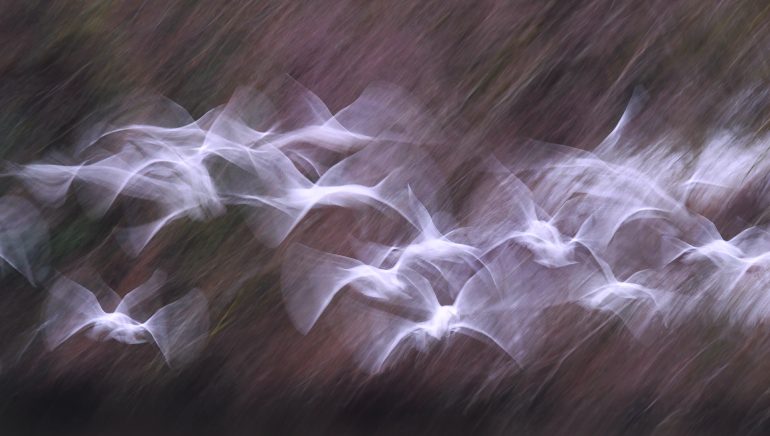
Saleel states that it was an overcast day, where the low light was “not suitable for any action photography.” With his Canon EOS 50D and a telephoto lens. Saleel chose to take a different route. “I decided to make creative use of the situation and, using the slow shutter speeds along with simultaneous zooming and panning, tried to achieve this dreamy effect of a surreal bird flight,” he adds.
Since the 50D was launched in 2013, this would make it somewhat impossible to get a clear picture in such an environment. However, kudos to the photographer for thinking on the spot and capturing the same scene in a unique way.
Plant Life
Avilash Ghosh
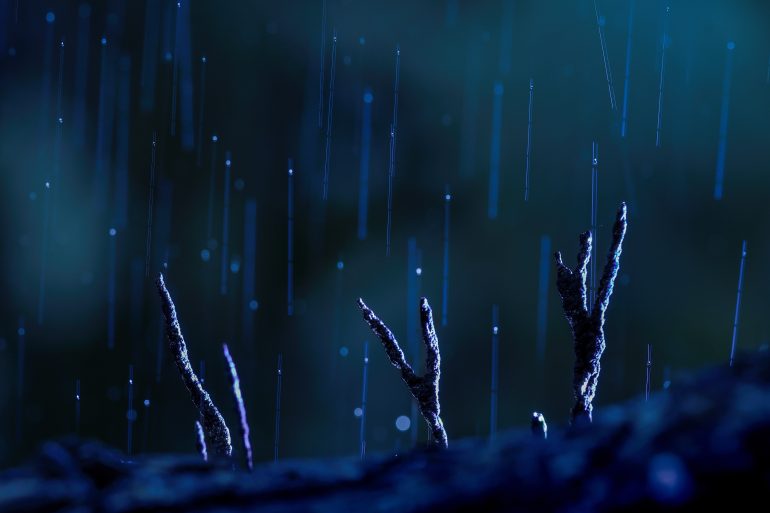
Another Nature Photography Contest winner shot this spellbinding image with a DSLR, the Nikon D7500, and a 90mm macro lens. The fungi are called Dead Man’s Finger, a name they get from their skeleton-shaped appearance. To make this site as eerie as the name, Avilash used an LED light to light up the fungi and utilized the existing rain and flashlight.
Night World
Francisco Cortes Arias

This photograph showcases the eruption of the Volcano of Fire “Chi’Gag” in Guatemala. “A starry sky, a full moon that was hiding and the unforeseen and impressive eruption of Chi`gag that seemed from the earth to offer its strength and energy to the sky and the whole universe,” said the Nature Photography Contest category winner.
Environmental Impact
Rob Green
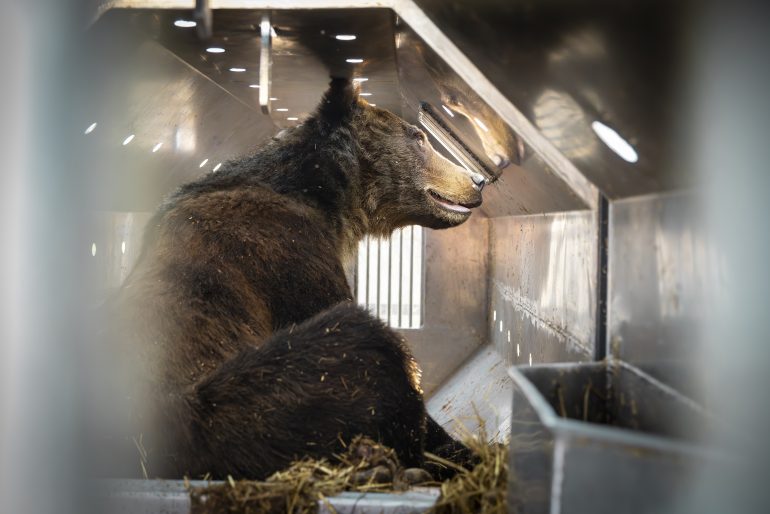
The bear in the photograph was captured when he went to look for a sheep as his next meal. “Strange as it sounds, getting captured might be his best chance of survival,” says Rob. The image showcases the reflection of the bear looking at himself and the world that is changing so quickly. This portrait was made with the Canon EOS R5 and a 50mm lens. The camera has a 45MP sensor, which, when paired with the DIGIC X Image Processor, gives great image quality and colors.
Sharing the Planet
Sina Ritter
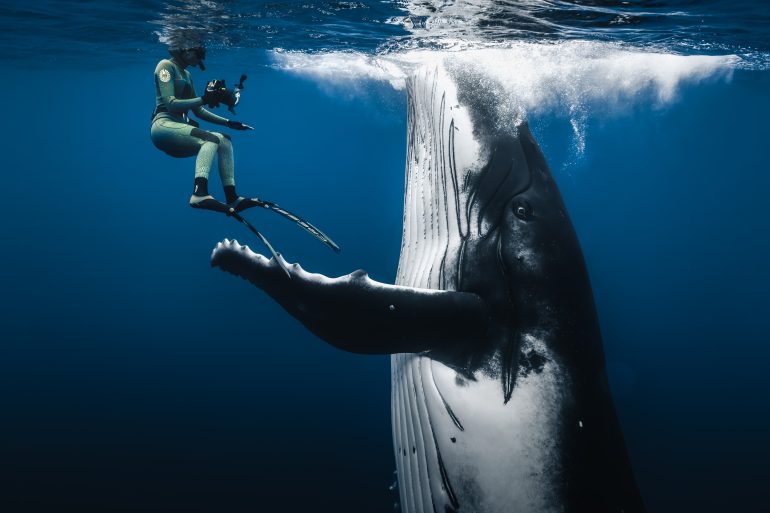
This beloved young whale was known as Sweet Girl, who tragically lost her life on October 8, 2024, “after being hit and killed by a large fast-moving vessel between Tahiti and Moorea.” This photograph was shot before the accident, where she was seen communicating with a woman called Rachel Moore. “Her death deeply affected those who encountered her, highlighting the urgent need to slow down ferries during whale season,” says Sina.
Funny Nature
Brian Clopp
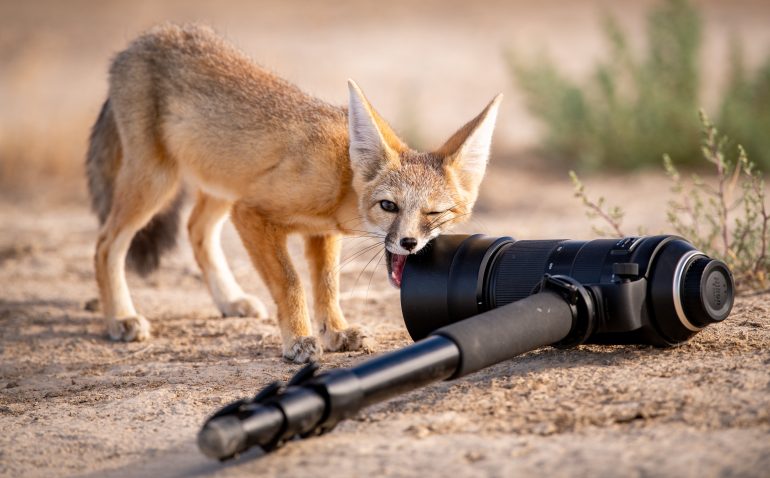
The young rare desert kit fox bites onto the camera lens to see what the object is made of. This is the third photographer in the Nature Photography Contest who uses a DSLR, the Nikon D850, alongside a 600mm focal length.
Overall, we saw a mix of cameras this year, from drones to DSLRs to mirrorless. While full-frame mirrorless seems to be in the lead, the use of DSLR and drones only proves how much photography is changing. This, thus, proves it is not about the camera but about the photographer.
Get rid of the ads!
Did you enjoy reading this article as much as we enjoyed writing it? There's a way to support us and our reporting, getting ad-free navigation and more as a bonus. Subscribe to us for less than a coffee per month —just $3.99— or take advantage of our yearly subscription with a hefty discount for only $25.- An ad-free experience
- A free mystery box for Lightroom or Capture One
- All the books in our store
- 20% discount on Capture One
- 30% discount on Imalume Photo Theft Protection
- 20% off Herbs and Kettle Tea Company.
- 20% off your order from MPIX printing services.
- 5% off Viltrox Products via their eCommerce store.
- 10% off all film developing, printing and scanning services from Blue Moon Camera and Machine
- 15% off 7Artisans products: The lens and accessory maker is offering a sweet discount for Phoblographer's readers.
- 15% off a VSCO One subscription: Get a bunch of great tools with their all-in-one package.