


Last Updated on 02/21/2025 by Chris Gampat
There is a lot of excitement going on in the photo industry, thanks to Zeiss’s return. We have already mentioned that Zeiss is likely to launch its Otus lenses for the mirrorless market, and it has been confirmed that some sort of launch will take place on February 25. While we anticipate what Zeiss brings to the table, we can tell you a few things that will certainly be possible this time in Zeiss revival. How so? Because of our past experiences and reviews on these legendary lenses.
Immense Sharpness
One of the things that you can easily expect is the striking sharpness, which is one of the most revered features of the Zeiss Otus lenses. If you look at our review of the 55mm f1.4 Otus, you can see how the lens has the best image quality we’ve seen by far from any other optics. “Indeed, it is pretty much flawless when it comes to this parameter,” as we stated. This level of sharpness was not only noticeable at the center but also towards the edges, making it the perfect choice for portraits as well. In addition, you will also get spectacular bokeh at f1.4. And so, if the lens comes from Sony, photographers can expect sharpness, unlike anything we have seen before, especially now that Sony has some high-megapixel cameras like the a7R V.

Below is a gallery of images that we shot with Zeiss Otus lenses over the years in our previous reviews.


How They Focused
We had the pleasure of reviewing several Zeiss Batis lenses, a series created in collaboration with Sony. In many ways, the lens fits like a glove. The Zeiss 40mm f2 Batis had fast autofocus, but it was not too fast for street photography but perfect for photojournalists. Similarly, the Zeiss 85mm f1.8 Batis was quick, and so was the Zeiss 135mm f2.8 Batis. However, if the Otus follows Batis and adds an autofocus that is reliable with newer cameras, then things will be pretty fantastic for photographers, especially for those who shoot fast-paced scenes.
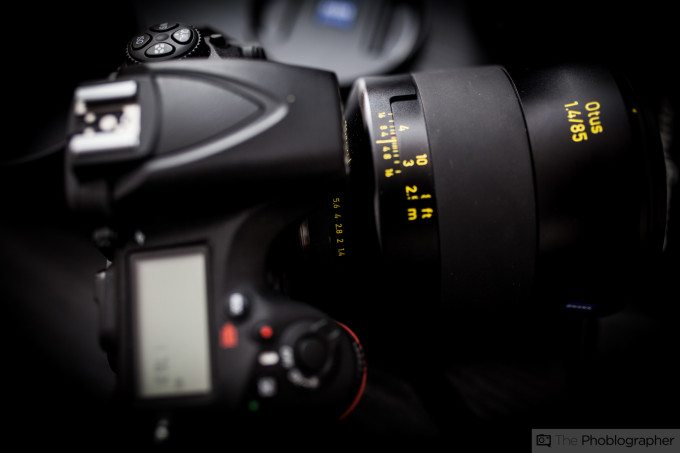
While we all want autofocus, there is a high possibility that Zeiss Otus lenses will stick to manual focus, which they were praised for. For instance, the Zeiss 85mm f1.4 Otus has a rubber focus ring that is precise and smooth. The use of rubber was to help photographers who shoot in colder environments. However, a manual lens is a possibility because a lot of camera manufacturing companies do not allow them to add autofocus. For instance, Sigma could never create an autofocus lens for Canon, so did Zeiss.
Weather Sealing and Metal Body
While Otus lenses for Sony were robust with an all-metal body, durability was a challenge. The company never had weather sealing, and you could see how the lenses could age over time. As we stated in our older article, the DXO mark ranked a Zeiss lens below a Canon, Nikon, or Sony, as the lack of weather sealing caught up to them. So, our hope is that the company changes this with the new lineup, which can be helpful for those who shoot outdoors.
Instead, Zeiss gave the weather sealing feature to the Zeiss Milvus, Loxia, and Batis lenses.
Will be Expensive
What is an Otus line without a hefty price tag? Both the original lenses were priced under $4000, but that was because of the high-end materials and precision engineering involved. As we commented in our 55mm f1.4 review, “If you absolutely need no compromise on image quality, then this is your lens. But be sure that you can get the work to make a profit from the purchase.” So, there is definitely a possibility that the company will continue the tradition with its newer lenses.
There is a possibility that all of these things are true and a chance that only some are. Either way, Zeiss has held a benchmark in the optical department, and they are unlikely to let that go anytime soon.
Get rid of the ads!
Did you enjoy reading this article as much as we enjoyed writing it? There's a way to support us and our reporting, getting ad-free navigation and more as a bonus. Subscribe to us for less than a coffee per month —just $3.99— or take advantage of our yearly subscription with a hefty discount for only $25.- An ad-free experience
- A free mystery box for Lightroom or Capture One
- All the books in our store
- 20% discount on Capture One
- 30% discount on Imalume Photo Theft Protection
- 20% off Herbs and Kettle Tea Company.
- 20% off your order from MPIX printing services.
- 5% off Viltrox Products via their eCommerce store.
- 10% off all film developing, printing and scanning services from Blue Moon Camera and Machine
- 15% off 7Artisans products: The lens and accessory maker is offering a sweet discount for Phoblographer's readers.