

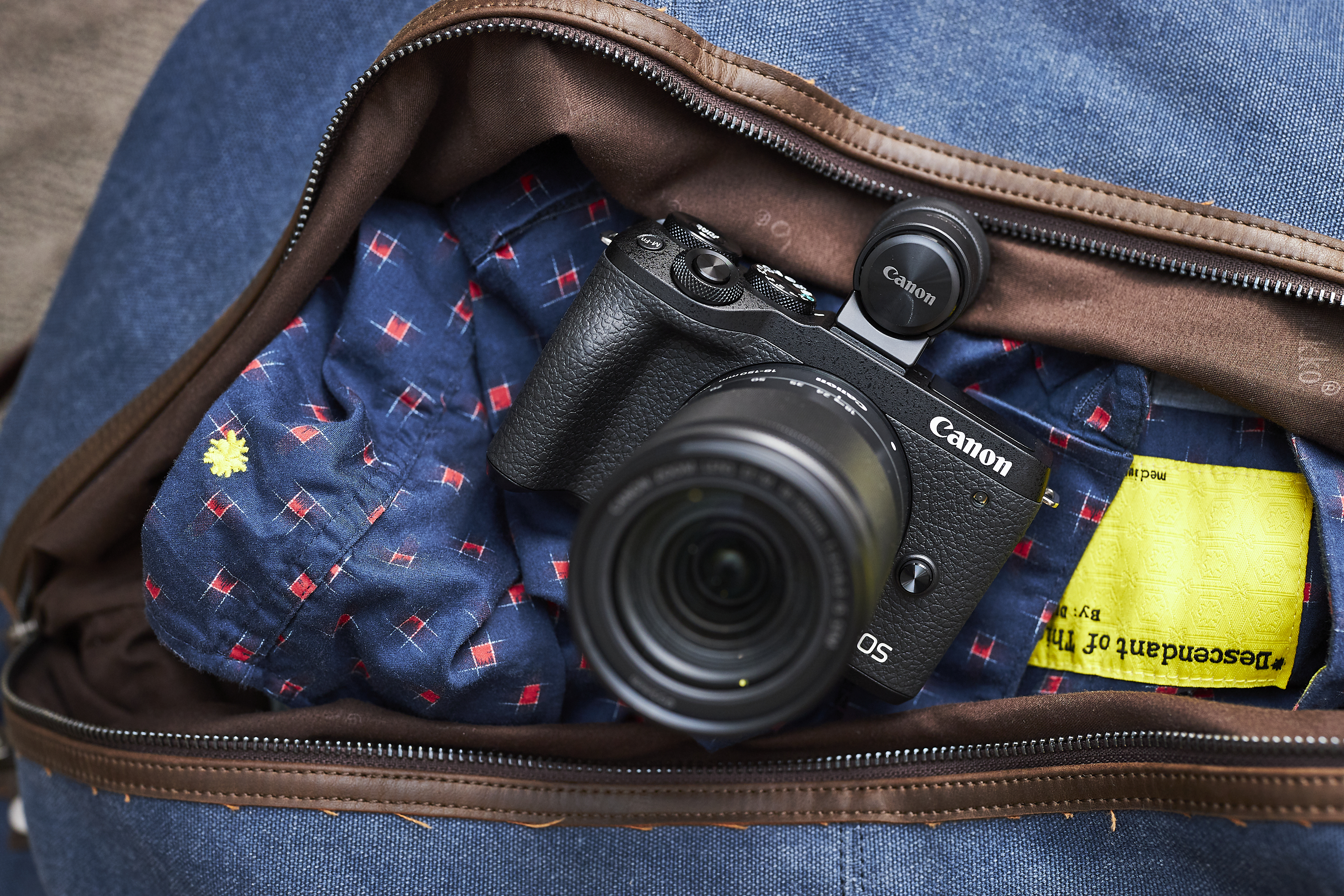
In the two centuries since photography came into existence, we have witnessed diverse inventions that have made the medium more comfortable for subsequent generations. Perhaps, in this regard, the most influential change came in the 1900s, when Kodak introduced its popular and easy-to-use Brownie camera. Gone were the days when one had to dress up and visit a studio for formal portraits. In fact, the small device is so efficient that anyone could become a photographer. Gradually, this democratization of the medium eventually helped photography reach the masses. Building on this success, the CCD camera sensor and its successor, the CMOS, which came several decades later, have changed the face and feel of photography.
Analog to Digital: A Tumultuous Camera Sensor Journey
While analog was the rage in the 1900s, things changed when Steven Sasson, an engineer at Kodak, invented the world’s first digital camera using a CCD (Charge-Coupled Device) sensor in 1975. The device wasn’t anything like the compact, sleek cameras we see today; it was bulky, large, and had a distinct blue hue. But it didn’t deter Sasson. He continued to work on his innovation to perfect the concept. Almost a decade later, he and his colleague, Robert Hills, designed the world’s first self-contained digital single-lens reflex (DSLR) camera.
To understand how CCD sensors really perform, we reach out to one of the most renowned wedding photographers in the industry: Andy Marcus. For the unversed, Marcus has been in the photography business for the past five decades. His father, Fred Marcus, was the first in the family to begin his own wedding photography studio. After graduating in 1975, Andy took over, and today, he and his son, Brian, keep the familial business flourishing.
Andy explains to us how things were before the CMOS sensor came into being, having seen the transition from analog to digital. “Previously, a lack of adequate lighting was a major hurdle, often requiring extensive additional equipment, such as flash units and reflectors,” he told us. In his career, Andy has photographed the weddings of the most well-known faces in the entertainment, political, and business spheres. Some of his clientele, for instance, includes the likes of Eddie Murphy, Donald Trump, Ivanka Trump, Kelsey Grammer, Mary Tyler Moore, and Princess Yasmin Aga Khan. Since weddings are often a rushed affair for the photographer, Andy reminds us how CCD sensors would often lead to “lugging around heavy equipment bags filled with lighting and assorted gear.” But now, all of that is behind him.
A New Way of Photography
Then came the 1990s, with it, a more affordable and compact way of photography: the CMOS camera sensor. Invented by Eric R. Fossum, this technology was specifically designed for NASA, who “wanted smaller cameras that would use less energy.” The CMOS sensor, thus, is not just small, but it is spectacularly effective. The sensor’s design is such that “each chip contained arrays of light-sensitive pixels, each with its own amplifier.” As a result, one gets a device that can shoot in dimly lit situations. “One of the most striking improvements is their efficiency in low-light conditions,” Andy tells us. “Now, thanks to the high sensitivity of CMOS sensors, I can capture exceptionally clear and detailed images even in dim environments. This capability has opened up new avenues for creativity, allowing me to shoot in diverse settings without compromising on image quality.”
But that’s not all; with CMOS camera sensors, cameras are much smaller and ergonomically compact. “The lightweight nature of cameras equipped with CMOS has revolutionized my photography workflow,” Andy explains. With wedding photography, one often has to carry various camera bodies and lenses, each serving a great purpose. For instance, a person carries two cameras, one with a specific lens attached, so that they don’t waste time or miss the shot while changing it. “Modern CMOS-equipped cameras are lighter and more compact without sacrificing any of the professional features I rely on,” Andy states. “This portability means I can travel farther and faster, react more quickly to spontaneous moments, and shoot for longer periods without fatigue.”
Perhaps the biggest winning point is the ability to have fun while taking pictures. CMOS sensors have not only enhanced the technical quality of my photos but have also made photography a more spontaneous and enjoyable pursuit,” Andy states. “The convenience and capabilities of this technology allow me to focus more on the creative aspects of photography, pushing the boundaries of what I can achieve with my camera.”
When looking at photography, it’s important to remember the challenges faced by those who came before us. Despite the limitations, many found ways to create their own unique work. As Andy Marcus pointed out, photography used to be challenging with old sensors, but now, with new technology, it has redefined what it means to be a photographer.
You can see Andy Marcu’s work on his website or follow him on @andymarcus.
Get rid of the ads!
Did you enjoy reading this article as much as we enjoyed writing it? There's a way to support us and our reporting, getting ad-free navigation and more as a bonus. Subscribe to us for less than a coffee per month —just $3.99— or take advantage of our yearly subscription with a hefty discount for only $25.- An ad-free experience
- A free mystery box for Lightroom or Capture One
- All the books in our store
- 20% discount on Capture One
- 30% discount on Imalume Photo Theft Protection
- 20% off Herbs and Kettle Tea Company.
- 20% off your order from MPIX printing services.
- 5% off Viltrox Products via their eCommerce store.
- 10% off all film developing, printing and scanning services from Blue Moon Camera and Machine
- 15% off 7Artisans products: The lens and accessory maker is offering a sweet discount for Phoblographer's readers.
- 15% off a VSCO One subscription: Get a bunch of great tools with their all-in-one package.