


Last Updated on 09/07/2024 by Nilofer Khan
Some photographs are not documents of a lived reality; they transcend to become an emotion, a fleeting sentiment captured like the lines of poetry. They don’t reveal their true nature at one quick glance; instead, they entice you with queries, provoking you to peel back each layer to witness their true essence. Their depth may be elusive to you at first, but as you spend more time, you witness the intricate pieces come together. And then, there is a tranquil moment of epiphany, where your world collides with the photographer’s. In that instance, the photograph is no longer a barrier but a doorway to another world. When you look at the soulful imagery by Jordanna Kalman, you will undergo a similar experience.
All images by Jordanna Kalman. Used with permission. For more, please check out her website and Instagram @rabbitsparrow.
Unraveling Her Identity

Whether it was Invisible, Take Take Take, or Jordanna and the Masters of Photography, Kalman’s work reflects what it feels like to be a woman. “I’ve always been fascinated by women who are feminine, who are comfortable in their bodies and with sexuality while it has always been a mystery to me,” she once wrote. In most of her images, we notice women expressing themselves—troubled, joyful, determined, or sorrowful. However, upon closer inspection, one notices how the photographs are punctuated with themes of memory, self, isolation, loneliness, and the magnificence of femininity. “I predominantly work with female models because, most of the time, they are meant to represent or be a reflection of myself,” she tells us in an interview. However, what one also notices is how a large part of her portraits are nudes. When asked what made her determine this, Kalman comments about its simplicity. “At some point, I began to get stressed out about what the models should wear. I found that clothes dated the pictures, and I wanted the work to be timeless,” she explains.
One of her ongoing series, Little Romances, is another exceptional body of work that draws the viewers in. Here, Kalman expresses her womanhood and emotions, forging connections and claiming her intellectual right. “In sharing my work online, sometimes it is treated with respect, but more often not,” she once wrote, expressing how often her images are used without her consent or credit. To overcome this, Kalman, who enjoys the “sensory experience” of using film, opted to print the photographs, transforming them into “physical objects.” Then, the photographer added another layer, using elements from her “garden or other personal items” to truly create an image of her own. While this practice has allowed her to protect her work, it also enables her to “distance that image from the viewer by obscuring/recontextualizing it.” Another way that this practice has worked is by allowing her to differentiate herself “from similarly themed photography.”
Whenever I do go outside and find something special it becomes a souvenir of that outing and I like to record it in my pictures.
Jordanna Kalman
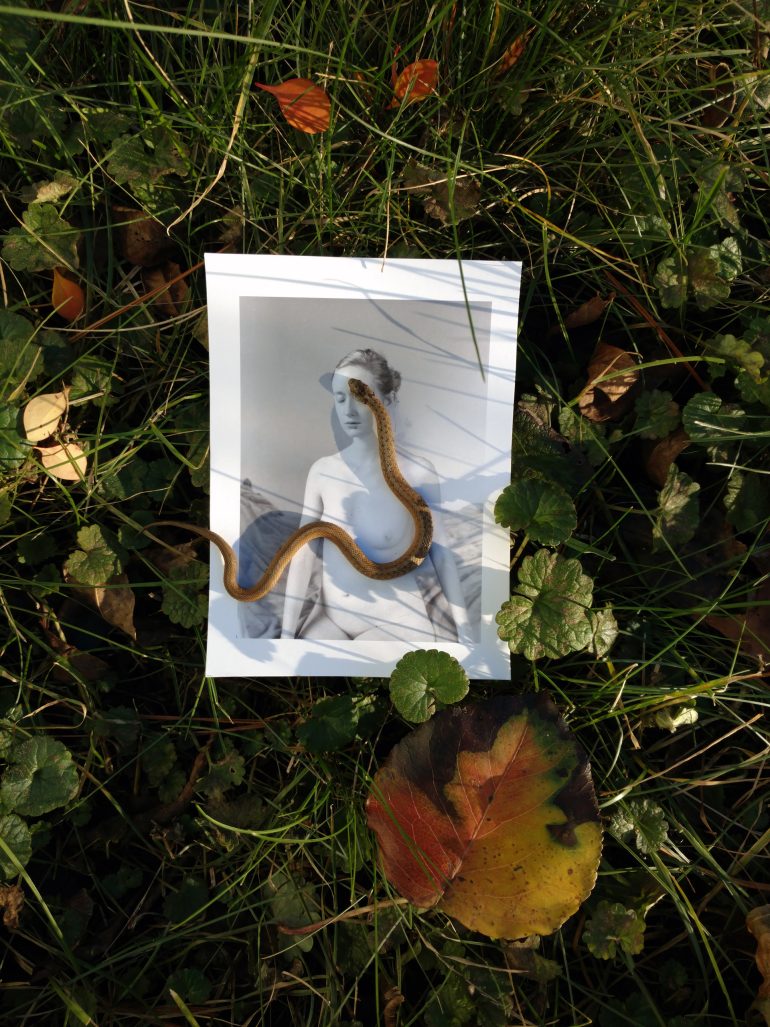
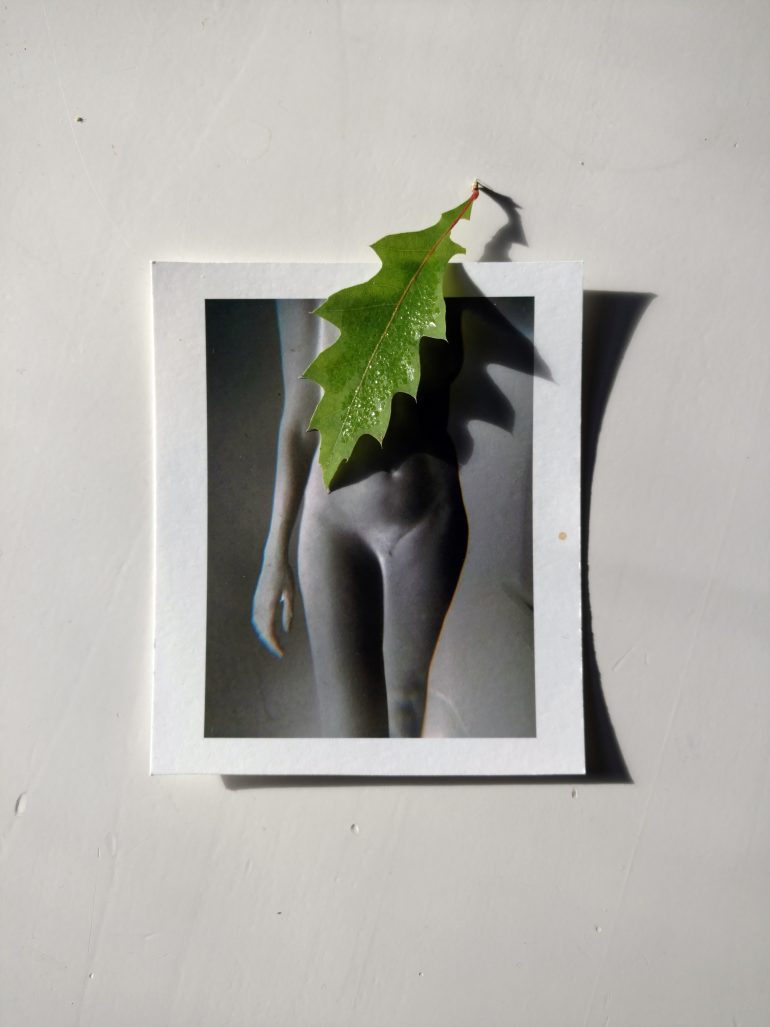
On a more profound stage, Kalman’s photographs prompt us to think about our existence and the fragility of life. But for her, it’s about conquering the fear of being forgotten, especially when social media persistently pressures us to engage with the audience. “Is what I’m doing worth remembering?” questions Kalman. “I always have that voice whispering in my ear, ‘You’re nobody, and your work sucks,’ but I also feel it’s cowardly to give up,” she explains. This fear led her to create her book, Index 2014-2024, which looks at the past decade of her work. “I think (about) how barely anyone has seen most of those photos, but that’s the way it goes,” she states. “It would be nice to be remembered, but currently, my main concern is paying my rent.”

What’s With The Gaze?

Having worked as a photographer for decades, Kalman has noticed the subtle but significant differences between genders in photography. More so when it comes to describing one’s work. For instance, when one uses “woman photographer”, Kalman believes they separate her from the medium. “No one describes a man as a ‘male photographer’ because, historically, when you say ‘photographer,’ it’s assumed you’re speaking about a man. Saying ‘woman photographer’ denotes a subcategory, an ‘other,’ setting one up to make preconceived notions about the work. I am a woman, and I am a photographer, but calling me a ‘woman photographer’ suggests that I am somehow separate from the main category of photography,” she explains.
This is not the only time she felt that certain practices in the community are strange. The other instance is the description of the phrase “female gaze,” which she believes is stereotypical, too. “The ‘male gaze’ is a term used to describe the sexualization and objectification of women, but the ‘female gaze’ does not mean the sexualization/objectification of men, so what does it mean? Anything a woman has in her view? It is a non-specific, lazy term used to pigeonhole the work of women into stereotypical feminine tropes.”
A Photograph of A Photograph
One of the most striking features of Jordanna Kalman’s pictures is the use of light and often natural components. Sometimes soft, sometimes harsh, each picture reflects a distinct disposition. Since her images work on two levels—a photograph of a model and then a photograph of that print—each unique fragment yields the power to enhance or devalue the photograph. “My work happens in a cycle: I open myself up to everything; I look and do research and think for weeks or months at a time, and then the thinking brain turns off, instinct takes over, and pictures happen,” she tells us about her process. The she wakes “from the trance” to see what she made, write her thoughts and “then make more pictures to flesh out the ideas.” Once the work is shown, then she gets “very depressed for a few months and then the cycle begins again.”

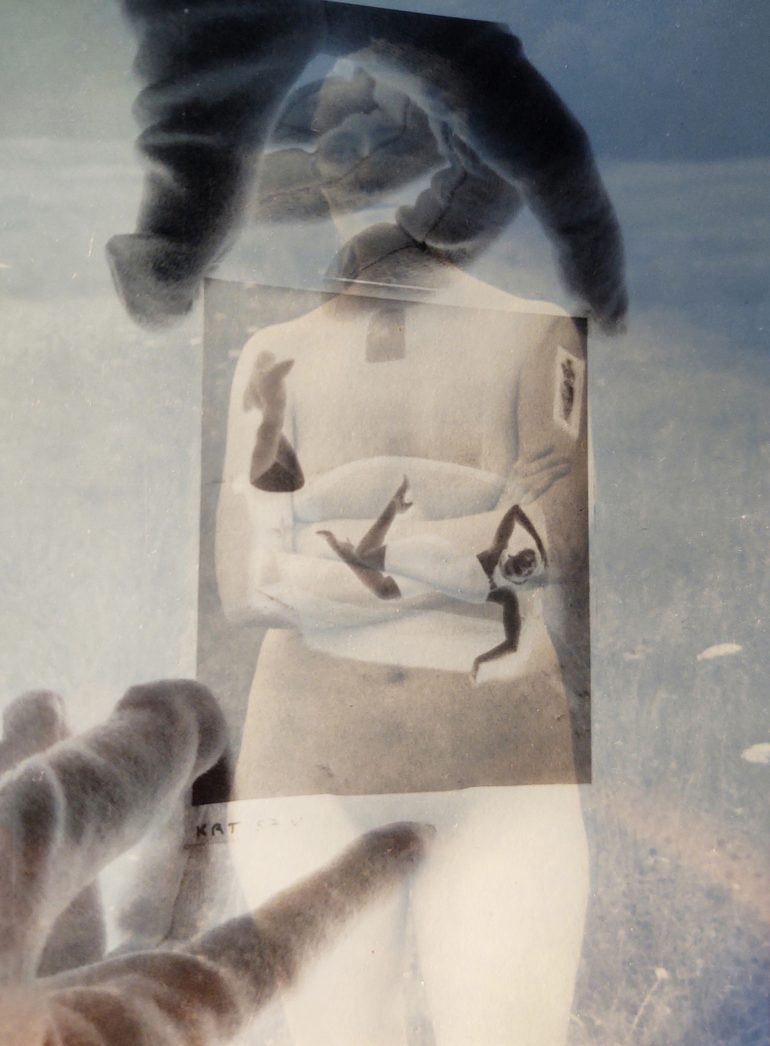
Writing about my work gives me a deeper understanding of it which honestly freaks me out sometimes, being so self-aware.
Jordanna Kalman

Kalman captures her astonishing work on two cameras, a Pentax K1000 and a Mamiya press camera. She primarily uses Kodak Tri-X for the film, which she “develops on her kitchen counter.” Much of her understanding of film comes from her father, a freelance photographer, who taught her photography and printing. She also has a 4×5, which she doesn’t use “very much.” “Working with 4×5 is too slow for me,” she expresses. Regarding her post-production, Kalman limits the edits to “mostly remove dust from the negatives and adjust the contrast.”
Jordanna Kalman may be photographing her world in black and white, but every little sentiment it portrays is like a welcoming burst of colors. As Fedrick Bacman writes in A Man Called Ove, “You only need one ray of light to chase all the shadows away.” Kalman’s photographs offer us hope that every photographic narrative will bring a more nuanced tomorrow.
AUTHENTICITY STATEMENT
The Phoblographer works with human photographers to verify that they’ve actually created their work through shoots. These are done by providing us assets such as BTS captures, screenshots of post-production, extra photos from the shoot, etc. We do this to help our readers realize that this is authentically human work. Here’s what this photographer provided for us.

Get rid of the ads!
Did you enjoy reading this article as much as we enjoyed writing it? There's a way to support us and our reporting, getting ad-free navigation and more as a bonus. Subscribe to us for less than a coffee per month —just $3.99— or take advantage of our yearly subscription with a hefty discount for only $25.- An ad-free experience
- A free mystery box for Lightroom or Capture One
- All the books in our store
- 20% discount on Capture One
- 30% discount on Imalume Photo Theft Protection
- 20% off Herbs and Kettle Tea Company.
- 20% off your order from MPIX printing services.