First Impressions: Sony NEX 7 vs Fujifilm X Pro 1 vs Olympus EM5 OMD

by Chris Gampat on 04/19/2012

Which one? The Fuji X Pro 1, the Olympus OMD EM5, or the Sony NEX 7? These three cameras seem to be the current flagship of their respective camera systems. We’ve had hands on time with each camera already and feel that there is a sufficient lack of major information out there on the internet. Sure, everyone is comparing the high ISOs and looking at charts on image quality; but there is much more to a camera than that. What about the viewfinders? Or the ergonomics? Or the practicality of the lens selection?

Let’s take a look.

Gear In Question

Fujifilm X Pro 1: B&H / Amazon

Sony NEX 7: B&H / Amazon

Olympus EM5: B&H / Amazon

Coverage

EM5

X Pro 1

NEX 7

Ergonomics

Sony NEX 7: The ergonomics on the Sony NEX 7 are very much like a rangefinder camera body, but not quite. Instead, it is a rethink/modern update to the aesthetics that those cameras have. With that said, there is a bit more of a grip, three major control dials with two being on top of the camera, and a flip up LCD screen.

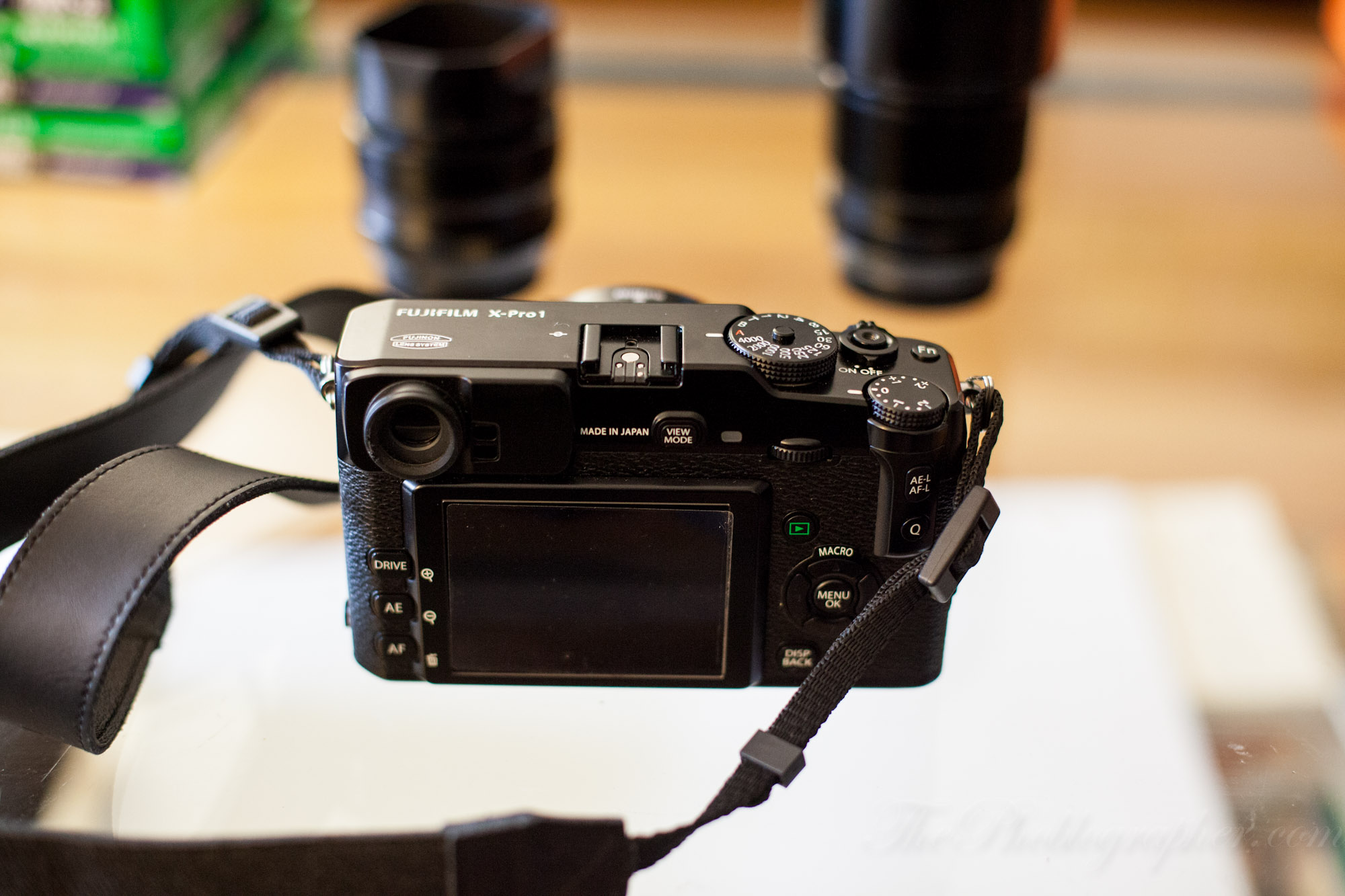
Fujifilm X Pro 1: Though the camera is said to be a modern rangefinder, it isn’t. The ergonomics are almost exactly like one though. Fuji went the different route of putting the shutter dial on top of the camera and the aperture dial around the lens: just like the old classics. Otherwise, there are buttons galore on the back.

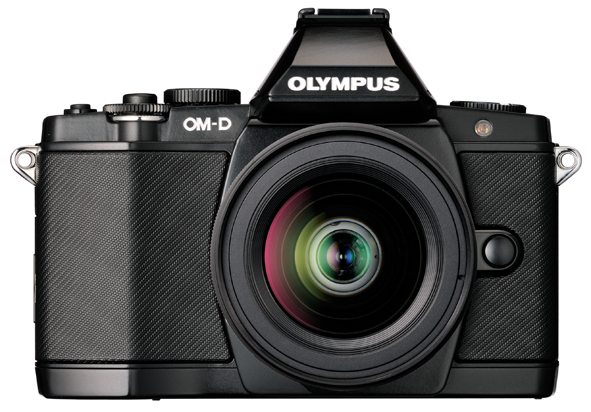
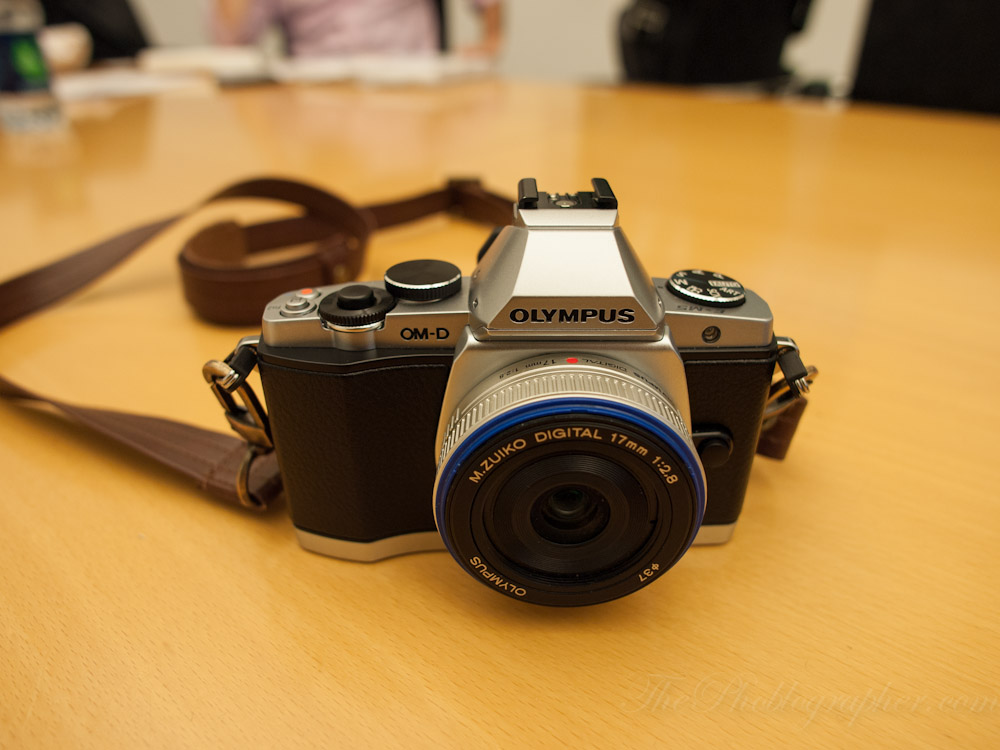
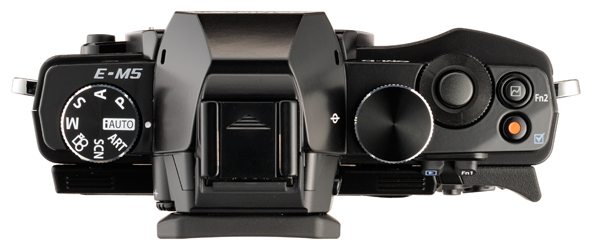
Olympus EM5: The EM5 OMD is an interesting camera. It is a rethink on the company’s old SLR cameras, but in a mirrorless camera model. It isn’t as big as a Fuji X Pro 1 but isn’t as small as an NEX 7. There is a big viewfinder right in the middle (just like an SLR), two top control dials, and buttons on the back that can be tough to press at times. Plus there is a flip up LCD screen that is also touch capable.

Winner: I’m very much torn between the NEX7 and X Pro 1 on this one, but I have to hand it to the X Pro 1 for the reason that all of the functions that I would typically use are right where I want them.

Autofocus

Sony NEX 7: The NEX 7′s autofocus is really quick. When I handled it, it wasn’t that quick due to it being a pre-production model. However, I know for a fact that the focusing works just like the NEX 5n’s, and therefore is very speedy in acquiring a subject. Sadly, individual selection of a specific focusing point isn’t the simplest to do.

Fujifilm X Pro 1: This is where Fujifilm needs to pick up its game. The X Pro 1 focuses like the 5D Mk II. Additionally, choosing a focusing point besides the middle in a real life situation isn’t really the easiest to do.

Olympus EM5: Olympus revamped their Fast Autofocus System (they actually call it that) and it is indeed quite quick. Using the touch screen on the EM5, you won’t have much of a problem focusing at all. Use the viewfinder, and you’ll suffer from the same problems as the other cameras.

Winner: The touch screen saves the EM5 in this case. But all of the companies should consider a system like Canon or Nikon’s where the point can be selected with a joystick on the back of the camera.

Lens Selection
Sony NEX 7: Sony has a bunch of adapters for various lenses at the time of writing this post. That includes Leica and their own Alpha lenses for their DSLRs. Plus, they have third party support already from Tamron and Sigma.

Fujifilm X Pro 1: Fujifilm has only Leica adapters at the time of writing this post. They have no digital SLR system of their own. The S Pro series were essentially Nikon cameras.

Olympus EM5: Olympus and Micro Four Thirds have the smallest sensor of the three: and can therefore mount nearly any camera lens you can think of. Plus, there are adapters for their system everywhere.

Winner: Micro Four Thirds and the EM5 win this one. If you already have an investment in another camera system, consider it as a backup.

Universal System Support

Sony NEX 7: Sony NEX cameras have many lenses and customized cases and grips available for them.

Fujifilm X Pro 1: At the time of writing this post, the X Pro 1 doesn’t have much support yet. Most interestingly though, it is the only camera on the list with a PC sync port: meaning that it can easily hook up to studio strobes. Sony’s NEX 7 can use Pocket Wizards with an adapter and the EM5 can also use triggers or fire strobes via infrared transmission from an attached Olympus supported flash.

Olympus EM5: Micro Four Thirds (M 4/3) has a ton of support and there are tons and tons of grips and cases available. Plus, many flashes also work with the system.

Winner: Micro Four Thirds wins again.

Video Quality
Sony NEX 7: Sony’s video quality is truly remarkable and is often used by many professionals.

Fujifilm X Pro 1: Fujifilm hasn’t really stepped into the digital video world quite seriously yet. However, their movie film is popular. They might one day take a more serious step forward.

Olympus EM5: Older Olympus cameras were plagued with their codec being super tough to work with. Olympus has fixed that now, but they’re still not often seen on film sets.

Winner: The winner in this case needs to go to Sony, despite the fact that there are also nightmares with their codec.

Viewfinder
Sony NEX 7: Sony’s OLED TruFinder is truly beautiful and the best electronic viewfinder out there. Plus, if you’re manually focusing your lenses, then peaking can be enabled to ensure that you get in focus with ease and with the least amount of button pushing.

Fujifilm X Pro 1: Fujifilm uses a real viewfinder with displays over it. With the flip of a switch, it can turn into an electronic viewfinder. For the most part, it’s an excellent viewfinder, but one can’t see how far out they are focusing in optical mode except through a distance scale in the viewfinder.

Olympus EM5: Olympus put the VF2 on top of the EM5. It isn’t as high quality as the NEX 7′s but it is still very good.

Winner: This is very tough, but for a guy like me with glasses, I much prefer the NEX 7′s TruFinder.

Practicality in Real Life Shooting

Sony NEX 7: There is a big giant LCD screen to use, or the viewfinder. The focusing is snappy. Manually focusing a lens is an absolute breeze due to the focus peaking. Manual adjustment of settings can be a bit tough, but it isn’t terrible. Using the camera for photojournalistic reasons is practical, but that proprietary hot shoe for accessories is killer.

Fujifilm X Pro 1: Focusing is perhaps the biggest problem with the X Pro 1. However, the viewfinder is wonderful for real life use. If someone wants you to take their portrait, you’ll have the easiest time focusing. With a moving subject though, you’ll have some hardships. This is actually a camera that I would want to use in a studio and just to go out and have fun. In real life though, I know that since the focusing is just like my 5D Mk II’s, that I can use it for almost anything.

Olympus EM5: This camera in many ways is the street photography king when it comes to autofocus due to the touch screen. Plus the image quality in a studio can be exceptional. When it comes to manually focusing though, Micro Four Thirds is still a bit crippled due to the fact that they only use a magnification factor to do so.

Winner: This is a three way tie. OMD wins for autofocusing, NEX 7 wins for manually focusing in real life, and the X Pro 1 wins for the easiest ergonomics and getting your settings right if you’re a manual shooter.

We’re not drawing a conclusion yet though, and this will be a tough one. But we will do so once we have finished reviewing the units.

Please Support The Phoblographer

We love to bring you guys the latest and greatest news and gear related stuff. However, we can’t keep doing that unless we have your continued support. If you would like to purchase any of the items mentioned, please do so by clicking our links first and then purchasing the items as we then get a small portion of the sale to help run the website.

  • http://twitter.com/stst31415 Stefan Steinbauer

    @@focus  setting: On the Nex-7 I know for sure that the system is faster than with a joystick in real life situations. Press the button next to the shutter and use the 2 control dials to select the focus point with your eye on the viewfinder. I also used Joystickcameras and I prefer this system.
    Generally I think that you will have to “learn” the Nex-system but once you are there (and you do not have to use the menu ;-) also street shooting will be a breeze.
    I would think that this will be similar on the OM-D but would not let the OM-D win as I cannot imagine that a touch screen can be an advantage in outdoor lighting situations…

    • Guest

      Are you a fucking moron?

      • Paul Wren

        Nicely constructed feedback there Guest. Go find a jelly factory and give yourself a wobble. Shake some sense into yourself.

    • ptejada

      I aggree,
      It may sound odd on paper, but you actually have to use the cameras and their features.

      Coming from the touch enable NEX-5 to a NEX-7 not having the touch screen really feels like an upgrade. The Tri-Navi system in the NEX-7 system is truely revolutionary, once people get used to it. And at the end of the day that is what matters, what ever system you get use to.

  • Bob James

    To not mention the price difference between the cameras is a disservice to the reader, as well as the fact that all but a couple Sony lenses are crap.

    • ChrisGampat

      Dude, click the links. Those will tell you the most current prices.

  • Gerd Müller

    “Additionally, choosing a focusing point besides the middle in a real life situation isn’t really the easiest to do.”

    I own the X Pro 1 since 3 days!
    The selection of out-of-the-middle-focus-points is straight forward. Just press the AF button to the lower left of the screen. Then move focus point with the four way controller around.
    Regards.

  • Pingback: X PRO 1 review at Imaging Resource (and X PRO 1 versus the rest of the mirrorless world). - Fuji Rumors

  • Pingback: Micro Four Thirds Camera Blog – Sony NEX-7 vs Fujifilm X-Pro 1 vs Olympus OM-D E-M5 - Micro Four Thirds Camera Blog

  • Drdul

    I was interested in your comment about viewfinders and eyeglasses, and would like to he how all three cameras compare with eyeglasses and why you liked the Sony best. In my case, I’ve been eying the OM-D, but fat chance finding one in stock anywhere to try out the viewfinder!

    • Steve Rounds

      If you get the OM-D, be sure to order the accessory EP-11 rubber eyeshade…it’s deeper, and does a much better job blocking out bright daylight.  I’d get it even if you DON’T wear eyeglasses.  BTW, I wear the Hoodman photographers eyeglass frames…the lenses flip up so you never have to take your glasses off.  I’ve already done a full stomp of the frames, and they bent back with no worries…titanium is great!

  • Paul Wren

    Back on topic though I’m appreciating the work put into these reviews as I’m still debating on a secondary camera myself. The D800 was my flavour of the month up until Nikon upped the pricing in the UK only which makes the purchase more expensive here than anywhere else. I understand the Olympus is weathersealed and judging by their past performance I can’t see that being beaten here. I look forward to the conclusion of your review.

  • Pingback: Mattebox Might Be The Best iPhone Camera App Around [Review] | Digital photography basics.

  • http://www.facebook.com/Frosti7 Rostislav Alexandrovich

    NEX-7 wins for video?

    no way it does,
    OM-D’s UBER-IBIS acts much like steady cam, makes videos that much stable and jerk free,
    plus NEX-7 video mode overheats quite fast, cant take videos for longer then a few mins.

    • Edgar Baumgarten

      The OM-D records 30P video and puts it in a 60I container. No options for 24P/25P or 50P/60P. The jello effect is also still there.

      • Valk

        From everything I’ve seen of the OM-D it has by far the least amount of rolling shutter of any interchangeable lens consumer camera to date.  That includes the GH-2 which IMO had the least prior to the OM-D

    • inteliboy

      For home video the Em5 woud be best.

      For professional video, NEX-7 is far superior. You’ll be using a rig or tripod  in controlled setups anyway, so the IS is not such an issue. Plus you get a larger sensor, which is far better for legacy lenses and DOF control.

      The X-Pro 1 unfortunately has no manual control and a crappy bitrate for video. 

  • DJEZRAJ

    Nice Review. many points are well put. I agree about most of the Pro’s of each system. However I would add the 3 lenses Fuji does make for the system seem like very useable focal lengths not to mention Fast and reasonably priced. 

    I however would not agree that Micro four Thirds really supports more legacy glass when the crop 2.5 factor doubles the Focal length. Many beginners might think that fast 50 “normal will be a great walk around  lens for their new EM-5. Perhaps if you want a fast telephoto but it won’t be like the old full frame days of Oly.I would consider the EM5 but more for what is available new such as the Pany 20 1.7 Oly 45.1.4 and 20.2 etcSony OTOH could seriously release some smaller faster Primes. Otherwise i would likey grab the new Sigma 19 and 30…but I digressThanks for the info

    • ChrisGampat

      You mean 2x crop, right?

      -Chris Gampat
      Editor in Chief
      The Phoblographer

    • jimspc

       Voigtlander 25 and 17mm 0.95 + pany 25mm 1.4 + oly 12mm 2.0 + oly 45mm 1.8 and tons of primes under 35mm from the vast legacy collection.
      You are not trying, are you?

  • Pingback: From M43 to NEX: A Story of Lenses | fotoniac

  • Pingback: omd vs x pro 1 vs nex 7

  • Pingback: Mirrorless Rumors | Blog | Mirrorless news roundup (with a new full frame mirrorless rendering)

  • chris

    The video on the Nex 7 is far superior to the Fuji and the EM5 and it gives my GH2 and 5d2 a run for its money. The framerate options alone top the others, but I’m guessing the bitrates are higher on the Sony as well.  I have the Nex7 and the EM5 and the Oly is not a a player in the video realm yet.  Of course that could be addressed in a firmware update. The GH2 is still the best m43 camera for video.  Fuji’s video is a joke, its a token addition because everyone else has it.  I’ve tinkered with the XP1 video off a friends camera, its nice looking, but no manual controls, unlike the Nex7 where everything is easily adjusted.

    The Nex does use the Sony flash mount and there’s a $5 adapter on Amazon if you have standard hotshoe stuff.  I picked a couple of them up when I bought the Nex7 and use them with my triggers and Canon flashes – works perfectly.  Sony makes a couple really nice flashes as well if you need TTL metering, I just don’t have one at the moment so I shoot all manual.  I have a studio strobe and it fires that perfectly as well.

  • Mike

    And just how many real rangefinders are there in digital?   Hum, let me think.  So saying XP1 went a different route with the shutter, aperture, etc does not make much sense.   The one camera and versions of it in digital went the different route, no? 

  • Guest

    Not sure the nex7 being as quick to focus as the nex5n is saying much. My son’s nex5n spends an awful lot of time hunting instead of focusing. I just bought an X100, latest firmware. Hardly a quick focusing camera.  But it very rarely hunts and in low light it’s quicker than the 5n. So I guess that makes it quicker than the  7 as well?

    • ChrisGampat

      Tell him to switch to the center focusing point.

      -Chris Gampat
      Editor in Chief
      The Phoblographer

  • Pingback: Aktuelle Systemkamera Links (23. April 2012) - Systemkamera Blog

  • Pingback: X-Pro1 versus E-M5 versus NEX 7 mal anders - Systemkamera Blog

  • Alan James M

    “Olympus EM5: Olympus and Micro Four Thirds have the smallest sensor of the three: and can therefore mount nearly any camera lens you can think of. Plus, there are adapters for their system everywhere.

    Winner: Micro Four Thirds and the EM5 win this one. ”
    - Eh? NEX can also take any RF or SLR lens ever made with a cheap physical adapter, plus the APS-C x1.5 crop factor is a better compromise between getting the central sweet spot and retaining some of the lens’s FoV. Admittedly the NEX 5N plays nicer specifically with RF wide-angle edges (magenta cast & smearing) than the 7. But why does M43/EM5 win this one? 

  • Pingback: Fuji news roundup! | Fuji Rumors

  • Alex

    Very strange review -almost makes you wonder if author actually shoots…

    Couple of comments from personal experience …

    Evf on om-d is actually better then nex-7, no noise and better contrast. Nex Evf is very noise in low light and the contrast is too high – if you are shooting in the sun you will not see much in the shadow areas…. On the ther hand nex has almost no lack out when you take a shot and om-d has a really long annoying blackout in a single shot mode.

    Focusing on nex7 is adequate – and that’s where it stops. And no it does not compare to 5d
    Focusing on om-d is very fast and reliable.

    Ergonomics on nex 7 are much much better… Om-d is a lot harder to hold and change settings on …

    • ChrisGampat

      Maybe you should start a blog and review products.

      You’re aware that these are all opinions, yes? That doesn’t discount my opinon or yours.

      -Chris Gampat
      Editor in Chief
      The Phoblographer

      • safe as houses

        Maybe you should keep them to yourself then if you feel the need to explain what opinions are. Your opinions are inane. Should I explain what that means?

        • ghaco

          safe as houses. you are a pompous douche bag. Should I explain what that means?

    • http://twitter.com/Emacs232 Denis Cheremisov

      There’s wonderful thing: settings. You can adjust contrast if you want.

  • Mani

    Hi Photographer,  A very informative article.  The way you compare is really object oriented…. hats off….

  • reeltime

    Not sure what they are talking about regarding the NEX 7 selectable focus points. It’s by far the simplest control yet to select a specific focus point! I’ve been a pro shooter for years using both Nikon and Canon and the Sony is much quicker and easier than anything they have come up with. I’ll admit the manual sucks and they may not have understood how it works….

    To select focus point simply click the control button next to the shutter, rotate left dial to select ‘flexible spot’ then simply use the right dial to move it left or right and the control (mode) dial to move it up and down. This can all be down intuitively without ever taking your eye away from the viewfinder or you can use it with the LCD. You can also just keep rotating the right dial to scroll the point across the scene row by row if you prefer and a simple click of the lower button returns you to center focus point.

  • Blueridgews

    I have both the fuji x pro 1 system, all lenses, and Olympus EM-5 with almost all the lenses.  I did some test shooting the other day of a multicolored doll with both cameras and all lenses and the Olympus was a much easier camera to use and the results were to close in image quality to make a difference to me on screen.

    So far, depending upon the scene the Fuji raw files are not easily processed.  The Olympus Jpegs appeared to be better.  I love both cameras, but for most of my work right now I bend towards the Olympus.

  • http://twitter.com/Clayton_H_ Clayton Hunter

    An argument of opinions. This is actually somewhat hilarious to read. I love how anonymity of the internet instantly brings out the tough guy in most people. I know for sure if we were all debating this in person half of you dorks wouldn’t get all bent out of shape stating your “opinion”. I could care less what the Author thinks of either camera but I get my ideas by reading multiple reviews. I applaud the Author. Great job. I enjoyed the review. Do I agree? NO!

  • jlsummers

    Will Konice E mount lens fit the NEX system?

    I have some real gems f1.2 on up.

    I am not worried about auto focus.

    By the way. I have used a Cannon s90 since they came out. I sell photographs, competing in art galleries and doing quite well. The handy little s90 and now it’s replacement is always hooked to my belt loop anytime I am out of the house. My success in selling photographs has a lot to do with knowing what the camera will do.

    Alas after 20,000+ snaps from the little s90 she bit the dust hard. Cannon will refurbish for around $160.00. So I am looking at a NEX system.

    Sony has burned me three times in the past with their electronics.

    The original CD player. It used 33 1/3 size records with data encoded on the surface not grooved like a standard record. At the time picture clairty was tops.

    Next I was burned with the BETA recording system. A system superior to the VHS but lost out because of poor marketing.

    Last was the original SONY digital camera. It recorded to floppy disc. It was a 3.5 mp which made very clear 5×7 and decent 8×10′s

    Turned out the floopy’s were not a stable recording media so they too were abandoned.

    However if my Konica lens will fit the NEX system I will bite on Sony again.

    • ChrisGampat

      With an adapter yes

      - Chris Gampat
      Editor in Chief
      The Phoblographer

  • Pingback: First Impressions: Sony NEX 7 vs Fujifilm X Pro 1 vs Olympus EM5 … « DigitCam

  • Pingback: The Mirrorless Quandary..to Sony Nex 7 or to Olympus OMD EM5? | neysapazphotography

  • David Gifford

    Since my discovery of the Phoblographer a few months ago, I have experienced nothing but delight at the topics covered here and the information therein. I most certainly have not come across any portion of it that has inspired me to offer up derogatory commentary…excepting some of the commentators, that is.

    Sooner or later, I will want to upgrade from my Canon 20D or move to a whole new system. I strongly feel this blog will help greatly with that decision when the time comes. I have enjoyed this review and look forward to further installments. Keep up the good work!

Previous post:

Next post: