

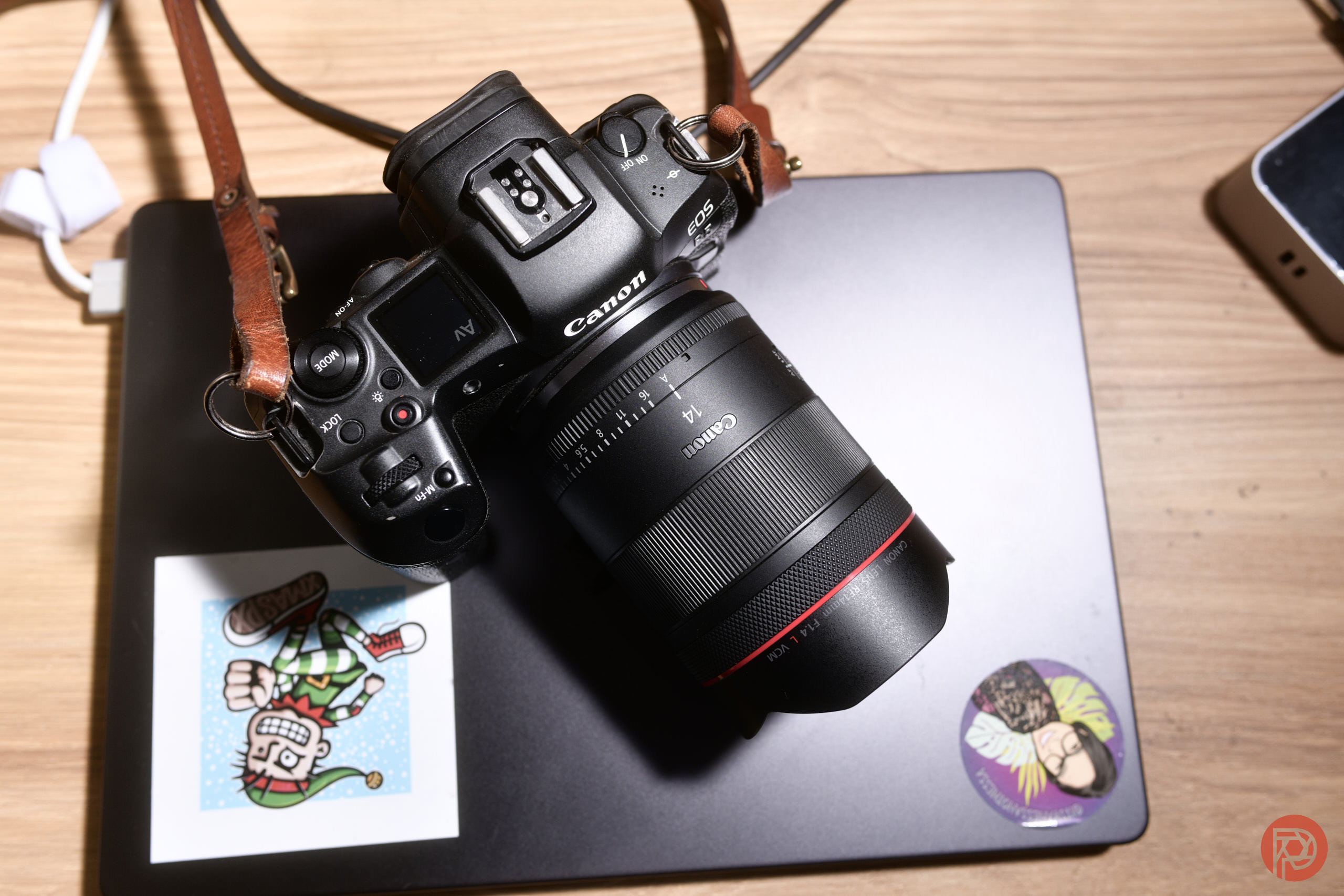
“The more I shoot Canon, the more I want to run back to LUMIX and Nikon,” is a message I type in the private Discord of the Phoblographer’s staff. I type this up at the end of being absolutely frustrated with Canon gear and using it all a lot over the past few days. Unless you’re constantly buying the latest products, Canon’s control layout makes zero sense to me. And it ultimately lead me to believe that most of the YouTubers and influencers who review the Canon RF 14mm f1.4 L lens either mostly shot with it in auto or didn’t do really engaging work with the lens. Sure, it’s seemingly designed for astrophotography. But if you’re spending nearly $3,000 on an gastrophotography lens, then I’d hope that you’re making money from your images. And chances are that you aren’t. So instead, you’d need to use it for architecture, events, etc. That, ultimately, is where this lens falls apart.
The Big Picture: Canon RF 14mm f1.4 L Review Conclusions
There are some notable and innovative things to talk about with the Canon RF 14mm f1.4 L lens. It’s firstly, the first of its kind at a focal length this wide. It’s also remarkably lightweight overall. Plus, Canon integrated a rear-filter system into the lens. For all these things, Canon should be commended.
But holy crap, this thing has distortion. I’m typically not a person to sit there and complain about it — and it can most of the time be corrected in post-production. In the case of the Canon RF 14mm f1.4 L, that specifically has a profile in Capture One, we can see that the lens doesn’t even actually cover the entire imaging circle. And so instead, it’s relying on software correction to actually make the lens into something that you may like.
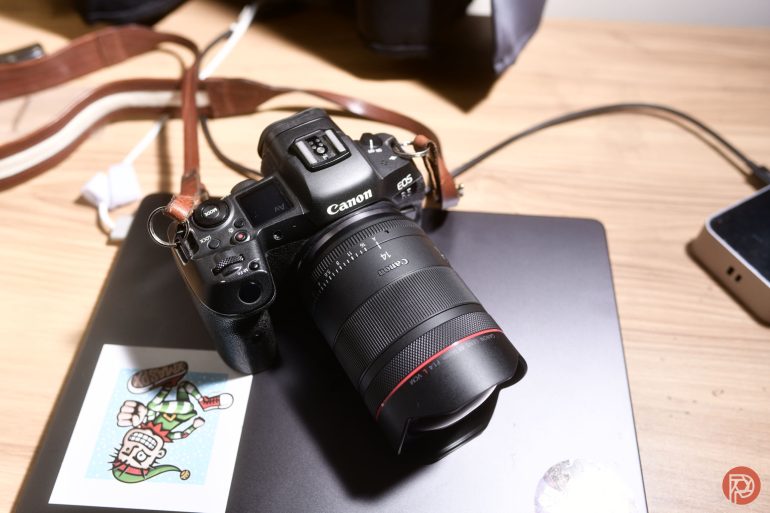
In 2026, I expect more from the #1 company in camera sales. Plus, Canon has the nerve to charge nearly $3,000 for this lens.
Are there alternatives? Sadly, no — because Canon limits how 3rd party companies work with them. If I wanted to adapt something from the Canon EF mount days, I’d probably go for the Sigma 14mm f1.8 Art — which I’ll talk about in just a moment. Know that the Sigma 14mm f1.4 Art lens, if it was available natively to the mount would’ve been an excellent option that would’ve overtaken the Canon lens by far. What’s even crazier to me is that back in 2017, I reviewed the Sigma 14mm f1.8 Art for Canon EF mount cameras. Plus, I used it on a film camera — and even that lens didn’t have so much distortion that the corners weren’t even covering the sensor.
Canon, this is embarrassing. What’s worse is that if I tried to adapt the older Sigma lens that it would have issues with Canon’s mount adapter — or at least it did when the Canon EOS R was launched so long ago.
The problem isn’t necessarily that this lens is so expensive and that it performs like a lens that’s a whole lot cheaper. The problem is that Canon’s system is just so busted. The aperture ring doesn’t even work for photography.
Canon doesn’t fly us out to press trips the way they do with several others. So our units come from Lensrentals. In fact, they don’t brief us on products anymore either. With that said, I’m being completely honest here. I started out in full-frame as a Canon shooter, then left, then came back, and then I left a few years ago.
The current Canon system feels as frustrating as it was in the 2010s when I was telling everyone that they’re not making bad products — they’re just not making good products either. In 2026, the standard for what a good product is has majorly shifted.
Folks, don’t waste your money on the Canon RF 14mm f1.4 L lens. I’m giving it 2 out of 5 stars. Don’t bother buying it.
- Weather resistant
- Very lightweight
- Aperture ring doesn’t work for photography and is limited to only video
- Image quality is sub-par to several other options
- Canon limits third parties in their camera system
- Canon’s control layout changes so much that it gets annoying
- Major distortion issues
- It’s close to $3,000 for no good reason.
Experience
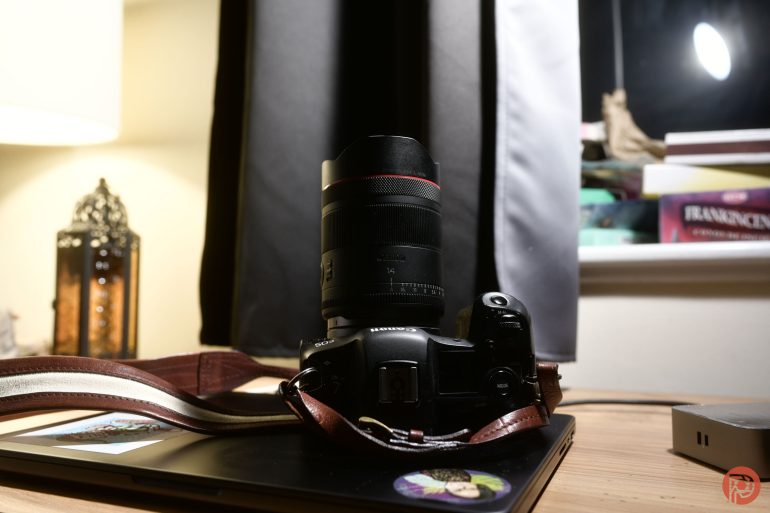
I started the Phoblographer 16 years ago as a way to really be super honest about products and to write from my heart. And anyone who’s read the site for a long time will tell you that this is indeed the case. So with that in mind, know that I’m writing this article out of frustration about a product that I really, really don’t like. To that end, I can’t wait to send it back to Lensrentals.
When I first took the Canon RF 14mm f1.4 L out of the case, I was really impressed. The lens is lightweight, smallish, and feels good in the hand. When it mounts to the in-house Canon EOS R or the Canon EOS R5, the lens feels very balanced overall to the bodies. But this is where things also very complex.
You see, the Canon EOS R is an oddly high-end camera and I bought mine when it first came out. There is no traditional back dial wheel on the rear of the camera — only the two on the top. So this is where things are odd. If you’ve been using Canon since the DSLR days even back into the EOS film days the way I have, you’ll know that the back dial is for controlling the aperture. But that can’t be done with the EOS R. It can, however, be done with the R5. And so switching the lens between camera bodies becomes insanely frustrating because the control layout will switch between both.
We also have an R3 in house, but we wouldn’t use it with the Canon RF 14mm f1.4 L. The EOS R is also just still a really capable camera body.


On the EOS R5, it works pretty darn well. But on the EOS R, you have to rely on the clicked control ring around the lens to operate the aperture unless you set it to the top back dial.
The whole thing feels like it’s breaking my brain.
Oh, and the aperture ring doesn’t work for photography. You have to otherwise bind that command to the clicked dial around the lens.
Thankfully, this is a Canon L lens, so it boasts weather resistance. I took it out during a rainfall here in NYC, and it survived with absolutely no problems in the rain. Generally speaking, I don’t think anyone should be worried about Canon’s weather resistance. My Canon 5D Mk II famously survived Hurricane Sandy. And even beyond that, I’ve seen Canon gear survive insane things.
It also focuses really well on people and animals without any major issues. Tracking also works without fault too when the camera is set to not show us a preview of the exposure. When the exposure preview is off, the autofocus speed can surely slow down. Most of the time, I set this lens to Single instead of Servo shooting. Lots of folks only use servo these days, but I can’t imagine shooting subjects with a lens this wide and always needing to use tracking features.
The only situation I ran into where I really think that the lens and camera should’ve nailed the focus is with this one shot where it completely missed the gentlemen in the front. If you’re not viewing the image large, then it’s fine. But if it’s taking up your monitor, you’ll tell that it’s actually out of focus.

Other reviewers have used this lens for astrophotography. To that I’ll say this: I don’t think that the Canon system is great for astrophotography at all. OM System and LUMIX are great for it due to the Live Composite feature. Canon doesn’t have anything like that. In fact, Canon takes features for photographers (like Multiple Exposure RAW) out of their cameras for still photographers just to pack it with more features for video.
Also, NYC has been very cloudy pretty much every night since we’re currently in the spring season.
By all means, this is the type of lens that you should use with a tripod simply because it will make you work with it differently. But most photographers probably won’t do that. And considering the laws of physics, you shouldn’t really need to either to overcome the lack of image stabilization.
Image Quality
We don’t pixel peep here at the Phoblographer as we find it useless. But with that said, the Canon RF 14mm f1.4 L lens is pretty sharp. However, there are sharper lenses by Canon. Considering how odd this lens is, I’m not surprised.
So when you open up Capture One, it gives you a profile for the Canon RF 14mm f1.4 L lens. Here’s what it looks like with the profile activated.

And here’s what it looks like when distortion is turned off totally. Notice the corners.
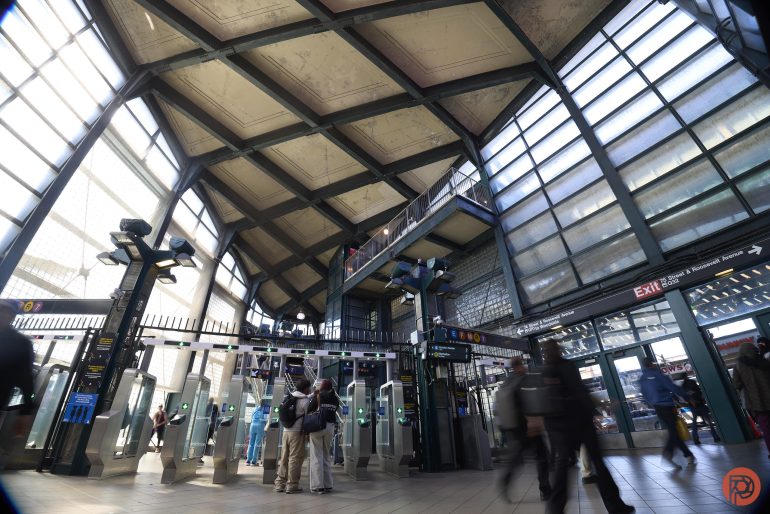
As you can see the lens isn’t even totally covering the sensor. Below, you can use the slider to see the image comparison.


The lens is sharp, but not impressively so. Canon hasn’t always seemingly been about impressive sharpness. But for what it’s worth, even Canon’s 24-105mm f2.8 is sharper than this. And that’s a zoom lens!
Aside from that, the lens offers bokeh — though you shouldn’t really rely on this lens for that particular feature.
The following images haven’t been edited. They were done using Thomas Frannson’s Crowdak look.


The following images have been edited using the Phoblographer’s presets in Capture One.


Do You Really Want To Buy From Canon?
We believe that everyone should be aware of the ethical decisions that they’re making when they spend money. So to do this, we research the companies that whose products we test and make folks aware of both possible concerns and reasons to feel great about giving a company your money.
Here’s what we’ve got for Canon:
- Several of Canon’s products may contain potentially harmful chemicals, as described under California’s Proposition 65/Safe Drinking Water and Toxic Enforcement Act of 1986.
- Like many other companies, Canon has recently begun working with more artists from diverse (non-white/European) regions, including members of the African Diaspora, the Middle East, Asia, and the Americas; one such example is the Miraisha Project, which aims to increase employment opportunities and skills training in Africa. Locally, Canon has provided support to the BLACK PEARL’s Culture@ Campaign.
- Since the early 2000s, Canon has become more proactive in its sourcing and supply chain practices to ensure that its suppliers/vendors meet Canon’s corporate ethics, environmental conservation goals, and ensure the rights of their suppliers’ workers. You can find their full Sustainability Policy here.
- In Canon’s 2025 Sustainability Report, a third-party researcher concluded that Canon has continued making progress in its sustainability goals.
- We’ve previously questioned Canon’s employment practices when it comes to equality.
- Canon has been known to offer misogynistic responses to criticism about what they think of women.
- Canon has had to recall several devices in the past. Some of these were cameras.
- Class Action Lawsuits have been taken against Canon for printer issues.
- Customers have been actively leaving Canon because of the lack 3rd party options.
Declaration of Journalistic Intent
The Phoblographer is one of the last standing dedicated photography publications that speaks to both art and tech in our articles. We put declarations up front in our reviews to adhere to journalistic standards that several publications abide by. These help you understand a lot more about what we do:
- At the time of publishing this review, Canon isn’t running direct-sold advertising with the Phoblographer. This doesn’t affect our reviews anyway and it never has in our 15 years of publishing our articles. This article is in no way sponsored.
- Note that this isn’t necessarily our final review of the unit. It will be updated, and it’s more of an in-progress review than anything. In fact, almost all our reviews are like this.
- None of the reviews on the Phoblographer are sponsored. That’s against FTC laws and we adhere to them just the same way that newspapers, magazines, and corporate publications do.
- Canon did NOT loan the unit or any accessories to the Phoblographer for review. There was no money exchange between us or their 3rd party partners and the Phoblographer for this to happen. Manufacturers trust the Phoblographer’s reviews, as they are incredibly blunt.
- Canon knows that it cannot influence the site’s reviews. If we don’t like something or if we have issues with it, we’ll let our readers know.
- The Phoblographer’s standards for reviewing products have become much stricter. After having the world’s largest database of real-world lens reviews, we choose not to review anything we don’t find innovative or unique, and in many cases, products that lack weather resistance. Unless something is very unique, we probably won’t touch it.
- In recent years, brands have withheld NDA information from us or stopped working with us because they feel they cannot control our coverage. These days, many brands will not give products to the press unless they get favorable coverage. In other situations, we’ve stopped working with several brands for ethical issues. Either way, we report as honestly and rawly as humanity allows.
- At the time of publishing, the Phoblographer is the only photography publication that is a member of Adobe’s Content Authenticity Initiative. We champion human-made art and are frank with our audience. We are also the only photography publication that labels when an image is edited or not.
More can be found on our Disclaimers page.
Get rid of the ads!
Did you enjoy reading this article as much as we enjoyed writing it? There's a way to support us and our reporting, getting ad-free navigation and more as a bonus. Subscribe to us for less than a coffee per month —just $3.99— or take advantage of our yearly subscription with a hefty discount for only $25.- An ad-free experience
- All the books in our store
- 20% discount on Capture One
- 30% discount on Imalume Photo Theft Protection
- 20% off Herbs and Kettle Tea Company.