


A while back, I reviewed the new Leica 35mm f1.2 M-mount lens and really loved what it was capable of producing. But I also knew that I didn’t want to only test it out on digital cameras. A lens like that deserves to be tested on film too. So after buying some Kodak Kodacolor 100 from Blue Moon camera, I made images with it and asked them to develop it for us. So how was it?
The following is text that we’ve added to our full Leica 35mm f1.2 M review.
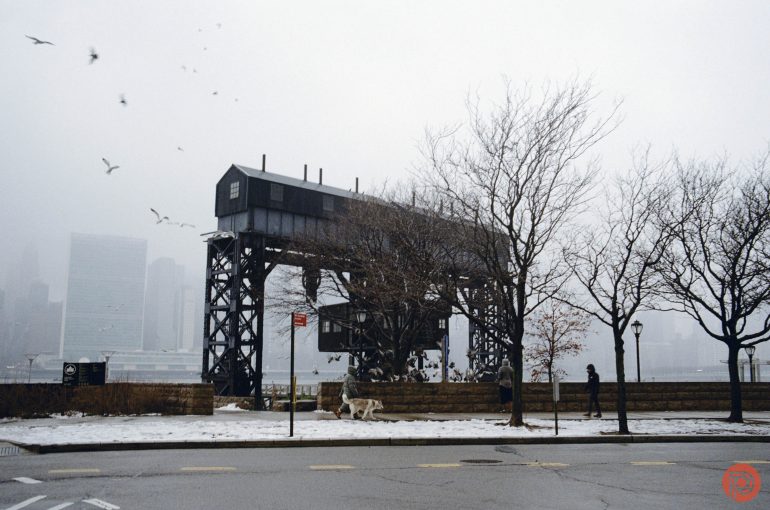
I remember walking along the Long Island City waterfront on the sold, semi-snowy day in NYC when I was reviewing the Leica 35mm f1.2 lens. I also remember loading Kodak Kodacolor 100 into the camera and saying to myself that the images are bound to look really classic. And believe it or not, I was right.
Making photos on film with this new lens isn’t the same as making those same images on digital. With digital, there’s a pop to the images that’s pretty unmistakable. But with film, there’s a vibe and color that doesn’t come with the otherwise sterile digital format.
Where digital is designed to feel like a blank canvas for you to make a painting, film is designed to be an exterior wall with character for you to make a mural. And with that, I’ve got to say that I really, really, majorly enjoyed making those images on film. Pointing the camera through the 7 train window and slowing the shutter speed down while stopping the lens down made me think that yes, I would get blurry images. And yes, they’ll be softened by the window in front of me.
But who cares? It’s all about a look.
Compared to the digital photos I made, I can’t help but really adore the film photographs that much more. And ultimately, this is something that I truly love about the Leica M-series of cameras moreso than I do with the L-series. I can switch between film and digital. That can’t be done as easily anymore except if you’re still using DSLRs. And even then, you’ll lose some sort of support for the lenses after a while.
When I really think about it, I don’t think that I could’ve made these images as easily on digital. To get this look and feel, I’d have to use presets of some sort and even then, I still don’t think that I could get matching tones, the specific colors, etc. Blue Moon Camera did such a wonderful job with the development and scanning of my film.
This is yet another part I love about it: with digital, you have to do your own processing. But with a film lab, you get the images processed for you and you’ve got to live with the look. And 99% of the time, I really do adore that look.
I’m sure there will be some tech-bro with an AI that claims that he can get this same look with digital. But that’s removing the humanity from it. Digital isn’t meant to be used the same way that film is.


Get rid of the ads!
Did you enjoy reading this article as much as we enjoyed writing it? There's a way to support us and our reporting, getting ad-free navigation and more as a bonus. Subscribe to us for less than a coffee per month —just $3.99— or take advantage of our yearly subscription with a hefty discount for only $25.- An ad-free experience
- A free mystery box for Lightroom or Capture One
- All the books in our store
- 20% discount on Capture One
- 30% discount on Imalume Photo Theft Protection
- 20% off Herbs and Kettle Tea Company.
- 20% off your order from MPIX printing services.