

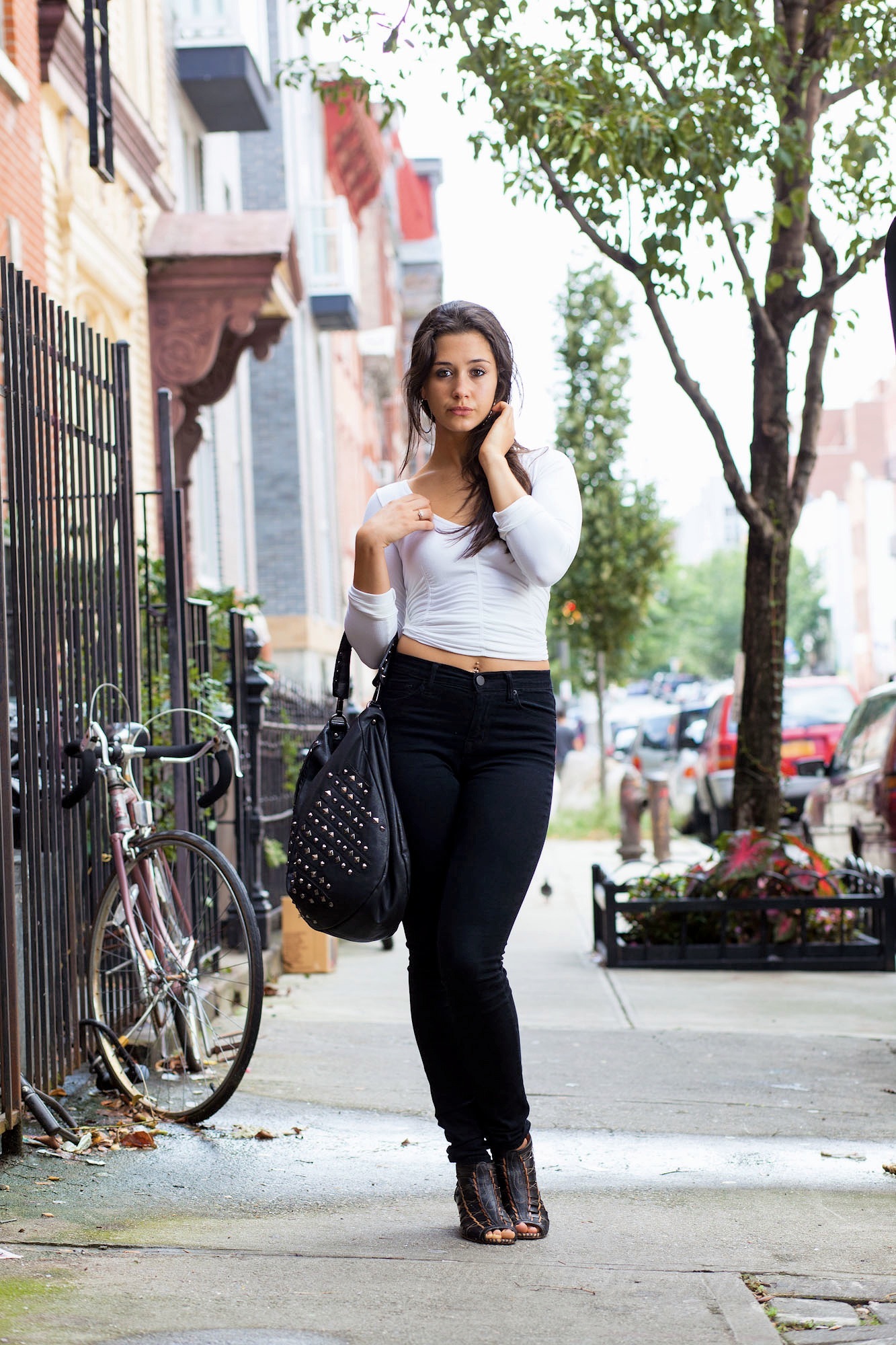
When I first got into photography, my photojournalism professor always taught me to never use flash. Why? Honestly, I’m still not sure. But I had good mentors when I worked at B&H Photo over a decade ago. They completely changed my understanding of why you’d use a flash. For years, people taught me that you only use a flash when you don’t have enough light. But the truth is that you use a flash when you want to add creativity to your images. It’s part of why I started the Creating the Photograph series here on the Phoblographer. To this day, it still is one of photography’s greatest magic tricks in that it creates something that the human eye can’t see in a matter of split seconds. And so over the past 10 years, I’ve changed as a photographer. And how I light has also changed.
This article is partially inspired by a thread I found on Reddit about how amateurs and professionals light their images. Realistically, I feel amateurs light their images with the intent of only trying to get people to pay attention to a specific thing. But professionals care about the entire scene.
I Used to Augment Natural Light for Product Photography
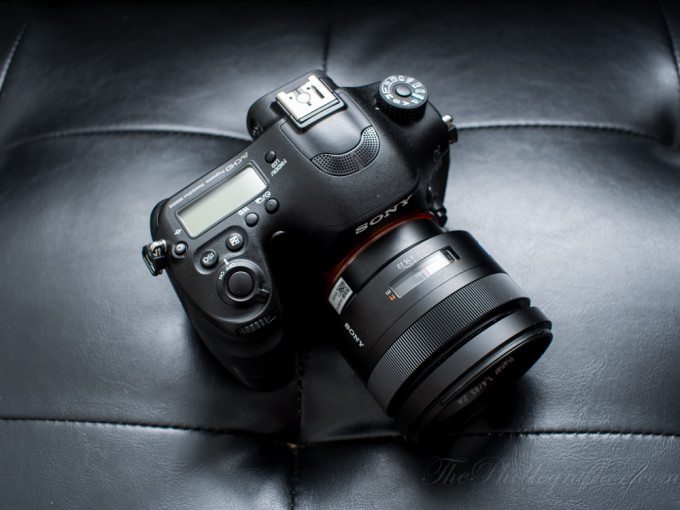
If you recognize this image, you’ve probably read the Phoblographer for a very long time. I was one of the first to put cameras on a leather couch and create very specific lighting to get a look like this. And often what I’d do is point a powerful flash at windows and augment the natural light that was coming in. It usually worked really well and gave me really stunning product images. Even today, I’m very proud of the work I made.
Several years ago, I wrote about how we did our product shoots here. Everyone who has worked for the site learned the art of product photography and how to apply the art of lifestyle appeal to everything we do.
Mostly it was about making the product look like an object of desire while also trying to make something look practical. To this day, we’re still the only photography publication that does full lifestyle photo shoots of the products that we photograph.
I Balance Natural Light for Product Photography Now
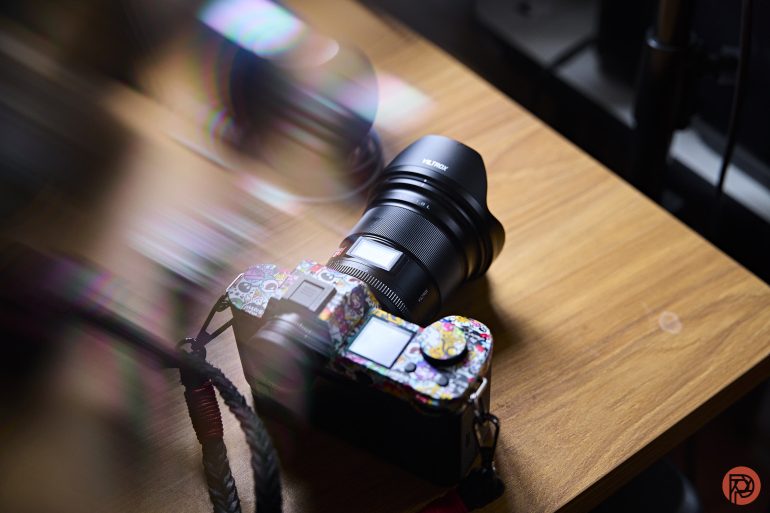
These days, I often use southern light from a large window and balance that out with flash from a big softbox overhead or somewhere else. Typically, I’ll shoot in TTL and make adjustments from there. Profoto lights are great for this.
I used to use bare walls, windows, and umbrellas. But these days, I’ve switched to softboxes. In certain situations, I’ll use umbrellas still as they remain to be some of my favorite light modifiers.
In addition to this, I’ll use special in-camera techniques, unique lenses, and filters to get different effects in-camera. In fact, I always ensure that this is the case.
I Used to Balance Natural Light and Flash for Portraits
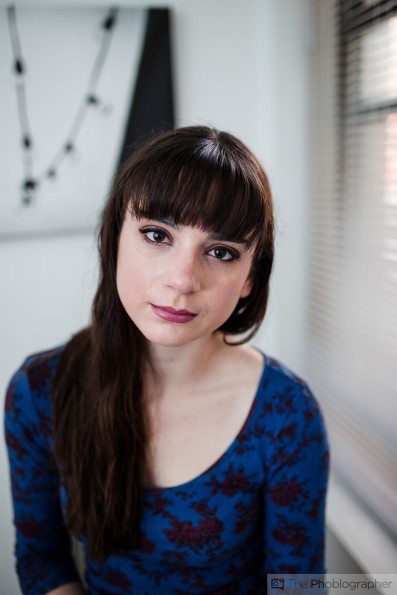
My portrait lighting process for people has been honestly all over the place over the years and I’m usually inspired directly by them. I don’t like drawing ideas from YouTube or Instagram. If anything, I’d borrow on ideas from photographers that Phoblographer has interviewed over the year. But we stopped covering art because folks weren’t reading it as much as we wanted; and we ran into several issues around stepping on the toes of a few reps.
But I drew lighting from the idea that a scene should be very shadowless. After that, I embraced the idea of shadows as a form of contrast. And I ultimately think that this came from my legal blindness. I needed to find a way to make contrast and understand shapes in what I saw. Honestly, the degradation of my vision over the years has majorly changed a lot of how I light.
I Use Flash at My Key Light Now

A lot of my lighting work these days involves shooting events and parties. And rarely do I do standard portraits anymore. I find them boring, if anything. Everyone tries to do them for external validation on Instagram. But I never shot portraits for that reason when trying to be creative. Instead, I shot portraits because I wanted to emphasize something important, unique, or something that I thought was worth staring at. If I don’t think that someone will stare at the image, I don’t think that it’s worth making.
For this, I’m usually shooting digital like I would film. Take that for what you will. But it also means that I throw all ideas of sharpness and a lack of blur out the window.
I light these days to make an experience happen. That’s usually all about creating something that can’t be seen with the human eye.
Past Chris has always done really solid imagery; it’s just that it takes folks a while to be able to understand the work I do.
Get rid of the ads!
Did you enjoy reading this article as much as we enjoyed writing it? There's a way to support us and our reporting, getting ad-free navigation and more as a bonus. Subscribe to us for less than a coffee per month —just $3.99— or take advantage of our yearly subscription with a hefty discount for only $25.- An ad-free experience
- A free mystery box for Lightroom or Capture One
- All the books in our store
- 20% discount on Capture One
- 30% discount on Imalume Photo Theft Protection
- 20% off Herbs and Kettle Tea Company.
- 20% off your order from MPIX printing services.
- 5% off Viltrox Products via their eCommerce store.
- 10% off all film developing, printing and scanning services from Blue Moon Camera and Machine
- 15% off 7Artisans products: The lens and accessory maker is offering a sweet discount for Phoblographer's readers.
- 15% off a VSCO One subscription: Get a bunch of great tools with their all-in-one package.