


Leica is one of the camera manufacturers who we have always adored. The company really gets its ingredients right for a perfect camera recipe, and when some elements are amiss, they pepper the dish with firmware updates. Overall, you get a camera that you genuinely hoped for. In a new interview with French publication Photo Trend, Laurent Pidancet, head of the Leica Akademie in France, we get a few updates about the company’s future plans. What we seem to be missing is the Leica Q3 Monochrome. So will it be copming?
Leica’s Q Series Future
Laurent Pidancet revealed that while the M series was their best-selling camera, that award now goes to the Q series, particularly after the arrival of Leica Q3. Furthermore, the new Q3 43, which has a unique lens, also “responds to a historical demand from our customers.”
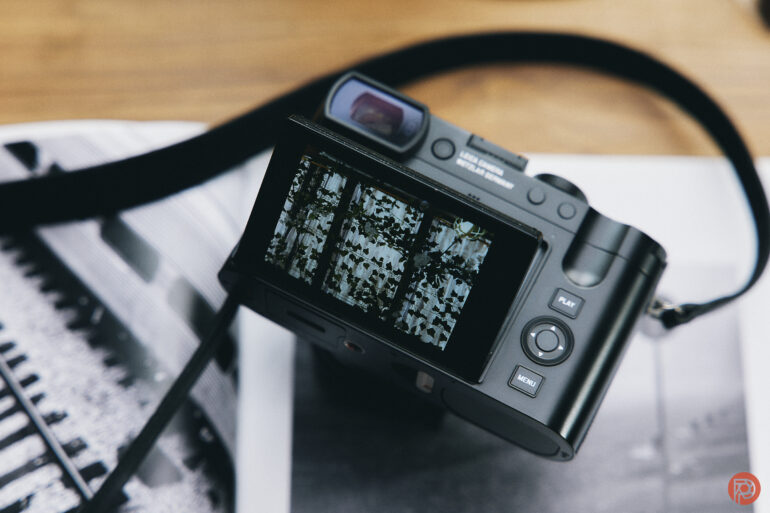
Now, if the Q3 model is becoming more popular, thanks to being a full-frame point-and-shoot with various features, the question of a monochrome model would arise. Pidancet states that after every two years, the company releases a monochrome model following the launch of a color model. “If we follow past trends, a monochrome model could well be in the pipeline. Even if it is not officially confirmed, it is common to see this evolution in the Leica product roadmap.”
It’s been four years since the Leica Q2 Monochrome was launched, and in our review, we found the camera to be quite wonderful. There were some differences in autofocus, in addition to having a dedicated black-and-white sensor. For instance, the camera didn’t have a mode to track faces. Similarly, the Q3 Monochrome could work on the autofocus and, perhaps, the fps rate, which tops out at 4 fps with autofocus and 15 fps without it. The stabilization is also not the best, and the full menu is not entirely touch-friendly. So, while the Q3 is an exceptional camera, there are a few things the company can perfect later on.
Panasonic’s Patent For Leica 43mm Lens
While Panasonic holds the patent for the 43mm f2 lens, which is currently seen on the Leica Q3 43, Pidancet notes that it is Leica that has perfected the lens. “But while Panasonic might hold patents, they lack certain specificities like apochromatic lenses, which make all the difference in image quality, especially in terms of correcting chromatic aberrations and color rendering,” he said in the interview. “This is where Leica’s expertise comes into play, not only in design but also in fine-tuning materials and manufacturing.”


This isn’t the first time Leica has used lenses from other camera manufacturers. Another example is Sigma. The company is known to have identical lenses, which not only share similar builds but are also competent. This doesn’t mean they are exact replicas but rather identical versions. Panasonic and Sony also had lenses made by Tamron, so one can see how working in groups is beneficial for the brands. However, that also leads to having too many slight variations of similar focal lengths.
In Leica’s case, the 43mm lens works in their favor, as the last time the lens was seen was in 1997, and it was called the Pentax HD FA 43mm f1.9. The refreshed version came out in 2021, but what Leica did differently was include a macro version of the same. Technically, with only two of its type. We did mention in the past that 43mm lenses would be perfect for many photographers, so if Leica has taken the leap of faith, other brands must follow suit.
The future of Leica seems pretty solid for now. So, we must wait and see what the company brings to the forefront next year.
Get rid of the ads!
Did you enjoy reading this article as much as we enjoyed writing it? There's a way to support us and our reporting, getting ad-free navigation and more as a bonus. Subscribe to us for less than a coffee per month —just $3.99— or take advantage of our yearly subscription with a hefty discount for only $25.- An ad-free experience
- A free mystery box for Lightroom or Capture One
- All the books in our store
- 20% discount on Capture One
- 30% discount on Imalume Photo Theft Protection
- 20% off Herbs and Kettle Tea Company.
- 20% off your order from MPIX printing services.
- 5% off Viltrox Products via their eCommerce store.
- 10% off all film developing, printing and scanning services from Blue Moon Camera and Machine
- 15% off 7Artisans products: The lens and accessory maker is offering a sweet discount for Phoblographer's readers.
- 15% off a VSCO One subscription: Get a bunch of great tools with their all-in-one package.