

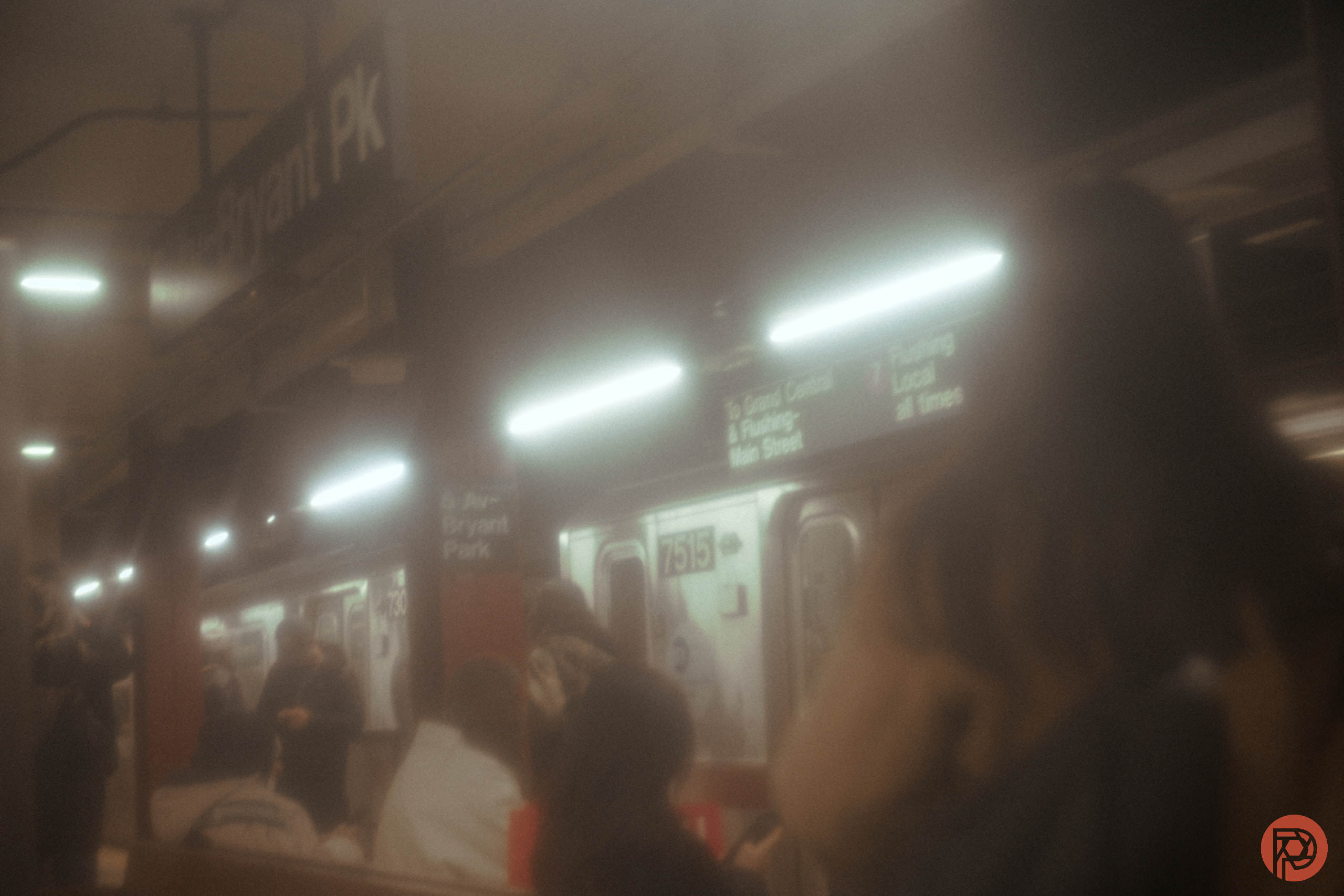
This article is chaos. The photographs in this article are chaos. And the world is chaos. If you’re looking at the lead image and squinting at it to understand what you’re seeing, then know that it’s partially mimicking my eye condition. It’s called kerataconus, and it’s only part of the issue with how I see the world. I created these images just by putting a plastic sandwich bag over a lens. For years, photographers did things like put sheer tights over lenses to get a look. And this is no different. But in a world where all the brands out there are trying to make everything super-sharp and AI is mimicking the look and output of those lenses, I wanted to make something inherently human.
So to make these photos, I used my Nikon Zf with a clear sensor-protection filter, then I put the Viltrox 55mm f1.8 EVO lens on the camera. Then I chose a vintage film look and put the sandwich bag over the lens. After that, I locked it in place using the lens hood.
The result is a world where you’re constantly squinting to understand the details and look at what you’re seeing because it’s so blurry. You even sometimes want to get closer to the image.
This, inherently, is doing exactly what so many photographers want others to do. People sit and simply scroll or click past photographs on social media because they’re leaning into what the mind thinks is predictable. But in these photos, the world isn’t at all predictable. You probably don’t even understand what you’re seeing. To that end, the mind’s eye needs to get closer.
Photographers: if you’re reading this, then understand that this is how you’ll get people to pay attention to and look at your images. They’ll even stare at them.


If you’re doing something photojournalistic, then this method shouldn’t be attempted. But otherwise, I say that you should forget about all the rules. Sharpness? It’s stupid. Clarity? Whatever.
Every single lens manufacturer makes lenses with crystal sharp clarity that’s even sharper than what your eye sees. But they’re not making unique and special tools that will help you make images that people will want to pay attention to out of the box.
Instead, the manufacturers are making the equivalent of standard white printer paper and your camera is the printer. Think about that: no one can tell the difference between the paper you bought from Staples, Office Depot, Amazon, etc. Heck, it’s even hard to tell the difference between photo papers. But what makes it unique are either the actual paper itself (very rare) or what you’re doing with the paper.
So what’s the point of this? Everything is a simple blank piece of white paper. They’re all using the same components and all are striving to make the same image quality with the same vision. Therefore, they’re dictating what images you make.
The manufacturers should be expanding their portfolios — and you should be thinking more for yourself rather than letting aperture priority brain rot make the images for you.
Get rid of the ads!
Did you enjoy reading this article as much as we enjoyed writing it? There's a way to support us and our reporting, getting ad-free navigation and more as a bonus. Subscribe to us for less than a coffee per month —just $3.99— or take advantage of our yearly subscription with a hefty discount for only $25.- An ad-free experience
- A free mystery box for Lightroom or Capture One
- All the books in our store
- 20% discount on Capture One
- 30% discount on Imalume Photo Theft Protection
- 20% off Herbs and Kettle Tea Company.
- 20% off your order from MPIX printing services.
- 5% off Viltrox Products via their eCommerce store.
- 10% off all film developing, printing and scanning services from Blue Moon Camera and Machine
- 15% off 7Artisans products: The lens and accessory maker is offering a sweet discount for Phoblographer's readers.