

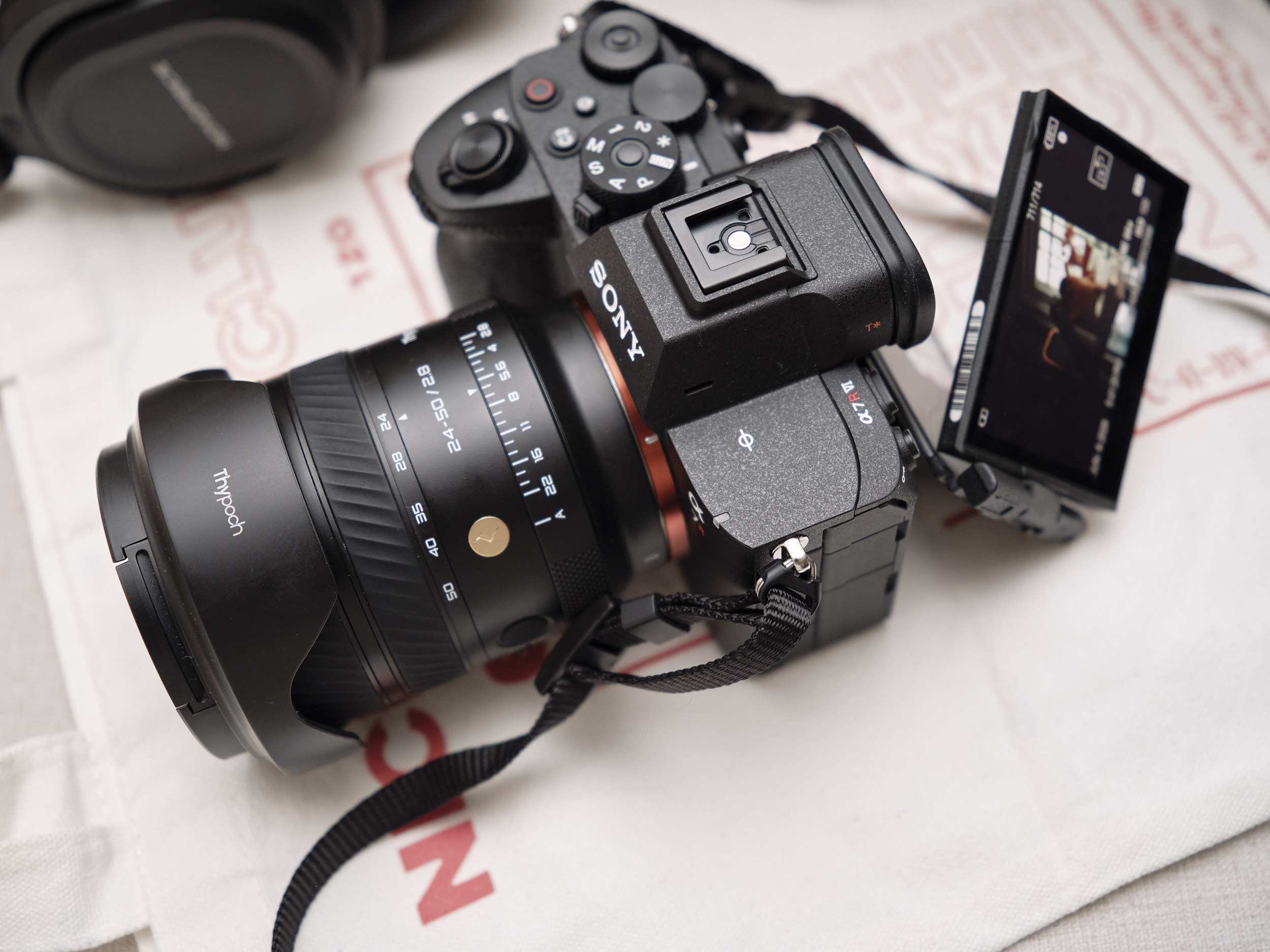
While many times we speak of a “Jack-of-all-Trades” as a positive moniker, we have largely forgotten the rest of the adage: “Master-of-None.” So, in late May when I sat at press conference unveiling the Sony a7R VI and each presenter positioned the new camera as capable of doing it all, I worried that we were looking at another Jack-of-all-Trades, Master-of-None. After taking the Sony a7RVI into the real world, shooting everything from street scenes to BMX riders to a baseball game, did we finally find a camera that can truly do it all? Here are the results of our first real-world review.
The following text are addendums to our full Sony a7r VI review. You can view the full review here at this link.
Sony’s a7R VI: Autofocus and Bursts That Rival an a1II?
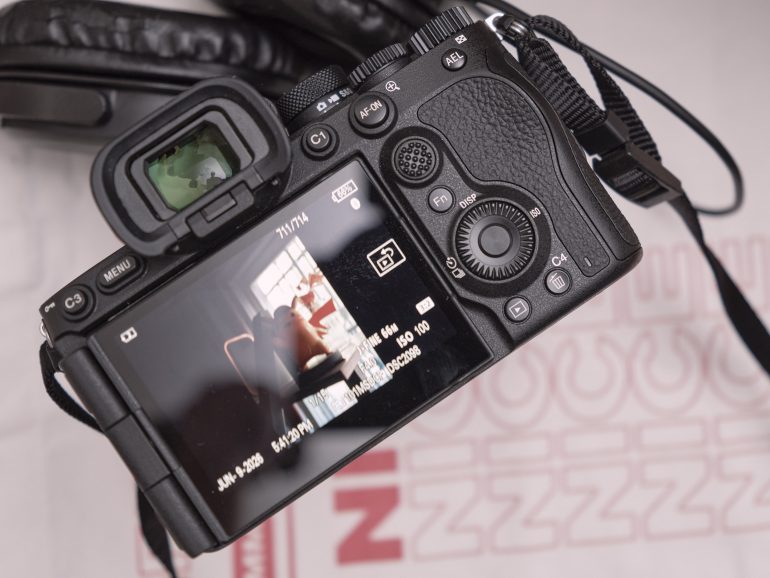
At this point, Sony has built its brand on its Autofocus capabilities and the a7R VI was positioned as being able to lock focus and track subjects as fast as the flagship Sony a1 II. During our testing period and in our initial hands-on, I primarily kept the a7R VI in AF-C or AF-Auto – the latter of which I only used to push the camera’s capabilities. In each mode, the Sony a7R VI would consistently and accurately find its subject and deliver useable images. During the Sony press event in May, I paired with the FE 100-400 F4.5 GM OSS and found that it was able to keep up with the chaotic movements of a NYC squirrel with ease, allowing me to shoot bursts and capture the bushy-tailed rodent in its urban majesty.
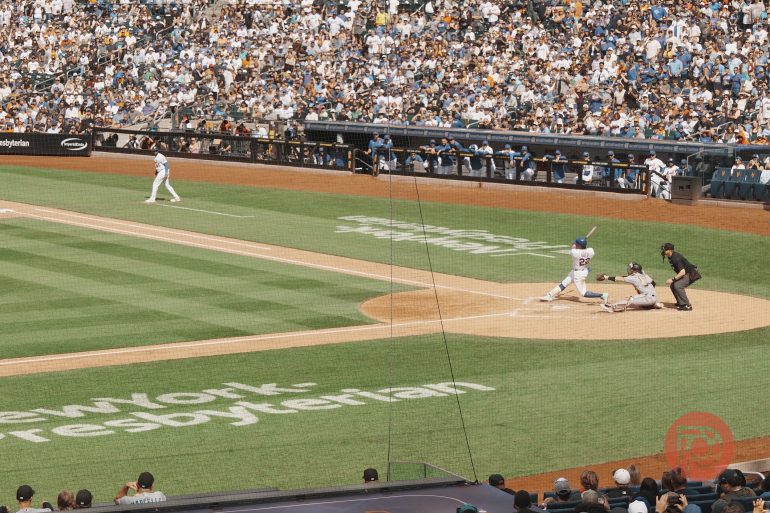
During my time with the Sony a7RVI, I spent a lot of my review period with the Thypoch 24-50mm F2.8 attached to it. When I first paired the two, I was concerned about any potential degradation in image quality – after all, the a7R VI is a high-resolution camera that would in theory highlight any imperfections in the lens that’s placed in front. Instead, I found that this combination transformed the a7R VI into a 67-megapixel, everyday carry camera that can quickly focus on moving subjects. One example of this was when I used the a7R VI and the Thypoch 24-50mm at a Mets game allowing me to crop in on the field – capturing a grand slam in continuous high-speed burst. Capturing nearly every motion of the pitcher and batter at the opposite end in focus. It’s important to note that I did say “nearly” and not “all,” that’s because with subject detection turned on, the camera wanted to occasionally hunt for nearby faces instead of staying locked where the focus point was originally set.
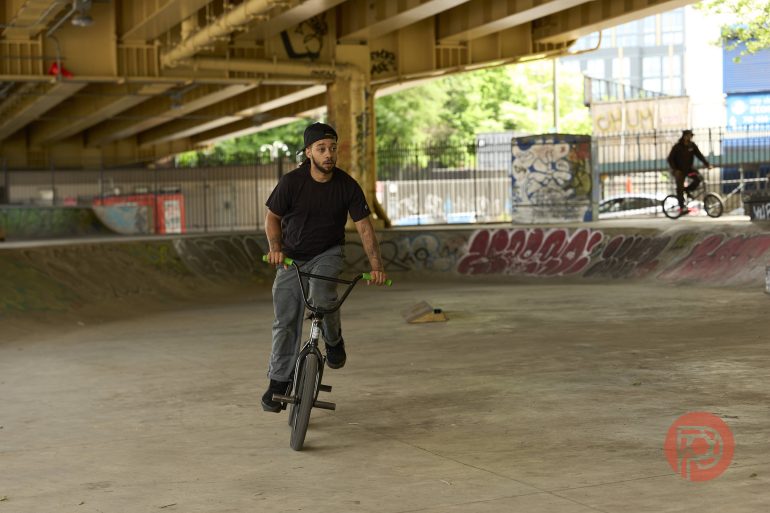
This was even more evident when using the Sony FE 50-150 F2 GM (on loan from Sony). During my shoot with a local BMX crew, I used the FE50-150 F2 GM almost exclusively – I wanted to pair the a7RVI to some fast native glass, and the 50-150mm GM ticked off most of the boxes. What I found was quite surprising, for some reason or another the FE 50-150 F2 seemed to struggle keeping focus on faces in the 50-75mm range, especially as my subjects moved toward the lens. I’ve experienced similar focusing issues with crop sensor cameras, like my Fujifilm X-Pro 3 and X-T2, and occasionally with my Sony a7III, but not this bad. During the shoot, I switched lenses going back to the Thypoch 24-50mm and the focusing issues corrected themselves.
One thing I have to mention: Focus Tracking was solid through and through. This really makes me wonder if there wasn’t some kind of focusing issue with the loaner lens itself rather than an issue with the camera itself. Even with the BMX bikers, AF Tracking was constantly and seamlessly going back and forth between locking on faces and tracking the body as it moved across the frame.
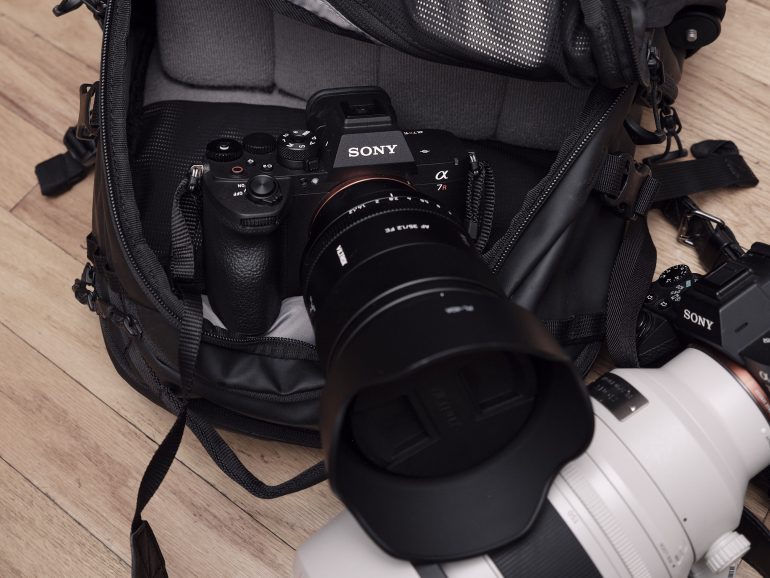
In practice, I found that the Sony a7R VI was largely able to keep up with its subjects, including people of color in complex lighting. Though it wasn’t perfect, it was a very good experience shooting with the camera in scenarios that went far beyond the landscape and portrait genre that high-megapixel cameras are most known for.
Real-World Use Notes
Sony’s a7RVI managed to eke out even more battery life thanks to its redesigned NP-SA100 battery. The new battery design is rated for over 700 shots per charge based on CIPA standards. In real-world testing one charge was enough for multiple days of casual shooting and a full day shoot. While this might make your stash of existing NP-FZ100 batteries obsolete, you’ll be happy to know that the newer, larger battery pack, didn’t create any changes to the body’s ergonomics. In fact, while the chassis is ever so slightly larger, the truth is that there is no noticeable difference in size and best of all, no changes to the camera’s memory card slots.
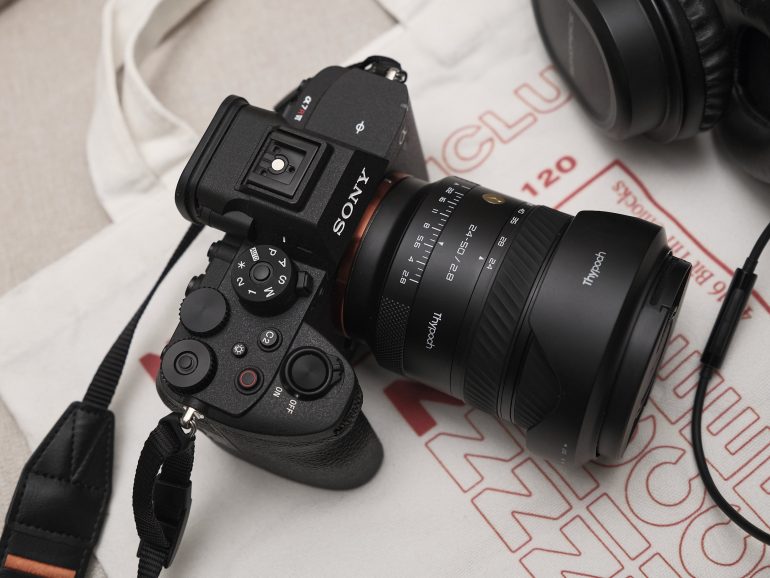
In terms of its build quality, I have to give Sony kudos for its rugged construction. In my experience, the a7R VI was able to take being handled without kid gloves. While I don’t ever advocate torturing your gear for its own sake, I can say with certainty that the a7RVI was able to handle jolts and bumps like a champ. When shooting with the BMX crew, I found myself tripping on a ramp at the skate park and did have the bottom plate of the camera make contact with the ramp’s lip. As panic rushed to my face and I checked on the camera, I was relieved to see that all that came of that interaction was a little chipped paint. Although I had nothing but sunny weather during my review period, based on how the camera was able to dust off a tumble, I’m confident that some rain won’t be a problem.
Image Quality
The Sony a7R series has long been sought out for its high-resolution images that allow you to either crop in tightly, retain details, or both. The a7RVI gives photographers more of the same with a slight bump in total resolution over its predecessor. During the Mets game, I was easily able to take what otherwise been a wide shot of the stadium into a tight shot of the field.

Additionally, with a lens like the Viltrox AF 35mm F1.2 LAB, I was able to get architectural details of a local church with the ability to crop into the details of the façade without even the slightest bit of degradation in the final image. This of course speaks to the capabilities of Sony’s high-resolution sensors and if you’re a photographer that is looking for the sharpest resolution in a full-frame sensor camera, then the Sony a7RVI will be
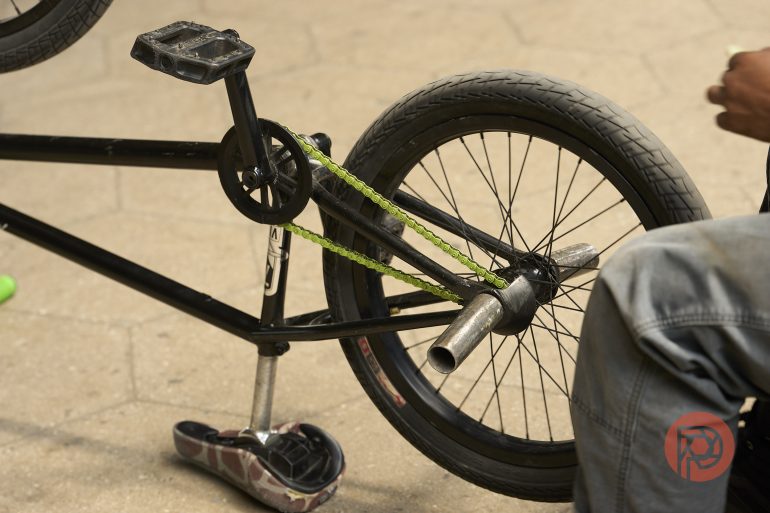
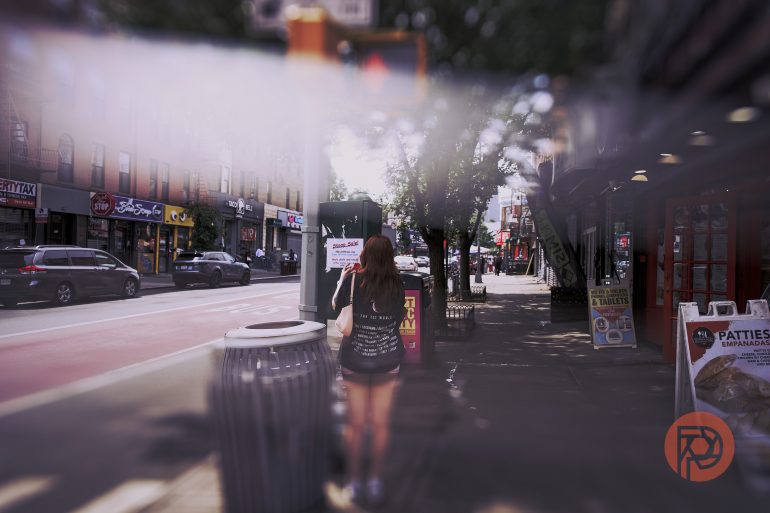
If there’s one thing that left me very underwhelmed were the SooC JPEGs from this camera. While I’m very aware that the primary audience that would be interested in this camera will most likely want to spend time in their photo editor, it’s still worth noting that some photographers would rather not spend much time post processing.
Below are some unedited sample images for reference:


Here are the edited images. All images here were edited with our Journalism Presets:


The Big Picture: The Sony a7R VI Gets a lot Right, but far From Perfect
There’s a lot to like in the new Sony a7R VI. For one the 67-megapixel sensor (I’m being generous and giving them the additional 0.2 megapixels for simplicity – it’s officially a 66.8-megapixel sensor) truly is the reason why you’re reading this review in the first place. It’s extremely versatile and when paired with Sony’s Bionz XR2 processing engine, it can perform certain functions, like autofocusing and high-burst capture, at a rate that would’ve been nearly impossible a decade ago. During my testing I found that in terms of a high-resolution camera where I could potentially crop in when needed, or take advantage of the ability to create images that could easily be turned into a large format print, the a7R VI is only rivaled by medium format cameras. Right now, the Sony a7R VI sits atop the high-res, full-frame category, but using a camera as a creative tool requires more than a spec sheet. In a lot of ways, the a7R VI feels a bit stale in terms of user experience and the images that come straight out of the camera feel a little flat – even with improvements /additions to Sony’s Creative Looks profiles.
We’re giving the Sony a7R VI four out of five stars. Want to try one for yourself? Purchase one for $4498 on Amazon.
Get rid of the ads!
Did you enjoy reading this article as much as we enjoyed writing it? There's a way to support us and our reporting, getting ad-free navigation and more as a bonus. Subscribe to us for less than a coffee per month —just $3.99— or take advantage of our yearly subscription with a hefty discount for only $25.- An ad-free experience
- A free mystery box for Lightroom or Capture One
- All the books in our store
- 20% discount on Capture One
- 30% discount on Imalume Photo Theft Protection
- 20% off Herbs and Kettle Tea Company.
- 20% off your order from MPIX printing services.