

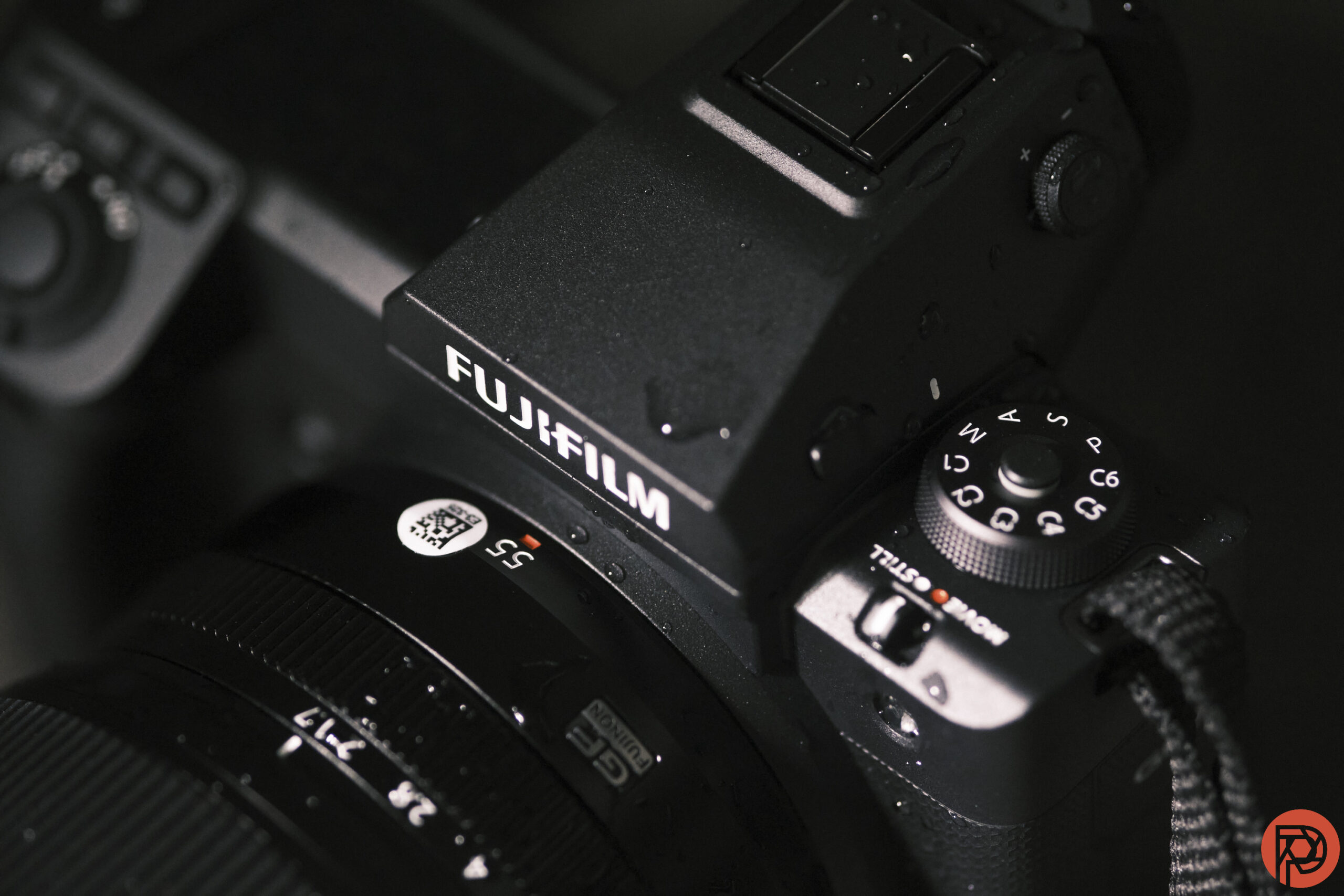
After nearly three years, it’s time we took another look at Fujfiilm’s GFX100 II. The GFX100 II remains atop of Fujifilm’s medium format system and as we noted in our initial review, it produces some of the most beautiful colors we’ve seen in any camera. Unfortunately, during our initial testing, we found that the GFX100 II also suffered from some serious issues with its autofocus system, making the hefty investment into the system something of a gamble. Today, we take another look at the GFX100 II and ask the question, have time and the latest round of firmware updates made the GFX100 II a camera to bring you into the medium format world of photography.
The Fujifilm GFX100 II in 2026
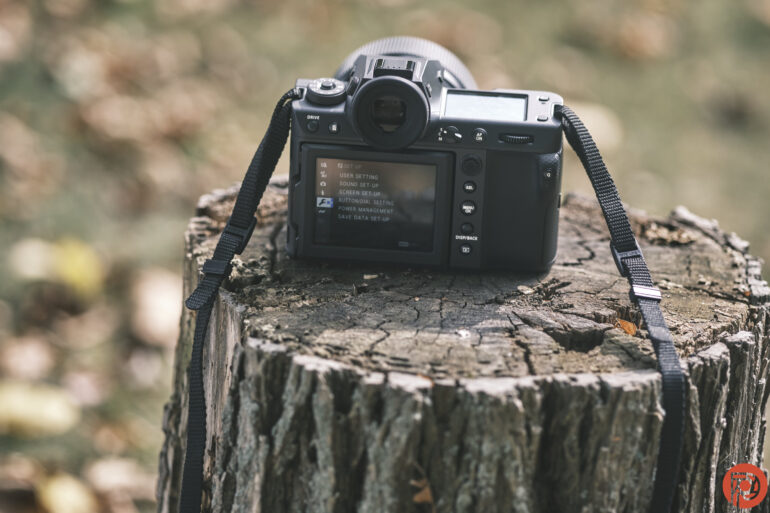
In our initial review we noted that the GFX100 II was a beast in terms of color and dynamic range, but suffered from autofocusing issues. In that review, we said:
In around 200 shots of semi-still kids, only 18 percent were out of focus. Once I switched from jokes to make them smile to games, however, the number of keepers dropped drastically, with some bursts of running towards the camera all out of focus and some getting a small handful of sharp shots.
Since that time, Fujifilm has released several firmware updates with Version 2.21 being the one that primarily aimed to resolve many of the issues with some of the most popular lenses on the system – namely, the GF50mm and the GF35-70mm; the latter of which we used during our review period with the camera. We tested the Fujifilm GFX100 II with the latest firmware, version 2.50 which bundles the Ver.2.21 update along with other previous updates which largely addressed connectivity issues with both Fujifilm’s XApp, and improvements to the camera’s video capabilities (which we did not test).

From my time with the GFX100 II, I’ve found that there are significant improvements to autofocusing, allowing me to use the camera nearly exclusively the way a photojournalist would – in the thick of, at times, chaotic environments where you’d only have the opportunity to get the shot once, or it’d be gone forever. During my first outing with the camera and lens, I found myself in the middle of the chaos of an active fire emergency. There were people frantically moving from place to place, some moving towards, some moving away, and others still crossing my focal plane in front of a subject. In each instance, I found that the GFX100 II was able to not only achieve focus without issue, but as was the case during the recent New York Knicks Championship Parade in New York City, it was able to lock onto moving subjects, people of color in throngs of humanity, and everything in between. It’s important to note that this is still relative. For example, I used the camera in AF-C and AF-S for most of my time with it. However, I did remove subject detection. I wanted to be able to lock onto an AF point faster versus trying to pick out faces in a crowd. If I were using this for portraits – people or animals, then I would’ve approached this differently.

One final improvement that’s worth mentioning are the quality-of-life improvements Fujifilm have taken to fully integrate the GFX100 II to the XApp. To be fully transparent, I still don’t like the XApp for a number of reasons – mainly connectivity speeds – but I found that for dumping JPEGs onto my phone or iPad, the GFX100 II is able to send a couple of hundred of full-sized JPEGs in a few minutes. Ironically, that’s something I’m not able to do with my X-Pro 3 and its much smaller image files.
No Pain Points?
For all that improvements that Fujifilm have made to this camera’s AF capabilities, it’s still feels slower compared to something like the Sony a7R VI which I was reviewing concurrently with the GFX100 II. That’s not to say that autofocusing is slow – the GFX100 II is not just going to be a camera you’d consider for high-action sports or birding. And when you consider that there are an increasing number of high-resolution full-frame cameras coming to market with substantially quicker autofocusing speeds, it still makes the GFX100 seem like a big financial commitment when compared to those full-frame options, but not by much.
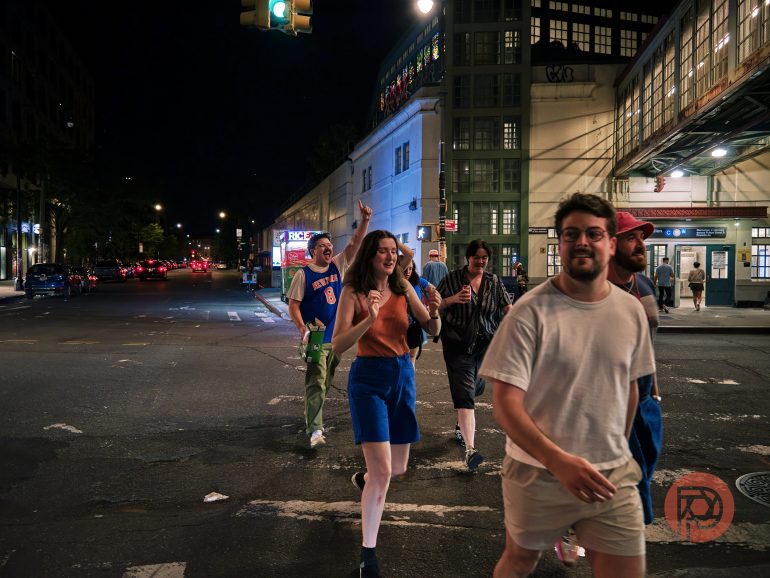
Taking the example of the GFX100 II when compared to the Sony a7R VI, I found the autofocusing speed of the Sony a7R VI to beat the GFX100 II in everything except extreme low light. The other consideration is the amount of give (and grace if I’m being honest) that the RAW files offer photographers. The image above was very poorly taken by me in the throes of the Knicks victory over the Spurs. For context, I was at a bar enjoying the game and never once bothered to look at my settings before running to the streets to capture people celebrating. I was gutted the next morning when I found out that the images straight-out-of camera were pretty much a black screen. I was able to achieve the final image by essentially pushing every slider I could to the right and added Capture One’s De-noise. Lastly, I’d much quicker use the JPEGs of the GFX100 II before I’d consider any unedited Sony file.
Below is a sample gallery of unedited images:


Here are the edited ones:


Does this mean that the GFX100 II is worth its hefty $8k price tag? That ultimately depends on what you value as a photographer. But since its version 2 updates, the GFX100 II feels like a true workhorse camera, and one that can survive the chaos of the streets just as easily as the chaos of a studio.
Get rid of the ads!
Did you enjoy reading this article as much as we enjoyed writing it? There's a way to support us and our reporting, getting ad-free navigation and more as a bonus. Subscribe to us for less than a coffee per month —just $3.99— or take advantage of our yearly subscription with a hefty discount for only $25.- An ad-free experience
- A free mystery box for Lightroom or Capture One
- All the books in our store
- 20% discount on Capture One
- 30% discount on Imalume Photo Theft Protection
- 20% off Herbs and Kettle Tea Company.
- 20% off your order from MPIX printing services.