

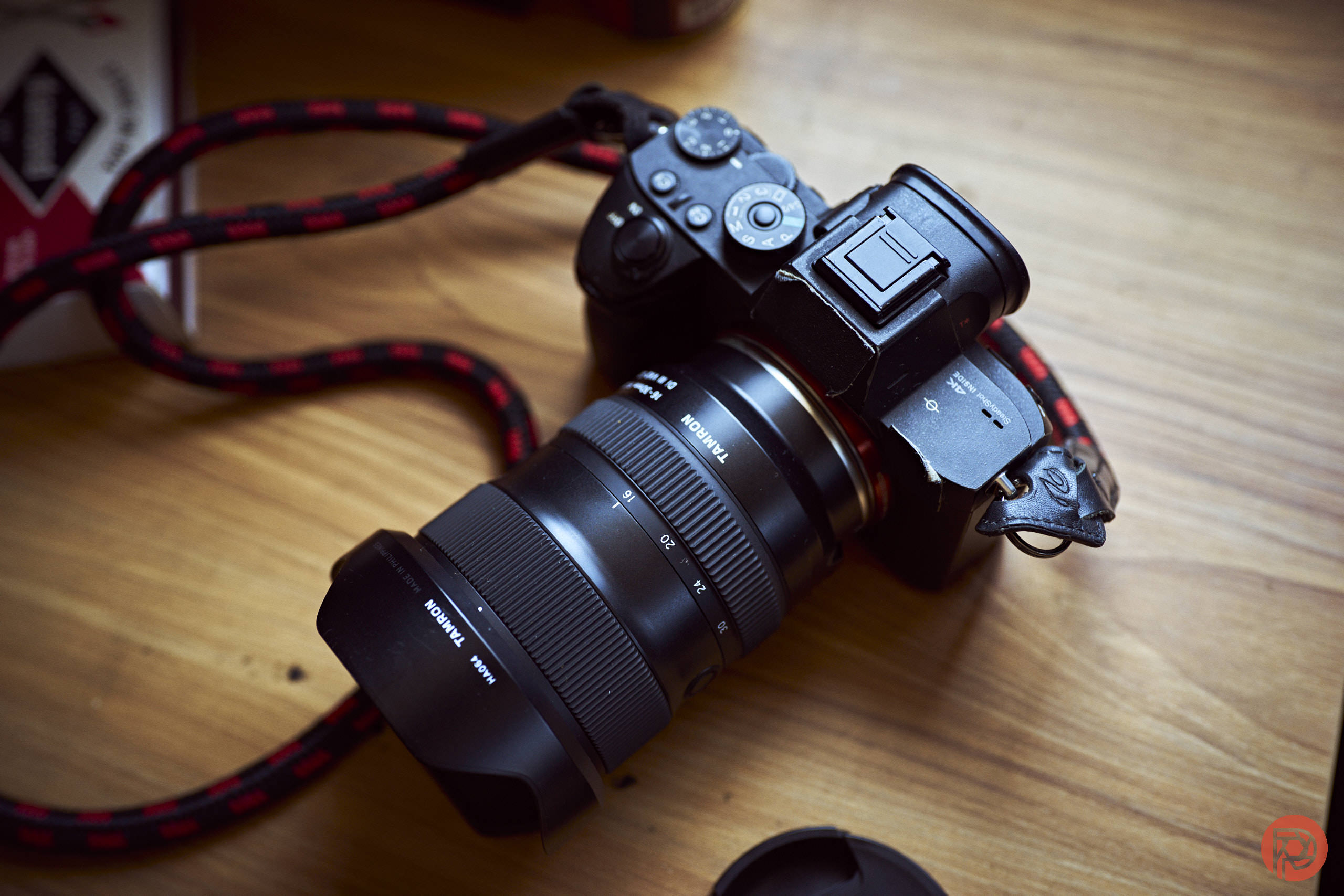
In the past few years, Phoblographer has published reviews where we’ve often felt like something could’ve just been a firmware update instead of a brand new product release. And often, we’ve wondered why there was even a new product in the first place. “In general, some minor performance improvements can be implemented via a firmware update,” Stacie Errera, Vice President of Tamron America’s Marketing division tells us in consult with Tamron Co., Ltd., the parent company of Tamron Americas. “However, the G1 versions have hardware limitations such as the AF motor and main circuit board.” And sometimes, those hardware improvements really don’t get discussed enough with the press.
Recently, we’ve been talking with every camera and lens manufacturer about trying to understand more about their lenses. They’ve all got this weird nomenclature, and no one in the press understands why something like 10 elements in 4 groups would be better than a lens that has 21 elements in 7 groups.
So if the accredited press doesn’t get it, then YouTubers won’t get it.
And if none of us get it, you, as the customer, won’t understand it either.
The Outside Looking In
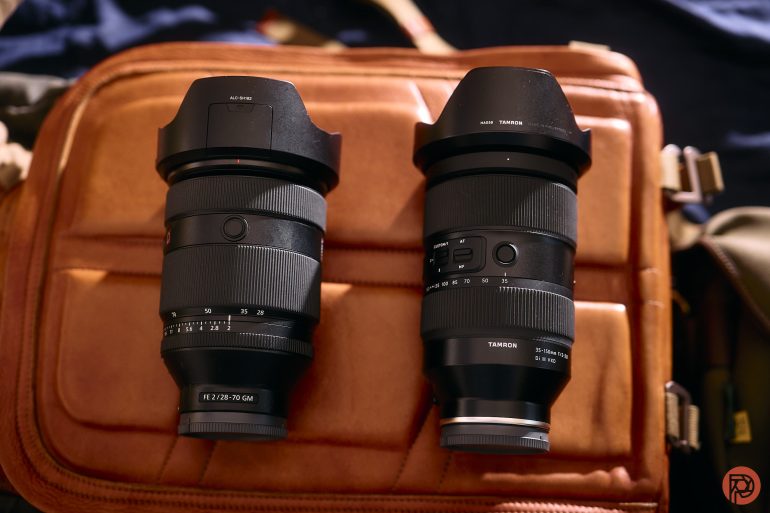
Tamron’s lenses have always had either some sort of plastic or metal — or at least it felt that way to the touch. It always seemed like the higher end lenses were more built better and even cold to the touch, like metal. But in fact, it’s not. In recent reviews, we’ve explored how Tamron is committed to recycled materials, and in this case, the exterior is a polycarbonate resin — aka engineering plastic.
“This material is extremely reliable, lightweight, and durable, and also broadly used for such as racing car bodies and F1 racer‘s helmets,” Stacie tells us. “TAMRON selects the best material from various grades of polycarbonate and selects a material with thermal expansion/shrinkage comparable to that of aluminum in structurally critical areas. These materials must be carefully determined.” In addition to that, it builds on the company’s weather resistance in various conditions and environments.
Considering that Sony owns a percentage of Tamron, we can only assume that Sony is also using the company’s expertise in lens making with many of its own offerings.
What Special Lens Elements Do
Every brand says that they have stuff like aspherical elements. But if you ask the standard consumer, they wouldn’t know what those meant. They’d probably say something like, “it gives you better image quality.”
But how are you defining better? And more importantly, how is Tamron defining it?
According to Stacie, each element has a different role, for example:
- XLD (extra low dispersion) lens elements deliver the highest possible contrast, the finest detail, and superior imaging performance throughout the entire zoom range.
- LD (low dispersion) elements allow the lens designer to effectively compensate for chromatic and lateral chromatic aberration which are a particular problem at wide-angle and telephoto focal lengths.
- GM (glass molded) elements are capable of efficiently correcting aberrations in the angle of view that changes significantly with an ultra wide-angle zoom lens. It has an especially significant impact on minimizing distortion and enhancing the sharpness of the image at its periphery.
But it doesn’t end there. “Tamron is a manufacturer that develops and produces its own lens elements,” Stacie tells the Phoblographer. “Because of this, we have a distinct advantage: while projects for other brands may have cost or manufacturing constraints, we can freely use expensive and difficult-to-process elements in our own products to achieve the ideal performance we aim for.”
So essentially, yes: Tamron does make lenses for other brands. Where that may differ, however, is with lens coatings.
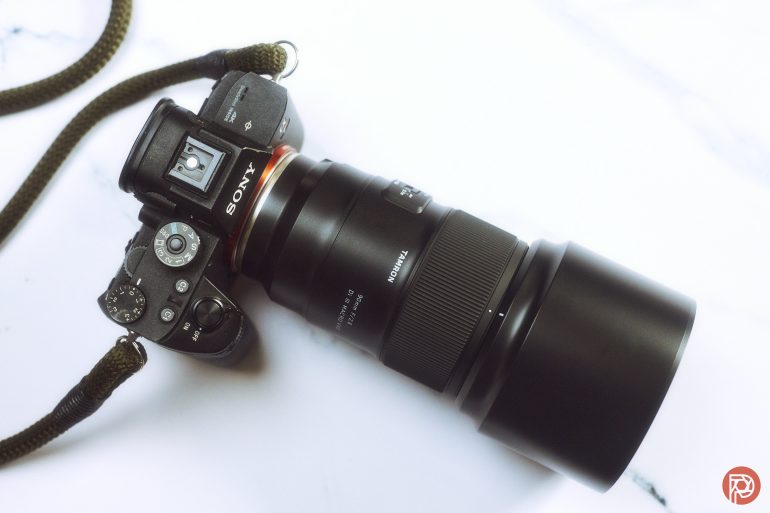
Consider the fact that Pentax, a formerly independant brand, was purchased in the 2000s by Hoya. Camera brand reps with a bit too much to drink have told me in the past that Hoya essentially took Pentax’s coating tech and sold it off to Ricoh. And for a while, Pentax was selling rebranded Tamron lenses as their own. To that end, even celebrated brands could end up using Tamron’s lens tech — especially their coatings.
In their new 35-100m f2.8 lens, Tamron has a BBAR-G2 lens coating — which I accidentally mistyped before correction as “goating.” And some Tamron fans may call this the GOAT of all coatings.
Tamron’s press communications stated that it effectively reduced ghosting. But when I read this, I replied that I hadn’t seen ghosting in their lenses even as far back as 2015. So what, exactly, was the point of this? “The transition from DSLRs to modern mirrorless cameras has set a new bar for lens performance,” Stacie stated. “As sensors become higher in resolution and sensitivity, they demand much greater optical precision. The new floating focus system is our response to this shift—it isn’t about fixing a “problem,” but about evolving our lenses to fully support the extreme capabilities of the latest mirrorless technology.”
Tamron continued to state that it supresses the ghosting for stuff like landscape and portrait photography especially — to the absolute limit.

With this in mind, we can all logically conclude that megapixels haven’t majorly changed in the past 10 years. And with that said, we’re probably now at a point of diminishing returns.
At least, that’s seemingly the case with lens coatings. Motors, however, seem to be a whole other arena. While focusing speed is partially reliant on the camera’s performance, Tamron’s newest VXD motors are designed to really enhance things like tracking moving subjects for Sony and Nikon cameras both.
“They are also not fixing anything broken, just increasing technology, adding benefits, and moving the needle for users,” Stacie told us even about the new floating focusing elements.
We’re publishing this article because even for us, sometimes it’s really difficult to understand how a lens could be better than its predecessor. And sometimes, the difference is miniscule. I’ll admit to even feeling this about many newer Tamron lenses. But it’s nice to know that they’re still trying and believe that we haven’t yet met the limits of engineering capabilities.
Get rid of the ads!
Did you enjoy reading this article as much as we enjoyed writing it? There's a way to support us and our reporting, getting ad-free navigation and more as a bonus. Subscribe to us for less than a coffee per month —just $3.99— or take advantage of our yearly subscription with a hefty discount for only $25.- An ad-free experience
- A free mystery box for Lightroom or Capture One
- All the books in our store
- 20% discount on Capture One
- 30% discount on Imalume Photo Theft Protection
- 20% off Herbs and Kettle Tea Company.
- 20% off your order from MPIX printing services.
- 5% off Viltrox Products via their eCommerce store.
- 10% off all film developing, printing and scanning services from Blue Moon Camera and Machine