

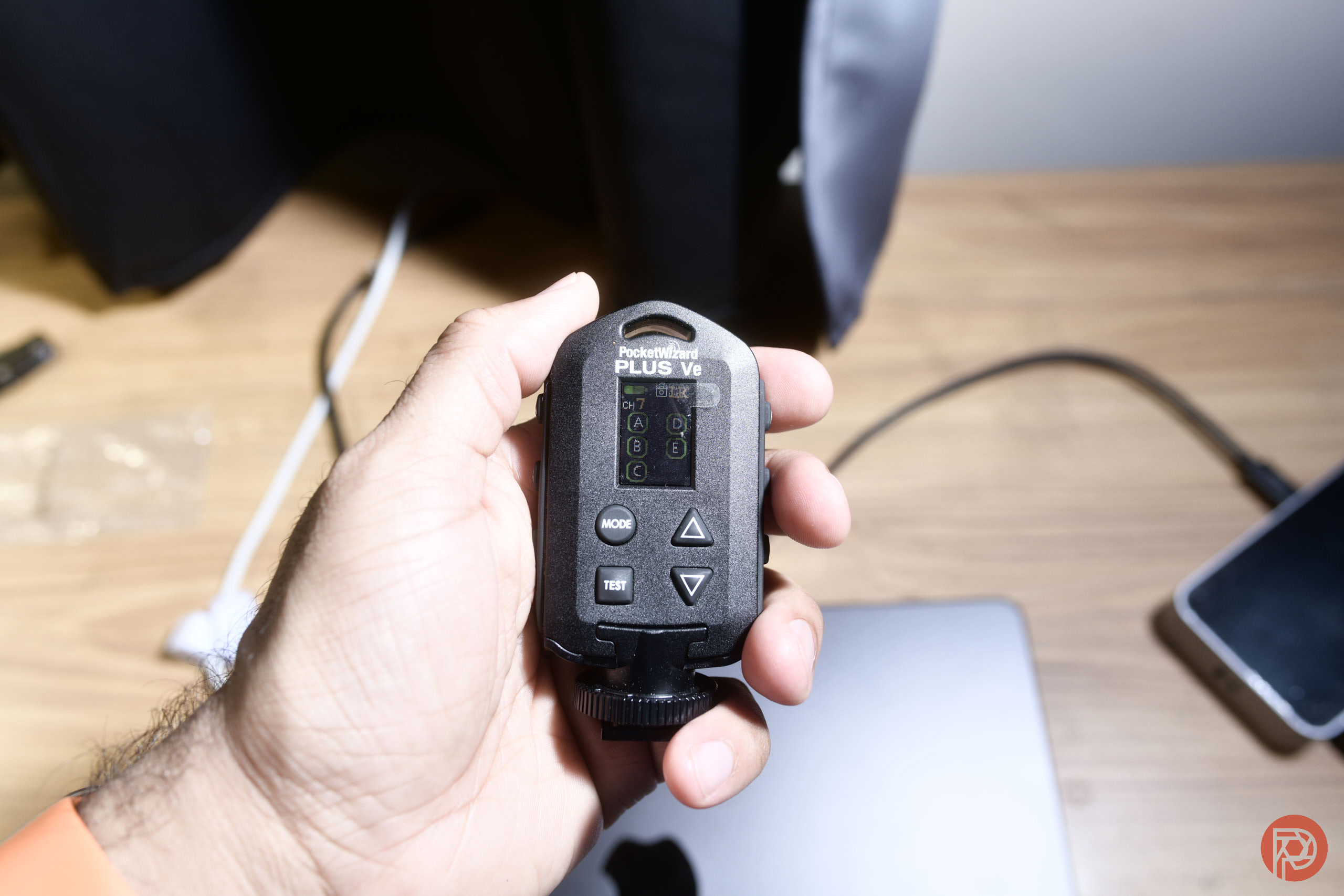
No one on staff that’s been around and testing camera gear long enough would’ve suspected that PocketWizard would’ve made a new announcement in 2026. Yet, we’ve got the new PocketWizard Plus VE Transceiver. Before the days of flash and studio strobe systems having dedicated radio transmitters, everyone used to have the capabilities to control each other’s lights to a certain extent. And universal triggers were pretty common. Things changed though. In a world where everything is silo’d, how does a new PocketWizard hold up?
The first thing you should know is that I haven’t used PocketWizard transcievers in over a decade. In fact, it was 2013 when I reviewed the Plux X. Now, in 2026, PocketWizard is back with new hardware in the form of the Plus VE Transceivers. These are units from a time long, long ago in the strobist world. This is when every transmitter didn’t have direct power and operational control over the lights, the lights didn’t always have radios built in, and when you wanted to adjust the light, you had to have a lighting assistant (or sometimes yourself) go manually futz with the settings. But I have to say, this review starts out with a ton of anxiety as I see the Plus VE transceiver unit I’m using dangling off the side of the Godox flash that I’m using it with. And for this, I need to channel a past version of myself.


But first, you should know that the PocketWizard Plus VE unit has channel button on the side and a USB-C port. To turn it on, you hold the test button and the power button at the same time. It’s weird. To charge it up, you need a very specific USB cable — or at least I did.
This review had me going back into the Phoblographer’s now 16 year old archives to find lights that I was using back then. Some of them were the Lumopro LP-180, the Interfit Honey Badger, Interfit Honey Badger Unleashed, and the older Einstein E640 light.
I even ended up looking at the Paul C Buff Celestial – which is probably one of the worst lights I’ve ever tested. Looking back, I’ve done great work with all of those lights the best that I could.
Plus, I needed to dive into some old studio gear that I never got rid of, like my Phottix Luna II.
Why those lights? Well, pretty much everything released today already has radio control built into them. So why would you need or want PocketWizards in 2026? To boot, almost nothing takes a 3.5mm audio jack anymore.
Well, in my research and reading from my previous reviews, the PocketWizard Plus X survived a 7 foot fall with just a scratch and kept working. I’m not sure, in contrast, that my Profoto transmitters would be able to do the same thing. And these days, I’ve even found myself moving away from Profoto for Godox and even Flashpoint.
The PocketWizard Plus VE might work super well with really old cameras – like those from the film days and even some older DSLRs. My previous tests had me making photos even with older Polaroid 185 cameras. For this session, my schedule didn’t allow me the time to make images with this camera even though I’ve got the film available. Nor did it allow me to make multiple exposures in-camera, which I really wanted to do.
Let me first start by saying that powering it up wasn’t so obvious. I had to hold down all the buttons on the front first and then the menu popped up.
In one photo session I did, it seemed like business as normal. I pulled out my old Phottix softbox, set it up, put the flash in the belt, set the power, turned the PocketWizards on, powered on the Nikon D850 and then made a photograph. The exposure was exactly how I wanted it – but that’s because I’ve had an entire near decade or so of lighting images this way under my belt. So for the experienced photographer like me, it will be business as usual. However, it was really nice to not make images with all the controls at my camera for the moment because it meant I needed to be more interactive and introspective. That, in turn, slowed me down and I ended up making really nice photos of the Unseen Saul Leiter book I reviewed.
In fact, I used the JPEGs from the shoot and didn’t even bother with the RAW files.
Of course, you’d think that the battery life would last forever, right? Well, that’s not the case. When I powered the transceivers off, they were apparently still draining battery power. More than that, even when I powered my transmitter off at one point, I could still trigger the receiver. Weird, right?

One of the other big uses of PocketWizards, however, is for remote photography with sports and wildlife. So I decided to try it out in a very unique way. I set up a bird feeder on my balcony and put a Nikon 28mm f1.8 on my Nikon D850. Then I set it to zone focus at the closest distance at f8 with a Yongnuo flash attached to the D850. After figuring out how to set up the transmission and also finding the exact cable set up to charge the PocketWizards (this really is a pain) I was able to do this whole remote photography thing with ease.
And honestly, I’m very happy with the results. I thought that maybe the camera would fall asleep, but it didn’t.
Ultimately, I think that if you’re a sports photographer and need a radio of some sort to trigger remote cameras, then a PocketWizard will be great. But you don’t necessarily need the newest one because your older gear works pretty well. To that end, I really don’t see the need for photographers to buy one. There are indeed new features coming via firmware like locking the settings — which is really useful for event photography. But ultimately, I don’t think that these do enough for most photographers. Lots of us will simply just trigger our cameras using Wifi. Of course, that drains the battery.
I’ll end this review with a sample image gallery of what I’ve made using these units.


Get rid of the ads!
Did you enjoy reading this article as much as we enjoyed writing it? There's a way to support us and our reporting, getting ad-free navigation and more as a bonus. Subscribe to us for less than a coffee per month —just $3.99— or take advantage of our yearly subscription with a hefty discount for only $25.- An ad-free experience
- A free mystery box for Lightroom or Capture One
- All the books in our store
- 20% discount on Capture One
- 30% discount on Imalume Photo Theft Protection
- 20% off Herbs and Kettle Tea Company.