

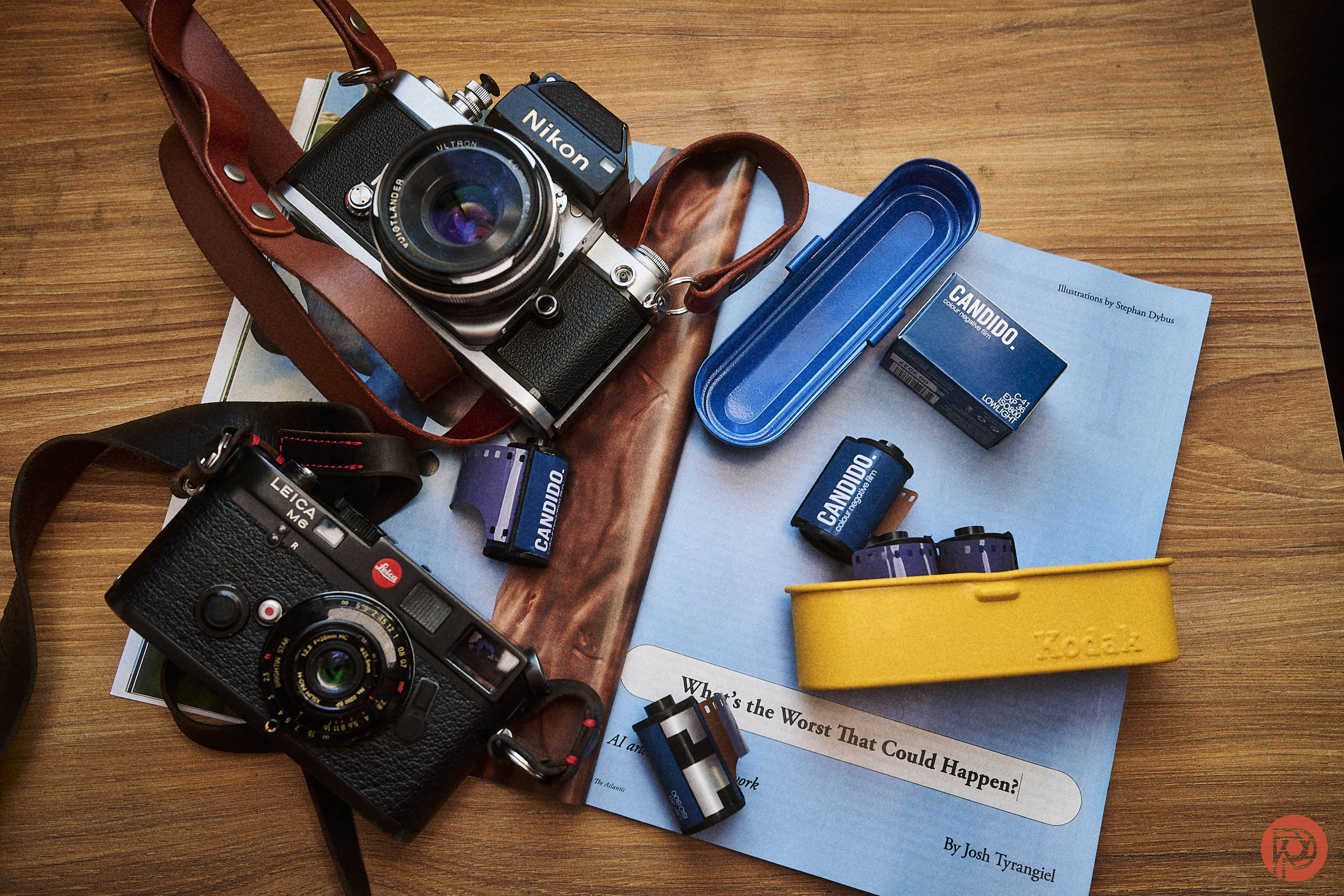
Back in February, I reported on Candido 800T film and how the folks over at Blue Moon Camera are some of the only ones who sell the film. Essentially what you need to know is that it’s a more affordable version of CineStill. And by that, all I mean is that the owner just isn’t making as much money as the Wright Brothers over at CineStill are from the sales. That also means that it’s got the same red halation effect that you can only get with this film organically. If anything, it’s one of the best reasons to remind yourself to use film. Most importantly, it’s a reminder to always cross all your t’s and dot all your i’s.
I say that statement because, well, I’m a bit disappointed in myself. All of the images for this review were made with the Nikon FM2 with a metered finder that doesn’t at all do well in the darkness. And so because I haven’t made photographs with it in a while, I sometimes didn’t meter the scenes in front of me all the best. But everything I shot with my Leica M6 is beautiful. Still, I’d say at 25 or so keeper from two rolls is a lot higher than most other photographers.
Blue Moon Camera, as always, is the Phoblographer’s lab of choice. They developed them film for us free of charge. But I purchased the rolls with my own money.
To reiterate again: many of the images I love. Many of them, I don’t.
Candido 800T is essentially the same thing as CineStill 800T. The brand takes Kodak Vision movie film, removes the remjet layer so that it can be developed C-41 instead of the movie film process, and then sells it. Removing the remjet gives this unique look with red halation in highlights. It’s a vibe. And perhaps more so than any other film out there, it’s the one to work with because you’re guaranteed to get a look that you can’t get from anything else. Fujifilm and Kodak’s other films look tame and kind of bland in comparison.
I don’t know how Blue Moon Camera develops their film: but considering how legendary they are with much of the analog community, I’d say that they’re doing things pretty standard and any secret methods they use are what make them different and unique.
The look is something I describe as a cross between Kodak Portra 800 and Fujifilm PRO 400H at times.


Like all film, you should really aim to give it more light when you can. So with all my future rolls, I’ll probably expose them at ISO 400 and develop at ISO 800. Otherwise, I may expose at ISO 640 and develop straight to 800. Either way, film likes light. And when you give it that resource, it delivers photographs that you’re bound to really love.
Over a decade ago, I reviewed CineStill 800T and updated the review too. Even that film I overexposed because it really needed it. And generally speaking, any film like this where the remjet layer is removed should be given extra light.
My staff liked the images. And honestly, there are lots in here that I really do like. I know that past Chris did the absolute best job that he could with the tools that he had available and when gauging how appropriate it was to make the images. Most importantly, I’m absolutely going to make images with this film again. When all the stars align, this is by far my new favorite film.
Get rid of the ads!
Did you enjoy reading this article as much as we enjoyed writing it? There's a way to support us and our reporting, getting ad-free navigation and more as a bonus. Subscribe to us for less than a coffee per month —just $3.99— or take advantage of our yearly subscription with a hefty discount for only $25.- An ad-free experience
- A free mystery box for Lightroom or Capture One
- All the books in our store
- 20% discount on Capture One
- 30% discount on Imalume Photo Theft Protection
- 20% off Herbs and Kettle Tea Company.
- 20% off your order from MPIX printing services.
- 5% off Viltrox Products via their eCommerce store.
- 10% off all film developing, printing and scanning services from Blue Moon Camera and Machine
- 15% off 7Artisans products: The lens and accessory maker is offering a sweet discount for Phoblographer's readers.
- 15% off a VSCO One subscription: Get a bunch of great tools with their all-in-one package.