


The Phoblographer’s staff is pretty adamant about one big fact: you don’t need a new camera despite what some YouTuber or a larger photography website may have been telling you. And nowhere is that more truthful than with the Olympus and OM System Micro Four Thirds lineups. Besides the Pen F and the OM5, my heart belongs to the older Olympus EM1 original. That’s not in my office though — but the Olympus EM1 Mk III is. And so I took it out for a bit of a joy ride.
The following text is the update that we’re posting to our full Olympus EM1 Mk III review. You can read the entire review here at this link.
Is the Olympus EM1 Mk III Still Good in 2026?
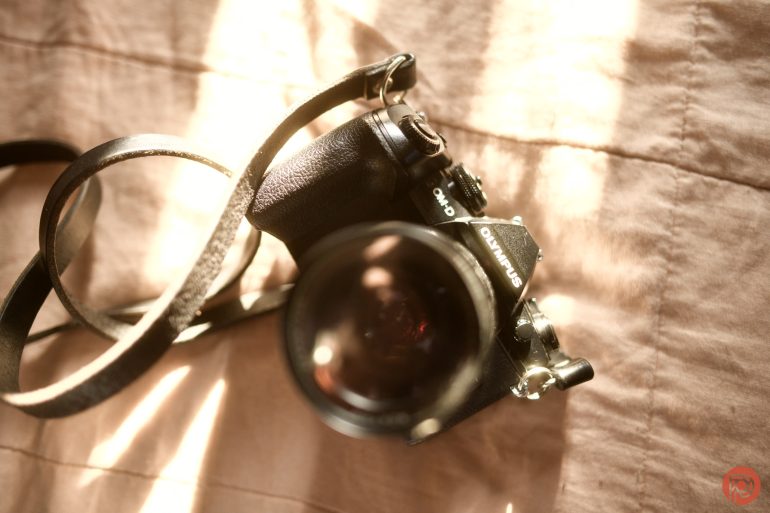
For a long time, the site has moved away from Micro Four Thirds cameras. There are several reasons why. Professional photographers don’t often reach for them and the genre in general is simply targeting landscape and wildlife photographers. But the truth is that both passionate and professional photographers do way more than just these genres. So if anything, I often found them too niche and way overpriced for the genre of a camera meant for the thrills – though still very legitimate. Additionally, they do very little to cater to the massive demographic of photographers who still live in cities. Yet, to this day, I think about the Voigtlander 17.5mm f0.95 – perhaps one of the single best lenses that I’ve ever used for the system. For several years, it has sat in either my cabinet or my cameras bags whispering to me even in my dreams. And that’s what ultimately made me break the Olympus EM1 Mk III in 2026.
My memories of this camera are what I’d call nostalgic hallucinations. Sometimes I’ll be in love with the idea of what they are and in reality, they’re as disappointing as the McRib when it used to be released every year. A friend of mine put it so incredibly well a while back, “It’s not about whether or not it’s good,” he said. “It’s about the shame and disdain that you know you’re going to feel after you realize that the hype got to you.” To this day, it’s still the most beautiful and eloquent way that I’ve heard this spoken of.
So it took some exploration to learn about this website called OM Recipes. Intrigued by this idea, I charged the camera for a bit and then turned it on. Immediately I’m intrigued. I last set the camera to the Bleach Bypass filter and I’m in love with the look that it’s delivering. So with the Voigtlander lens, a Pro Mist filter, and an SD card in the body, I continue to charge it up before playing with the Kodak Gold simulation from OM Recipes.
OM Recipie website made it a bit difficult to figure out how to do this with the EM1 Mk III. So instead, I asked Google AI. It told me the following:
Olympus E-M1 Mark III Picture Mode Settings
Create a custom recipe using these base settings to emulate the Kodak Gold look:
- Picture Mode: Natural or Portrait (provides a good base for skin tones).
- Contrast: +1 or +2 (Kodak Gold has decent punch).
- Sharpness: -1 or 0.
- Saturation: +1 (Kodak Gold is fairly saturated).
- Gradation: Low or Normal (Low can help mimic shadow lift).
- White Balance: 5000K–5500K (Daylight) or Auto with a red/yellow shift.
- WB Compensation: A+1, G+2 or similar (introduce a small amount of magenta/red).
- Color Creator (Optional): Use the Color Creator to shift the overall image toward a warmer, golden hue.
The reference comes from Reddit. And even then, I’m a bit lukewarm on my first impressions. In fact, a part of me like the Bleach Bypass setting more. Then I went out to make images with it.
The camera is small, feels nice, and truthfully reminds me more of something that I’d use for fun than anything else. Beyond that, my relationship with Olympus cameras is pretty complex. It started in my childhood when my mother owned one of their cameras. Then the first DSLR I bought was an Olympus E510 until I upgraded to the 5D Mk II. At the time, I felt that the brand wasn’t delivering what I wanted and needed. And upon typing that, I’ve realized that every single brand has done that.
It gets even more complex though — I’m the survivor of a very abusive household. In fact, in therapy I’ve said often that I’ve escaped that place. It’s taken me a while to realize that and to understand that I can work on trying to thrive more than anything else. Olympus is tied to that because my mother never let me use the camera, so I’d have to sneak in my use. Crazy enough, she bought the damn thing and never understood how to use it herself.
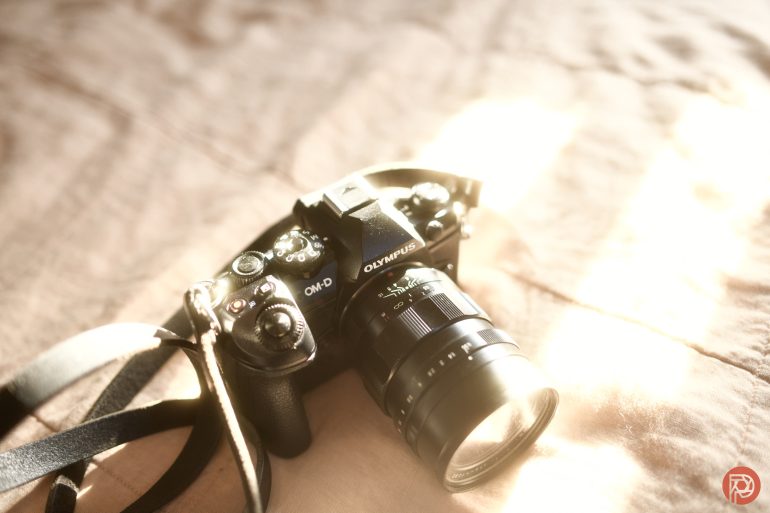
Many Olympus users photograph wildlife and landscapes — or at least that’s what Olympus’s data says. Search around the web and you’ll find that even Magnum photographers like Matt Black use them for documentary work.
Do I even photograph birds? Oh yeah! I did that just last weekend with the Canon EOS R5 because NYC is a hot spot for bird migration. In fact, it’s considered to be the most important on the East Coast from what I’ve read. But the autofocus of even OM System is behind older Canon, Nikon, Sony, and Panasonic full-frame cameras. What’s more, those older cameras go for really solid prices on the 2nd hand market.
Considering that I work out 5 days a week and take many long walks, I’m not worried about the weight all that much. And when I get older, I plan to do everything to not need to worry about that either.
So with that said, what is the Olympus EM1 Mk III doing that’s making it worth in 2026?
In my editing of this article, I’m still not sure. Olympus never called this camera back in after they sent it to me for testing. So if it wasn’t still in my closet, I probably wouldn’t do anything else with it. And journalistic ethics mean that I can’t sell this camera.
Yes, I and the staff abide by those. Do any of the Youtubers or other websites do that?


On Watch Count, you can see that the camera still sells for a fair amount of money but I’m not exactly sure why. Reviews Editor Alberto Lima came by just yesterday and we were discussing older cameras on the second-hand market. Did you know that some older full-frame cameras go for even cheaper prices than the Olympus EM1 Mk III? It’s a fascinating thing to think about and ponder on.
Truthfully, I’m charmed that the customer base (not the community — you’re not a community, you’re paying customers and the two aren’t the same) is so smitten with the products. And the new recipes are basically customer-made options that let them say, “we can do this too.”
After a while though you’ll realize that Canon, Nikon, Sony, Leica, Panasonic, Fujifilm, Olympus, and OM System can all make images that look like Kodak film. And again, it comes back to the usability, lens selection, durability, etc.
So one of the big questions in my head became why I’d use this camera in 2026 when I’ve got a perfectly good Nikon Zf and a very good Panasonic S9. Both systems have access to lenses with character and good autofocus. Both systems arguably have better autofocus than Olympus. Panasonic can do live composite. But none of them have the durability that the older Olympus flagship has – and even that’s proven irrelevant when I attach a Voigtlander lens to it.
To translate that in more plain language, cameras today are as much the same as they’ve been for a very long time — I’d say almost 20 years now. I can use a dedicated bottle opener or I can use the one on my keychain multi-tool. They both do the same job, but I’d probably keep my multi-tool on me much more often. And in this situation, full-frame cameras are often more of a multi-tool than anything from Micro Four Thirds.
One is a camera system specialized for birds and landscapes. But the other systems do that job just as well. And I’m not the only one who thinks so: look at the sales numbers.
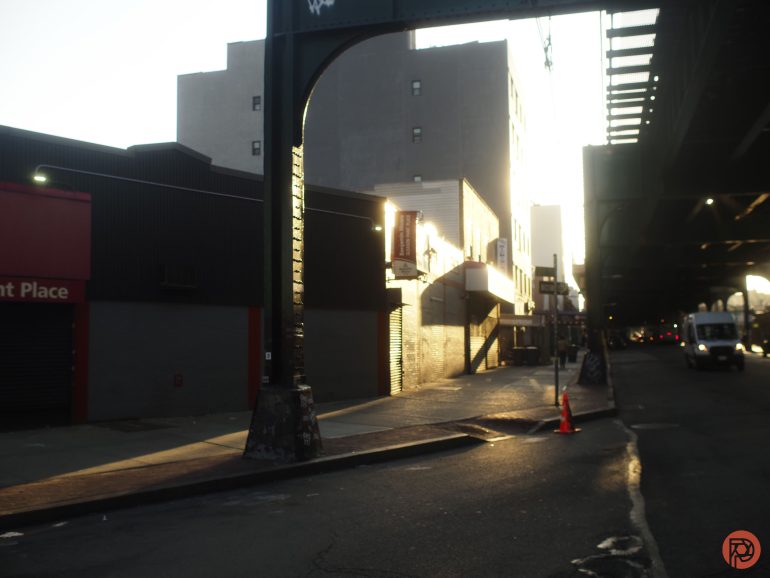
Several years ago when I wrote the review, I stated that the only thing that really makes this camera unique are indeed the art filters. All the other OM system and Olympus cameras have a similar sensor.
And with bringing these OM Recipes to the camera system, we’re giving it similar image quality as other cameras. But in this case, because of the smaller sensor, the image quality feels like scans that you paid for from a pharmacy instead of from a dedicated film lab where you paid extra to get the really good scans.
And there’s something very nostalgic about the pharmacy look if you’ve been making photographs for that long.
More importantly, there’s something about the feel of the product.
To recap on what I stated earlier, Micro Four Thirds users are a more divided nation than the United States was during the last major Presidential election. Go on YouTube or Reddit, and you’ll find people asking for smaller, rangefinder style cameras. Go into the DPReview forums, and you’ll find all these Colin Robinsons’ talking about how they need more DSLR style cameras and holding a company like OM System hostage with Stockholm Syndrome. Yet many of these critics never actually work in the photography industry as anything beyond content creators — and so they don’t even have the invoices to prove their chops as real photographers.
Yes, I know you’ll read this. And I’m fine with that.
If the company ever wants to get to the #1 spot then they need to know that most commercial work still involves people and products.
So is this camera worth purchasing in 2026? Honestly, only if you’re wanting a lot of fun and a very specific look. But otherwise, the entire camera world has come far beyond the capabilities of the Olympus EM1 Mk III except when it comes to weather resistance, battery life, and portability in some ways. And even then, that’s questionable. Canon, Nikon, Sony, Fujifilm, and Panasonic all make some great smaller cameras with bigger sensors. At the same time, no company has made a bad camera since the early 2010s.
I think what’s more important in this situation is a very simple thing: does this camera bring you joy? And is that joy organic? Are you being completely 100% honest with yourself? Do you even know how to be 100% honest with yourself?
Get rid of the ads!
Did you enjoy reading this article as much as we enjoyed writing it? There's a way to support us and our reporting, getting ad-free navigation and more as a bonus. Subscribe to us for less than a coffee per month —just $3.99— or take advantage of our yearly subscription with a hefty discount for only $25.- An ad-free experience
- A free mystery box for Lightroom or Capture One
- All the books in our store
- 20% discount on Capture One
- 30% discount on Imalume Photo Theft Protection
- 20% off Herbs and Kettle Tea Company.
- 20% off your order from MPIX printing services.
- 5% off Viltrox Products via their eCommerce store.
- 10% off all film developing, printing and scanning services from Blue Moon Camera and Machine
- 15% off 7Artisans products: The lens and accessory maker is offering a sweet discount for Phoblographer's readers.