


Last Updated on 04/10/2026 by Chris Gampat
Nikon recently updated the firmware of their Nikon Zf. And with that, I was truly wondering what had happened. In fact, I was waiting for this specifically. The changes seemed to be very odd until I did some deep testing. What I’ve found is that Nikon is preparing for a way to screw with Viltrox and anyone who uses their lenses on their cameras.
The updated text for the review is below. But if you’re interested in reading our entire Nikon Zf review, please click here.
——-
As of April 2026, Nikon updated the firmware for the Nikon Zf. Here are the latest additions with Nikon Zf firmware 3.01:
• Changed the way the aperture was adjusted on a lens when the standby timer expired.
• Fixed an issue where the “i” menu touch control would sometimes not be available in the [Prioritize viewfinder (1)] and [Prioritize viewfinder (2)] monitor modes.
This firmware can be downloaded from Nikon’s website.
The very curious change to me is the first statement on how the aperture was adjusted on the lens. So I went to the Custom Settings Menu and then C3 and changed the power off delay setting to 10 seconds. With the 40mm f2, nothing seemed to change in regards to the firmware that would’ve caused alarm. That’s to say that I tried changing the aperture via the camera’s dials, and nothing changed. I had to wake the camera up for that to happen.
Then I tried it with the Nikon 24-120mm f4 S lens. The same thing happened. So far so good. I stopped the lens down to f11, let the camera go to sleep, manipulated the dials, and it stayed at f11.
That’s when I got really curious.
So I tried it with my 7Artisans 50mm f1.1 and the Nikon Zf set to the Non-CPU lens setting. From there, I dialed in an aperture. Then the camera went to sleep, I tried changing the aperture, woke the camera up, and the aperture stayed the same.

After this, I adapted the Nikon 28mm f1.8 G lens from my Nikon D850 onto it using the official Nikon F to Z adapter. I stopped the lens down to f5.6, let the camera go to sleep, tried changing the aperture, and upon waking the camera up, the aperture had stayed the same.
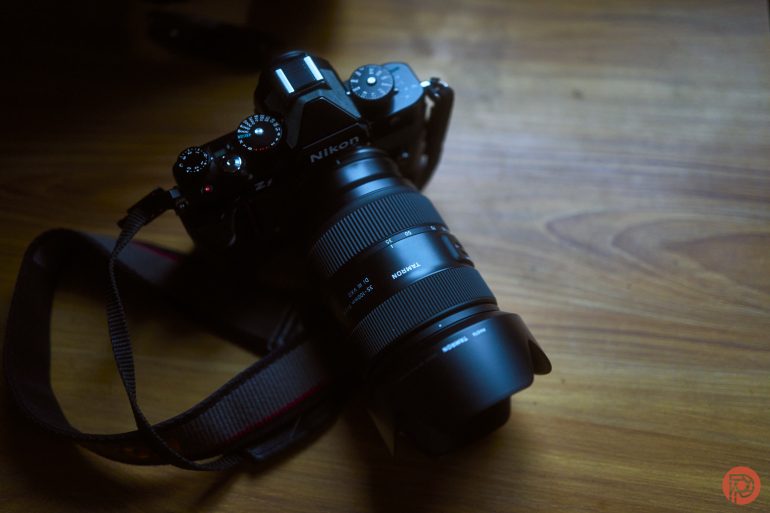
Thankfully, I also still have the Tamron 35-100mm f2.8 for Nikon Z-mount still around. So I tried that. The Tamron lens worked just as perfectly as Nikon’s native lenses did.
Curiously, I realized that something seems odd here — I’ve owned the Zf for a long time, so why would Nikon issue this update? And then I remembered that Nikon is in a lawsuit with Viltrox. The lawsuit is regarding Viltrox making lenses for the Nikon Z mount without paying the appropriate licensing fees. Sounds nuts, right? As it is, Viltrox lenses work perfectly fine on L-mount cameras and they’re even part of the L-mount alliance.
This also isn’t the first time we’ve seen this happen. Sony’s new a7V has issues with Viltrox lenses too. In our tests, some really crazy stuff happened. Thankfully, the lenses work just fine with older cameras that Sony doesn’t issue firmware updates for. Viltrox even tried updating many of their lenses to work with the Sony a7V, and the issues still persisted.
Could that be the problem?
Nikon’s lenses don’t have native aperture rings: and the only ones that do are Viltrox’s offerings.
One of the coolest things available is the Fotodiox Pro Fusion adapter that helps photographers use Sony E mount lenses on Nikon Z mount bodies. So I adapted a Viltrox 85mm f1.4 for Sony E mount onto the Nikon Zf. The Viltrox lens has an aperture ring. When the aperture ring was engaged and not set to the “A” setting, the camera and the lens conflicted. When I told the camera to stop the lens down to f8, but the lens was set to f1.4, I’d try to set the lens to f2.8 but the camera only recognized it at f8.
When the lens was set to the “A” mode, the problem didn’t appear at all. However, let’s remember that this is with an adapted lens.
The same issue happened with the Viltrox 50mm f1.4 for E mount, and I don’t ever remember this happening before. However, I’ve stated several times before that if you moved from Sony to Nikon and decided to become a real photographer instead of a content creator, you could bring all your lenses with you. If you’re using Viltrox lenses, that’s tougher. But if you’re using native Sony and Tamron lenses, then you’ll be just fine.
I decided to put in extra effort here. So I tried the Viltrox 14mm f4 for E mount adapted to the Nikon Zf. It worked exactly the same way that the Tamron and Nikon lenses worked. But that lens doesn’t have an aperture ring at all.
Still, things got even stranger. I tried the Viltrox 35mm f1.2 for E mount adapted to the Nikon Zf. The lens didn’t even receive power. To make sure the lens wasn’t busted, I tested it on my Sony a7r III — it worked just fine.
Even more odd: the Viltrox 135mm f1.8 for E mount received power from the camera, but it wouldn’t autofocus and it wasn’t even recognized. When I changed the aperture on the lens, the camera didn’t recognize what was going on.
Essentially, the camera is screwing with the aperture settings and conflicting with the dedicated Viltrox aperture ring. But so far, I realized that it could’ve been an issue with the adapter ring.
The whole situations, however, brings up concerns of mine. It’s for reasons like this that I’ve advised so many of my friends to not buy the Nikon Zf — because Nikon may try to mess with third party lenses. Reviews Editor Alberto Lima purchased the Nikon Z7 II, which hasn’t had a firmware update since the middle of 2025. So too did one of my very good friends who lives in my neighborhood. Using Viltrox lenses with his camera is straight forward and everything worked as you’d expect it to. But when Alberto started using the Viltrox 85mm f2 EVO in E mount with the Sony E to Nikon Z adapter on the Nikon Z7 II, something odd happened.
“So when I use the Viltrox adapter and am manually adjusting the aperture via the control ring, the camera automatically switches to Shutter Priority,” he tells me in a discussion. “Switching to A on the lens allows you to control aperture from the camera dial.” He added that the camera doesn’t always seem to recognize the correct f-stop when using the adapter. This leads us to believe that the problem has either has to do with Nikon or the adapter. And considering the history of the big three photography companies, I was willing to bet that the problem is Nikon.
The next day, Alberto swung by my office and brought two unannounced Viltrox lenses that we’re currently testing and the 85mm f2 I previously spoke of. Both of the new lenses have aperture rings and that problem didn’t occur. But when I adapted the 85mm f2 E mount to Nikon Z, the problems occurred.

So ultimately, we’re concluding that this new firmware messes with folks who probably might’ve come from Sony cameras, brought their lenses to Nikon via an adapter, and still use them. I plan on trying to find a way to update the firmware of the adapter soon as I’ve misplaced the dock that’s needed for me to do this. This didn’t happen before the Zf firmware and everything worked just fine. So at least for right now, I’m concluding that the problem is with the adapter.
To recap on my previous statement, during the DSLR days, third party lenses would often have lots of issues with autofocus performance on DSLRs. When the world switched to mirrorless, those largely went away — save for the Micro Four Thirds alliance that we’re convinced always finds subtle ways to screw each other over. So everything just needed to be fixed via firmware over and over again until the brands ended up in these kind of crazy firmware wars.
The same problems seem to be on the horizon and the camera industry seems to be transporting itself back to 2007. And if Nikon is currently doing this with adapted lenses, it’s probably only a matter of time before they do it to Viltrox lenses made natively for the Nikon Z mount.
Get rid of the ads!
Did you enjoy reading this article as much as we enjoyed writing it? There's a way to support us and our reporting, getting ad-free navigation and more as a bonus. Subscribe to us for less than a coffee per month —just $3.99— or take advantage of our yearly subscription with a hefty discount for only $25.- An ad-free experience
- A free mystery box for Lightroom or Capture One
- All the books in our store
- 20% discount on Capture One
- 30% discount on Imalume Photo Theft Protection
- 20% off Herbs and Kettle Tea Company.
- 20% off your order from MPIX printing services.
- 5% off Viltrox Products via their eCommerce store.
- 10% off all film developing, printing and scanning services from Blue Moon Camera and Machine