


This article isn’t going to get into the question of why someone owning a Nikon Z camera would want to use a Sony E-mount lens. Nor is it going to discuss which of the two brands has better autofocus modes or lens performance. We know there are photographers out there who would have made the switch from Sony to Nikon Z in the last few years. I personally know one such professional myself. But such a switch often comes at a considerable cost when you factor in the prices of new lenses. Then there’s always the attachment we have to some lenses that have helped us get memorable pictures. The Fotodiox Pro Fusion Smart AF Adapter aims to help you fix the conundrum of not having to sell out all your old Sony lenses when you make the move to Nikon Z mirrorless cameras.
Table of Contents
The Big Picture: Fotodiox Pro Fusion Smart AF Sony E to Nikon Z Adapter Review Conclusions

So, what’s the solution if you’ve jumped to Z but can’t bear to ditch your beloved Sony E-mount lenses? Enter the Fotodiox Pro Fusion Smart AF Adapter. This little piece of engineering aims to solve that exact dilemma – letting you keep your trusted Sony optics alive and kicking on your shiny new Nikon Z body. It’s slim, cost-effective, and does the job without you even knowing it was there in the first place (if it came in black instead of silver, you probably wouldn’t even see it mounted on your camera). Is there a market for something like this, you ask? Without a doubt. Moving systems come at the cost of a lot of emotions, self-doubt, and savings. If you can hold on to your precious Sony lenses for longer and retain all the goodness they have, can the Fotodiox Pro Fusion adapter help? Performance-wise, it did a decent enough job, but we did notice a few anomalies during our testing, which you definitely want to consider before clicking that Add To Cart button.
The Fotodiox Pro Fusion Smart AF Sony E to Nikon Z adapter is a fairly good product overall. It retains your Sony lens’s AF capabilities and sharpness. However, it loses two stars for various other issues, which I will describe in detail below.
Pros
- A good adapter to have if you own many Sony lenses but want to switch to Nikon
- Compatible with various 3rd party Sony E mount lens brands
- You can still have autofocus
- Lens EXIF data is (almost always) saved to your image files
Cons
- Works only on Nikon Z full-frame cameras. Will not mount to the Nikon Z30, Z50, Z50 II, or Zfc as per what the website notes state
- Compatibility issues with some 3rd party brands
- Was repeatedly very slow to detect a Sony G-master lens during our testing
- I feel the Megadap ETZ21 adapter we tested 3 years ago was faster to autofocus
Gear Used
I used the Fotodiox Pro Fusion Smart AF SNE-NKZ-FSN Adapter with the following gear:
- My Nikon Zf
- Sony 24-70mm f2.8 G Master lens
- Zeiss Batis 85mm f1.8 Sony FE mount lens
- Viltrox 16mm f1.8 Sony mount lens
- Sigma AF 35mm f1.4 Sony mount lens
Ease of Use and Ergonomics

If this were black in colour instead of silver with orange accents, it would totally blend into any Nikon Z camera you mount it on. This really should have a black version too. I first mounted the Fotodiox adapter to my Zf and then attached the lens to it, all done while the camera was off. Mounting the lens can be confusing if you’re a Nikon user borrowing a friend’s Sony lens, as you’d have to rotate the lens in the opposite direction that you’re accustomed to.
Autofocusing
When using the Fotodiox Pro Fusion Smart AF Adapter, you get the best of both worlds — the sharpness and autofocus speeds of your Sony lenses coupled with Nikon’s various AF scene and subject recognition modes. All 4 lenses we tested were AF lenses, and the autofocus worked as expected on them all.
Lens Test Results
For the most part, the image results I expected from these lenses were on par with using them on a Sony mirrorless camera. What varied greatly in some cases was the experience of using the lenses. You might think that the quirks and anomalies would be restricted to third-party lenses, but sadly, this wasn’t the case. Funnily enough, the EXIF data in all images shows the lens manufacturer as BOR. A quick Google search led me to an adapter on Aliexpress branded as BORYOZA, which looks an awful lot like this Fotodiox one…
Sigma 35mm f1.4 Art Lens
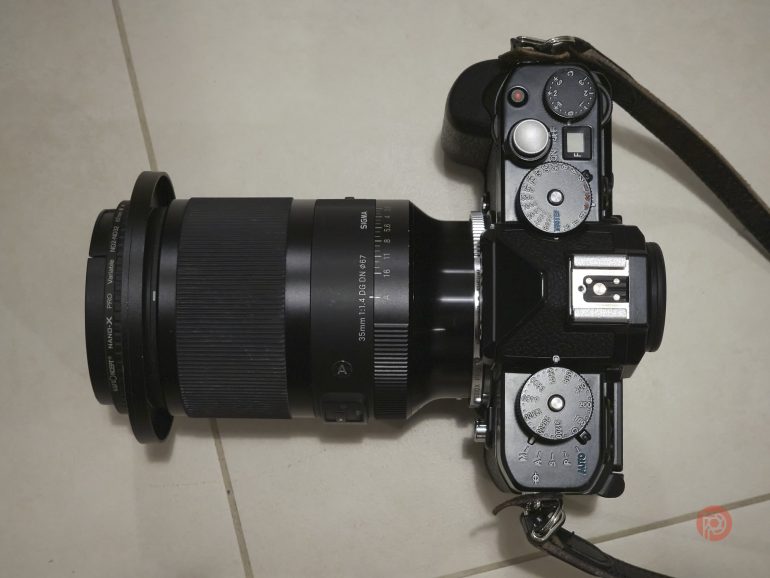
This lens was the first of the four I tested, and surprisingly, I encountered absolutely no issues. AF was quick and snappy, and sharpness was exceptionally good. Spoiler alert—this was the only lens that gave me zero headaches when used with the Fotodiox adapter. No issues whatsoever when testing this lens with the adapter. I kept the lens’s aperture ring to A and made adjustments using my camera’s front dial. EXIF data was saved properly as expected.


Viltrox 16mm f1.8 Sony mount lens

When we tested this lens on a Sony mirrorless camera, we found the results to be astounding. It took a full five stars in our review. A lot of that performance carried over while using it with the Fotodiox adapter. Focusing was very fast, even when moving from close to infinity.

The one image quality problem I faced was when focusing this lens on infinity. Images were clearly soft when using this lens on the Nikon Z with a Fotodiox adapter. It wasn’t even in low light; I was outdoors. I tried multiple aperture settings, but still observed this issue many times. The above image is zoomed in to show the lack of sharpness. See the gallery below for the original shot.


Sony 24-70mm f2.8 G Master lens

You would think that an adapter built for Sony mount lenses would give the best performance on a native Sony lens, but this wasn’t the case during my tests. It’s not that the results weren’t acceptable when everything went right; in fact, the pictures that turned out from this lens via the adapter were technically great. But there seemed to be one big flaw. To get the adapter to recognize the lens each time took on average 10 to 15 seconds. This wasn’t just when the camera was turned on. Even when the camera would move into standby/idle mode and I would half-press the shutter to wake it, the screen would be black or very dark, and the aperture would show no value. It was very frustrating to use this lens in this manner, and it meant I could not rely on it to be able to quickly take a photograph from an off or standby mode.


Zeiss Batis 85mm f1.8 Sony FE mount lens

Quite possibly one of the best 85mm lenses I have used so far. This lens would have been amazing to shoot with on the Zf with the Fotodiox adapter, but there was one major flaw – it would detect the lens as an APS-C crop type and not a full-frame one. As a result, the images had a 1.5x crop applied to them and were only about 10 megapixels in resolution. So the 85mm was effectively a 127mm. I reported the matter to Fotodiox and followed up multiple times, but they got back to me to say that it was still under investigation. Images were sharp and autofocus speeds were fast as expected, but the loss of resolution on this otherwise stunning piece of glass is a real drawback. I didn’t shoot much with this lens as a result. EXIF data of the image does get saved to the file, including the aperture value, but the lens details strangely show up as Lens Model: 0.0 mm f/0.5 and Lens Model: 0 mm f/–


Conclusions

I did hope the issue with the Zeiss lens could have been resolved, despite the many months having passed since I reported it, but alas, it wasn’t. I hoped the Sony 24-70 f2.8 blackout issue would have fixed itself with a camera restart, but this wasn’t the case. And try as I may, the Viltrox infinity focus softness still prevailed. If I were to compare this with the Megadap ETZ21 adapter, I would choose the latter any day. Even if the adapter was scarily tight at times when I was removing it from the camera, it still gave me excellent sharpness and autofocus. Those tests were done on a Nikon Z6; the Nikon Zf trumps that model in many departments, one of them being autofocus accuracy and speed.
I have no doubts in saying that the Megadap ETZ21 adapter would do a far better job than this Fotodiox on the Nikon Zf. I wish I could have done a comparison test, but we had to return the Megadep after our review back in 2022. At the time of writing this review, they’re both the same price, so it’s easy to pick one now. Hopefully, Fotodiox can fix the issues I observed in a future firmware upgrade
Get rid of the ads!
Did you enjoy reading this article as much as we enjoyed writing it? There's a way to support us and our reporting, getting ad-free navigation and more as a bonus. Subscribe to us for less than a coffee per month —just $3.99— or take advantage of our yearly subscription with a hefty discount for only $25.- An ad-free experience
- A free mystery box for Lightroom or Capture One
- All the books in our store
- 20% discount on Capture One
- 30% discount on Imalume Photo Theft Protection
- 20% off Herbs and Kettle Tea Company.
- 20% off your order from MPIX printing services.
- 5% off Viltrox Products via their eCommerce store.
- 10% off all film developing, printing and scanning services from Blue Moon Camera and Machine
- 15% off 7Artisans products: The lens and accessory maker is offering a sweet discount for Phoblographer's readers.