


Last Updated on 04/21/2026 by Chris Gampat
I will be the first do it admit that I’ve become a bit of a monster to most folks after nearly two decades of reviewing camera gear. And to lots of folks, I’m the bad guy — but I’m not the villain. This is a much longer way of saying that the Lomography Joseph Petzval 35mm f2 is an incredible lens that puts artistry and human intent first instead of what the Japanese and other manufacturers are doing by making us all have the work done for us. This lens shakes it on the dancefloor in a time when people are too afraid to dance because they’ll be made fun of on social media. It is authentic to itself and is bound to lure in anyone else who loves authenticity and individuality over sameness. I received this lens in December of 2025 and am writing this review in early January of 2026. After spending several weeks with it, I’m truly elated with what it can do.
Table of Contents
The Big Picture: Lomography Joseph Petzval 35mm f2 Review Conclusions
The Lomography Joseph Petzval 35mm f2 is a lens that at first caused me some frustration. But sometimes using cameras and lenses is like navigating a relationship with a partner who’s a terrible communicator. You have to determine for yourself whether or not the journey is worth it. I’ll be frank here. This lens is currently attached to my Nikon Zf — in a camera bag and in my closet. It’s not that I dislike the lens. Instead, I’ve wanted to dive back into working with DSLRs. But with the right image profile loaded up on my Nikon Zf, the Lomography Joseph Petzval 35mm f2 exhibits some of the most beautiful image output that I’ve seen in the past few years. The bokeh is smooth — which isn’t hard to do. But it balances this with micro-contrast and adds in the Petzval swirl that so many of us really adore.
At the same time, I’ve been saying the same thing about Lomo lenses for years. They need to start adding in weather resistance and focus confirmation. Granted, they say this lens is focus-coupled—but that’s not the same thing. Instead, the focus coupling has to do with eliminating focus shifts.
- Metal build quality
- Beautiful swirly bokeh
- The bokeh control ring is a nice touch
- Very sharp image quality
- You need contrasty image profiles to make it really pop
- A unique look
- Kind of a big lens, but it works very well
- Affordable
- I wish it had weather resistance and focus confirmation
The Lomography Joseph Petzval 35mm f2 lens receives four out of five stars. It’s incredible in so many different ways that I wish other lenses would become.
Experience
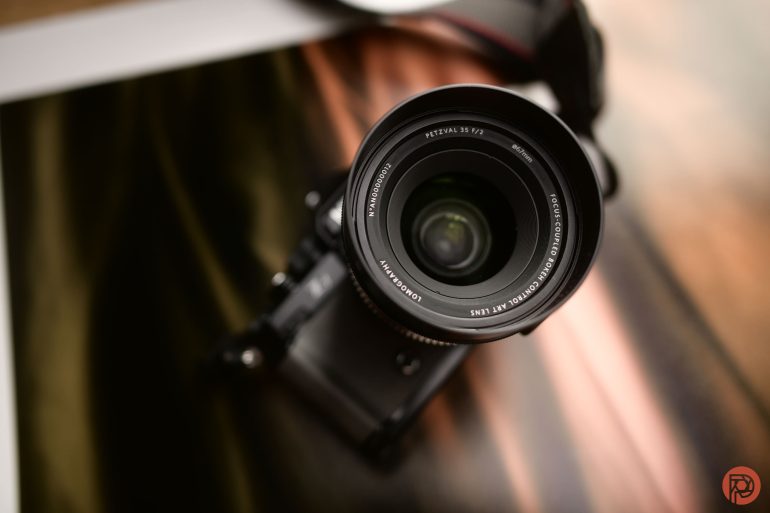
I used the Lomography Joseph Petzval 35mm f2 with the Nikon Zf. On the camera, I loaded up Scott Tucker’s vintage film profile and even used a bit of the stuff from Nikon PC. To keep the sensor clean, I used a Kolari filter over the sensor. This is a particular concern of mine when I use non-weather-resistant gear because I’ve gotten so many dirty spots in images before.
Putting the lens onto the camera is a particular thing. First off, this is Nikon, so you need to twist the lens the opposite way of everyone else. And that means that unmounting the lens sometimes can be a pain. I often found myself needing to turn one of the many rings on the lens completely to one way to undo it. This has been the story of many Nikon users for years since the days of full aperture rings on lenses.
Speaking of rings, the Lomography Joseph Petzval 35mm f2 has lots of them. There’s a manual focus ring, a bokeh control ring, and an aperture control ring. Like the 80.5mm f1.9 lens that Lomo made before it, you can add a bokeh modifier to the rear of the lens by unscrewing a little holder. I stuck the heart filter in there and lived my most wanna-be Scott Pilgrim life.
Because there is no focusing communication with the Nikon Zf, you have to use focus peaking. But to be frank, even with my legal blindness, I felt that I needed to just use magnification to ensure that I was critically in focus, shoot, and then aodre the photo. It’s really not that difficult to do.
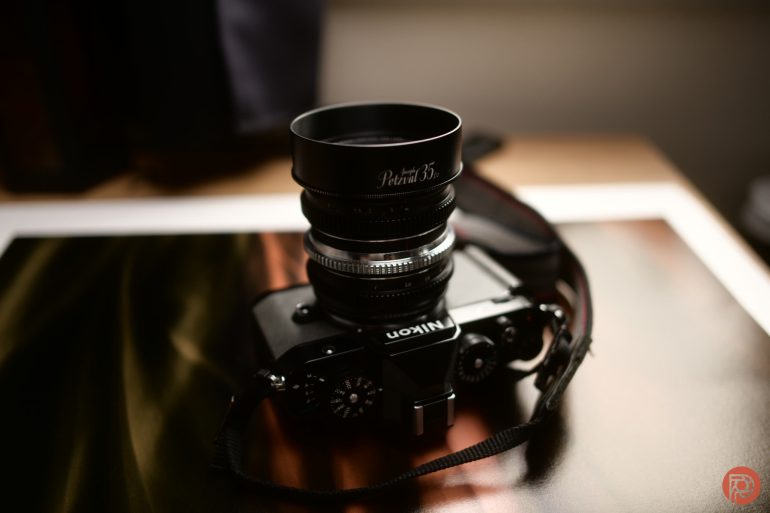
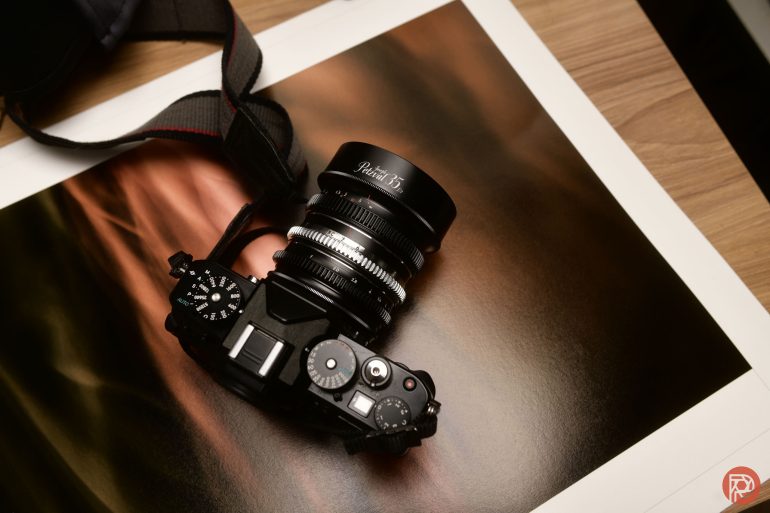
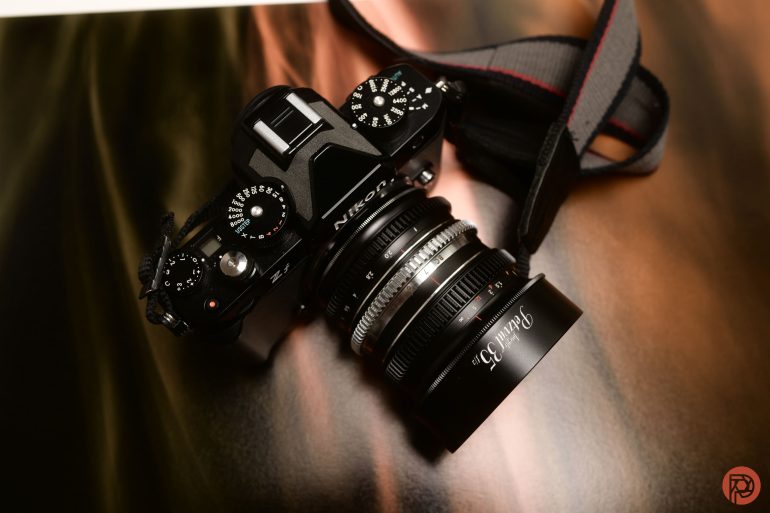
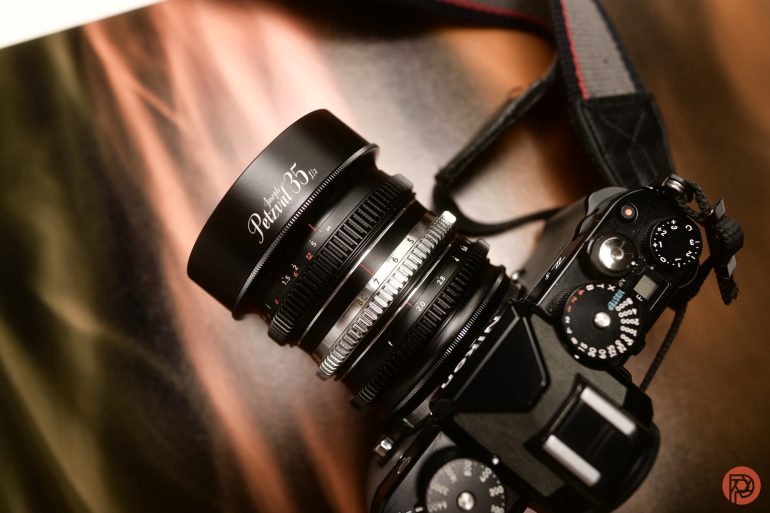
Over time, I found myself shooting with even more intentionality. I’d sometimes dial down the Petzval look all the way and most of the time I’d have it dialed in all the way. It gave me the best of both worlds with ease. Plus I wouldn’t always shoot with the lens wide open. On top of that, I’d compose my scene first, check the focus, recompose a bit, check the scene, and then shoot. I wouldn’t have this kind of intentionality with an autofocus optic.
Even though the Nikon Zf doesn’t have focusing communication with this lens, you can still tell the camera what aperture you’re using manually by dialing it in. But that doesn’t affect how the light meter reads and interprets the scene.
Coupled with Scott Tucker’s Vintage film Picture Control, everything I shot was stunning and I barely ever needed to do any post-production.
Image Quality
Lomography raised a hell of a celebratory bonfire of the self with this lens. It can appease so many folks. For the traditionalists, the bokeh is smooth, and the image quality is very sharp. But even the traditionalists who I put this lens in the hands of wanted to play with the Petzval look. And all of them enjoyed it. However, I enjoyed the look with an even more contrasty camera profile.
If you’re using a newer Nikon camera with Imaging Cloud available, you’re missing out by not uploading profiles to your camera. They do such a great job.
Sure, there are some of you who would want to do post-production to your images to make them what you think is, “better.” But you don’t really have to do that.
The following images were edited.


The following images are straight out of the camera.


Tech Specs
This information is taken directly from the Lomography page listing:
- Focal Length: 35 mm
- Lens Aperture System: Stopless Iris Style Aperture, Drop In Special Aperture Plates
- Closest Focusing Distance: 0.4 m
- Lens Focusing: Manual Focusing Ring, Mod 0.8 Follow Focus Gear
- Available Apertures: Stopless f/2 – f/22
- Filter Thread: 67 mm
- Lens Material: Multi–Coated Glass
- Lens Body Material: Anodized Aluminum
- Lens Family: Joseph Petzval Focus-Coupled
Declaration of Journalistic Independence
The Phoblographer is one of the last standing dedicated photography publications that speaks to both art and tech in our articles. We put declarations up front in our reviews to adhere to journalistic standards that several publications abide by. These help you understand a lot more about what we do:
- At the time of publishing this review, Lomography isn’t running direct-sold advertising with the Phoblographer. This doesn’t affect our reviews anyway and it never has in our nearly two decades of publishing our articles. This article is in no way sponsored.
- Note that this isn’t necessarily our final review of the unit. It will be updated, and it’s more of an in-progress review than anything. In fact, almost all our reviews are like this.
- None of the reviews on the Phoblographer are sponsored. That’s against FTC laws and we adhere to them just the same way that newspapers, magazines, and corporate publications do.
- Of my own accord, I bought this lens because I truly wanted it at full price and during the pre-order period. Manufacturers trust the Phoblographer’s reviews, as they are incredibly blunt.
- Lomography knows that it cannot influence the site’s reviews. If we don’t like something or if we have issues with it, we’ll let our readers know.
- The Phoblographer’s standards for reviewing products have become much stricter. After having the world’s largest database of real-world lens reviews, we choose not to review anything we don’t find innovative or unique, and in many cases, products that lack weather resistance. Unless something is very unique, we probably won’t touch it.
- At the time of publishing, the Phoblographer is the only photography publication that is a member of Adobe’s Content Authenticity Initiative. We champion human-made art and are frank with our audience. We are also the only photography publication that labels when an image is edited or not.
More can be found on our Disclaimers page.
Get rid of the ads!
Did you enjoy reading this article as much as we enjoyed writing it? There's a way to support us and our reporting, getting ad-free navigation and more as a bonus. Subscribe to us for less than a coffee per month —just $3.99— or take advantage of our yearly subscription with a hefty discount for only $25.- An ad-free experience
- A free mystery box for Lightroom or Capture One
- All the books in our store
- 20% discount on Capture One
- 30% discount on Imalume Photo Theft Protection
- 20% off Herbs and Kettle Tea Company.
- 20% off your order from MPIX printing services.
- 5% off Viltrox Products via their eCommerce store.
- 10% off all film developing, printing and scanning services from Blue Moon Camera and Machine
- 15% off 7Artisans products: The lens and accessory maker is offering a sweet discount for Phoblographer's readers.