


Every year, I take a very long vacation for myself in December. And during that time, I did something that I haven’t done in a while: I printed. First off, I’ve run into several problems with my Canon Prograf 1000, and that’s one of the reasons why I stopped doing print tests when we review cameras at the Phoblographer. But the bigger issue is that using the printer is such a massive pain in the ass. So after a lot of maintenance to fix it myself, I finally got it working and in a place where I was very happy with the performance. And after that, I printed two images. One is hanging at Upstairs Cocktail bar in NYC. The other, is in my office and has reminded me of a statement said to me a long time ago.
The world of the early 2010s was still very big on printing images when possible. And some of the best photographers in the world told me that a photograph isn’t done until it has been printed. Crazy enough, that would mean that I’ve got a ton of prints to make. But the moment that I saw my image made manifest in the form of a print, I was reminded about why I love the process so very much. And that, like the modern camera, has to do with the sensory experience.
We, as photographers, can’t just look at photos. We have to touch them. When we touch them, we realize that they’re real, and we activate another part of our brain that otherwise doesn’t really understand what’s happening. That’s to say that we can’t feel a photo and know that it’s real with our eyes. Seeing isn’t always believing — instead, we need to experience something to truly believe it and understand it.
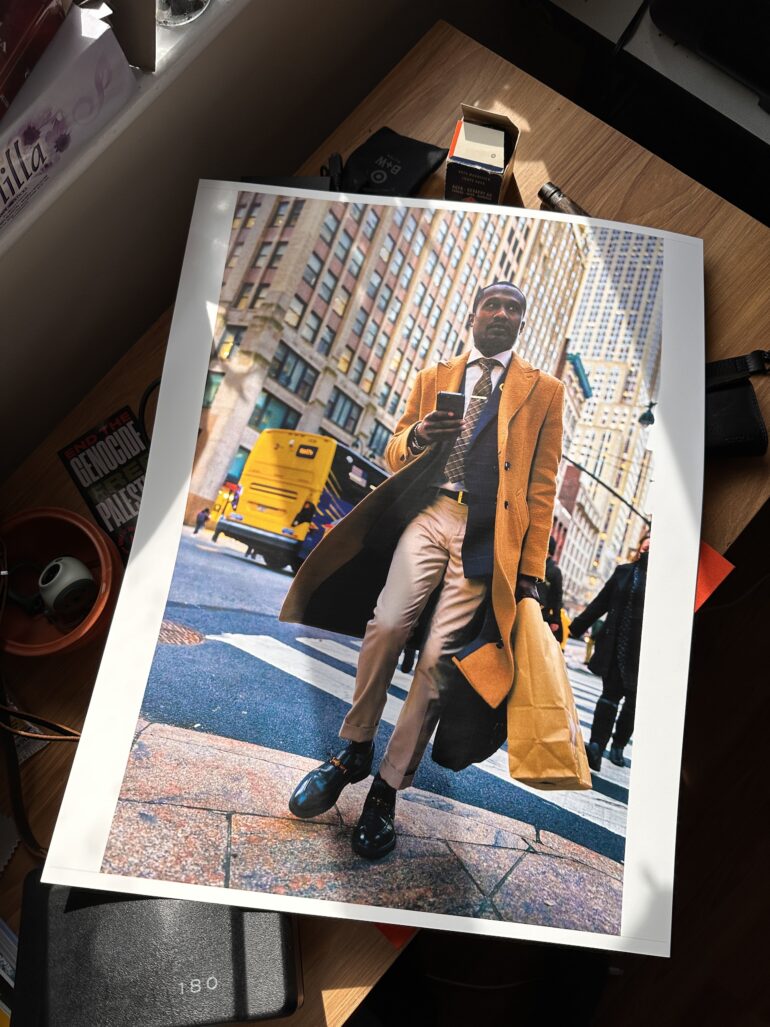
It’s wonderful to print an image and then bring it around a studio, office, or home to experience it with different lighting. As it walks around with you, it interacts with the world in a similar way that you would. If you’re wearing a saffron sweater, you’ll look one way in harsh sunlight vs overhead light. A printed photo does the same thing. The print, like a plant, thrives in an ideal environment and becomes better over time if it’s given the love it deserves.
In 2026, folks will take and make more images than ever before. But they’re all going to be forgotten or live in some library that’s digital and that you won’t really own if you switch from one phone manufacturer to another. It’s just like buying eBooks or streaming music. You don’t own it and you never will.
After a while, even the hard drives won’t work anymore. So you’ll need to put them in a private cloud or print them. Trust me when I say that you’re often far better off printing them. Much of the high end photographic paper has been designed to last hundreds of years at this point.
Get rid of the ads!
Did you enjoy reading this article as much as we enjoyed writing it? There's a way to support us and our reporting, getting ad-free navigation and more as a bonus. Subscribe to us for less than a coffee per month —just $3.99— or take advantage of our yearly subscription with a hefty discount for only $25.- An ad-free experience
- A free mystery box for Lightroom or Capture One
- All the books in our store
- 20% discount on Capture One
- 30% discount on Imalume Photo Theft Protection
- 20% off Herbs and Kettle Tea Company.