


Prime lenses may not be the best choice for all genres, but many photographers prefer them for their lightweight and compact design. Companies such as Sigma, Laowa, and TTArtisans have been launching a variety of wide-angle primes, and today, one can easily choose between the multiple offerings based on the price range. Sigam, for one, has various variants, including popular offerings such as 14mm f1.4, 20mm f1.4, and 65mm f2. Adding to this portfolio are patents for new options that could be of assistance to you. Have a look.
Spotted by Asobinet, patent JP2025-167449 was published on November 7 and showcases larger aperture lenses. However, the document also states they will have a lightweight design, minimal focus breathing, and a better focusing system. The examples of focal ranges include the 35mm f1.2 DG II, as well as the 28mm f1.2 and 24mm f1.2 lenses. Here is a look:
Example 1

- Focal length: 33.98
- F-number: 1.24
- Angle of view: 65.29
- Image height: 21.63
- Total length: 129.30
- Back focus: 18.0998
Example 2

- Focal length: 28.80
- F-number: 1.24
- Angle of view: 75.31
- Image height: 21.63
- Total length: 132.26
- Back focal length: 17.5511
Example 3

- Focal length: 24.70
- F-number: 1.24
- Angle of view: 84.14
- Image height: 21.63
- Total length: 133.63
- Back focal length: 18.4823
Example 4
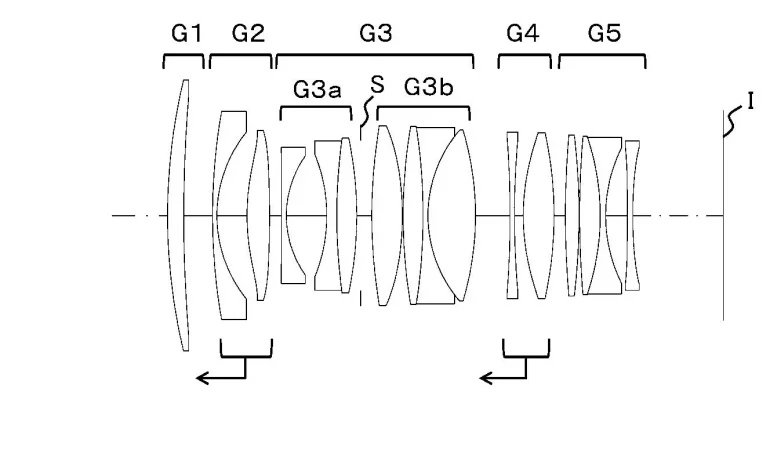
- Focal length: 36.05
- F-number: 1.45
- Angle of view: 62.10
- Image height: 21.63
- Total length: 115.00
- Back focal length: 18.7543
Sigma already offers fast lenses, such as the 35mm f1.2 DG DN Art and 50mm f1.2 DG DN Art, which are renowned for their sharpness and bokeh. In fact, in our review of the 35mm f1.2 (both the original and the new lens), we found both lenses exceptional and also able to beat Canon’s offerings in many ways. As we said, “It’s fast, reliable enough, weather resistant, light enough, and is truly a lot of fun to work with. For the most part, it gets out of the way of making great images.” The patent appears to be showcasing lens development in a similar vein.
If the company introduces 24mm and 28mm lenses with an f1.2 aperture, these lenses can be used for environmental portraits, astrophotography, and creative street work. Additionally, anyone shooting in low light will have plenty of depth of field and bokeh to work with. Moreover, these lenses also feature better motors, which can be of help to video creators. Moreover, Sigma is pushing itself to offer more than other third-party options at a much lower rate. Many photographers who do not wish to purchase Chinese lenses will like the offering from Sigma. In fact, if Sigma is able to get toe-to-toe with first-party lenses, then it’s a win-win.
It remains to be seen whether Sigma launches something new soon. If not, then this only proves they are taking the future direction very seriously now.
Get rid of the ads!
Did you enjoy reading this article as much as we enjoyed writing it? There's a way to support us and our reporting, getting ad-free navigation and more as a bonus. Subscribe to us for less than a coffee per month —just $3.99— or take advantage of our yearly subscription with a hefty discount for only $25.- An ad-free experience
- A free mystery box for Lightroom or Capture One
- All the books in our store
- 20% discount on Capture One
- 30% discount on Imalume Photo Theft Protection
- 20% off Herbs and Kettle Tea Company.
- 20% off your order from MPIX printing services.