


Throughout the lives of most adults reading this article, we’ve known capitalism to primarily target women and the hard-earned money they’ve made. To do that, they often make women feel awful about themselves so that they can sell solutions. But in the past two decades, we started to see that trend swing towards those identifying as men. I remember being very young when I saw an ad for the little blue pill. Awkwardly enough, I think I was watching television with my family — in fact, I think it was the Super Bowl. My parents weren’t ready to explain what the pill was to me, but I figured it out already. I was 11 years old, and I was very shocked that men couldn’t last. “Would I suffer the same thing when I get older?” I wondered to myself, sitting on the couch with my peach fuzz barely coming in, yet knowing that I’d have to shave or that I’d otherwise be shamed at school for being too hairy. It’s nothing compared to what young men are experiencing today.
That problem for me persisted until I was in high school. Then, it became all about being bigger and more muscular. Again, in college, it was all about keeping trim, not losing my hair, etc. But when I turned 30, the algorithms had the gall to assume that I needed the modern variant of the blue pill. Plus, nearly every YouTube video I see also has an ad for getting manscaped in some way or another.
For a while, we called this trend body shaming. Today, it’s given birth to the trend called LooksMaxing — and it has a central focus on what to do about your flaws. It’s a very unhealthy obsession, way beyond what we’ve seen previously and forgets the idea of balance. Worst of all, social media and various photo tools have amplified it. Fueling that fire are some of the latest apps and AI technology involving imaging.
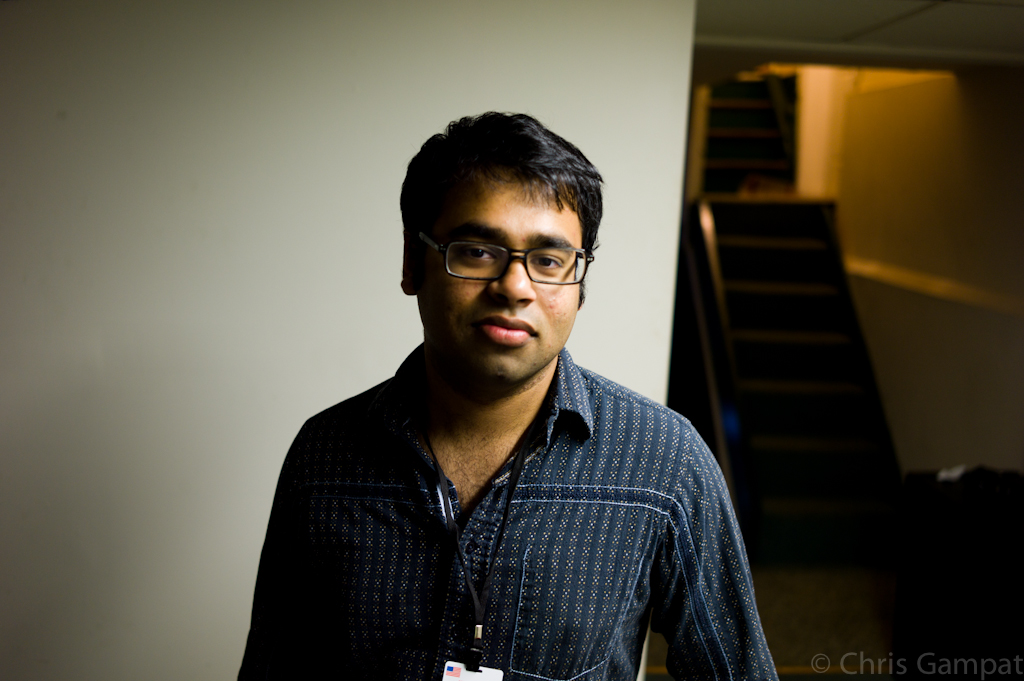
Because of social media, we as a society have become even more visually focused than ever. We search for the best and right angles to shoot and share images of ourselves. Unlike the film days, we have nearly limitless image storage and the instant gratification of digital imagery, so we can shoot tons of photos before we get the one that we want. This act turns into an obsession. Have you ever seen someone sit around in public and shoot endless selfies while they are all alone? I have — it’s more common than you’d think in NYC and in other big cities around the world. I mean, Nikon even tried to cash in on that over a decade ago.
Ninety per cent of women report using a filter or editing their photos before posting to even out their skin tone, reshape their jaw or nose, shave off weight, brighten or bronze their skin or whiten their teeth.
Science Daily
“There’s a whole generation growing up that doesn’t know what life was like without digital filters, and it’s almost unheard of for them to post a picture of themselves without any kind of retouching,” Gear Editor Feroz Khan reminds me. He also mentions that people like images online just as a formality at times. Like me, he’d much rather get a genuine, in-person compliment.
These days, lots of people on LinkedIn also use AI-generated images of themselves. It’s insane—and similar to catfishing—when there’s an image of you that looks far different from what you look like now. It happens all over social media.
All of this reminds me of many things that I’ve learned as a tech journalist of nearly 20 years. The first is that sometimes, removing tech is the best thing you can do for your mental health. Often I talk with my best friend about going back to technology before everything became smart and listening to our every move.
The second is that comparison is the theft of joy. But the online market is all about comparison. Years ago, I used to compare this publication that I built from the ground up to various others. After a while, I stopped. Instead, I worked to differentiate us as much as I possibly can. It’s a strategy that worked — and it’s one of the reasons why the Phoblographer is still around.
The Shield of Reality
As many people who read this website know, I’m legally blind. In this case, perhaps this is my shield—that I care a whole lot more about how I am inside than how I am outside. That’s not to say that I don’t care about my image—I am a portrait photographer after all. But I know that it’s not everything.
Obviously, not everyone thinks the same way or lives most of their downtime in the real world. The LooksMaxing trend even has massive posts on Reddit with people writing essay-length pieces about how to actually looksmax.
Men are bombarded with filtered, hyper-curated images of what a “high-value” man should look like. For many, this fosters a dysmorphic loop of comparison, critique, and compulsive correction.
Jennifer Heinen
Fashion Psychologist, Jennifer Heinen studies the intersection of style, identity, and mental health. “Trends like looksmaxxing, auramaxxing, and scentmaxxing—terms that may sound niche or even fringe at first—are in fact rich indicators of something much deeper: the modern male psyche under pressure,” she tells the Phoblographer via email through a PR agency. “These practices are not just about grooming or aesthetics. They are about belonging, control, and the desire to feel seen in a world that often offers men very few emotionally safe spaces for self-expression.”
According to Heinen, social media has amplified the ideals that men are trying to reach. This has led to body dysmorphia, as social media has emphasized the attention economy over everything else.
These days, ads are targeting even younger men, according to Men’s Health. These men haven’t necessarily developed protections against what they’re trying to sell them. Instead, ads often point out flaws a man has while trying to sell them a solution of some sort. This goes beyond advertising; it’s prevalent across various apps involving the use of images.
I pledged to stay off the dating apps after the pandemic — knowing that my worth was far more than someone could compile into a small dating profile. In fact, Glamour, years ago, famously used me as an expert on how to create better dating profile photos.
As a fashion psychologist, I believe it’s crucial we hold space for this trend without mockery. Yes, it raises concerns—from mental health to safety—but it also signals a generation actively trying to own their image in deeply psychological ways.
Jennifer Heinen
But after many years, I realized that an app couldn’t encapsulate my entire presence within a few images and a few prompts.
I didn’t stop there. In January 2025, I pledged to stay off social media for four years. I’m finishing this article in the middle of June 2025, and I’ve still not returned to social media. What it’s given me is a much better presence of mind that I feel continues to improve way beyond many of my peers. With social media, you’re constantly comparing yourself to others based on what you see — ultimately, I’ve learned that comparison is the theft of joy. And most importantly, what people are showing you isn’t always authenticity.
My joy is instead found in playing video games, reading, shooting photos, eating, drinking, going to tea meetups, exploring the city, playing sports with friends, yoga, conversations, rock climbing, boxing, etc. I’ve filled my life with so many things, and I can do that because I don’t have a romantic partner or children. My focus these days is to figure out how to retire early, be healthy, and live a more sustainable life in the real world. By all means, I’ve thrown away the traditional things that people say I should do. Homeownership in NYC, let alone America, doesn’t seem very promising to me. I’d feel awful bringing children into a world like today. And most importantly, I haven’t found a woman who I think makes my life much better than what I’m capable of doing myself.
To that end, I don’t thrive on social media’s dopamine casino. Who cares if a selfie and my warm smile get a bunch of hearts on Instagram?
Being off social media has meant that so many more things have changed. I don’t know what my friends have been up to, so I remind them often about the fact that I’m not seeing what they’re posting. Where in the past, all that we both would’ve done is a simple reaction to the posts, we now have fuller and more meaningful conversations like we did before social media took over our lives. People know that I haven’t been on it, and so I sometimes need to recount lots of things about how life has changed. The last things that I posted were about how I was adjusting to life after two eye surgeries to stabilize my vision. And in that time period, a lot has developed.
Let’s make a list:
- I found contact lenses that are way more comfortable for me to wear for longer periods of time after trying three different pairs
- I’ve been testing some really cool cameras and lenses. When I’m using them, I’m often really interacting with people and I never take my phone out.
- I now read actual, physical magazines. At the moment, I’m reading an incredible story by the New Yorker about how Nutella pretty much got an Algerian competitor banned from France. I also read about Jessica and Ashley Simpson’s careers in The Cut. And in the Atlantic, I read about how we need to redefine what classical music is.
- I joined a tea club where we meet up weekly
- I do boxing
- I rock climb
- I got a mediation certification, and I’m forming my first few classes and workshops. One of those will be specifically designed for photographers and involve at least a day of total silence
- I really have a better idea of what I want in life. Eventually, I’d like to retire to Europe and make beard oils and meditation oils — they’ve been a long-time hobby of mine and I now think I’ve got enough feedback to feel confident to sell the products I make
- I returned to video gaming in a far less toxic way
- I beat high blood pressure
- I’m focusing on building a better Phoblographer with my full definition of what I think the word, “better” means to me
This list can go on and on — and that’s because I chose to ignore my online public image and instead focus on my in-person public presence.

But for many younger men, being online is their entire world—which means that their public image is everything. For years, society mocked women for using FaceTune and skin smoothing. Now, lots of those tools are even built into the cameras that we test to see if the megapixel count is high enough. I remember years ago, a mother was shocked at how much the Fujifilm XH2 smoothed out the skin of her super-young child.
This tech isn’t new, though. It’s been in many compact cameras, like the Canon S95 and others, for years. At least a dedicated camera is doing this, and the manufacturers tend to hold back a bit on that. Then there are a lot of other ways: using older lenses or cameras, soft lighting, film simulations, etc.
On Fivver, freelancers offer to retouch people. While the more experienced among us take a more reserved approach to retouching people, that’s not the case amongst those who obsess about their image online.
A Middle Millennial Tries LooksMaxxing

So, what tools are young men using? One of the biggest is LooksMax AI. It runs your features across a database and compares you to idealized results. For example, it can rate your skin a 6/10 while also disclosing that it does not offer medical advice. I, a 38-year-old man who just beat hereditary high blood pressure, am nearly obese according to BMI, and am around 5’6″ tall, decided to give it a try. By all means, I’m basically middle-aged at this point.
The app first off tells you to rate it even before you begin to really do a deeper dive — this could explain why it has such a high rating in the app store.. Then, it tells you that you have to upload a selfie of yourself. Specifically, it asks for a well-lit front profile and a side profile. To get my results, I have to pay $3.99 a week. No way am I doing that. Even if I were much younger, I’m still not sure that I’d do that. However, there was surely a time when I paid for the OKCupid app and all the other dating apps to give me more results with women that their platforms found attractive.
The app, Moggr, does something similar. But this time around, it asked me for $4.99/week. At 38 years old, I know well enough that what’s most meaningful is finding something that works for me through experimentation and not by having an AI rate me.
The honest and blunt truth is that at least I know better and don’t even plan on dating an AI. I built my confidence through belief in myself, speaking kindly to myself, therapy, and doing the actual work to make myself better in ways that seep through me holistically. I really don’t care about what an AI thinks about me.
Perhaps some folks forget this: that in the end, they’re being rated by an AI and not by actual humans. And more importantly, the AI is probably holding everyone to the same standard. After a while, everyone is bound to more or less all look the same. If that doesn’t sound like the mission of one of World War II’s most nefarious leaders, then I’m not sure what does.
Are AI retouching apps becoming digital health supplements of some sort? At what point does it become too toxic?
I spoke to Alberto Lima, the Phoblographer’s Reviews Editor, about this story. Our conversation opened my eyes to an even crazier truth: Apple and Google are both complicit in this. Every time a purchase is made within an app, those companies take a cut. On the Google Play Store alone, LooksMaxAI has over 5 million downloads. Plus, there are 1 million reviews. Hypothetically speaking, they could be bringing in nearly $4 million a week.
Apps are the Problem
The big problem is the apps and our obsession with imagery. Social media has surely done a lot for many small businesses and many movements all around the world. But we all forget that the moment social media is gone, it doesn’t matter anymore. In fact, if the world suddenly lost all access to electricity, none of it would matter. People would have to go back to building themselves in real life instead of working on an online avatar.
Here’s the big problem: I believe that way too many people constantly worry too much about social media and don’t realize that the people right in front of them will be a million times nicer to them if they just speak to one another. Most importantly, that requires building up social skills.
As a journalist working in the tech and imaging industry for nearly twenty years, I am very concerned about how AI and imaging-based apps will affect the mental health of younger men. But most of all, I have no idea how to make them realize that the most important things in life are the things that are directly affecting them at every moment.
Get rid of the ads!
Did you enjoy reading this article as much as we enjoyed writing it? There's a way to support us and our reporting, getting ad-free navigation and more as a bonus. Subscribe to us for less than a coffee per month —just $3.99— or take advantage of our yearly subscription with a hefty discount for only $25.- An ad-free experience
- A free mystery box for Lightroom or Capture One
- All the books in our store
- 20% discount on Capture One
- 30% discount on Imalume Photo Theft Protection
- 20% off Herbs and Kettle Tea Company.
- 20% off your order from MPIX printing services.
- 5% off Viltrox Products via their eCommerce store.
- 10% off all film developing, printing and scanning services from Blue Moon Camera and Machine
- 15% off 7Artisans products: The lens and accessory maker is offering a sweet discount for Phoblographer's readers.