

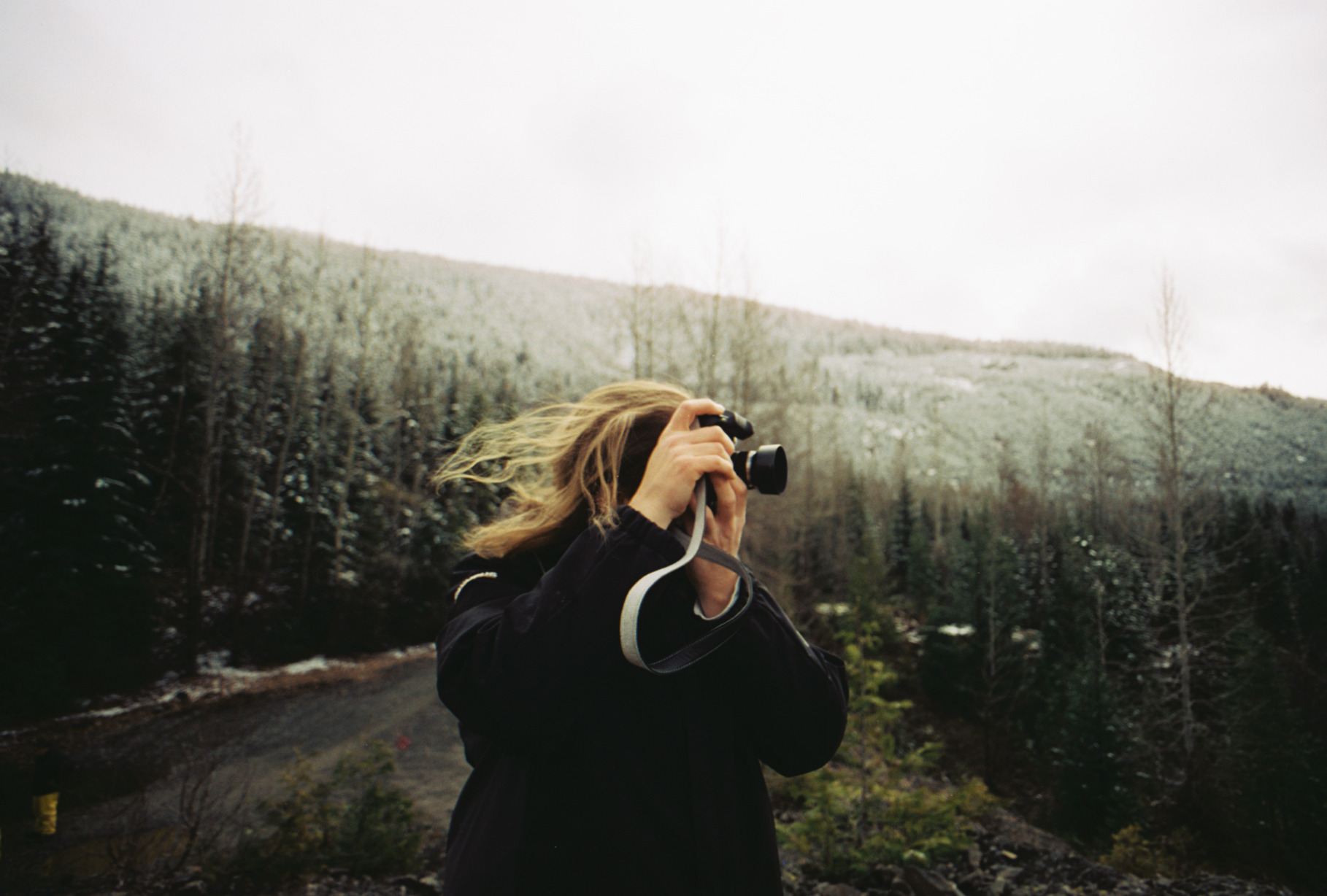
When photography was invented in the early 1800s, it was considered magic. The ability to glimpse one’s likeness, which slowly appeared within minutes, had its own charm, fascination, and a sense of wonderment for the viewers. But almost two hundred years later, as the medium went from its infancy to adulthood, we have begun to overlook what makes photography such a spellbinding means to “see” our world, and in turn, ourselves. While a part of us blames the advent of technology, the problems run much deeper. In an attempt to peel back the layers that impact the photo industry as a whole, we have reached out to seven acclaimed photographers, whose knowledge and insider’s perspective narrows down the areas we must work on together for a more fulfilling future.

Wildlife continues to be an awe-inspiring genre of the medium. Instances such as the birth of a baby elephant, a cheetah running after its prey, or a group of polar bears lying on the ice, when frozen as pictures, not only surprise or shock us but also make us wonder about the role of nature from the comforts of our desk. In fact, we often love to see such photographs on the walls of our dining room or offices, where a brush of nature respites us from the confines of our concrete jungle and complex lives.
As fascinating as wildlife photography is, have you wondered what happens when none of this exists? “Some of the biggest challenges we face today as wildlife photographers come from the shrinking of natural places, whether it’s due to climate change or overcommercialization,” says wildlife photographer Mital Patel to The Phoblographer. “There’s also been a huge rise in travel and tourism, which can make it harder to have those rare, meaningful encounters in wildlife.” Amidst this, a wildlife photographer is expected to get “quick” shots during a safari, where the urgency leads some individuals to act irresponsibly. “It (wildlife photography) requires patience, presence, and respect for the environment. That part is getting harder to protect.” Mital’s concerns echo the challenges faced by millions of wildlife photographers, many of whom pursue the genre in the hopes of protecting the very things they photograph. But if those in power can’t listen, what can even the photographers do?
But the decline of the wild is not the only problem. The demise of print publication and the boom of digital media are other culprits that are causing serious harm to the genre. “Wildlife photographers do not get paid as much as they used to,” Carolina Fraser, winner of the Audubon Photography Awards Youth 2015, tells us. “Lay-offs at big corporations like National Geographic and the decline of stock photography have happened recently.” Stock photography, as we had noted before, enabled image-makers to earn a handsome sum of money. That was the case almost a decade ago. With the increasing democratisation of the medium, stock photography has been perishing slowly. Thus, it is not surprising to see many in the genre taking on expeditions, workshops, or working with wedding photography, to ensure they are able to continue down this path.
“Lay-offs at big corporations like National Geographic and the decline of stock photography have happened recently.”
Carolina Fraser
Quite recently, our Editor-in-Chief penned a thought-provoking article on street photography and its origin. The genre, which has been around since the beginning of photography, only found its voice when photographers like Henri Cartier-Bresson, Joel Meyerowitz, Meryl Meisler, Jamel Shabazz, and Garry Winogrand began to document people on the streets.
Today, street photography, while immensely celebrated for its ability to capture a sliver of our complex lives, is struggling to reach its former golden days. “The timeless challenge for street photographers is that it is extremely difficult to create an extraordinary photograph in a public setting,” says street photography icon Meryl Meisler. “Nothing is predictable. The moment is gone as soon as it is recognized.” But while the ability to capture the ‘decisive moment’ is as fleeting as the scene, Asako Naruto, winner of the Paris International Street Photo Awards, reveals that the challenge lies in our surroundings. “I’ve noticed a growing concern: the slow homogenization of urban landscapes,” she tells us. To give us a better example, Naruto states, “The decline of independent stores and the rise of global chain businesses has made city streets—from my hometown in Japan to my current home in Madrid—can, at times, feel unexpectedly similar when it comes to the lineup of stores, even if the streets themselves look nothing alike.” Although this metamorphosis may differ from city to city, it continues to happen even in the smallest of towns around the world. “In a way, this uniformity is erasing the character of the places we once found so rich and unique,” she adds. This begs the question: What will street photographers have to do to find more moments that are simply not mere replicas of one another?
Taking Naruto’s point, and further elaborating on the complexity of the issue, Italian photographer Lorenzo Grifantini points out the age-old challenge: public space vs personal privacy. “As cities grow more surveilled and people become more aware — and sometimes suspicious — of being photographed, the spontaneous interactions that once defined the genre can now lead to confrontation,” Grifantini explains. “Legal ambiguity across countries further complicates things, making it hard to know what is and isn’t allowed.” Then comes the question of whether street photographers can “give back” to the people they are photographing. For instance, when Bruce Gilden was documenting on the streets of New York, his practice repeatedly drew the ire of many critics, including Joel Meyerowitz. Thus began the discourse on photographing in public spaces, and the ideal moment to stop releasing the shutter that ricochets through our consciousness.
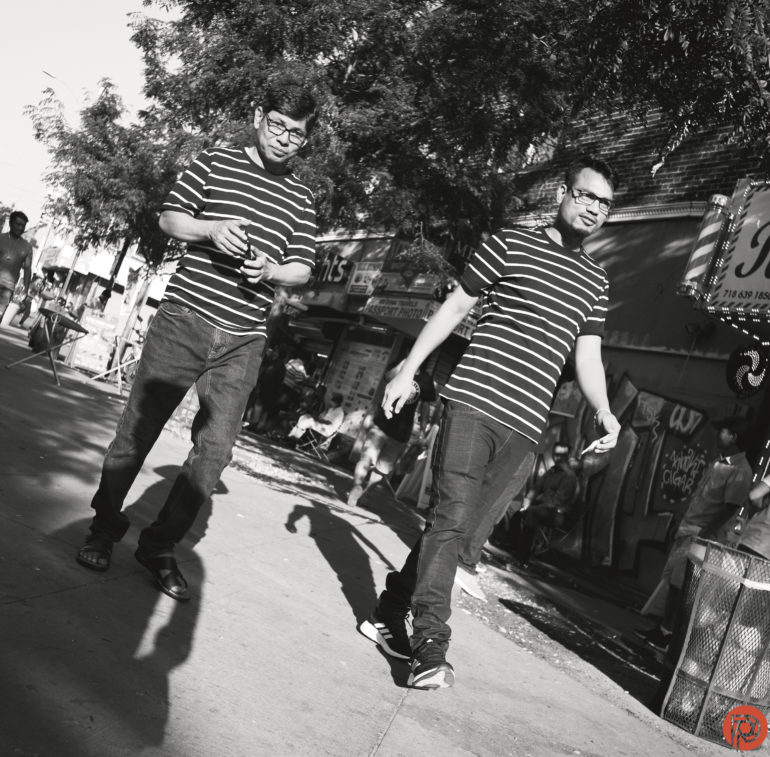
Throughout our conversations with these seven photographers, a thread that kept running between experiences and insights was the role of social media. While the platforms were once meaningful for socialising, this notion has changed drastically following the pandemic. For photographers, too, it poses a problem, which goes beyond its role as a dopamine casino. “An infinite number of people can instantaneously see a photo and circulate it for years to come,” Meryl Meisler tells us. “If it is in one’s style to ask a subject’s permission, as I do, the photographer is now more likely to be questioned about what it’s for and where it will appear.” And when that transpires, the sitter is likely to assess the impact of the image and what their families or friends will perceive of it. “If the image involves a minor, the adult in charge is rightfully concerned about the child’s privacy, parental and guardian wishes, possible custody battles, or even kidnapping,” Meisler adds. As a result, some photographers will not seek permission, as in the case of street photography, which puts the individual in the frame in a precarious situation.
The second layer to the issue is documenting subjects that are deemed to be liked by many. For instance, portrait photographer Raphaël Neal states that image-makers tend to choose subjects based on their popularity on social media. “Another big challenge for portrait photographers seems to be to manage to resist the desire to trap a person in a role,” he tells us in an email. Neal adds that this has led to photographers capturing images of “people from certain communities in a cynical attempt to address ‘hot topics'” as it helps them to get praise on social platforms, and the opportunity to get published in digital magazines. However, he argues, “If there is not a genuine curiosity and respect for your subject, you will also end up recreating something that has been asked by others, by which I mean capitalism.” As a result, one often comes across a plethora of images that follow a certain style or aesthetics, where the lack of connection between the subject and the photographer is quite evident. Sometimes, the narrative’s absence also echoes through the images.
Then there comes the third, and last, layer of challenge: Getting commercial work through social media. While some photographers do understand that these portals can’t be your entire portfolio, there are many who still rely on them to get recognition and remuneration. “There is a new trend,” says Carolina Fraser. “Posting Instagram Reels and TikToks of wildlife, often taken with a long zoom and featuring the photographer in the field, tends to go viral. Photographers can grow large followings, which can lead to print sales, workshop opportunities, and even revenue,” she adds. But is going viral the answer to getting recognition or more work? As a short-term goal, yes. But for the long haul, it’s your work that is going to get you favourable clients, ones that do not hire you based solely on your following.
As a reminder, photographers need to stop using social media as the only means to get assignments, and look at other alternatives to get a farther reach. Perhaps, the old-school way of communication. Zines are an example of that. Our phones can’t be a barrier between us and our potential clients, and a tactile experience is all one needs to get you on board.
“If there is not a genuine curiosity and respect for your subject, you will also end up recreating something that has been asked by others, by which I mean capitalism.”
Raphael Neal
If you want to pursue photography in 2025, then you have to be prepared for the gradual mainstream use of artificial intelligence (AI). We are unsure what the future holds, but each of the seven photographers has voiced their concerns about how AI can do more harm than good. “With AI-generated imagery becoming more convincing, the authenticity that defines street photography is at risk of being questioned or devalued,” Lorenzo Grifantini said to us. “When reality can be artificially constructed, the power of a genuine, unfiltered moment becomes harder to defend.” This is where the role of the Content Authenticity Initiative (CAI) and its stringent measures come into play. It is our only hope to ensure the veracity of photography is not corroded by miscreants.
However, CAI does not guarantee the livelihoods of photographers, especially when it comes to stock, commercial, and fashion photographers. With companies like Adobe and Shutterstock launching new Generative AI features, there is a fear that clients will begin to cut costs. But as scary as it may sound, portrait photographer Matteo Verre believes that AI can’t take away from the medium itself. “As in the case of the birth of photography itself in the early nineteenth century — which according to many critics of the time would have sanctioned the death of painting — but which instead only contributed to freeing it with even more force from the old pre-established canons,” he shares with us. While photography did not impact painting in the way it was perceived, it allowed the latter to undergo an evolution, where avant-garde movements helped to re-establish its significance as high art. “So the development of AI could give new life, new stimuli and new expressive possibilities to the world of art, thus making photography the trait d’union between historicized disciplines and new future scenarios,” Verre adds. We do agree with Verre to an extent, since the boom of vintage compact cameras showcases a positive consumer trend.
“The decline of independent stores and the rise of global chain businesses has made city streets—from my hometown in Japan to my current home in Madrid—can, at times, feel unexpectedly similar when it comes to the lineup of stores, even if the streets themselves look nothing alike.”
Asako Naruto
While these are some visible challenges, there are many more that will be personal, changing from the experience of every photographer. However, as long as we collectively understand our responsibility as image-makers and as those who can shift the narrative, photography will continue to find ways to thrive. As Lorenzo Grifantini aptly said, “We, as photographers, have a responsibility to go deeper to propose stronger stories, more meaningful narratives, and images that resonate with emotional and social truth.” So, let us allow our images to speak for themselves.
Get rid of the ads!
Did you enjoy reading this article as much as we enjoyed writing it? There's a way to support us and our reporting, getting ad-free navigation and more as a bonus. Subscribe to us for less than a coffee per month —just $3.99— or take advantage of our yearly subscription with a hefty discount for only $25.- An ad-free experience
- A free mystery box for Lightroom or Capture One
- All the books in our store
- 20% discount on Capture One
- 30% discount on Imalume Photo Theft Protection
- 20% off Herbs and Kettle Tea Company.
- 20% off your order from MPIX printing services.