


How can photography really be an art form? I mean, the barrier of entry is so low, and it doesn’t require you to have a special skill set, right? Anyone can take a fantastic photo with their phone and then send it off to a retoucher to make edits for your latest gig. Adobe, for several years, has taken advantage of this mindset to get sales and instill into people that all the art in photography happens in post-production. That’s the mindset that Diado Moriyama takes when he expresses that photography is an imperfect duplication of reality. But it’s not the only way of doing photography. Several photographers, like Jaina Cipriano, don’t use Photoshop or post-production at all. Instead, it’s all about the idea of capturing vs creating.
Table of Contents
A Brief History of Acceptance
Since the start of photography, it struggled to be accepted as an art form. The earliest critics said landscape photography isn’t truly an art form because it doesn’t require an artistic interpretation of a scene. Instead, it captures the scene for what it is. They were right, and so photography needed to evolve to incorporate different methods and subject matter to make it more artistic.
Photography surely evolved in various directions, both for commercialization and artistic merit. 35mm film meant people could bring a camera anywhere and capture many different moments. It emphasized a fast process of capturing candid moments instead of necessarily creating them.
While this happened, photographers developed different methods of making their images stand out. For many, it all had to do with the printing process in the darkroom. Indeed, anyone could shoot a photo and learn apertures. But very few people used creative methods in the darkroom, like adding smoke or the process of dropping ink blots on images. As time progressed, photographers experimented in artistic ways with instant film — cutting the images up and pasting them onto pieces of paper instead.
Then, digital photography came around, and ease of access became much more prolific with smartphones. Today, photography is still struggling to be accepted as an art form. Many museums, galleries, and photographers are working to showcase how their images stand out from so many others. Ultimately, they’re all trying to prove that an AI image-making software cannot replace them.
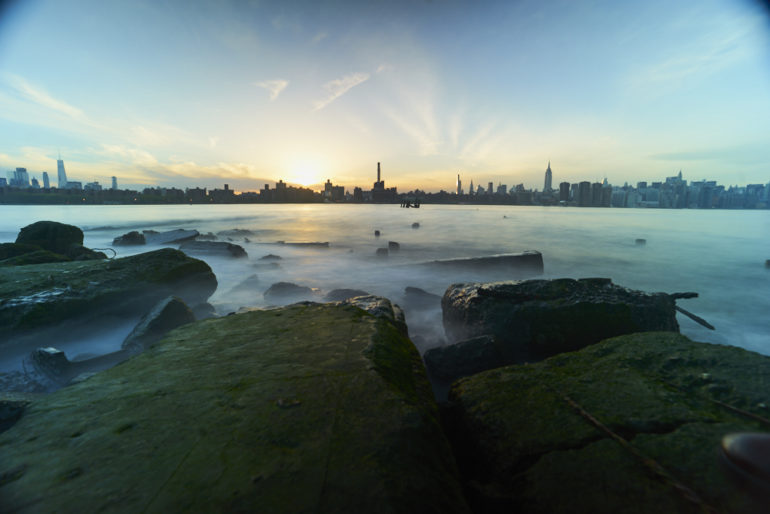
So, does that mean that the image above could be considered art photography at all? It’s a type of landscape called a seascape. What makes it so artistic?
How Artistic Images Are Made and Still Called Photographs
It’s important to note here that ultimately, images that are captured are typically just that: photos. Our culture calls them pics or snaps. But capturing an image can have artistic intent based on framing, composition, lighting, etc. Capturing an image is when a photographer points a camera at a scene and takes a photo. A photographer can put their own artistic interpretation of the scene by using depth of field, slow shutter speed effects, specific lighting techniques, intentional framing, etc. Art photography done through capturing a scene is often something you can feel instead of expect to see and understand. We can feel this because of the photographers specific artistic intent.

A fantastic example of a photographer who captures moments but still makes photographs that can be considered art is Anna Bedynska. “A documentary photograph encapsulates what someone has observed, contemplated, meticulously created, and redefined,” says told us in an interview about the image above during a Magnum Square Print Sale — and the difference between AI and human imagery. “It is a synthesis of someone’s perspective point of view, a profound synthesis of thoughts, emotions, and creative choices. We enter a dialogue through photography between the photographer, the person photographed, and the viewer.” Indeed, creative art photography in this case is all about the intent — which needs to be exercised in the same way that painting needs to be practiced.
I remember in college taking a photojournalism class and a photography class. One of the biggest things that we had to learn was the difference between taking a snapshot and making a photograph. With that comes a whole other vocabulary and respect for imagery.
On the other hand, photographers can create images — which is the opposite of capturing them. This isn’t necessarily done through post-production. Instead, it’s often done when a photographer puts elements into the scene that wouldn’t normally be there. By all means, it interferes with reality and often can’t be seen with the human eye normally. It has to be made. Many photographers do this through set design.

A fantastic example of a photographer who creates moments but still makes photographs that can be considered art is Ingrid Alice Irsigler. We can see this evidently in the image above. I mean, how often do women in red dresses wander through a forest randomly with makeup and all? In an interview, she told us about how lighting can change everything in a scene.
It changes everything!! As I mentioned before, I am a tech geek, and LOVE, LOVE lighting. I think one of my skills is mixing natural and artificial light, which is why I love location work the most. I use Profoto B1’s which are amazing for taking up mountains or lighting old haunted mansions.
Ingrid Alice
I have to agree with Ingrid. Lighting can completely change how we see a scene. This magic is much more apparent when you shoot with a strobe than an LED.
Some photographers make their images into art through printing; which isn’t at all the same as composites made out of camera — which aren’t photographs.
Is Photography an Art Form?
So, indeed, photography can be an art form. It all has to do with expressing artistic intent, which must be practiced with various art forms. To do this, you need to get in touch with your feelings. There’s nothing wrong with capturing photographs of birds as a hobby — but it doesn’t have much in the way of artistic intent. And in the end, they aren’t as valued as the rest of artistic photography.
Get rid of the ads!
Did you enjoy reading this article as much as we enjoyed writing it? There's a way to support us and our reporting, getting ad-free navigation and more as a bonus. Subscribe to us for less than a coffee per month —just $3.99— or take advantage of our yearly subscription with a hefty discount for only $25.- An ad-free experience
- A free mystery box for Lightroom or Capture One
- All the books in our store
- 20% discount on Capture One
- 30% discount on Imalume Photo Theft Protection
- 20% off Herbs and Kettle Tea Company.
- 20% off your order from MPIX printing services.
- 5% off Viltrox Products via their eCommerce store.
- 10% off all film developing, printing and scanning services from Blue Moon Camera and Machine
- 15% off 7Artisans products: The lens and accessory maker is offering a sweet discount for Phoblographer's readers.