While many gear heads geek out over specifications like megapixels and burst speeds, light plays a far bigger role than in image quality. Adding a flash to your kit allows you to take great photos nearly anywhere rather than being limited to where the ambient light looks best. Flashes also have the ability to make photos appear sharper by freezing the action and adding contrast. Flashes also open up more creative possibilities, from using direct unmodified flash for a retro feel to incorporating creative blur effects with rear-curtain sync. The best camera flashes offer powerful, versatile lighting to fuel those creative possibilities while balancing the list of key features and, of course, price.
Flashes are designed for photographers that need both on-camera and off-camera lighting and portability, including event photography and photojournalism. Genres that don’t need that on-camera ability can find lights powerful enough to overpower the sun by opting for a strobe instead. But, if you want that on-camera ability and portability, here are the best camera flashes for photography.
Table of Contents
Why You Should Trust Us

The Phoblographer has been doing real-world photography gear tests longer than any other photography publication currently run. We also have the largest database of real-world lens reviews, amongst other things like straps, camera bags, lights, accessories, and more. Here’s why that matters:
- AI Can’t Do This Job: These days, other publications do roundups, sometimes using generative AI. That’s the same as a person researching products and then making a decision without actually trying it. All of our reviews and guides are written not just by humans but by working photographers — not AI. Computers don’t use cameras, so why would you trust AI to recommend cameras for you?
- Research and Practical Experience: Here at the Phoblographer, humans consult on what roundups to do with guidance from an editor. Then, a human goes through our database of reviews and selects the best products based on our own internal research. The human creating the roundup has practical experience with photography gear and will apply their knowledge of what’s best to the already human-based experience provided in our reviews.
- We Block AI Bots: The Phoblographer blocks indexing bots from reading our site, so what’s here can only be read here.
How we Test and Choose the Best Camera Flashes
- The Phoblographer’s various product round-up features are done in-house. Our philosophy is simple: you wouldn’t get a Wagyu beef steak review from a lifelong vegetarian. And you wouldn’t get photography advice from someone who doesn’t touch the product. We only recommend gear we’ve fully reviewed in these roundups.
- If you’re wondering why your favorite product didn’t make the cut, there’s a chance it’s on another list. If we haven’t reviewed it, we won’t recommend it. This method keeps our lists packed with industry-leading knowledge. Some of our stories include affiliate links. If you buy something through one of these links, we may earn an affiliate commission.
- When we test lenses, we’ve got various things in mind. First off, we consider who might want to buy the lens and what they might do with it. With that in mind, we try to tackle at least three genres of photography with that lens in a variety of situations. If the lens has weather resistance, then we’ll test it accordingly with a weather-resistant camera. We also test the autofocus of the lens in continuous mode, single mode, with exposure preview effects, without those effects, and then with all the major image quality parameters. These days, no one really makes a bad lens — but some are far better than others.
- In this specific roundup, we’re basing our findings on the reviews that we’ve done. We’re choosing a favorite, but we’re also giving photographers a bunch of others that they might like, depending on how they shoot.
Our Choice Among the Best Camera Flashes: Canon Speedlite EL-1

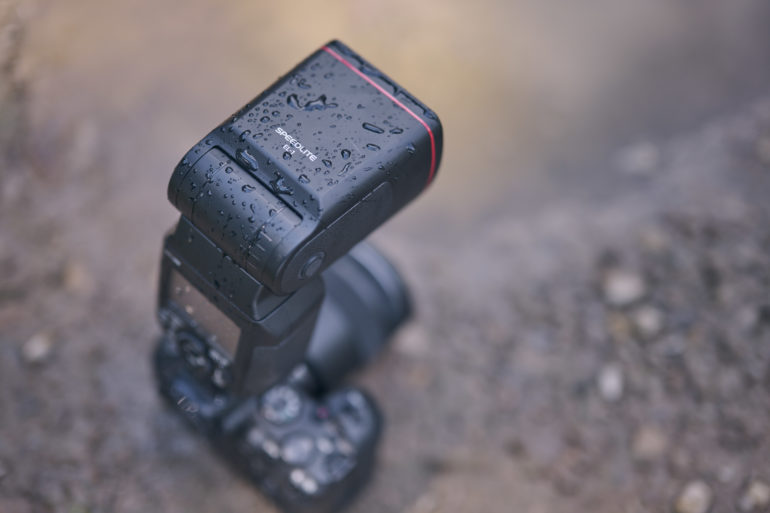
In a category where nearly every product description is boring and expected, Canon is doing something different with the Speedlite EL-1. The Canon Speedlite EL-1 is actually weather sealed, making Canon one of the few companies making a flash that can work without protection right alongside its weather-sealed cameras and lenses. But that’s not the only unique standout feature. The flash is capable of shooting down to 1/8192 power where most flashes only go down to 1/128 or 1/256. That’s a key feature if you want to use the flash as a fill light for making the eyes pop without creating harsh shadows. It’s not quite as powerful as a speedlight — it will only overpower the sun on an overcast day. And, it is rather large and heavy. But, the weather-sealing and wide range of power settings make the EL-1 a solid choice for Canon shooters.
In our Canon Speedlite EL-1 review, we state:
“The EL-1 has a wide range of power settings that are near impossible to find in a hot shoe flash. At the same time, it’s strong enough to make noon on a cloudy day look like night (mixed with the right exposure settings, of course). Then add in features that you’d expect from a flagship flash like high-speed sync and built-in wireless. On top of all that, you can take this flash in the rain — which is huge, because backlighting looks amazing in the rain.”
Pros
- Versatile settings from 1/1 down to 1/8192, or 1/128 with high speed sync
- Weather-resistant
- Simple interface and joystick controls
- Powerful enough to make a cloudy day look light night
- Wireless built-in, with second flash acting as a receiver in slave mode. There’s radio and optical transmission in here.
- Built-in cooling system with a fan, and .9 second recycle time
Cons
- Expensive
- Oversized
- No touchscreen, despite easy interface
For Some Photographers, these Might be the Best Camera Flashes
Did you skip over that last section because you don’t shoot Canon? While the El-1 is arguably the most innovative flash on the market, there are plenty of great on-camera flash options that work with nearly any brand of camera. In fact, our favorite lights are from brands like Flashpoint and Godox, who offer variations for every major brand with full functionality. You don’t need to match the brand of your flash with the brand of your camera — if you do, you might be overspending.
Flashpoint Zoom Li-ion R2 III

The Flashpoint Zoom Li-ion III is everything an affordable flash should be. Despite being a more budget-friendly option, the flash still packs in all my must-haves, including high-speed sync, multi-shot mode, built-in radio transmission for off-camera use, and a modeling light. The Li-ion III has a decent amount of power at 76 ws (and the same guide number os the pricier Canon EL-1), with the ability to go down to 1/256th power. It won’t overpower the sun like a strobe can, but offers a good mix of power and portability. The build isn’t as durable as the EL-1 and it does take some time to learn, but for the price, it’s an excellent light.
In our Flashpoint Li-ion III review, we state:
“The Flashpoint Zoom Li-on III delivers the features of a flagship flash for under $300. There’s a lot this flash can do – and what you can’t do with it is almost always something that requires the power of a strobe. It’s a versatile flash that goes from basic TTL to off-camera soft portraits to slow sync and multi-flash effects.”
Godox Lux Junior

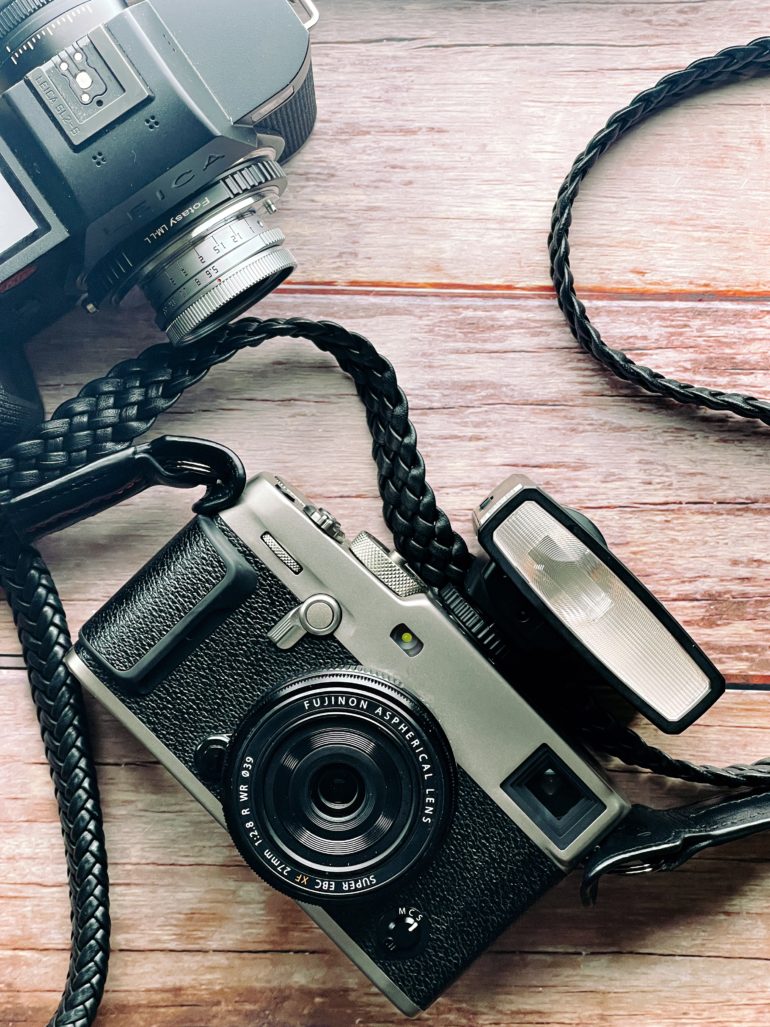
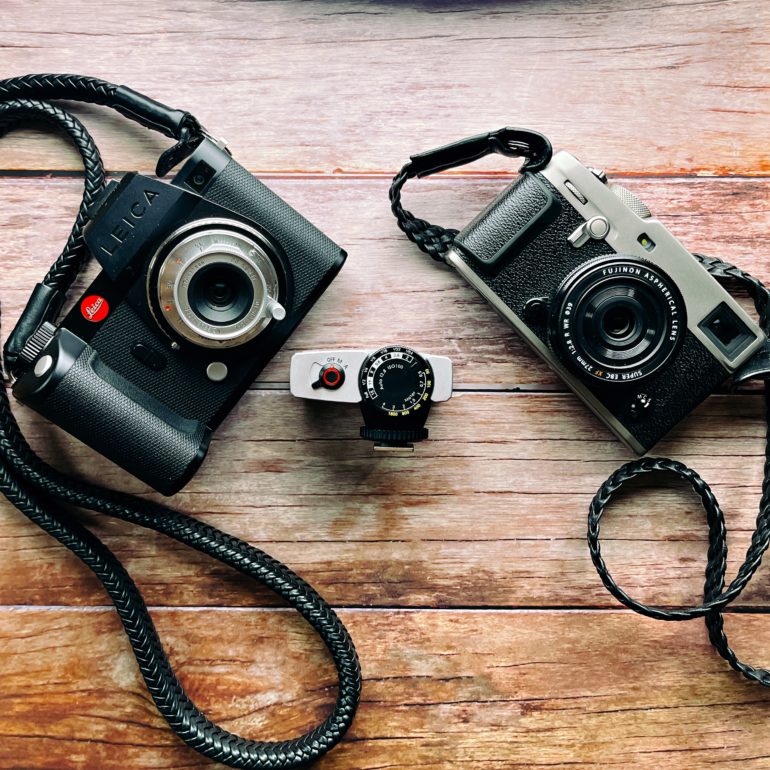
While retro-styled cameras have been making a comeback for awhile, the Godox Lux series is the first attempt at a vintage-looking flash that doesn’t cut too many features or sit at too high of a price point. The Godox Lux Junior is a compact flash small enough to fit in some pockets, with charming retro dials and compatibility with any brand. It uses a vintage-inspired power knob that helps calculate what manual settings to use. The Junior flash isn’t as powerful as others on the market and there’s also no TTL mode or HSS. The odd shape also means it won’t work with many flash modifiers. But, for photographers that shoot with manual flash anyway and want something both small and charming, the Godox Lux Junior is a great option.
In our Godox Lux Junior review, we said:
“The Godox Lux Junior is a flash with a retro design that’s simple to use. Street photographers and candid photographers are the ones who will like it the most. Street fashion photographers will also really adore what the Godox Lux Junior can do. It’s incredibly small and can fit into the pocket of a pair of skinny jeans. This will be essential when the weather starts to make a turn for the rainier side. And while you might not be a fan of AAA batteries, they’re easy to get in nearly any convenience store.”
Flashpoint Zoom Li-on X R2 TTL

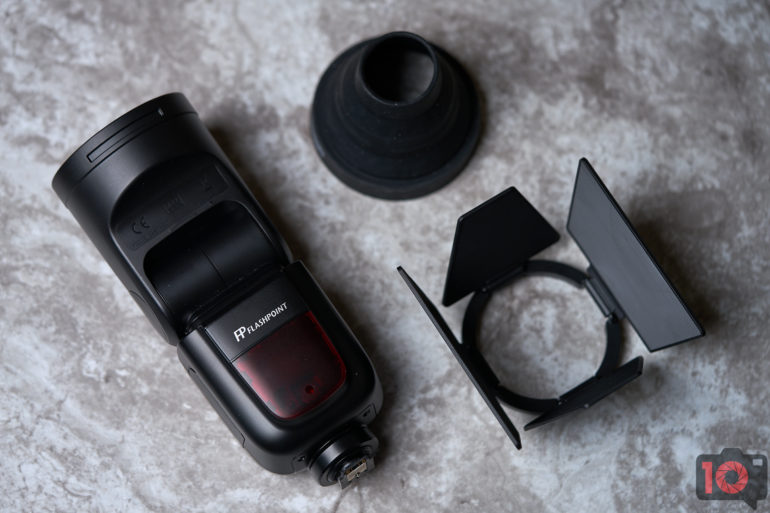
Flash photographers know that a flash is only as good as its modifiers — which is why the Flashpoint Zoom Li-on X R2 finds itself on this list of the best flashes. The round, magnetic head is compatible with a number of easy-to-attach modifiers, from colored gels to diffusion domes to a grid and even a snoot. If you buy this flash, spend the few dollars extra and buy the kit that includes all the modifiers for around $320, because that’s the R2’s best features. It has a 75 ws output, which is good for a hotshoe flash, plus HSS and built-in radio control for off-camera use.
In our Flashpoint Zoom Lion R2 TTL review, we said:
“The inclusion of the round head is obviously the biggest selling point of the Flashpoint Zoom Li-on X R2 (Godox V1). It’s well built overall, delivers consistent results, and the new twist-lock hot shoe mechanism is much easier to secure than Flashpoint’s older screw-down style. The magnetic light modifier attachment system is very easy to use as well. All of these positives are marred by inconsistent build quality and a questionable design choice. The command dial on the rear of the light (along with the circular disc in the middle where the controls are labeled) is way too loose. The inability for the round head to turn backwards fully when turning counter-clockwise is an unnecessary annoyance.”
Using this Guide to the Best Camera Flashes
If you’re considering purchasing anything from this list, consider the following:
- All the product images and sample photos in these roundups are shot by our staff. In fact, we don’t talk about products at length in roundups like this unless we’ve done full reviews of them. But you can surely know that we’ve done all the research ourselves.
- We’d never recommend a product to you that we haven’t tested or that we really didn’t like. You can reference our linked reviews, for more information on this.
Tips on Choosing the Best Camera Flashes
Many beginners are timid when it comes to flash — I know I was when I first started out. If you’ve never used flash before, here are a few tips to buying your first one.
- If you need to overpower the sun, you need a strobe, not a flash. Hotshoe flashes offer the versatility of use on camera and off, but even the best options will only overpower the sun on a cloudy day. If you need to overpower the sun, you’ll need the power of a strobe.
- Using TTL, which is an automatic flash mode that works based off your camera’s settings, requires choosing the flash listed with compatibility for your brand. If you buy a Canon Flashpoint, you can still use it on a Sony, but you don’t be able to use the TTL and auto flash features.
- Unless you want that direct flash look, you’ll probably also want to buy a flash modifier. The R2 in the list above has its own set of modifiers. But for the Canon EL-1 and the Flashpoint li-ion III, I recommend this MagMod kit with the Sphere and Grid.
- HSS or high-speed sync allows you to use the flash beyond the limits of your camera. Without it, you’ll get a black bar if you use your flash above 1/250 (or 1/125 on some budget cameras). If you want to use a wide aperture while using flash, you’ll want HSS.
- Hotshoe flashes can be used off-camera, which offers excellent versatility. For that, you’ll need the transmitter that pairs with your specific flash.
Picking the Right Camera Flashes for you
- What’s your budget?
- How will you use the product?
- What lighting situations are you in, and how will that affect what you’re doing? Our reviews hyperlinked in this article can help with that.
- Are you traveling a lot with it?
- Will you be using it in a situation that’s a bit rougher?
- Who else uses this product? How are they using it?
- What’s so appealing about this product that I can’t get from what I have already or something else?
- When will I really have time to use this product?
- Where will I bring this product?
- How will this product help bring me joy and joy in my photography?