


The film-look isn’t just a gimmick. No, it delivers a look that makes your subjects look nearly flawless, timeless, and organic. It’s something that you can’t get from a phone and that otherwise is often too highly detailed. Cameras can do this for you, but they often need the right lenses. The problem is that many of those lenses don’t have autofocus. But LUMIX has exactly what you need. So here’s a look at the best lenses for the film-look with autofocus.
This article is presented in partnership with LUMIX.
We’re going to say this right off the bat: this article is presented in partnership with LUMIX. But at the same time, we also are transparently stating that we don’t write anything we don’t truly believe in. Trust us, it has caused lots of friction in advertising campaigns. And if we don’t have the facts to back up what we’re saying, we won’t say it. These truly are the best full-frame cameras with a film look for good reasons.
LUMIX luckily has a selection of very affordable lenses that have a film-look and that also have autofocus. In fact, they’ve got more than any other brand that also makes full-frame cameras. You’ll really enjoy the character these lenses can deliver if you’re also using the Real Time LUT feature on their cameras.
Here are the best interchangeable lens cameras available now.
Why You Should Trust Us
The Phoblographer has been doing real-world photography gear tests longer than any other photography publication currently run. We also have the largest database of real-world lens reviews, amongst other things like straps, camera bags, lights, accessories, and more. Here’s why that matters:
- AI Can’t Do This Job: These days, other publications do roundups, sometimes using generative AI. That’s the same as a person researching products and then making a decision without actually trying it. All of our reviews and guides are written not just by humans but by working photographers — not AI. Computers don’t use cameras, so why would you trust AI to recommend cameras for you?
- Research and Practical Experience: Here at the Phoblographer, humans consult on what roundups to do with guidance from an editor. Then, a human goes through our database of reviews and selects the best products based on our own internal research. The human creating the roundup has practical experience with photography gear and will apply their knowledge of what’s best to the already human-based experience provided in our reviews.
- We Block AI Bots: The Phoblographer blocks indexing bots from reading our site, so what’s here can only be read here.
How We Test and Choose the Best Lenses With a Film Look

- The Phoblographer’s various product round-up features are done in-house. Our philosophy is simple: you wouldn’t get a Wagyu beef steak review from a lifelong vegetarian. And you wouldn’t get photography advice from someone who doesn’t touch the product. We only recommend gear we’ve fully reviewed in these roundups.
- If you’re wondering why your favorite product didn’t make the cut, there’s a chance it’s on another list. If we haven’t reviewed it, we won’t recommend it. This method keeps our lists packed with industry-leading knowledge. Some of our stories include affiliate links. If you buy something through one of these links, we may earn an affiliate commission.
- When we test lenses, we’ve got various things in mind. First off, we consider who might want to buy the lens and what they might do with it. With that in mind, we try to tackle at least three genres of photography with that lens in a variety of situations. If the lens has weather resistance, then we’ll test it accordingly with a weather-resistant camera. We also test the autofocus of the lens in continuous mode, single mode, with exposure preview effects, without those effects, and then with all the major image quality parameters. These days, no one really makes a bad lens — but some are far better than others. The same applies to working with cameras.
- In this specific roundup, we’re basing our findings on the reviews that we’ve done. We’re choosing a favorite, but we’re also giving photographers a bunch of others that they might like, depending on how they shoot.
Our Choice Amongst the Best Lenses for the Film Look: LUMIX 85mm f1.8
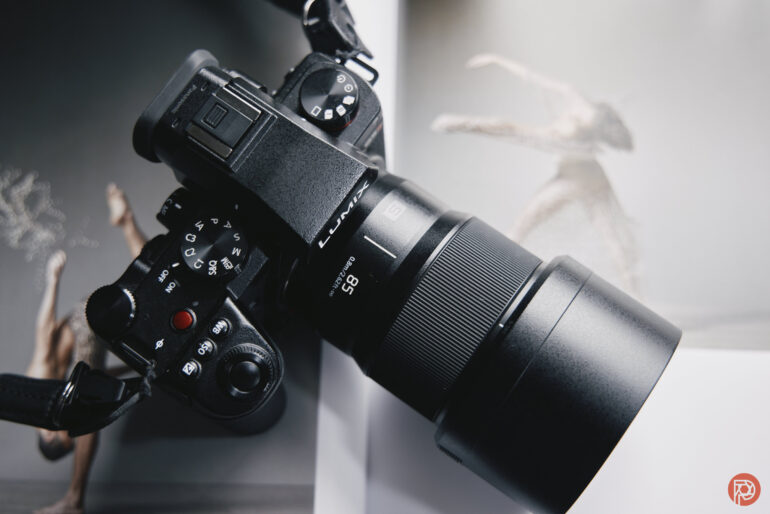
I mean, come on! Bokeh, a small size, weather resistance, fast focusing, etc. What’s not to love about the LUMIX 85mm f1.8 S? To get the most film-like look, we recommend loading up a preset of some sort using the Real Time LUT feature. Then go ahead and just shoot. For the look that you really want, choose a warmer-looking white balance. And just for some extra lens flare, take the lens hood off and consider a nice lens filter.
Tech Specs
These specs are taken from the Lensrentals listing.
| Angle of View | 29° |
| Aperture Blades | 9, Rounded |
| Autofocus | Autofocus |
| Brand | Panasonic |
| Diameter | 2.9″ |
| Extra Low-Dispersion Elements | 2 |
| Filter Size | 67.0mm |
| Focal Length | 85.0-85.0 |
| Format | Full-Frame |
| Groups/Elements | 8/9 |
| Hood Included | Yes |
| Image Stabilization | No |
| Item Type | Lens |
| Length | 3.2″ |
| Max Aperture | 1.8 |
| Maximum Magnification | 0.13x |
| Mfr. Model Number | S-S85 |
| Minimum Aperture | 22.0 |
| Minimum Focusing Distance | 2.6’ |
| Mount | L Mount |
| Weight | 0.8 lb. |
In our review, we state:
The LUMIX 85mm f1.8 has nine aperture blades and a beautiful, creamy bokeh. For what it’s worth, I really like it. I think most photographers will really like it for the price point. Is there better bokeh? Yes, but not for this price point.


4 Other Lenses with a Film Look
Considering how good LUMIX’s cameras are, you’ll need to pair them with the lenses that have a film-look too. Luckily, these are a few that we’ve tested and can say with certainty that you can get that look using Real Time LUT.
LUMIX 26mm f8 S

In our review, we state:
Turn your lemons into the finest lemonade the summer has given you.
Do I sound nuts? Maybe. But I’m so sick of overly sharp lenses, and an autofocus game that leads photographers to all make the same photographs. Do it yourself.

LUMIX 50mm f1.8
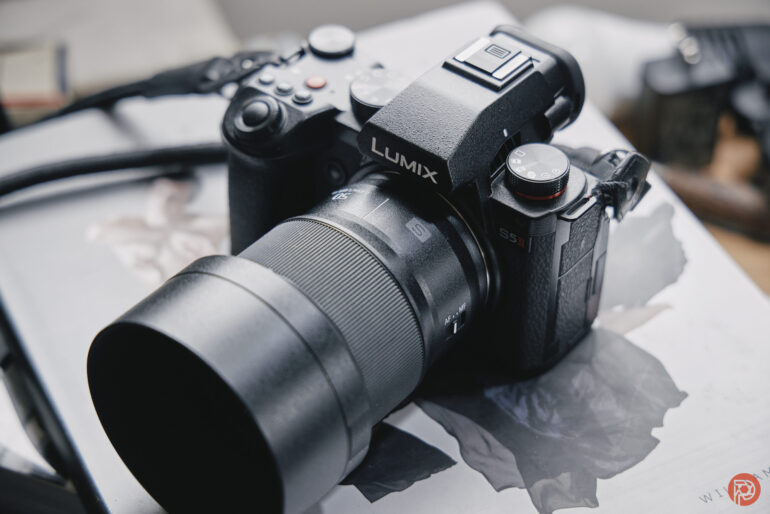
In our review, we state:
The LUMIX 50mm f1.8 S has 9 aperture blades. And of course, that’s more than enough to give it creamy bokeh. Is it the creamiest 50mm? No. I’ve seen creamier for sure. But I think that for a 50mm f1.8, it’s more than usable.

LUMIX 50mm f1.4 Lumix S Pro
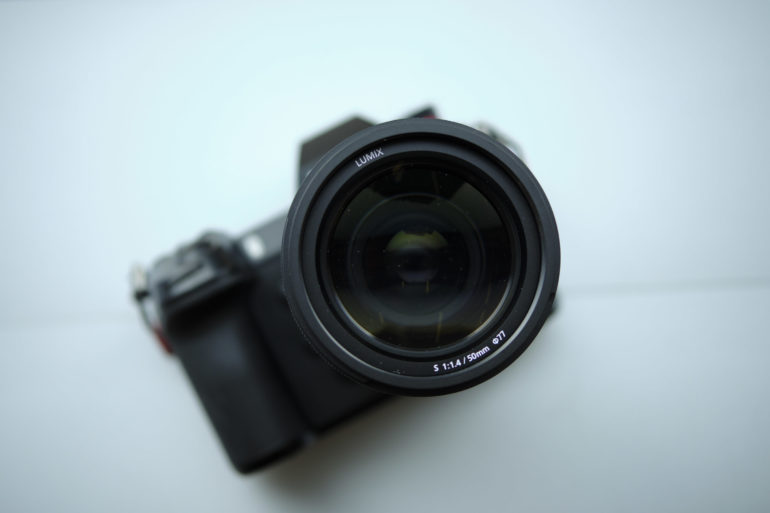
In our review, we said:
Now with all heartfelt honesty, the strongest feature of the 50mm f1.4 LUMIX S Pro is the image quality. Photojournalists, wedding photographers, landscape photographers, portrait photographers and those who just like pixel peeping will admire what the 50mm f1.4 LUMIX S Pro can do. This lens is so sharp that it makes the LUMIX S1 seem like it’s a higher megapixel camera. Beyond that it has beautiful bokeh, can focus closely, and has no major problems at all.

LUMIX S 35mm f1.8

In our review, we state:
The LUMIX S 35mm f1.8 is pleasantly sharp. Shooting wide open, the center is sharp, but not overly sharp. The corners at f1.8 are a bit soft, but the sharpness is retained through most of the image. The lens could handle a subject on the edge at f4, with everything except for the last bit of the corners sharp.

How to Use This Guide to Lenses for Portrait Photography with a Film Look

Here’s what you should know about using this guide to the best lenses for portrait photography with a film look:
- This guide contains products we’ve reviewed. Lucky for you folks, we’ve reviewed the vast majority of LUMIX lenses and modern lenses in general. Our Ethical Practices don’t allow us to feature products we haven’t fully reviewed. So when we say these are the best wide-angle lenses with great color for LUMIX, we mean it.
- This guide is sponsored by LUMIX, who trusts us and understands that we have a set of ethics when it comes to reviewing products. All the product images and sample images in this roundup were shot by Phoblographer staff. There are also links to our full reviews.
- These are the best lenses for portrait photography with a film look. We’re emphasizing mostly lenses that have digital sharpness, to that end, the heroes of your photos will always look their best.
- Of course, we’re choosing lenses that have wide, fast, apertures. What’s the film look without the bokeh, afterall?
- LUMIX is otherwise known in the market as Panasonic.
- This specific list of the best lenses for portrait photography with a film look is catering specifically to the full-frame LUMIX crowd. So that’s why there aren’t any Micro Four Thirds offerings here.
- Generally speaking, LUMIX lenses work better on LUMIX bodies than they do with others within the L-Mount Alliance. Part of this has to do with the motors being used. They’ll work perfectly fine on Leica and Sigma L-mount camera bodies too.
- We’ve chosen lenses with weather-resistance. Weather resistance has more use than just shooting in the rain. Think of it as “weathering away” instead of “talking about the weather.” It helps prevent dust from getting into your lens and camera. That means you don’t need to retouch sensor dust. If it helps any more, all LUMIX S lenses have weather resistance as of the publishing of this article.
- All the product images and sample photos in these roundups are shot by our staff. In fact, we don’t talk about products at length in roundups like this unless we’ve done full reviews of them. But you can surely know that we’ve done all the research ourselves.
Using this Guide to the Best Full-Frame Cameras with a Film Look
If you’re considering purchasing anything from this list, consider the following:
- All the product images and sample photos in these roundups are shot by our staff. In fact, we don’t talk about products at length in roundups like this unless we’ve done full reviews of them. But you can surely know that we’ve done all the research ourselves.
- We’d never recommend a product to you that we haven’t tested or that we really didn’t like. You can reference our linked reviews, for more information on this.
Tips on Choosing the Best Lenses With a Film Look
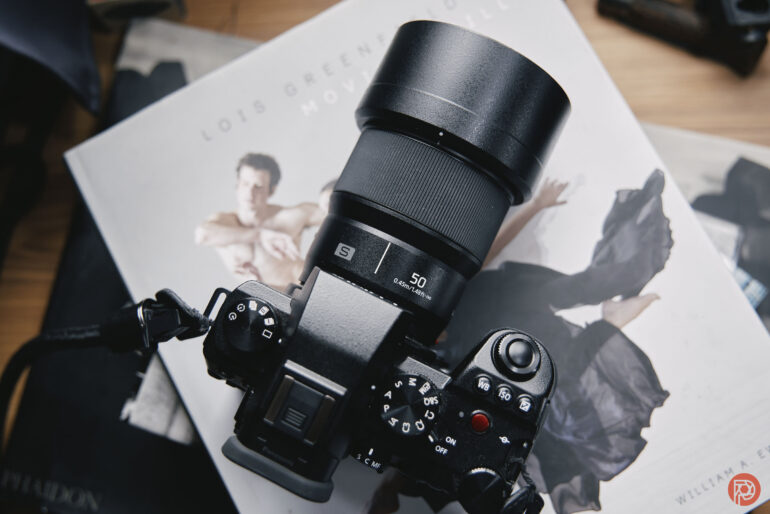
The key to choosing a lens starts with your point of view, but also incorporates how you want to express that point of view. And often, it isn’t very plain and clinical. Instead, it could be kissed by your imagination. Here are some tips on choosing the best lenses for you.
- This guide contains products we’ve reviewed. Lucky for you folks, we’ve reviewed the vast majority of LUMIX lenses and modern lenses in general. Our Ethical Practices don’t allow us to feature products we haven’t fully reviewed. So when we say these are the best wide-angle lenses with great color for LUMIX, we mean it.
- This guide is sponsored by LUMIX, who trusts us and understands that we have a set of ethics when it comes to reviewing products. All the product images and sample images in this roundup were shot by Phoblographer staff. There are also links to our full reviews.
- These are the best lenses for portrait photography with a film look. We’re emphasizing mostly lenses that have digital sharpness, to that end, the heroes of your photos will always look their best.
- Of course, we’re choosing lenses that have wide, fast, apertures. What’s the film look without the bokeh, afterall?
- LUMIX is otherwise known in the market as Panasonic.
- This specific list of the best lenses for portrait photography with a film look is catering specifically to the full-frame LUMIX crowd. So that’s why there aren’t any Micro Four Thirds offerings here.
- Generally speaking, LUMIX lenses work better on LUMIX bodies than they do with others within the L-Mount Alliance. Part of this has to do with the motors being used. They’ll work perfectly fine on Leica and Sigma L-mount camera bodies too.
- We’ve chosen lenses with weather-resistance. Weather resistance has more use than just shooting in the rain. Think of it as “weathering away” instead of “talking about the weather.” It helps prevent dust from getting into your lens and camera. That means you don’t need to retouch sensor dust. If it helps any more, all LUMIX S lenses have weather resistance as of the publishing of this article.
- All the product images and sample photos in these roundups are shot by our staff. In fact, we don’t talk about products at length in roundups like this unless we’ve done full reviews of them. But you can surely know that we’ve done all the research ourselves.
Picking the Right Mirrorless Cameras for You
- What’s your budget?
- How will you use the product?
- What lighting situations are you in, and how will that affect what you’re doing? Our reviews hyperlinked in this article can help with that.
- Are you traveling a lot with it?
- Will you be using it in a situation that’s a bit rougher?
- Who else uses this product? How are they using it?
- What’s so appealing about this product that I can’t get from what I have already or something else?
- When will I really have time to use this product?
- Where will I bring this product?
- How will this product help bring me joy and joy in my photography?
Get rid of the ads!
Did you enjoy reading this article as much as we enjoyed writing it? There's a way to support us and our reporting, getting ad-free navigation and more as a bonus. Subscribe to us for less than a coffee per month —just $3.99— or take advantage of our yearly subscription with a hefty discount for only $25.- An ad-free experience
- A free mystery box for Lightroom or Capture One
- All the books in our store
- 20% discount on Capture One
- 30% discount on Imalume Photo Theft Protection
- 20% off Herbs and Kettle Tea Company.