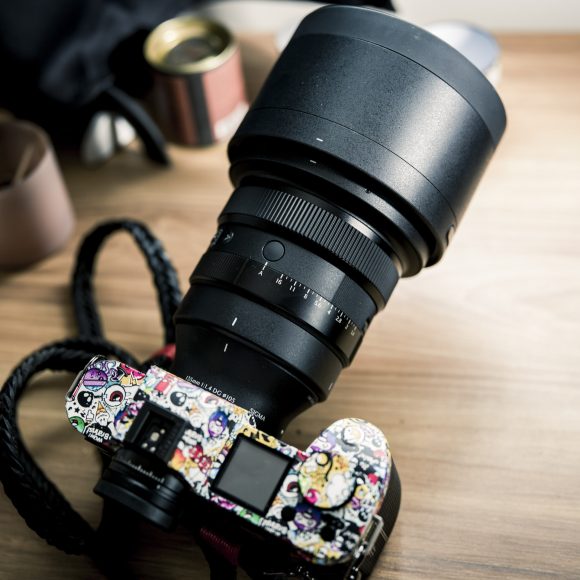
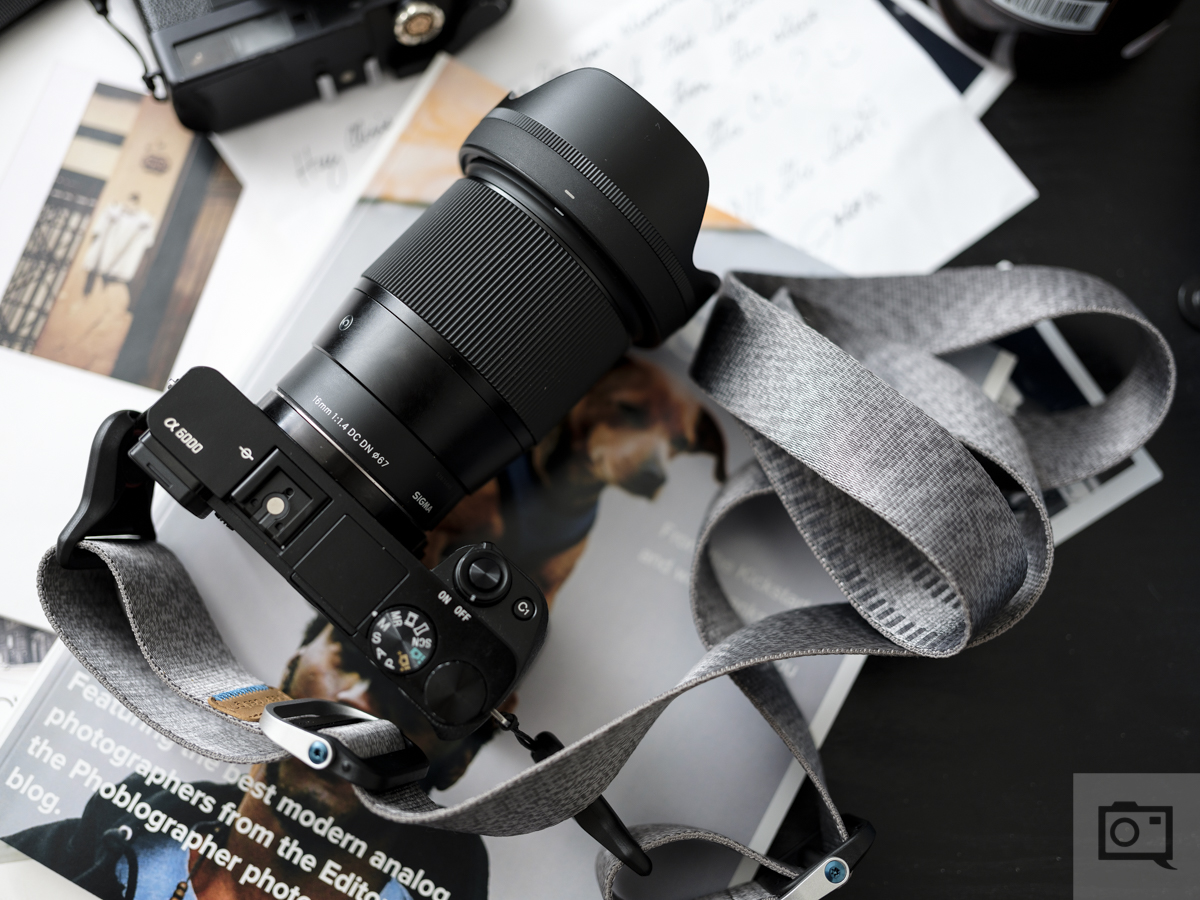
Recently, Sigma announced a refresh of their two mirrorless lenses: the 19mm f2.9 and 30mm f2.8. But they also added in a new player, the 60mm f2.8. Today, they’re announcing the price point of the new Art Series lens and some more specs. It will set you back $239 when it hits the shelves in mid-May and will be available for Sony NEX E mount and Micro Four Thirds mounts. It will focus as closely at 19.7 inches, has 8 elements in 6 groups, 7 aperture blades, and will also come in silver.
If you’re looking for a longer focal length for portraits, this may be the one to snag.

Sigma’s 18-35mm f1.8 DC HSM has been blowing the minds of photographers everywhere. Since its announcement, many are still truly amazed that the company was able to manufacture it. Before this, the fastest aperture zoom lenses made were done by Olympus for their Four Thirds lineup. But Sigma’s is a jaw droppingly bokehlicious f1.8 constant aperture instead. We recently met with the company in NYC to have some personal one on one fondling time with the optic. And here’s what we think so far.
[click to continue…]

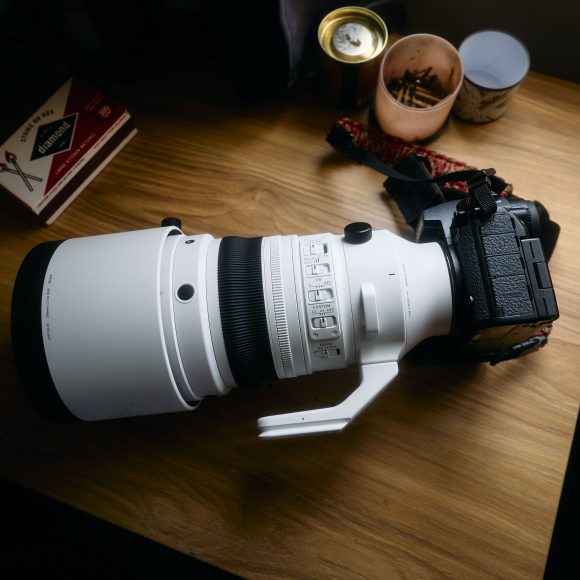
“Oh my! What a big lens you have!” That’s a joke that perhaps every sports or wedding photographer has heard. And those who choose to spring for Sigma’s new 120-300mm f2.8 DG OS HSM will probably hear the same thing. We played with a prototype around Photo Plus and at that point had yet to hear about pricing. But now, you’ll have to shell out $3,599 to hear bridesmaids everywhere compliment you about how big your lens is. And just in time for wedding season, it will be available in early May!
But that’s not all! They’re also announcing a $59 price for their USB dock to update the firmware on their new lenses.

Today, Sigma has broken a record–they’ve combined autofocusing capabilities, a constant f1.8 aperture and a constant zoom range in a single lens. Previously, Olympus was the speed champion with the F2 zoom lenses, but Sigma is now producing f1.8 zooms. Designed for APS-C sensor DSLRs, it will sport a 27-52.5mm field of view. This is also the company’s first zoom art lens–which were previously thought to be comprising of only primes.
The lens has Sigma’s Super Multi-Layer Coating, comes supplied with a petal-type hood, features Sigma’s Hyper Sonic Motor (HSM) and has nine aperture blades. More tech specs are after the jump along with another photo. No word on pricing yet, but we don’t expect this to be cheap.
[click to continue…]

Before we decided to post this, we did a little bit of research and confirmed it to be true. Sigma’s DP line of point and shoots such as the DP1, DP2 and DP3 Merrill have been hacked by the Chinese to use an M Mount. We first heard about this via Mirrorless Rumors, and it is indeed real. There are some more images of the hack in this Google translated forum and a company is charging to do it for users.
So what does this mean? Well first off, this is one of the most exciting pieces of news that we’ve heard in a while. Sigma’s Foveon sensor is actually quite good if you can think of it as a Hasselblad Medium format camera–which means that you need to use proprietary software to get the best results and that the ISO range isn’t up to par with others. In this way, you could probably call it the closest thing to a Mamiya 7 II in terms of digital formats–but many of us who have used that camera know that nothing could ever touch it.
But the bigger question is why isn’t Sigma doing this themselves? Back at CES, I spoke with the President of the company–and his desk (he doesn’t have an office) is in the same area as the engineers. But I really wonder what he’s thinking, and am confident he’s reading this and looking at it with great curiosity

Editor’s Note: Creating the Photograph is a new series that we’re starting where we interview photographers all about the photo that they shot and talk to them about how it was achieved. The results are some knowledge passed onto you. Want to be featured? Email editors[at]thephoblographer[dot]com
Much of the work that I feature on this site is my mediocre stuff simply because of the fact that I understand that not everyone wants to aspire to be a professional photographer or has ever been one. To that end, much of the images I shoot also have very little photoshopping or editing done to them. But at other times, I just want to create something. And I spent months developing the idea for the image you see above in my head.
This is the story of how I created that photo.
[click to continue…]